Can Cats Eat Dragon Fruit? Flesh, Peel, Portions, and Products
A healthy adult cat can usually sample one tiny piece of plain ripe dragon fruit flesh. The fruit is optional, not a feline superfood, and its tough peel, slippery chunks, fiber, natural sugar, spoiled flesh, smoothie ingredients, dried pieces, powders, packaging, and decorative skewers require separate attention.
Meet the fruit before offering a morsel
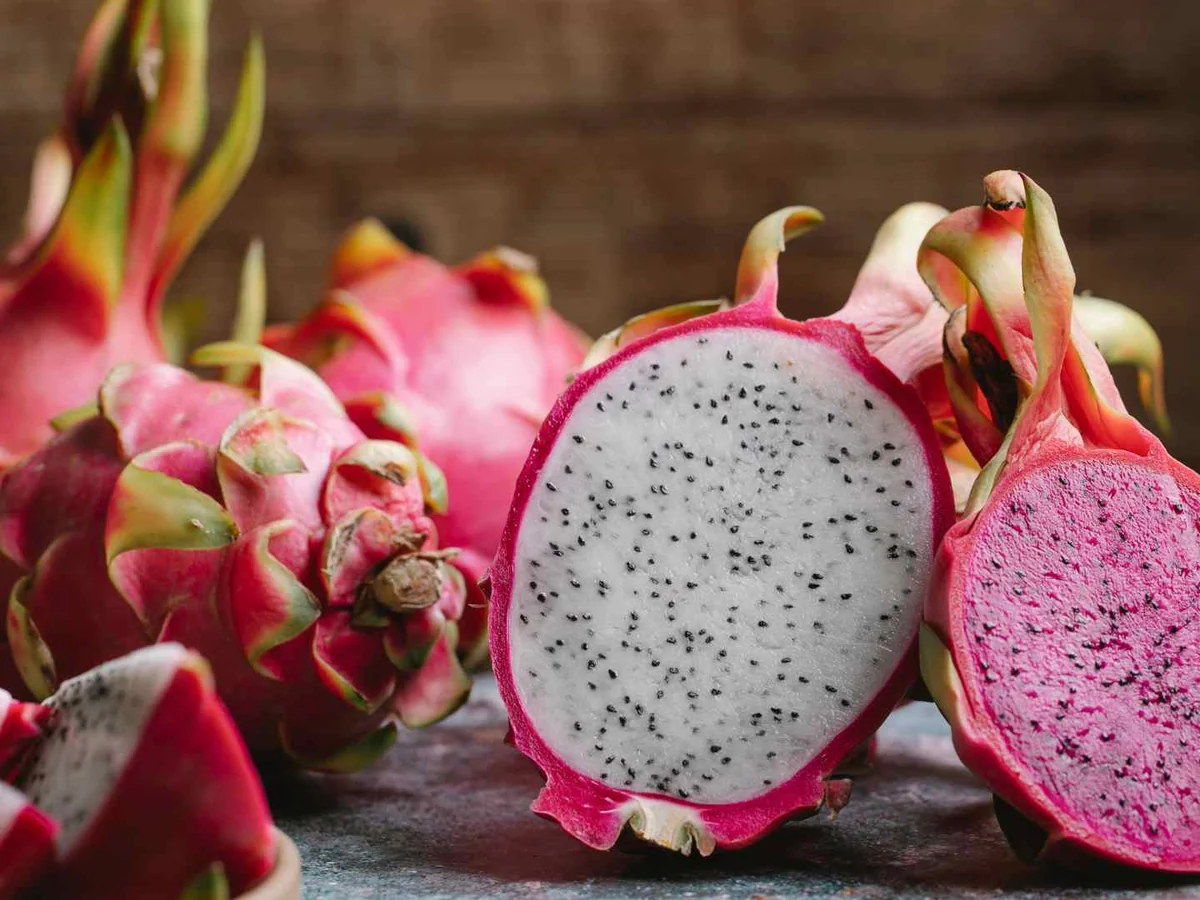
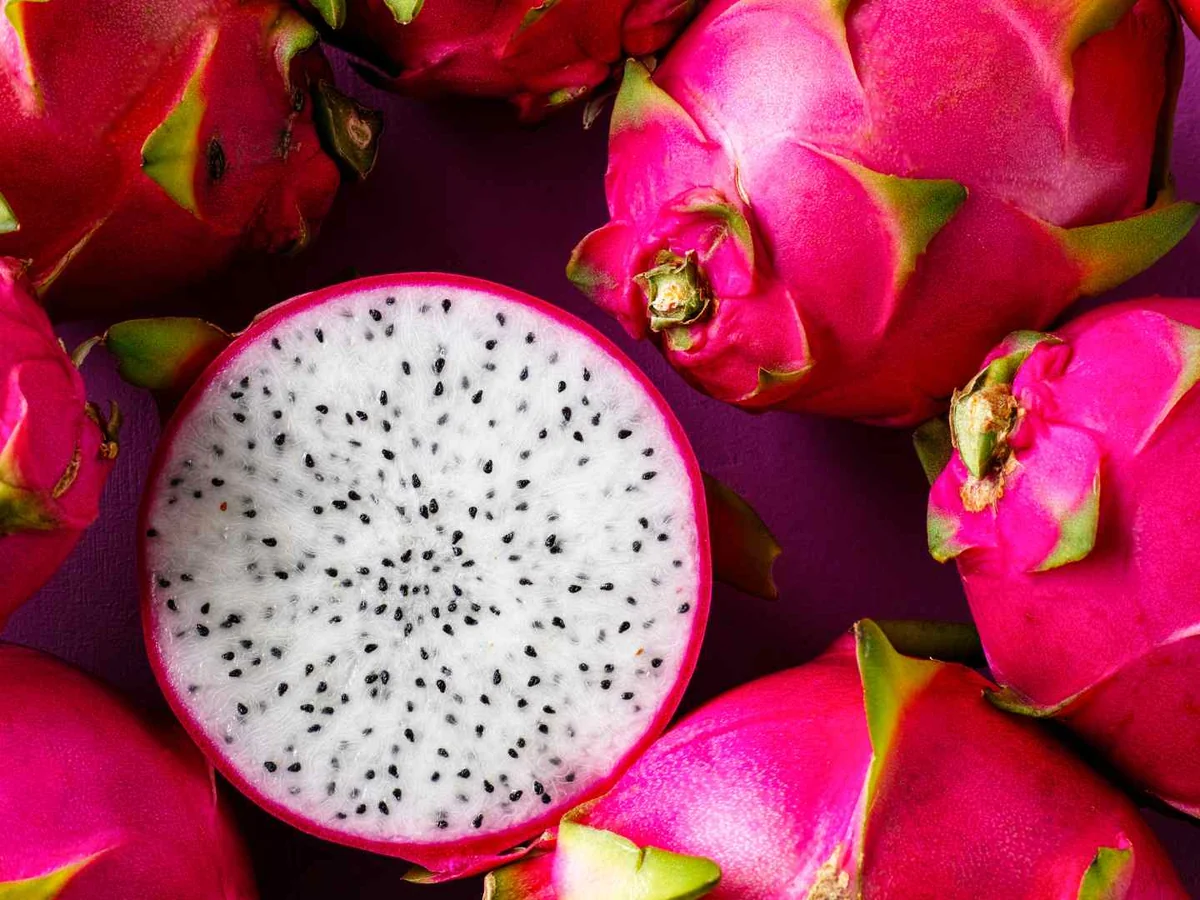
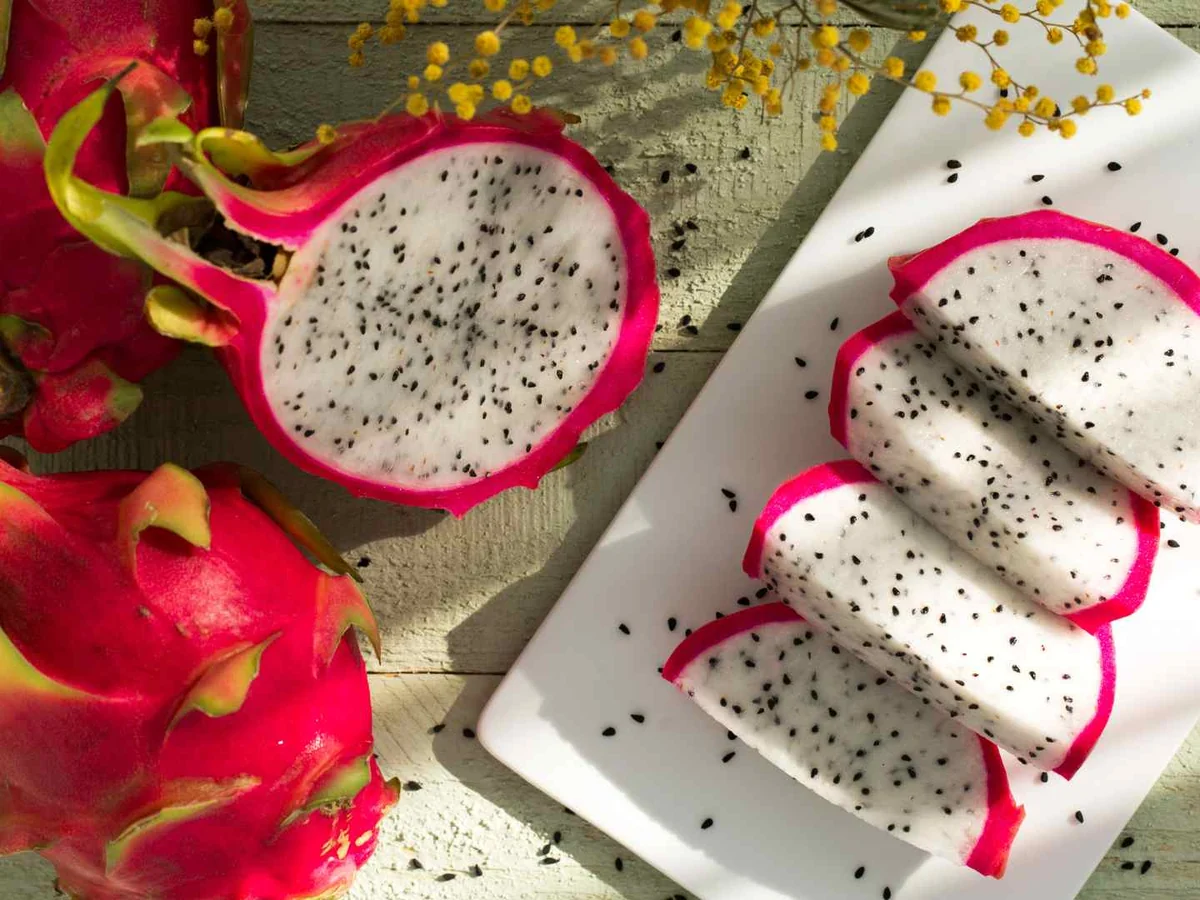
Dragon fruit, also called pitaya, has vivid leathery skin with leafy scales and soft white, pink, red, or yellow flesh dotted with tiny black seeds. Color and variety change appearance and flavor more than they change the basic feline preparation rule.
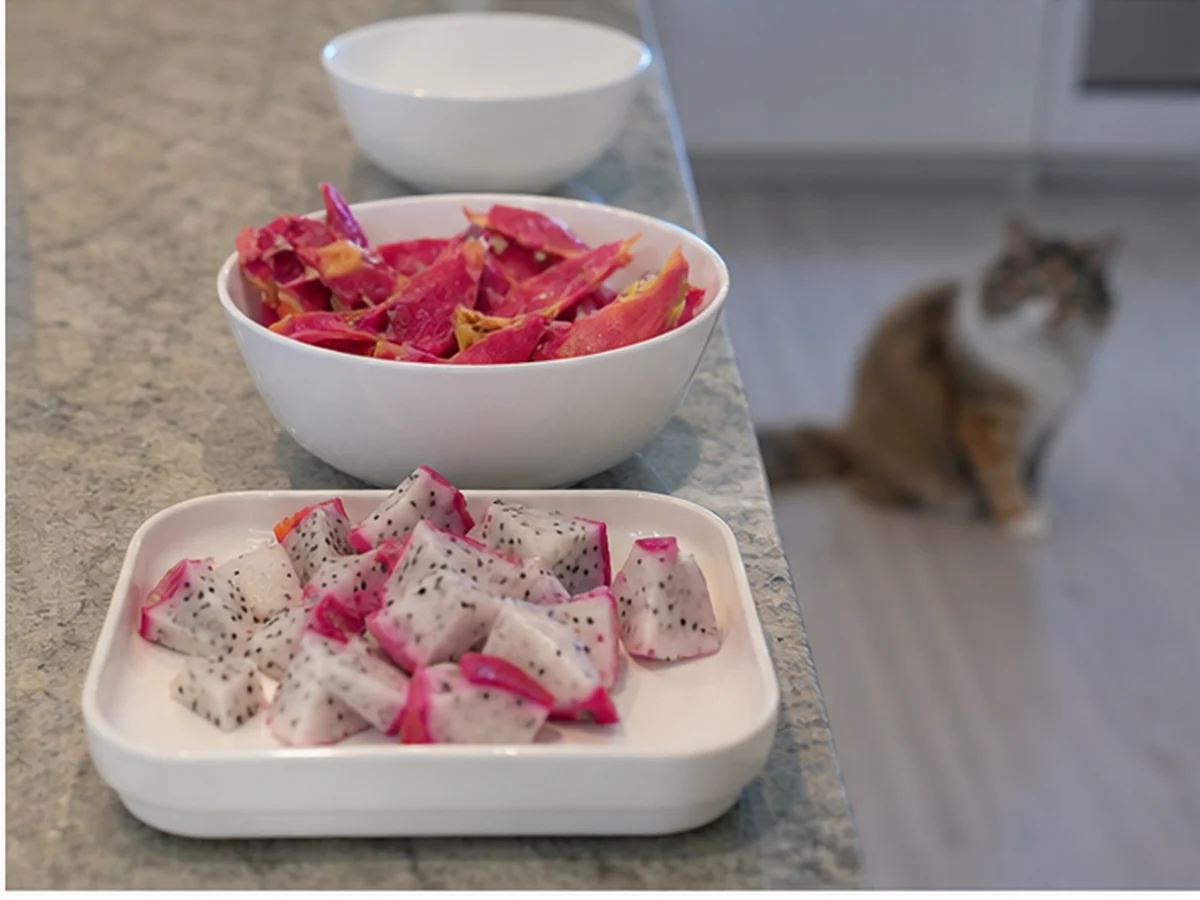
Only clean ripe inner flesh is a candidate for a tiny taste. The peel and outer scales are tough, fibrous, difficult to chew, and unnecessary for a cat.
The small seeds are normally eaten with the flesh and do not need individual removal from a pea-sized portion. That is not permission to offer a large slippery wedge or a bowl of seeds scraped from several fruits.
A calm kitchen preparation walkthrough
Choose an intact fruit without leaking areas, extensive bruising, mold, or a fermented odor. Refrigerate cut fruit promptly and discard pieces whose storage time or cleanliness is uncertain.
The FDA advises rinsing produce under running water before cutting, even when the peel will not be eaten. A knife can carry surface contamination into the flesh as it passes through skin.
Wash hands and use a clean board that has not just held raw meat. Soap and detergent do not belong on produce, and a perfumed cleaning residue is not an upgrade over running water.
Slice the fruit, scoop out a clean section of flesh, and cut a piece no larger than a pea. Serve it at room temperature without sugar, syrup, lime, salt, spice, yogurt, whipped topping, or another fruit.
Remove the dish after the taste so a curious cat cannot turn one measured sample into unsupervised grazing. If the cat ignores it, the experiment has reached a perfectly good conclusion.
Why peel stays in the compost-resistant trash
Dragon fruit skin is not recognized as a special feline toxin, but it is coarse, rubbery, and poorly suited to a small carnivore’s mouth and gut. Large pieces can choke, scrape, or contribute to obstruction.
Gagging, repeated swallowing, drooling, regurgitation, vomiting, appetite loss, abdominal pain, reduced stool, straining, or lethargy after peel disappears warrants veterinary advice. Go straight to emergency care when the cat cannot breathe normally, loses normal gum color, or collapses.
Do not induce vomiting and do not feed oil, bread, pumpkin, or extra food to push peel through. A clinician may recommend examination or imaging based on the amount and symptoms.
Secure peel in a lidded waste container because its fruit odor lingers. Compost may add mold, coffee grounds, onion, bones, string, and other hazards that make the exposure far more complicated.
Texture decides more than color
Ripe flesh can be slick and soft enough to slide toward the throat, especially as a long strip. Cross-cutting a tiny piece produces a safer shape than handing over a human-sized cube.
Kittens, seniors, flat-faced cats, and animals with dental, neurologic, or swallowing disease should skip unfamiliar fruit textures. Coughing, mouth-pawing, repeated swallowing, or regurgitation after a piece needs prompt attention.
Frozen dragon fruit can be hard enough to hurt a tooth and cold enough to make a sensitive mouth painful. Thawing reduces hardness but does not create a nutritional need.
Natural sugar is not the same thing as poison
Dragon fruit contains natural carbohydrate and sugar, yet one tiny plain piece is not a sugar-poisoning event. The reasonable concern is unnecessary calories and the ease with which fruit extras displace balanced food when offered often.
Cats do not need sweet fruit to complete their diet. The FDA’s pet-food adequacy guidance explains the nutritional claim to seek on daily food, while a raw fruit carries no feline life-stage formulation.
A cat with diabetes should not receive dragon fruit to manage glucose or obtain “healthy carbs.” Use the individualized food, insulin, monitoring, and emergency instructions supplied by the treating veterinarian.
For another seeded fruit with a different peel and texture, the cat strawberry guide shows why portion and preparation matter more than a generic fruit-is-healthy slogan.
Fiber is not an automatic digestive treatment
A larger serving can cause gas, soft stool, diarrhea, vomiting, or abdominal discomfort because cats vary in tolerance for unfamiliar plant fiber. Stop the fruit and observe rather than adding a second high-fiber food.
Do not use dragon fruit to treat constipation, hairballs, diarrhea, or weight problems without veterinary advice. Litter-box straining can signal urinary obstruction, constipation, pain, or another condition that fruit cannot diagnose.
Repeated straining, no urine, crying in the box, vomiting, profound lethargy, or a painful belly requires urgent care. Urinary blockage is especially time-sensitive in male cats.
No, “antioxidant-rich” does not make it feline medicine
Human nutrition articles often praise dragon fruit for antioxidants, vitamins, prebiotic fiber, or immune support. Those descriptions do not prove that feeding the fruit improves feline immunity, coat quality, cancer risk, digestion, or lifespan.
A nutrient can be present without being needed as an extra, well absorbed by cats, or beneficial at the amount safely offered. Complete feline food already manages required nutrients within a formulated profile.
Do not replace veterinary treatment or a prescribed supplement with dragon fruit powder. Disease claims require direct evidence in the target species, formulation, dose, and clinical setting.
Smoothie bowls are crowded recipes
Dragon fruit smoothies may combine sweetened plant milk, yogurt, honey, banana, pineapple, protein powder, caffeine, chocolate, supplements, sugar substitutes, or ice. A café version may have no accessible complete ingredient list.
Our banana guide for cats helps with one common base, while the pineapple guide covers fibrous core, peel, canned syrup, and juice. Neither link clears an entire smoothie.
Cold thick liquid can be lapped quickly, and spilled smoothie encourages grooming from fur. Prevent further licking and call for chocolate, caffeine, alcohol, xylitol uncertainty, concentrated supplements, or persistent symptoms.
Do not assume a plant-based drink is automatically safe. Products vary in sweeteners, gums, sodium, flavors, fortification, nut ingredients, and serving concentration.
Dried dragon fruit is a different chewing problem
Drying removes water and produces a denser, chewier snack with more calories per bite. Commercial pieces may be sweetened, flavored, colored, fried, or mixed with other fruits and nuts.
A strip can lodge in the mouth or be swallowed as a tough wad. Inspect the current ingredients and keep desiccant or oxygen-absorber packets away from the cat.
If a freshness packet was punctured or swallowed, save an identical packet and outer bag and call. Packet contents vary, so color and the words “do not eat” cannot identify the chemical or obstruction risk.
Powder, purée, juice, and supplements
Freeze-dried powder can become airborne and may be sold in blends with beet, acai, sweeteners, adaptogens, vitamins, or caffeine-containing ingredients. Human scoop directions do not establish a safe cat dose.
Plain purée removes choking texture but enables larger, faster consumption. Juice removes much of the fiber while concentrating an unnecessary sweet drink, and commercial beverages may contain added sugar or preservatives.
Use the label and amount rather than the front-panel fruit picture. Breathing irritation after powder, repeated vomiting, tremors, marked weakness, or an unknown supplement blend deserves veterinary advice.
Pink stool and urine need context
Deep red or magenta dragon fruit can sometimes tint human waste, and food pigment could plausibly color a cat’s vomit or stool after a substantial exposure. Never assume red material is harmless fruit without considering blood.
Photograph the finding, note the fruit variety and amount, and call for red urine, repeated bloody-looking stool, black tarry stool, weakness, pain, or ongoing vomiting. Urinary blood is not a novelty effect to monitor casually.
A tiny planned portion should not be large enough to create a dramatic color mystery. Visible pigment after a pantry raid is another clue that the amount exceeded a sensible taste.
Allergy and individual intolerance
A cat can react to almost any food, though dragon-fruit allergy is not a common assumption to make from one stomach upset. Other ingredients, spoilage, portion, and abrupt diet change must be considered.
Stop offering the fruit after recurring itching, skin lesions, vomiting, or diarrhea and arrange veterinary evaluation. Facial swelling, wheezing, breathing difficulty, collapse, or rapidly worsening signs needs emergency care.
Do not introduce fruit during a prescribed elimination-diet trial. One colorful smoothie lick can add several proteins and make weeks of careful feeding harder to interpret.
Storage, knives, and packaging
Cut dragon fruit is perishable and belongs in a clean covered container in the refrigerator. Discard slimy, moldy, fermented, leaking, or oddly colored flesh rather than asking the cat to resolve a freshness debate.
Keep knives, peelers, skewers, produce stickers, net bags, film, and rigid plastic clamshells out of reach. A swallowed sticker or torn film can obstruct even when the fruit itself was plain.
The FDA advises keeping refrigerators at or below 40°F in its food-storage safety guidance. Follow package instructions for frozen purée and do not refreeze a product with unknown thawing history.
A tiered response after a fruit raid
- Low concern: one pea-sized clean flesh piece in a healthy cat with no signs usually calls for simple observation.
- Call for advice: a large serving, peel, dried strip, packet, smoothie, supplement powder, spoilage, medical diet, or uncertain ingredients.
- Gather facts: save variety, recipe, packaging, amount, time, storage history, cat weight, medical conditions, and photographs.
- Do not improvise: avoid vomiting, forced water, oil, human medicine, or a bulky meal intended to move material.
- Seek emergency care: airway trouble, collapse, facial swelling, seizures, repeated retching, or severe abdominal pain cannot wait.
Frequently asked questions
Can kittens eat dragon fruit?
Kittens need complete growth food and have little room for fruit extras. Slippery flesh, tough peel, frozen pieces, and packaging add avoidable swallowing risks for a small mouth.
Can cats eat dragon fruit seeds?
The tiny black seeds normally remain embedded in the flesh and do not require individual removal from one pea-sized taste. Do not scrape out or serve seed-heavy quantities as a supplement.
Can cats eat yellow dragon fruit?
The same preparation applies: wash the intact fruit, discard the peel, and offer at most a tiny plain ripe flesh sample. Variety color does not turn it into necessary cat nutrition.
Is dragon fruit good for a cat’s immune system?
No direct feline evidence supports using it as an immune treatment. Feed a complete diet and ask a veterinarian about illness, supplements, or a suspected nutrient deficiency.
Bottom line
Dragon fruit’s spectacular wardrobe does not require a grand feline verdict. A tiny plain inner piece is usually low risk, but peel, slippery size, sugary products, supplement claims, and storage deserve ordinary good judgment, while balanced cat food remains the dependable main character.