Can Cats Eat Dates? Pits, Sugar, Sticky Texture, and Products
Date flesh is not known as a classic feline poison, but it is a poor cat treat. The fruit is sugary, dense, fibrous, and sticky, while the hard pit can choke or obstruct and date bars, stuffed dates, syrup, chocolate coatings, sweeteners, and wrappers add risks the plain fruit never had.
Take the date apart before judging the theft
A whole date has wrinkled skin, soft sticky flesh, and one elongated hard pit. Packaged pitted dates remove the central stone at the factory, but an occasional fragment or intact pit can remain, so inspection still matters.
Fresh dates range from firm and yellow to soft and fully ripe, while most supermarket dates are naturally dried or semi-dried. Moisture and texture change across varieties, yet none becomes necessary feline nutrition.
Start by counting fruit and pits separately. If a whole date is missing and the stone cannot be found, call a veterinarian with the size, time, cat’s weight, and any symptoms instead of assuming the pit was chewed into safety.
The pit is the clearest practical danger
A date pit is too hard to digest and awkwardly sized for a cat’s gastrointestinal tract. It may lodge in the throat, injure tissue, remain in the stomach, or cause an intestinal obstruction.
Gagging, repeated swallowing, drooling, regurgitation, vomiting, appetite loss, abdominal pain, hiding, reduced stool, straining, or lethargy after a missing pit needs veterinary assessment. An airway crisis, abnormal gum color, or sudden collapse calls for immediate transport.
Do not make the cat vomit and do not give bread, oil, pumpkin, or another meal to push the pit through. The safest plan depends on where the object is, how long ago it was swallowed, and whether it can be retrieved before causing injury.
Never pull string or packaging seen at the mouth or rectum. What appears loose may be anchored around a foreign object inside.

Sticky flesh is a surprisingly awkward texture
Date flesh compresses into a tacky lump that can cling to teeth, the roof of the mouth, whiskers, fur, and plastic wrap. A cat who gulps a chunk may cough, gag, or struggle with the dense mass.
Cutting a date into human snack pieces does not create a feline portion. Even a small cube can be larger and chewier than the morsels a cat normally swallows.
A tiny smear accidentally licked from a clean plate may pass uneventfully, but planned feeding offers little upside. If flesh sticks to external fur, soften it with lukewarm water rather than using essential oils, solvents, or scissors close to skin.
Dental disease makes sticky fruit especially unhelpful. New mouth-pawing, food dropping, one-sided chewing, drooling, or reluctance to eat after a date warrants an oral check.
Dates are naturally sweet without becoming toxic candy
Dates contain substantial natural sugar, but sugar content alone does not make the plain flesh a poison. The accurate concern is unnecessary calorie density, digestive upset, and the way repeated extras displace a balanced feline diet.
Cats do not require fruit sugars, and an enthusiastic lick can reflect texture or curiosity rather than a nutritional need. Obesity and diabetes make sugary extras particularly poor choices.
The FDA’s complete-and-balanced pet-food guidance explains the adequacy claim that should anchor a cat’s daily nutrition. A date has no feline life-stage formulation, no matter how many human wellness articles praise the fruit.
Do not give dates to manage a diabetic cat’s glucose unless the treating veterinarian has provided that exact emergency instruction. Insulin timing, signs, measured glucose, and the individual plan matter more than the fruit’s sweetness.
Honey and date syrup often share the same “natural sweetener” marketing language. The cat honey guide explains why a pantry origin does not turn concentrated sugar into a health food.
Fiber can upset rather than improve a cat’s digestion
Dates contain fiber, yet that does not justify using them for constipation, hairballs, or diarrhea. A dense unfamiliar serving may cause gas, soft stool, diarrhea, vomiting, abdominal discomfort, or appetite reduction.
Constipation in cats can reflect dehydration, pain, obstruction, kidney disease, medication, pelvic injury, neurologic disease, or megacolon. Treating blindly with sticky fruit can delay diagnosis and add an indigestible pit hazard.
Call for repeated straining, no stool, vomiting, a painful abdomen, profound lethargy, or refusal to eat. Urinary blockage can also look like litter-box straining and is an immediate emergency, particularly in male cats.

A sensible fruit comparison
Plain apple or banana also offers no required feline nutrient, but each has different seeds, peel, texture, and product forms. The apple guide for cats covers core and seed removal, while the banana guide addresses peel and starchy portions.
Do not infer that dates are equivalent to raisins because both are wrinkled dried fruits. A date is a dried date-palm fruit, while a raisin is a dried grape with a different evidence base.
The feline grape and raisin guide handles that uncertainty without pretending all dried fruit shares grape toxicology. Accurate identification prevents both needless panic and misplaced reassurance.
Stuffed dates can hide the highest-risk ingredient
Party dates may be filled with cheese, butter, nut paste, coconut, bacon, sausage, marzipan, tahini, or cream and secured with a toothpick. They may also be glazed with honey, alcohol, or chocolate.
Chocolate introduces methylxanthines that can affect the heart and nervous system, while onion or garlic in savory fillings can damage red blood cells. A missing toothpick or cocktail skewer creates a puncture risk even if the filling is otherwise mild.
Ask the host or caterer for the full recipe and count hardware. Do not rinse a stuffed date and assume the flesh is now plain because filling, glaze, and small fragments remain in the sticky surface.
Date bars, energy bites, and baked goods
Dates are used as binders in energy balls, granola bars, cookies, brownies, smoothies, and raw desserts. These products may add cocoa, coffee, raisins, macadamia nuts, nut butter, coconut oil, salt, protein powder, cannabis, or sugar substitutes.
Raw dough-style products may also contain uncooked flour, and bakery goods can include yeast dough or alcohol. Read the complete recipe rather than treating the date on the front label as the full exposure.
Wrapper film, wax paper, foil, silicone liners, and packet material may disappear with a sticky bar. Repeated vomiting, abdominal pain, appetite loss, or reduced stool after packaging is missing warrants a veterinary call.

Date syrup, paste, and powder are concentrated products
Date syrup and paste remove much of the chewing work but make it easy to lap a larger amount quickly. They remain sugar-rich ingredients and may be blended with flavorings or other sweeteners.
Date powder can become airborne, irritate eyes and airways, or arrive in supplement blends with herbs and minerals. A human serving direction does not establish a safe feline dose.
Save the jar or pouch after a raid and report the current ingredients. Never use date products as appetite medicine, a vitamin supplement, or a way to balance homemade cat food.
Storage and washing matter
The FDA recommends rinsing produce under running water and cutting away damaged areas. Do not use soap or detergent on dates, and use clean hands and utensils around ready-to-eat fruit.
Follow package directions after opening and discard fruit with mold, insects, fermentation, leaking packaging, or an off odor. A sugar-loving yeast or mold can thrive in storage conditions that looked merely sticky at first glance.
Keep pits in a closed trash container rather than a countertop bowl. Compost adds other hazards such as coffee grounds, onion, bones, string, and spoiled food.
Who should skip even the tiny taste
Kittens need complete growth food and have small airways. Cats with diabetes, obesity, chronic digestive disease, dental pain, swallowing problems, or a prescription diet gain nothing from a date experiment.
Cats on an elimination diet should receive only approved ingredients, because a date bar can carry multiple hidden proteins. A medically prescribed diet should not be decorated with fruit without the clinician’s consent.
The Cornell Feline Health Center recommends complete food and occasional treats. Measured cat food is a simpler reward than negotiating with a pit, sticky sugar, and a crowded ingredient panel.
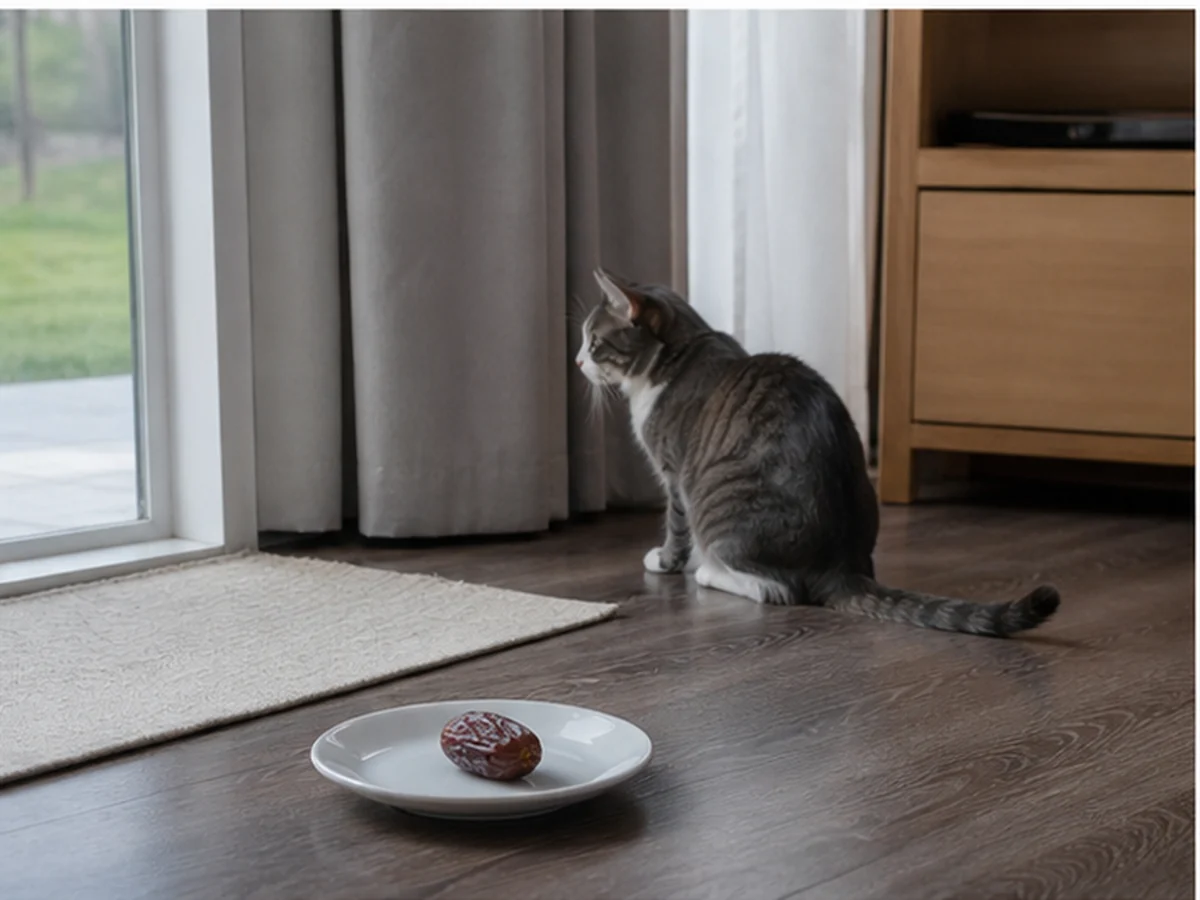
What to do after a date disappears
- Find the pit: count whole dates, pitted pieces, loose stones, and any fragment from the package.
- Name the product: plain fruit, stuffed date, bar, syrup, paste, smoothie, baked good, or supplement blend.
- List companions: report chocolate, coffee, alcohol, raisins, nuts, sweeteners, onion, garlic, cannabis, and raw dough.
- Call promptly: seek advice for a missing pit or pick, a large amount, an unknown recipe, symptoms, or a medically fragile cat.
- Go urgently: choking, breathing trouble, collapse, repeated retching, severe abdominal pain, or seizures cannot wait.
If the event was only one tiny pit-free smear of plain flesh and the healthy cat remains normal, observation may be all that is needed. Return to the ordinary meal and water rather than offering another sticky bite.
Frequently asked questions
Are dates poisonous to cats?
Plain date flesh is not recognized as a classic cat poison, but that does not make it a useful treat. Sugar, fiber, sticky texture, pits, and mixed products explain why it is better left to people.
What if my cat swallowed a date pit?
Call a veterinarian promptly with the pit size, time, cat’s weight, and symptoms. Do not induce vomiting or feed bulky food, because the hard object can choke, injure, or obstruct.
Can cats eat Medjool dates?
Medjool dates are large, sweet, sticky, and pitted only when someone removes the stone. A tiny pit-free accidental taste may be low risk, but the size and calorie density make them especially unsuitable to share.
Can cats eat date syrup?
A trace lick is unlikely to poison most cats, yet the concentrated sugar has no feline benefit. Check blends for chocolate, coffee, alcohol, unusual sweeteners, and other ingredients after a larger exposure.
Bottom line
Dates are better understood as an awkward fruit than a hidden feline toxin. Keep the stone accounted for, respect the sticky texture and concentrated sugar, unpack every stuffed or baked recipe, and choose a cat treat that does not require an archaeological dig through the pantry.