Can Cats Eat Cooked Onions? Why Heat Does Not Make Them Safe
Cats should not eat cooked onions. Frying, roasting, boiling, sautéing, caramelizing, dehydrating, or simmering does not reliably neutralize the compounds that can damage feline red blood cells, and serious signs may emerge days after the meal instead of during the first reassuring hour.
The answer stays no at every cooking temperature
Cooking changes an onion’s flavor, color, softness, water content, and sweetness, but it does not turn the Allium into cat-safe food. A translucent piece from soup and a crisp fried topping belong in the same avoid column.
| Cooked onion form | Where it hides | Why it still matters |
|---|---|---|
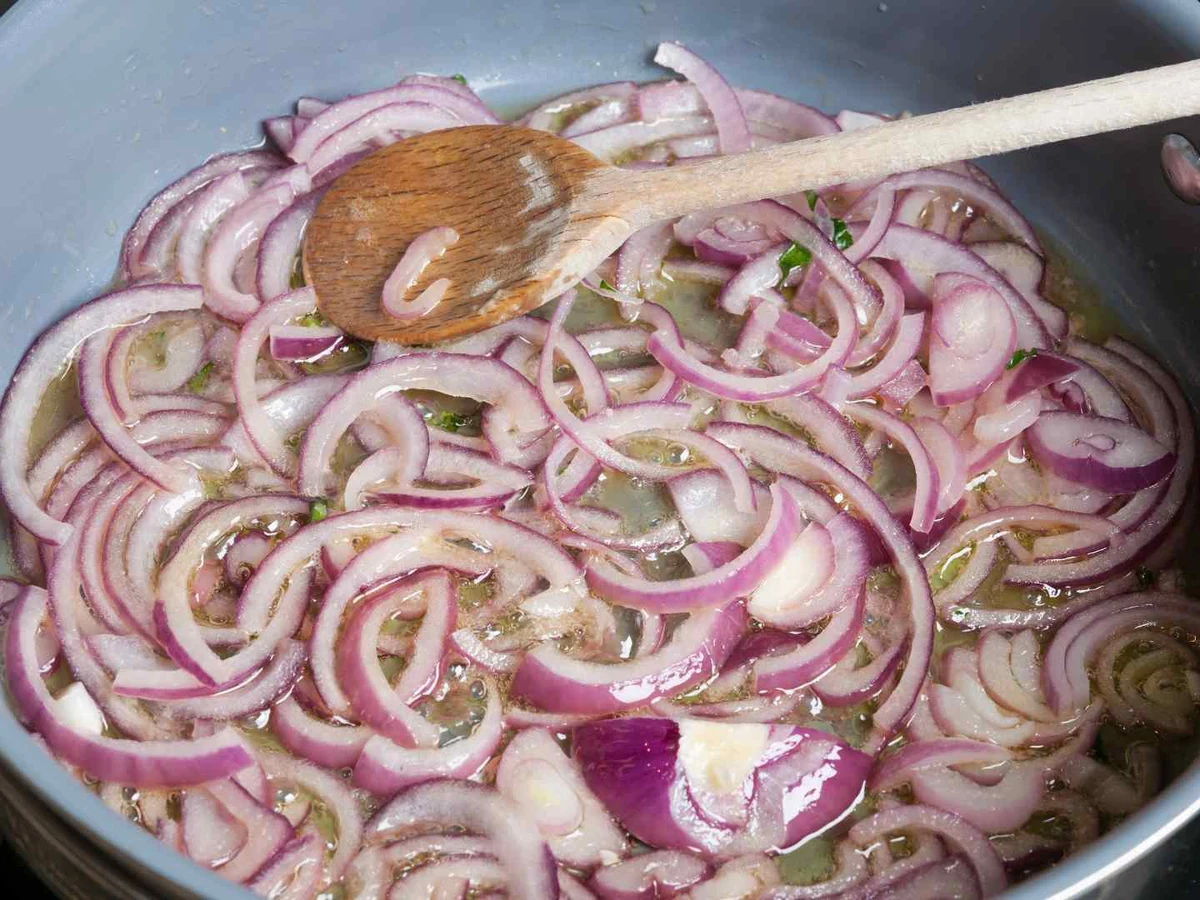
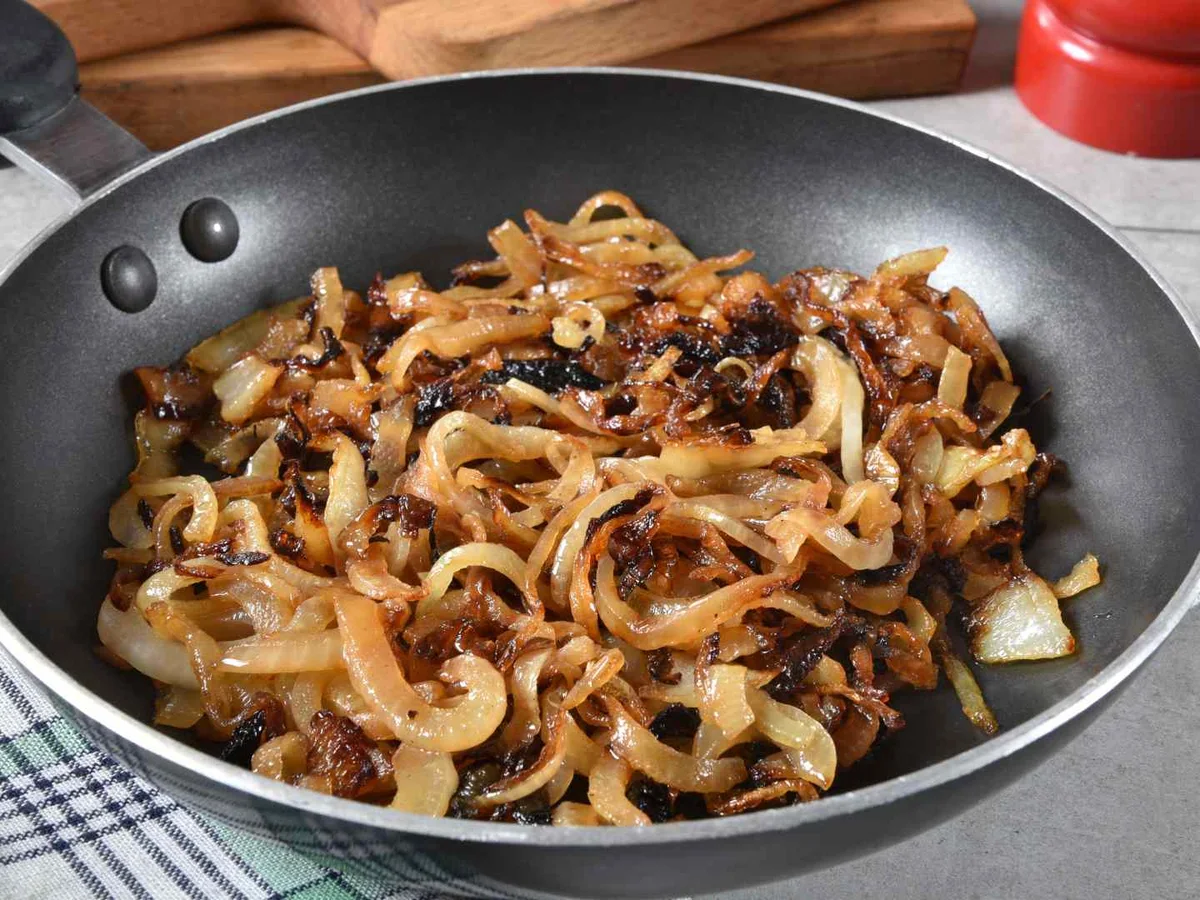
| Sautéed or caramelized | Burgers, quiche, gravy, tart, pierogi | Heat does not remove the oxidative red-cell hazard. |
| Boiled or simmered | Soup, stock, stew, beans, sauce | Onion compounds and small pieces may remain in the liquid. |
| Roasted or grilled | Vegetable trays, kebabs, meat drippings | Softness makes swallowing easier, not safer. |
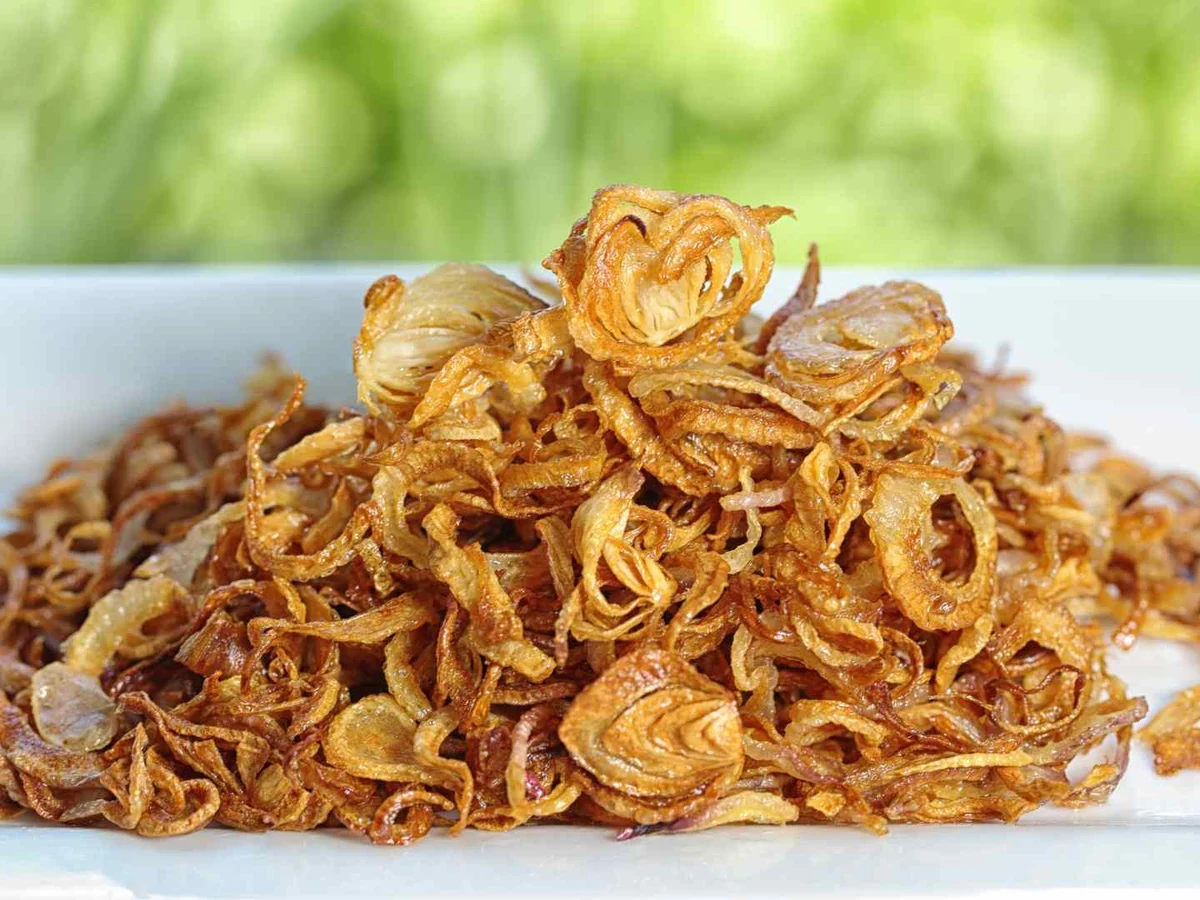
| Fried or battered | Onion rings, crispy topping, blooming onion | The onion remains hazardous while fat, salt, and crumbs add trouble. |
| Powder cooked into food | Seasoning packets, casseroles, rubs, baby food | Dehydrated forms are concentrated and hard to see. |
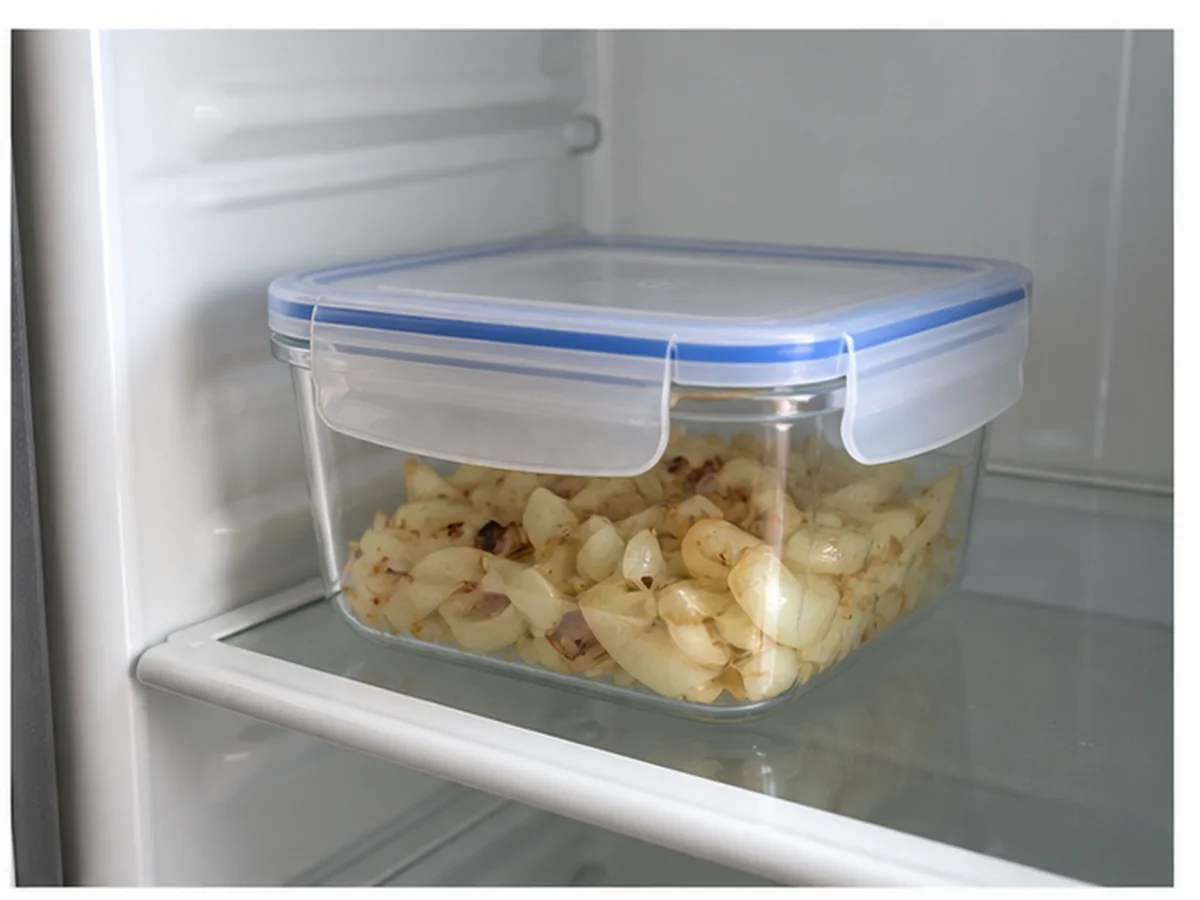
| Removed after cooking | Broth, rice, roast, slow-cooker meals | Picking out pieces cannot reverse flavor and liquid transfer. |
Why cats are unusually vulnerable
Onions contain organosulfur compounds that can cause oxidative injury to red blood cells. Damaged cells may develop Heinz bodies, become fragile, and be removed from circulation, producing hemolytic anemia when injury exceeds the body’s ability to compensate.
The Merck Veterinary Manual identifies cats as the most susceptible species and states that raw, cooked, dehydrated, and granulated Alliums have caused toxicosis. That is the central fact a recipe blog’s “fully cooked” reassurance fails to address.
No responsible guide can promise that one universal teaspoon is safe across every cat and onion product. Concentration, body weight, repeated exposures, health, exact Allium, and the amount hidden in a dish all shape the veterinary assessment.
The site’s broader onion guide for cats covers raw bulbs, skins, roots, garden plants, and powders. This cooked-onion guide focuses on the kitchen problem that heat and a delicious sauce can disguise.
A normal-looking cat may still need a call
Digestive upset can appear earlier, while clinically important red-cell damage may take several days to become obvious. Waiting for dramatic weakness gives a delayed process extra time to progress without examination or a monitoring plan.
Possible signs include vomiting, reduced appetite, unusual sleepiness, weakness, pale or yellow gums, fast breathing, a rapid heart rate, dark or reddish urine, poor exercise tolerance, and collapse. Not every exposed cat develops every sign, and absence of dark urine does not clear the exposure.
Call a veterinarian or animal poison service promptly after a known ingestion, even when your cat is currently playing, eating, and objecting normally. The professional may recommend examination, bloodwork now or later, or home observation based on the actual case.
Cornell’s poisoning guidance advises owners to contact veterinary help and avoid inducing vomiting unless directed. That restraint matters when the meal also contained hot grease, bones, skewers, or caustic seasoning.
Caramelized onions are concentrated, not detoxified
Slow cooking drives off water and develops rich flavor through browning reactions. The finished spoonful can contain onion from a larger starting volume, so its jam-like texture is not evidence of a weaker exposure.
Caramelized onion may also contain butter, oil, salt, sugar, wine, stock, garlic, or herbs. Tell the clinic about the whole recipe, but keep onion at the top of the list rather than blaming only the richness.
Do not scrape onion off a burger and feed the patty to a cat after it has cooked together. Juices and small fragments spread over the surface, and the meat may carry additional salt, cheese, sauce, and fatty drippings.
Soup and stock count even when no chunk is visible
Onion is often simmered for flavor and strained before serving. Removing the solid pieces does not establish that the broth is free of relevant compounds, nor does dilution create a dependable feline serving.
Bouillon cubes, soup bases, gravy granules, and canned stocks may use onion powder along with garlic, salt, yeast extract, and other seasonings. Read the ingredient panel rather than trusting a front label that says chicken, beef, bone, or vegetable.
A cat who needs extra moisture should receive fresh water, an appropriate wet food, or a veterinarian-approved feline broth. Human stock is a recipe product, not simply meat-flavored water.
Onion powder can disappear into almost anything
Dehydration removes water and makes powder easy to distribute through a dish. It appears in seasoning salt, taco mix, ranch powder, meat rub, instant noodles, stuffing, chips, baby food, frozen dinners, and restaurant sauces.
A visible onion cube can be counted, while powder often cannot. Save the label, record the serving amount eaten, and tell the clinic when the formulation uses a proprietary spice blend rather than inventing a dose from appearance.
Garlic frequently accompanies onion and creates the same broad Allium problem. The cat garlic guide explains why roasted cloves and cooked powder deserve attention too.
Meals that commonly conceal cooked onion
- Breakfast: omelets, hash browns, breakfast sausage, quiche, gravy, and seasoned potatoes can carry small cooked pieces or powder.
- Lunch: deli salad, soup, burger toppings, pizza, meatballs, and sandwich spreads may distribute onion beyond anything easily removed.
- Dinner: curry, stew, casserole, stir-fry, pasta sauce, roast drippings, stuffing, and rice mixes frequently begin with sautéed Alliums.
- Snacks: onion dip, flavored chips, cheese spreads, savory pastries, and fried crumbs can leave concentrated residue on plates.
- Prepared foods: baby food, meal kits, restaurant takeout, frozen entrées, and delivery sauces require current ingredient information.
An egg is not the problem in an onion omelet, but separating ingredients after cooking is unreliable. Our egg guide for cats shows how plain fully cooked egg differs from a seasoned skillet meal.
Pizza sauce, meat toppings, crust seasoning, and cheese can all contain Alliums in addition to visible onion. The feline pizza guide offers a whole-slice inventory when the missing food cannot be reduced to one topping.
Repeated small tastes should be added together
A cat who receives gravy every evening may have multiple exposures before anyone notices appetite or energy changing. Tell the veterinarian about the past several days, not only the most recent plate lick.
Shared households create accidental repetition when several people each offer a “tiny” taste. Put one person in charge of treats and keep an ingredient list for any homemade topper approved by the veterinary team.
Cats with existing anemia or illness have less room for avoidable red-cell injury, although a healthy cat is not protected by good baseline bloodwork. Kittens are small, and a modest kitchen portion can represent more food per pound.
What the veterinary team may need
Useful details include the cat’s weight, age, medical history, medicines, onion form, recipe, maximum amount, time, earlier exposures, and current signs. A food scale, remaining container, receipt, or restaurant ingredient sheet can sharpen the estimate.
A clinician may evaluate gum color, heart and breathing rates, hydration, urine, and blood-cell measurements. Follow-up timing matters because early results do not always predict the full delayed effect.
Treatment decisions depend on the case and may include gastrointestinal decontamination when appropriate, supportive care, monitoring, oxygen, or transfusion for severe anemia. This is not a condition to treat with iron supplements or vitamins from a human cabinet.
Do not use these home responses
Hydrogen peroxide is not a safe universal way to make a cat vomit, and salt is especially inappropriate. Do not give charcoal, oil, milk, bread, iron, or a large meal unless a veterinary professional directing the case specifically recommends it.
Do not wait for a home pulse oximeter, gum photograph, or urine color chart to “prove” poisoning. Consumer devices and lighting can mislead, while subtle anemia may require laboratory measurement.
Avoid online dose calculators built for dogs. Cats have their own susceptibility, and the unknown concentration in cooked recipes often makes false precision more dangerous than an honest phone consultation.
A calm action plan
- Stop access: move the dish, drippings, scraps, and trash into a closed area before another cat joins the tasting.
- Preserve evidence: keep labels, recipes, leftovers, seasoning packets, and an estimate of the missing portion.
- Call promptly: report any known cooked onion or onion powder, repeated access, an unknown savory recipe, or new symptoms.
- Use emergency care: collapse, severe weakness, breathing difficulty, very pale gums, seizures, or inability to stand requires immediate transport.
- Track the delay: follow instructions for appetite, energy, breathing, gum color, urine, and scheduled blood testing over the coming days.
Preventing the next exposure
Set aside any veterinarian-approved plain meat before onion enters the pan. Use separate utensils and a clean plate, because dipping into the finished skillet defeats the purpose of preparing an unseasoned piece.
Secure trash that contains onion skins, fried rings, takeout boxes, and greasy paper. Compost should also be inaccessible, since decomposing scraps can add mold, coffee grounds, string, bones, and other hazards.
The ASPCA includes onion and garlic among people foods to avoid for pets. A simple household rule that savory human leftovers never enter the cat bowl is easier to enforce than evaluating every sauce at the table.
Frequently asked questions
Does boiling make onions safe for cats?
No, boiled onion remains an Allium exposure, and the cooking liquid cannot be assumed safe. Contact a veterinarian after ingestion and describe both the amount of solid onion and any broth consumed.
My cat ate one tiny cooked onion piece. Should I call?
Yes, a prompt call is appropriate because cats are particularly susceptible and recipe concentration is difficult to judge. The professional can decide whether monitoring alone is reasonable for that specific cat and amount.
Can cats have food cooked with onion if I remove it?
No, small pieces, powder, juices, and cooking liquid can remain throughout the dish. Prepare a separate plain portion before adding onion instead of trying to undo the seasoning later.
How long after cooked onion can symptoms begin?
Digestive signs may occur earlier, while red-blood-cell injury and anemia can become apparent over several days. Follow the veterinarian’s monitoring schedule even when the cat initially seems completely normal.
Bottom line
Cooked onion is softer and sweeter than raw onion, yet it is not safer for a cat’s red blood cells. Treat heat, caramelization, straining, and piece removal as culinary changes only, then call with the full recipe before a delayed problem has time to hide.