Can Cats Eat Berries? Safe Types, Grapes, Wild Fruit, and Mold
Healthy adult cats can usually sample a tiny piece of washed blueberry, strawberry, raspberry, or blackberry. “Berry” is not a safety category, though, because grapes, dried currants, cherries, elderberries, toxic landscape fruit, mold, pits, sweeteners, and whole round pieces require different decisions.
The berry name game causes real mistakes
In botany, some fruits called berries at the store are not true berries, while grapes and tomatoes are. For pet safety, culinary naming matters less than the exact plant species, fruit part, preparation, and amount.
A berry mix can combine four harmless flesh portions with one ingredient that needs a call. Never approve the bowl from the word berries on the menu.
| Fruit group | Cat-owner approach | Important detail |
|---|---|---|
| Blueberry, strawberry, raspberry, blackberry | One small washed piece can be an occasional taste | Cut or flatten round fruit and remove strawberry leaves. |
| Cranberry | Plain fresh flesh is tart but not a needed treat | Dried products and sauces often add sugar or other fruit. |
| Grape, raisin, Zante currant | Do not offer and call after a meaningful exposure | Dog toxicity is established; feline evidence is limited and no safe cat dose is known. |
| Cherry | Keep pits, stems, leaves, and tree material away | Flesh and cyanogenic plant parts are different exposures. |
| Ripe cultivated elderberry product | Do not improvise a cat serving | Raw or unripe fruit and other plant parts can be hazardous. |
| Wild or ornamental berry | Prevent access until expertly identified | Common names and color are unreliable. |
| Moldy or fermented fruit | Securely discard it | Mycotoxins, alcohol, spoilage, and compost hazards can be urgent. |
Four common berries with the simplest answers
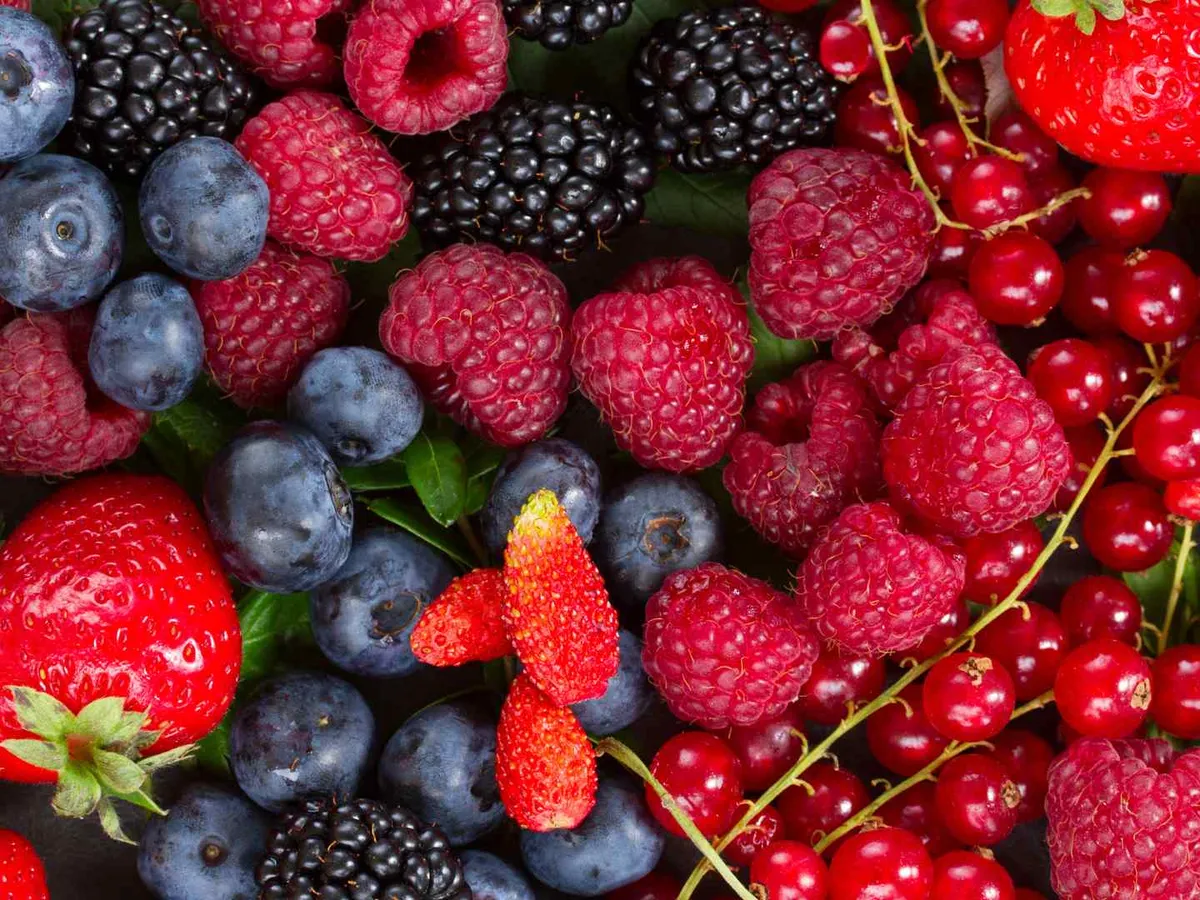
Blueberries, strawberries, raspberries, and blackberries are not recognized as common systemic feline toxins when the ripe flesh is served plain. Individual stomachs can still object to fiber, acidity, seeds, or a sudden unfamiliar food.
The ASPCA lists strawberry as non-toxic to cats, but notes elsewhere in its plant database that eating plant material may cause gastrointestinal upset. Non-toxic is not the same as nutritionally useful or unlimited.
Our individual guides cover blueberries, strawberries, and raspberries in product-level detail. A broad berry guide cannot show every yogurt, jam, leaf, and package issue without knowing the fruit.
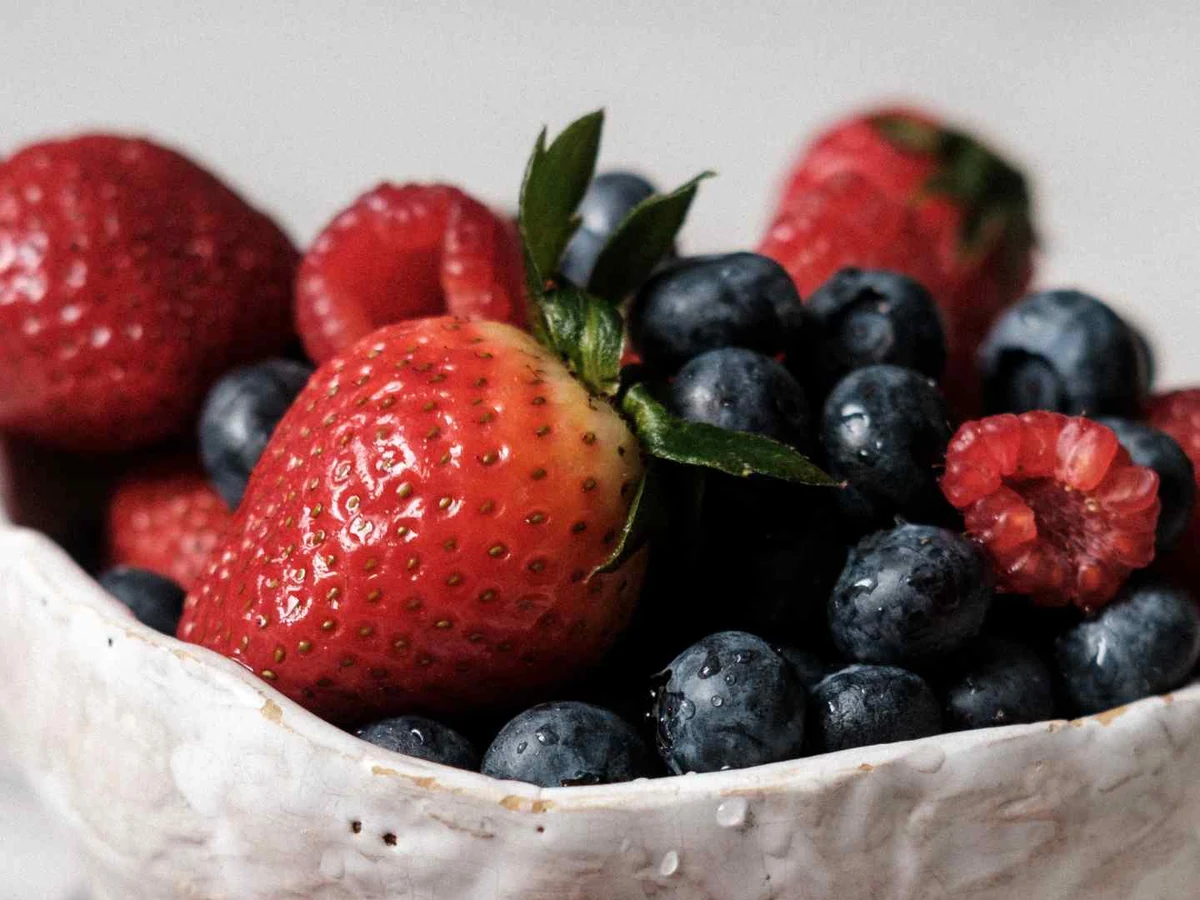
For a first taste, use half a blueberry flattened, a thumbnail-size strawberry slice, or one small segment of raspberry or blackberry. A cat has no minimum berry requirement, so less is always a valid portion.
Wash, cut, and flatten before the cat appears
Rinse fresh berries gently under running water and discard fruit that is bruised, leaking, rotten, or moldy. The FDA recommends plain running water rather than soap or produce wash and advises clean hands and utensils.
Dry the fruit, remove stems and leaves, then cut or crush it into a shape that cannot roll into the airway. Whole frozen blueberries and firm grapes are particularly poor shapes for a cat who gulps.
Keep produce separate from raw meat and seafood preparation areas. Refrigerate pre-cut fruit as directed and do not leave a communal berry dish available for repeated grazing.
Why cats do not need antioxidant marketing
Berries are promoted to people for fiber, vitamins, and plant compounds, but feline nutrition is not human nutrition in a smaller bowl. A cat eating complete food does not need a fruit topping to unlock wellness.
The FDA describes how complete and balanced pet foods establish nutritional adequacy. A handful of fruit, freeze-dried superfood dust, or antioxidant gummy has no equivalent feline feeding claim.
Fruit calories can also crowd a small treat budget, and acidic or fibrous extras may worsen vomiting or loose stool. Use part of the measured daily cat food when the goal is simply to share a pleasant moment.
Grapes and raisins demand species-specific honesty
Grapes and raisins have a well-established association with acute kidney injury in dogs, with unpredictable sensitivity. Comparable feline evidence is sparse, and a reliable non-toxic dose for cats has not been established.
That uncertainty supports avoiding grapes and contacting a veterinarian about a meaningful ingestion. It does not support copying a canine dose threshold, claiming every feline grape causes kidney failure, or promising that cats are immune.
Save the variety, seed status, fresh or dried form, estimated amount, time, and cat’s weight. Our grape and raisin guide for cats keeps the proven canine evidence separate from the limited feline record.
Watch for vomiting, low appetite, lethargy, thirst changes, or urination changes while following the clinic’s instructions. Do not wait for those signs before making the initial call.
Currants can mean two unrelated fruits
Zante currants are small dried grapes and belong in the grape-and-raisin conversation. Red, black, and white currants in the genus Ribes are different fruits despite sharing the same grocery word.
A package that says currant needs its ingredient identity, not a guess based on size. Baking mixes, granola, scones, and trail mix often use Zante currants, while jams may use Ribes fruit plus large amounts of sugar.
Neither type is a necessary feline snack. Call about dried-grape currants and evaluate other currant products by exact species, recipe, quantity, and symptoms.
Cherries bring pits, stems, and leaves
A tiny piece of ripe cherry flesh is different from a crushed pit or chewed branch. Prunus plant seeds and leaves can contain cyanogenic compounds, while pits also present choking and obstruction hazards.
Merck explains that cyanogenic substances are generally housed in seeds and leaves and are released when plant material is compromised by chewing or grinding. It also notes that severe toxicity from ordinary purchased fruit seeds is rare, which prevents unnecessary panic over every intact pit.
A cracked or chewed cherry pit, multiple pits, tree-part ingestion, breathing changes, bright or blue gums, weakness, tremors, or collapse deserves immediate veterinary guidance. An intact swallowed pit can still obstruct even when cyanide release is unlikely.
The cat cherry guide covers maraschino cherries, pie filling, tree access, and pit triage. Do not induce vomiting after a hard pit exposure.
Elderberry is not a home remedy for cats
Elderberry plants contain compounds that can release cyanide, with concern centered on unripe fruit, seeds, leaves, stems, and improperly prepared material. Commercial cooked products for people still add sugar, spices, alcohol, or other botanicals.
There is no evidence-based reason to give a cat elderberry syrup for immunity, colds, or inflammation. Human supplement directions cannot be converted into a feline dose.
Call with the botanical name, plant part, ripeness, preparation, product label, and amount after an exposure. Wild elderberry identification should come from a qualified local expert, not an image match made while the cat is vomiting.
Wild berries and ornamental plants stay unidentified until proven otherwise
Red, blue, black, and white fruit appears on yew, holly, pokeweed, nightshade, mistletoe, juniper, privet, and many other landscape plants. Color does not predict toxicity, and birds eating a berry does not certify it for mammals.
Photograph the whole plant, including leaves, bark, growth habit, fruit clusters, and location. Bring a sample in a sealed container only if it can be collected safely and without delaying care.
Block access to fallen fruit and pruning waste. Berries on florist arrangements, wreaths, and holiday greenery may also be wired, painted, preserved, or treated with chemicals.
Drooling, vomiting, diarrhea, weakness, abnormal heart rate, tremors, seizures, breathing difficulty, or collapse after unknown plant fruit requires urgent evaluation. One plant app result is not enough to stay home.
Mold and fermentation change the hazard
Soft berries spoil quickly, and mold may extend beyond the fuzzy patch a person can see. Compost, forgotten lunch containers, fallen fruit, and leaking refrigerator boxes can also ferment or grow toxin-producing molds.
Mold toxins may cause agitation, tremors, incoordination, vomiting, elevated temperature, or seizures. Fermentation can introduce alcohol, creating weakness, depression, low body temperature, and respiratory problems.
Securely discard the entire affected container and keep a sample or photograph if the cat ate it. Do not wash mold from soft fruit and offer the remaining pieces.
Frozen and freeze-dried berries
A hard frozen berry can be swallowed like a marble and may hurt sensitive teeth. Thaw and flatten a tiny plain piece if the veterinarian has no objection to fruit.
Freeze-dried berries are light, crisp, and concentrated by water removal. Powders can become airborne, coat fur, and appear in supplement blends with caffeine, sweeteners, or multiple botanicals.
Prevent grooming after a major powder spill and seek help for coughing, wheezing, eye pain, tremors, or a large ingestion. “One ingredient” still does not make a bag complete cat nutrition.
Jam, pie, yogurt, smoothies, and sauces
Jam and preserves concentrate fruit with sugar and may combine grapes, cherries, or alternative sweeteners. Sugar-free labeling calls for a sweetener review, but severe xylitol toxicity established in dogs should not be automatically assigned to cats.
Pie adds pastry, butter, sugar, spices, raw batter, and sometimes alcohol, while yogurt brings dairy tolerance and sweetener issues. Smoothies can contain coffee, chocolate, protein powders, cannabis, grapes, or supplements.
Cranberry sauce and dried cranberry snacks often contain sugar, apple juice, oils, or mixed dried fruit. The berry named on the front may be a minority ingredient in the product the cat actually ate.
Cats who should skip berry trials
Kittens, cats with diabetes, chronic digestive disease, food allergy, swallowing problems, obesity, or a prescription diet should remain with approved foods. Any fruit can disrupt an elimination trial even when it is not toxic.
A cat with sudden appetite loss should not be coaxed indefinitely with berry mixtures. Feline anorexia needs timely veterinary attention because prolonged inadequate intake can cause serious complications.
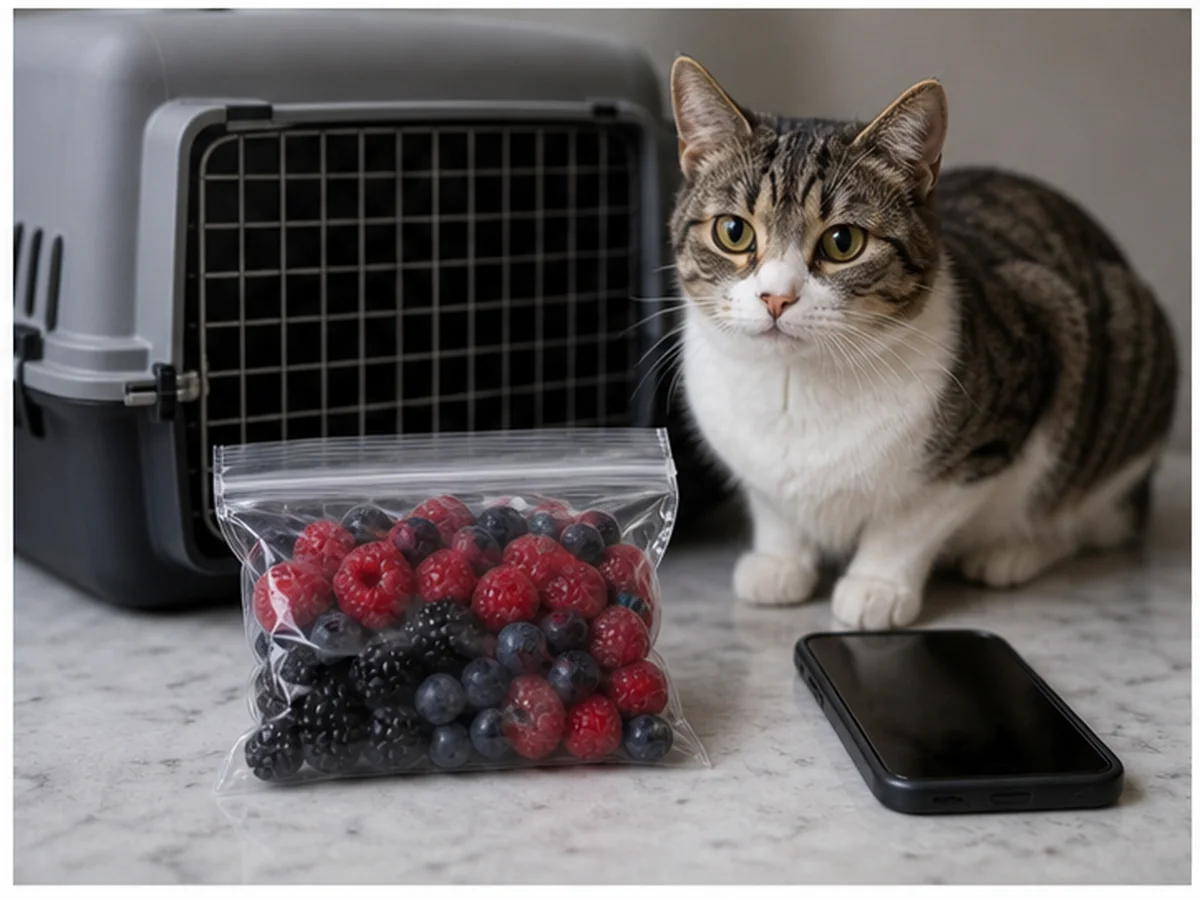
The berry incident checklist
- Name the fruit precisely: include botanical identity for wild plants and distinguish Zante currants from Ribes fruit.
- Identify the part: flesh, pit, seed, stem, leaf, vine, branch, powder, juice, dried fruit, or moldy waste.
- Reconstruct the product: list sugar, chocolate, caffeine, dairy, alcohol, sweeteners, granola, and supplements.
- Measure the likely maximum: note fruit count, missing package volume, time, cat’s weight, and repeated access.
- Call for the important cases: grapes, dried currants, crushed pits, elderberry plant parts, unknown wild fruit, mold, foreign objects, or symptoms.
Do not induce vomiting or give milk, oil, charcoal, salt, or another fruit as a household antidote. A veterinary professional can decide whether the particular plant, amount, and timing require treatment.
Frequently asked questions
What berries can cats eat?
Tiny plain pieces of washed blueberry, strawberry, raspberry, or blackberry are generally low risk for healthy adults. Remove leaves, cut round fruit, and keep the normal cat food as the meal.
Are all wild berries dangerous to cats?
No, but owners cannot safely classify an unknown plant by fruit color or common name. Prevent eating and obtain expert identification before offering reassurance.
Can cats eat dried berries?
Dried fruit is concentrated, chewy, and often sweetened, and some “currants” are dried grapes. Check the exact fruit and recipe, then choose a softer feline treat instead.
What if my cat ate a moldy berry?
Call promptly with the amount, time, fruit, storage history, and any symptoms. Tremors, seizures, agitation, severe weakness, repeated vomiting, or breathing changes requires emergency care.
Bottom line
A berry is safe only after you know which berry, which part, and which recipe. Keep common ripe berries tiny and plain, treat grapes with feline-specific uncertainty, respect pits and wild plants, discard mold, and never let a purple smoothie answer a botanical question.