Can Cats Eat French Fries? Salt, Seasonings, Potatoes, and Portions
A healthy adult cat who steals one plain, fully cooked French fry will probably be fine. Fries are still poor cat treats because they add fat, salt, starch, and calories without the balanced animal-source nutrition cats need, while flavored fries and dipping sauces can introduce genuinely dangerous ingredients.
What to do after the great fry theft
Take away the remaining food, offer fresh water, and check exactly what was eaten. One small plain fry usually calls for observation, while a large amount, a heavily seasoned product, an unknown restaurant recipe, or swallowed packaging deserves a veterinary call.
- Plain cooked fry, tiny amount: return to the normal cat diet and watch for stomach upset.
- Garlic or onion seasoning: call your veterinarian or a pet poison service promptly because Allium ingredients can damage feline red blood cells.
- Green, sprouted, or raw potato pieces: call for advice because glycoalkaloids are more concerning than a normal cooked potato interior.
- Repeated vomiting, marked lethargy, tremors, seizures, trouble breathing, collapse, or severe weakness: seek urgent veterinary care.
- Wrapper, foil, ketchup packet, wooden fork, or part of the carton missing: contact a clinic because obstruction and injury can be more important than the fry.
Do not induce vomiting or give salt, hydrogen peroxide, oil, milk, or another home remedy. Cats need species-appropriate veterinary instructions, and improvising can turn a snack problem into an emergency.
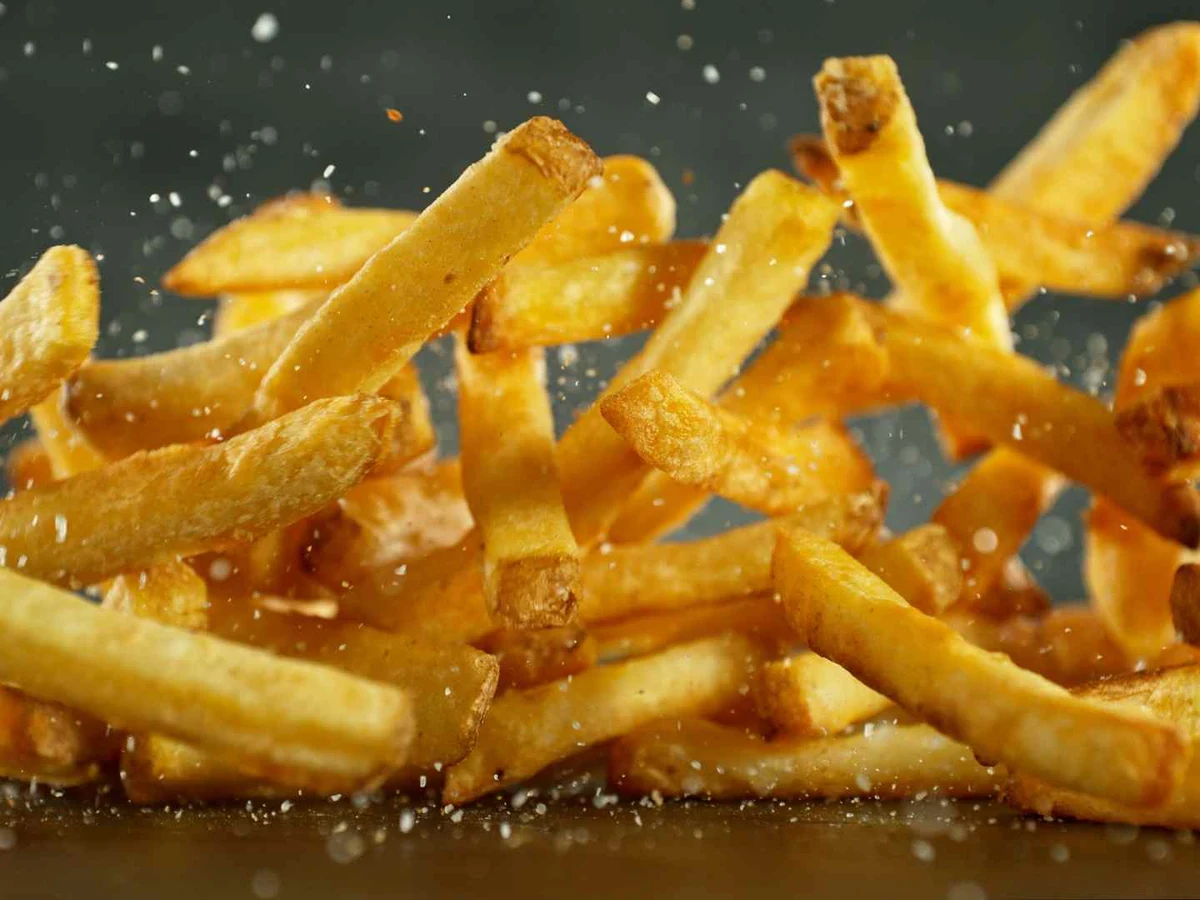
Are French fries toxic to cats?
A normal fry made from ripe potato, cooked oil, and a modest amount of salt is not classed as a feline poison in the same way as garlic, onion, or chocolate. The more common result of a small theft is no symptom or brief digestive upset.
That does not make fries healthy or useful. A cat has limited daily calorie room, and a greasy potato stick spends some of that budget without providing a complete feline nutrient profile.
Risk changes with the recipe, amount, cat, and surrounding clutter. A single unsalted oven fry and a basket of loaded garlic-parmesan fries are not the same exposure, even if both arrived under the word fries.
Why fries are a nutritional mismatch
Cats are obligate carnivores with species-specific needs for protein, amino acids, fatty acids, vitamins, and minerals. Cooked potato can provide energy, but French fries are not complete and balanced cat food and do not become more feline because they are cut into excellent batting-stick shapes.
The Cornell Feline Health Center’s feeding guide recommends complete and balanced food as the dietary foundation and says treats should remain occasional. Its practical rule keeps treats to no more than roughly 10 to 15 percent of daily calories.
For a small cat, one restaurant fry can be a noticeable treat even though it looks trivial on a human plate. The exact calorie count varies by size, oil, coating, and restaurant, which is why promising a universal safe number of fries would be nonsense with a side of ketchup.
Salt: a concern, but context matters
French fries can contain plenty of sodium relative to their size, especially after a second shower of finishing salt or powdered seasoning. A lick or one lightly salted fry is unlikely to cause salt poisoning in a healthy cat with water available, but a large salty meal or concentrated salt exposure deserves prompt advice.
The Merck Veterinary Manual review of salt toxicosis explains that excess sodium chloride can cause salivation, thirst, vomiting, diarrhea, neurologic signs, seizures, and other serious effects. Limited access to water can increase concern, but owners should not force water into a cat’s mouth because aspiration is possible.
Extra sodium also may not fit a therapeutic plan for a cat with heart, kidney, or other medical disease. If your cat eats a prescription diet, ask the prescribing clinic whether a fry-sized detour changes today’s plan.
Fat, oil, and the stomach’s opinion
Frying raises calorie density and leaves a coating of oil that can upset some cats’ stomachs. Vomiting, soft stool, diarrhea, gas, or reduced appetite can follow an unfamiliar rich snack, particularly when a cat eats several fries quickly.
It is too simple to claim that one fry causes pancreatitis, because feline pancreatitis has multiple possible contributors and often no single identifiable cause. A cat with a history of pancreatitis or fat-sensitive digestive disease should still avoid greasy extras and get case-specific advice after a larger exposure.
Used cooking oil can also carry crumbs and seasonings from other foods. A fry may therefore pick up onion, garlic, spicy coating, fish allergens, or other restaurant ingredients not listed on the menu description.
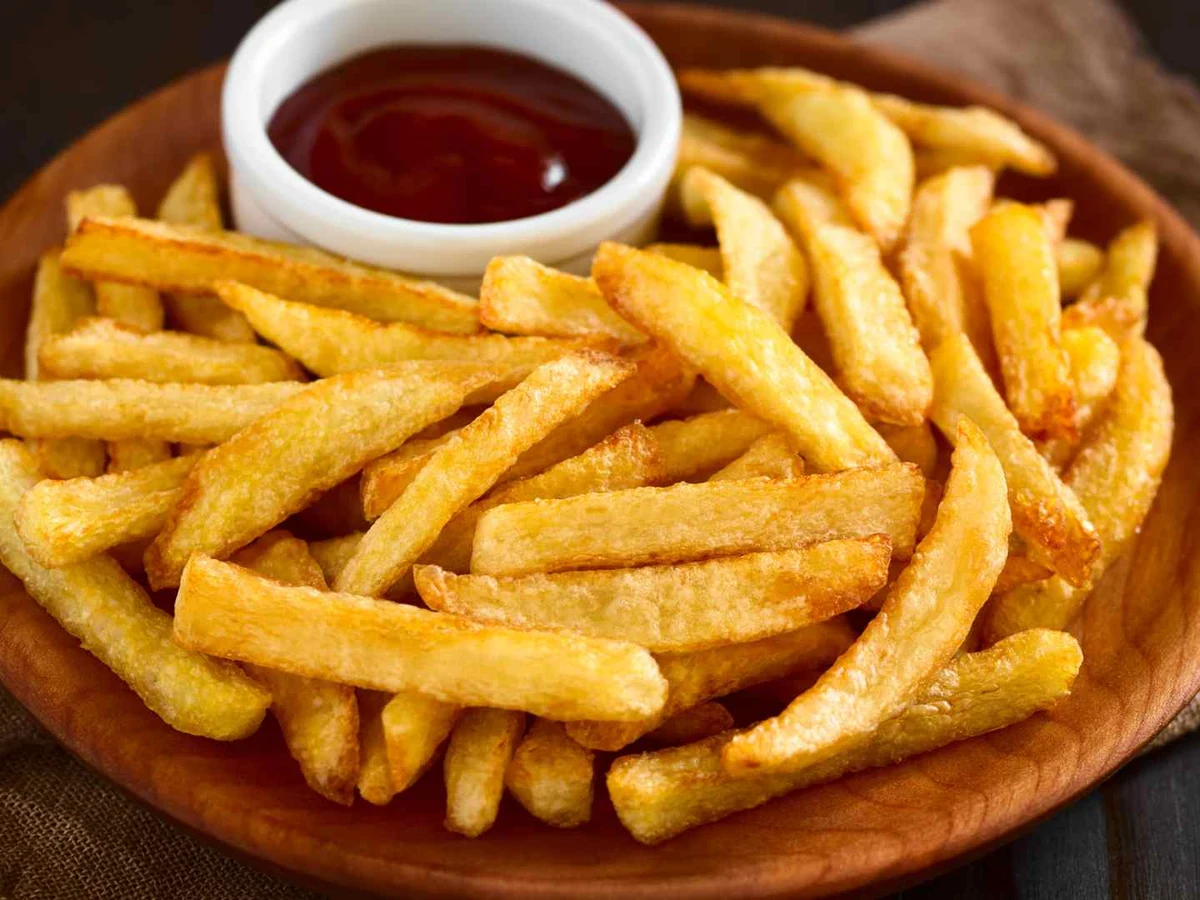
Seasonings are where a silly snack gets serious
Plain salt is only one possibility. Garlic powder, onion powder, chive seasoning, ranch dust, barbecue seasoning, bouillon, cheese powder, and spice blends can cling to fries or hide in coatings.
Garlic and onion are Allium plants, and raw, cooked, dehydrated, and powdered forms can cause oxidative red blood cell damage in cats. The Merck Allium toxicosis review notes that clinical anemia can be delayed for days, so a normal-looking cat immediately after seasoned fries is not automatically cleared.
Call with the ingredient panel or restaurant information rather than waiting to identify pale gums or dark urine. Our pizza safety guide and salami safety guide cover similar combinations of Allium seasoning, salt, fat, and packaging.
Dipping sauces need their own ingredient check
- Ketchup: often adds sugar and salt, while specialty versions may contain onion, garlic, or nonstandard sweeteners.
- Ranch and aioli: commonly contain garlic or onion plus fat, dairy, egg, and plenty of seasoning.
- Cheese sauce: can add sodium, fat, dairy, spices, and a hot temperature that burns the mouth.
- Barbecue sauce: recipes vary widely and may contain onion, garlic, concentrated sweeteners, raisins, alcohol, or spicy ingredients.
- Hot sauce: can cause oral and gastrointestinal irritation even when its ingredients are not systemically toxic.
- Gravy: may contain onion or garlic powder, bouillon, concentrated salt, and rich drippings.
Do not rely on a familiar brand name because limited editions, restaurant recipes, and regional formulas change. Photograph both sides of the packet before throwing it away if you may need veterinary advice.
Cooked potato versus green or sprouted potato
The pale interior of a properly stored, fully cooked potato is not the same as green skin, sprouts, leaves, stems, or an uncooked green tuber. Green and sprouted plant material can contain higher concentrations of glycoalkaloids such as solanine and chaconine.
Commercial fries are normally made from prepared potatoes, so green-potato poisoning is not the leading concern after one ordinary restaurant fry. Home-cut fries made from green or heavily sprouted potatoes deserve a different call, and the Pet Poison Helpline lists green potato as toxic to cats.
Possible glycoalkaloid effects include gastrointestinal and neurologic signs, but the veterinarian should interpret the exact exposure. Do not taste-test a bitter or green potato yourself and assume that removing the skin makes the rest suitable for the cat.
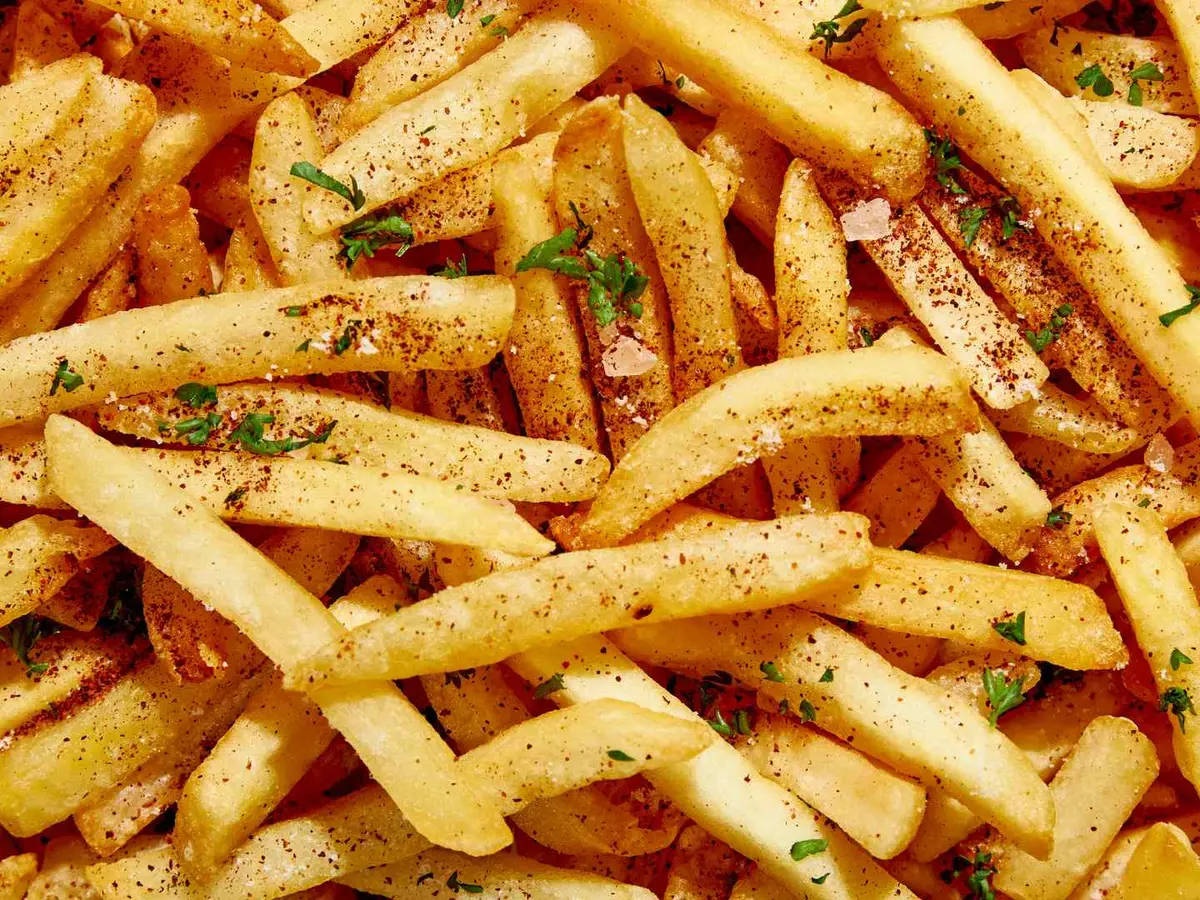
Raw, frozen, oven-baked, and air-fried versions
An unseasoned oven-baked or air-fried potato strip may contain less oil than a deep-fried restaurant fry, but it is still an extra rather than balanced cat food. The safest version is fully cooked, plain, not green, cooled, and offered only as a tiny occasional taste to a healthy cat.
Raw potato pieces are harder to chew and digest, while green or sprouted areas raise glycoalkaloid concerns. Frozen fries may be hard enough to injure teeth or lodge in the throat, and many arrive preseasoned even when they look plain.
A very hot fry can burn the lips, tongue, and mouth. Let stolen food cool while you identify it, but do not offer another one simply because the first has reached a cat-approved temperature.
Choking and packaging can outrank nutrition
A long crisp fry can be gulped rather than chewed, especially by a cat competing with another pet. Coughing, gagging, pawing at the mouth, noisy breathing, or breathing difficulty requires immediate attention, with breathing trouble treated as an emergency.
Greasy paper, foil, sauce packets, toothpicks, skewers, wooden forks, plastic film, and bits of carton may smell just as interesting as the food. Swallowed foreign material can cut tissue or obstruct the digestive tract even when the fry itself would have passed quietly.
Call for repeated vomiting, a painful or swollen abdomen, inability to keep water down, refusal to eat, straining, or marked lethargy after packaging disappears. Do not pull string, plastic, or another object from the mouth or rectum because it may be anchored internally.
Which cats need a stricter no-fry policy?
Kittens have small calorie budgets and need dependable growth nutrition, so fries should not displace kitten food. Senior cats and cats with diabetes, obesity, kidney disease, heart disease, gastrointestinal disease, food allergy, or a prescription diet also need more individualized boundaries.
A cat who repeatedly hunts fries may simply enjoy the smell, warmth, salt, or exciting crinkle of the bag. Persistent appetite changes, scavenging, weight loss, increased thirst, or refusal of normal food should prompt a veterinary visit rather than a steady supply of people food.
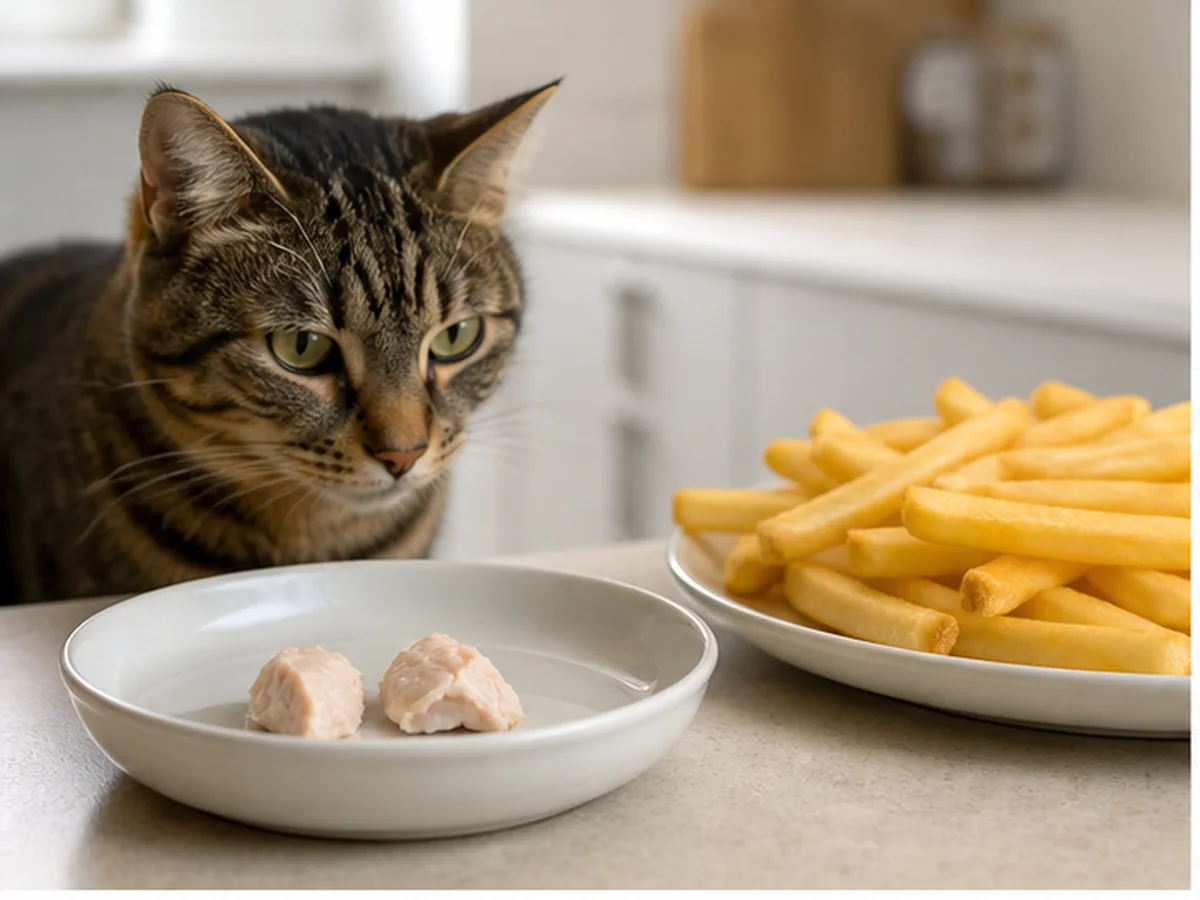
Better tiny treats
The easiest low-drama option is to reserve a few pieces of the cat’s regular complete food and present them as treats. The cat receives a snack, you keep the nutrient math intact, and nobody has to negotiate custody of a drive-through carton.
For many healthy cats, a crumb of plain, fully cooked egg or unseasoned cooked meat can be an occasional extra if the veterinarian has no objection. See our guides to boiled eggs for cats and other egg preparations before serving.
Do not season the cat’s portion, and avoid bones, skin, gravy, deli meat, raw meat, and foods cooked with onion or garlic. Treats should stay small enough that complete food remains the actual diet.
Frequently asked questions
Can cats eat one McDonald’s fry?
One plain fry is unlikely to poison a healthy adult cat, although restaurant recipes and salt levels can change. Do not make it a habit, and check for seasoning, sauce, excessive salt, and missing packaging.
Can cats eat unsalted fries?
A tiny piece of plain, fully cooked, unsalted, non-green potato is lower risk than a seasoned restaurant fry. It remains a starchy extra with no reason to replace complete cat food.
Can kittens eat French fries?
Skip them. Kittens need complete growth nutrition, have less room for nutritionally empty extras, and may choke on a fry that looks small to a human.
Should I call the vet if my cat ate fries?
Call for a large amount, unknown seasoning, garlic or onion, green potato, swallowed packaging, significant medical disease, or concerning symptoms. One small plain fry in a healthy adult usually can be monitored at home, but your veterinary team can account for details an article cannot.
The bottom line
One plain cooked French fry is usually a minor dietary detour for a healthy adult cat, not a poisoning crisis. Fries still make poor treats, so check the seasoning and packaging, call when the recipe or symptoms raise concern, and spend the cat’s snack budget on complete food or a more useful tiny treat.