Can Cats Eat Grass? Safe Cat Grass, Lawn Hazards, and When to Worry
Many cats can nibble clean, untreated cat grass safely, but outdoor lawn grass is not automatically safe. Pesticides, fertilizer, weed killer, slug bait, animal waste, mold, sharp seed heads, toxic lookalikes, and long stringy blades can turn ordinary grazing into a poisoning, infection, or foreign-body problem.
If your cat just ate grass
Identify where it grew and what was applied nearby. A few bites of known indoor oat, wheat, barley, or rye grass usually call for observation, while treated lawn, unknown plants, foxtails, repeated vomiting, or a visible blade stuck in the throat deserves a veterinary call.
- Clean known cat grass: monitor for gagging, vomiting, diarrhea, appetite change, or repeated chewing.
- Treated lawn or unknown plant: save the product label or photograph the plant and call promptly.
- String or blade hanging from the mouth or rectum: do not pull it because material may be anchored internally.
- Breathing difficulty, collapse, severe weakness, repeated vomiting, tremors, or seizures: seek emergency care.
Do not induce vomiting or give milk, oil, salt, or hydrogen peroxide. Move the cat away from the patch and gather accurate plant and chemical information.
Why cats eat grass
Grass chewing can be a normal exploratory and feeding behavior rather than proof of illness. Cats may enjoy the texture, seek plant material, respond to scent, or turn moving blades into a snackable toy.
The behavior is often described as a way to force vomiting, clear hairballs, obtain folate, or self-medicate, but those explanations are not established for every cat. Some cats graze without vomiting, while others vomit for unrelated medical reasons.
Cornell’s feline behavior guidance says indoor cats may chew plants as part of investigation and suggests oat grass, catnip, or catmint as alternatives to houseplants. It also emphasizes blocking access to unsafe plants.
What counts as cat grass?
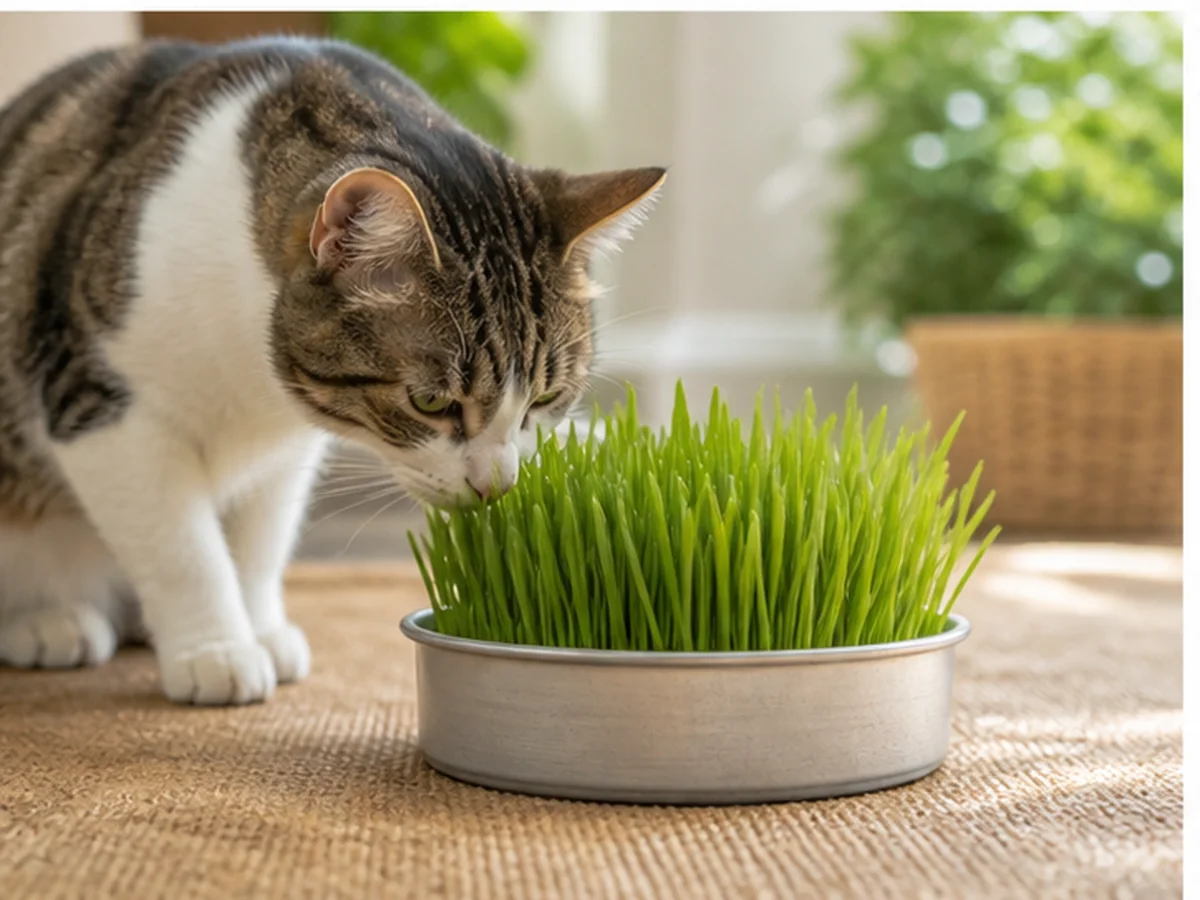
Commercial cat-grass kits commonly contain sprouted oat, wheat, barley, rye, or a blend. The phrase cat grass describes the intended use, not one botanical species, so read the seed label.
Buy seed intended for growing edible pet grass rather than lawn seed, which may be treated with fungicides or other chemicals. Use clean potting medium without fertilizer pellets, insecticide, or moisture-retaining crystals accessible to the cat.
Keep the package and lot code until the crop is finished. If the grass molds, smells sour, or attracts gnats, discard the entire pot where the cat cannot raid it.
Lawn chemicals change the answer
Herbicides, insecticides, fungicides, fertilizers, moss control, slug bait, rodenticides, and ice melt can contaminate grass or paws. A cat may swallow residue directly while grazing or later during grooming.
Cornell’s common cat hazards guide identifies pesticides, fertilizers, weed killers, and molluscicides as household and garden risks. Follow the exact product label for reentry, not a generic waiting period.
After suspected exposure, photograph the front label, active ingredients, EPA registration number when present, mixing instructions, application time, and area. Call with the product in hand because the word lawn treatment cannot guide therapy.
Fertilizer is not one substance
Simple fertilizers may irritate the stomach, while products combined with insecticide, herbicide, iron, bone meal, blood meal, or other additives can create different risks. Granules can stick between toes and be swallowed during grooming.
Keep cats indoors during application and until the label’s reentry requirements are satisfied. Store bags, spreaders, and scoops in closed storage, then clean spills promptly.
Animal waste, parasites, and microbes
Outdoor grass can carry feces, urine, soil organisms, parasites, and residues from wildlife or other pets. Grass near sidewalks, dog parks, standing water, compost, and treated public landscaping deserves particular caution.
A cat who develops persistent vomiting, diarrhea, blood in stool, fever, appetite loss, or lethargy after outdoor grazing needs veterinary assessment. Mention outdoor access and the exact location because exposure history helps narrow infectious and toxic causes.
Foxtails and sharp seed heads
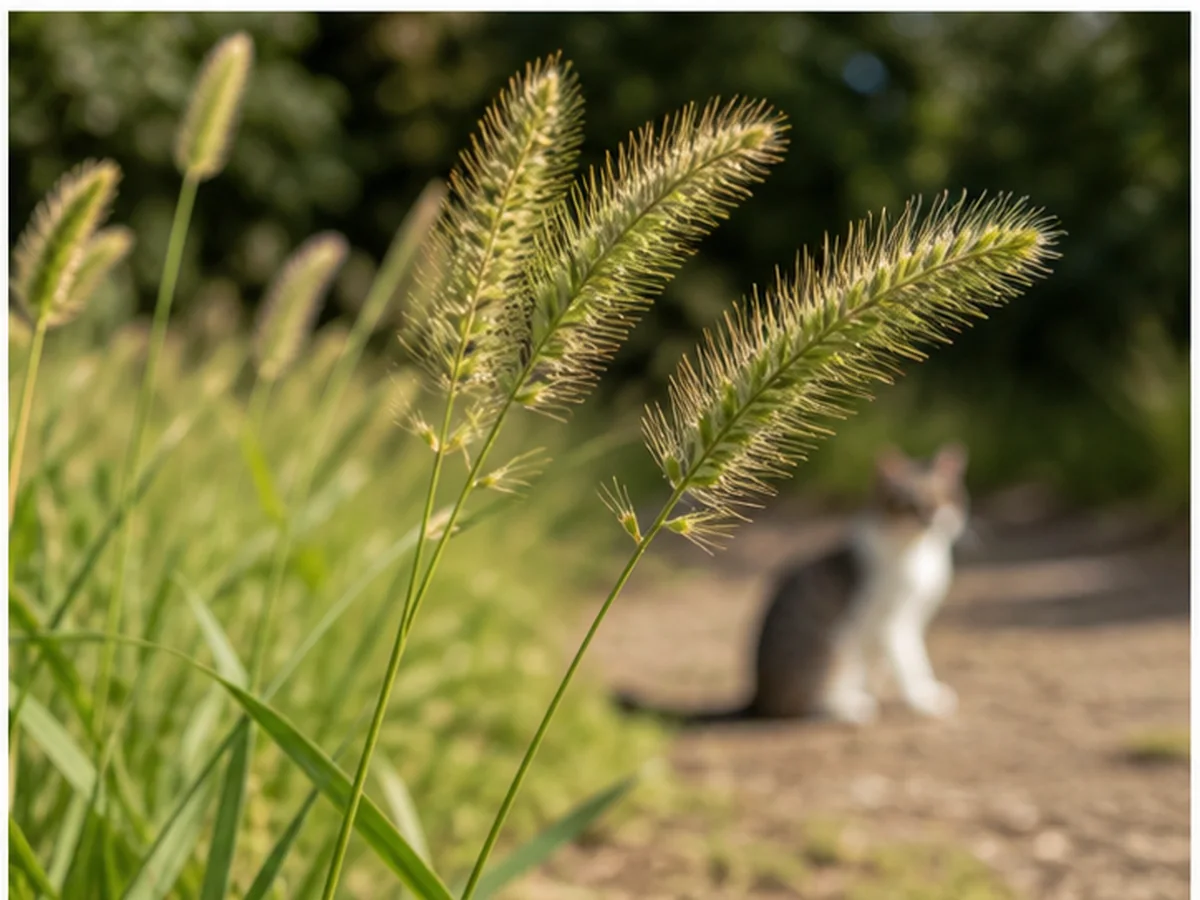
Foxtail awns and similar barbed grass seeds can migrate forward through tissue instead of backing out. They may lodge in the nose, mouth, throat, eyes, ears, paws, or skin and cause serious injury.
Sudden sneezing, gagging, coughing, head shaking, pawing at the face, drooling, eye pain, swelling, or a draining skin tract deserves prompt care. Do not dig deeply for an awn or pull material from the throat.
Inspect supervised cats after time in dry grassy areas, including between toes and around eyes, ears, and coat. Keeping seed heads trimmed from enclosed cat spaces is safer than letting the cat conduct fieldwork.
Long blades can act like string
A long tough blade may lodge behind the soft palate, trigger gagging, or pass as a linear foreign body. Grass can also wrap around the tongue or become caught with string, tinsel, or hair.
Call for repeated gagging, swallowing, vomiting, inability to eat, drooling, mouth pawing, abdominal pain, or lethargy. Never pull a blade or string hanging from the mouth or rectum because internal tension can damage tissue.
The Merck introduction to feline digestive disorders notes that swallowed foreign objects can cause obstruction and that continuing vomiting or diarrhea can lead to dehydration. A persistent symptom deserves more than a fresh grass pot.
Grass versus toxic houseplants
A narrow green leaf is not automatically grass, and a product sold as a decorative grass may be a different plant. Lilies are particularly dangerous to cats, while palms, sedges, bulbs, and ornamentals vary widely.
Our guides to cilantro and cats, catnip forms and enrichment, and culinary herb risks show why the exact plant and finished product matter. Use the ASPCA’s toxic and non-toxic plant database to verify the exact botanical name. When identification is uncertain, remove access and call instead of testing palatability.
Do not rely on a plant-scanning application as the only identification after an exposure. Clear photos of leaves, stems, flowers, roots, pot label, and growing location can help a professional.
Does grass help hairballs?
Grass is not a dependable hairball treatment, and frequent vomiting should not be normalized as successful plant medicine. Hairballs can be influenced by grooming, coat length, skin disease, parasites, motility, and other health factors.
Contact a veterinarian when hairballs are frequent, vomiting occurs without hair, appetite or weight changes, constipation develops, or the cat strains. Brushing and an evidence-based diet or treatment plan are safer than encouraging unlimited grazing.
Repeated grass eating can be a clue
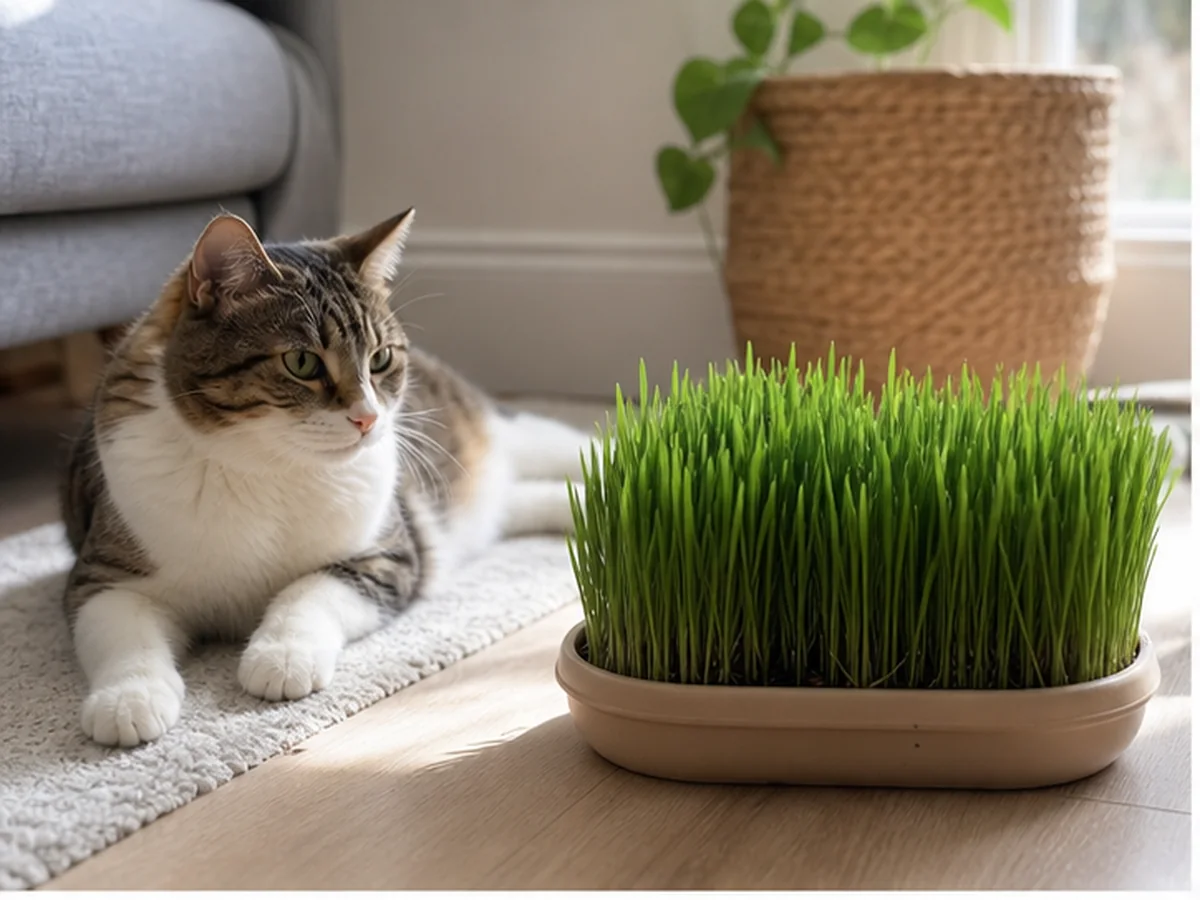
Occasional nibbling may be normal, while a sudden increase can accompany nausea, dental pain, dietary change, boredom, stress, or gastrointestinal disease. Context matters more than one dramatic chomp.
Track frequency, vomiting, stool, appetite, weight, water intake, medications, diet, and access to plants. Video can help document the behavior, but do not delay care for a cat who cannot keep food down or seems painful.
How to grow safer cat grass
- Use pet-intended edible seed with a clear species label.
- Choose clean soil without pesticides or loose fertilizer pellets.
- Rinse equipment, follow growing directions, and prevent standing water.
- Offer short tender blades and trim before seed heads form.
- Discard the pot at the first sign of mold, slime, sour odor, or chemical contamination.
- Supervise early sessions and remove the pot if the cat uproots soil or gulps long clumps.
Place the pot away from toxic plants so the safe option does not become a staircase to the unsafe one. Cat logic respects convenience more consistently than signage.
Keeping the grass station clean
Place the pot on a washable tray away from food, water, and litter, then remove loose soil and clipped blades daily. Shared damp soil can harbor mold and insects, while stagnant tray water invites a different kind of biology project.
Use clean scissors reserved for the grass and wash the tray between crops. Do not spray the pot with household cleaner, essential oil, insecticide, or homemade deterrent while it remains accessible.
Rotate or replace a flattened crop instead of letting roots decay in wet soil. If several cats use one pot, supervise enough to notice guarding, gulping, soil digging, or one cat monopolizing the safest blades.
When grass appears in vomit or stool
A small blade may pass without trouble, but repeated grass-filled vomit, straining, blood, abdominal pain, or appetite loss needs veterinary assessment. Photograph what you see rather than pulling fibrous material.
Note whether vomiting happens immediately after grazing or at unrelated times, and whether hair, food, foam, blood, or foreign material is present. This timing helps the veterinarian separate oral irritation, rapid eating, digestive disease, and obstruction.
Clean vomit with gloves and keep other pets away until the material is checked. A chewed plant fragment may reveal that the cat reached a houseplant rather than the designated grass.
What to tell the veterinary team
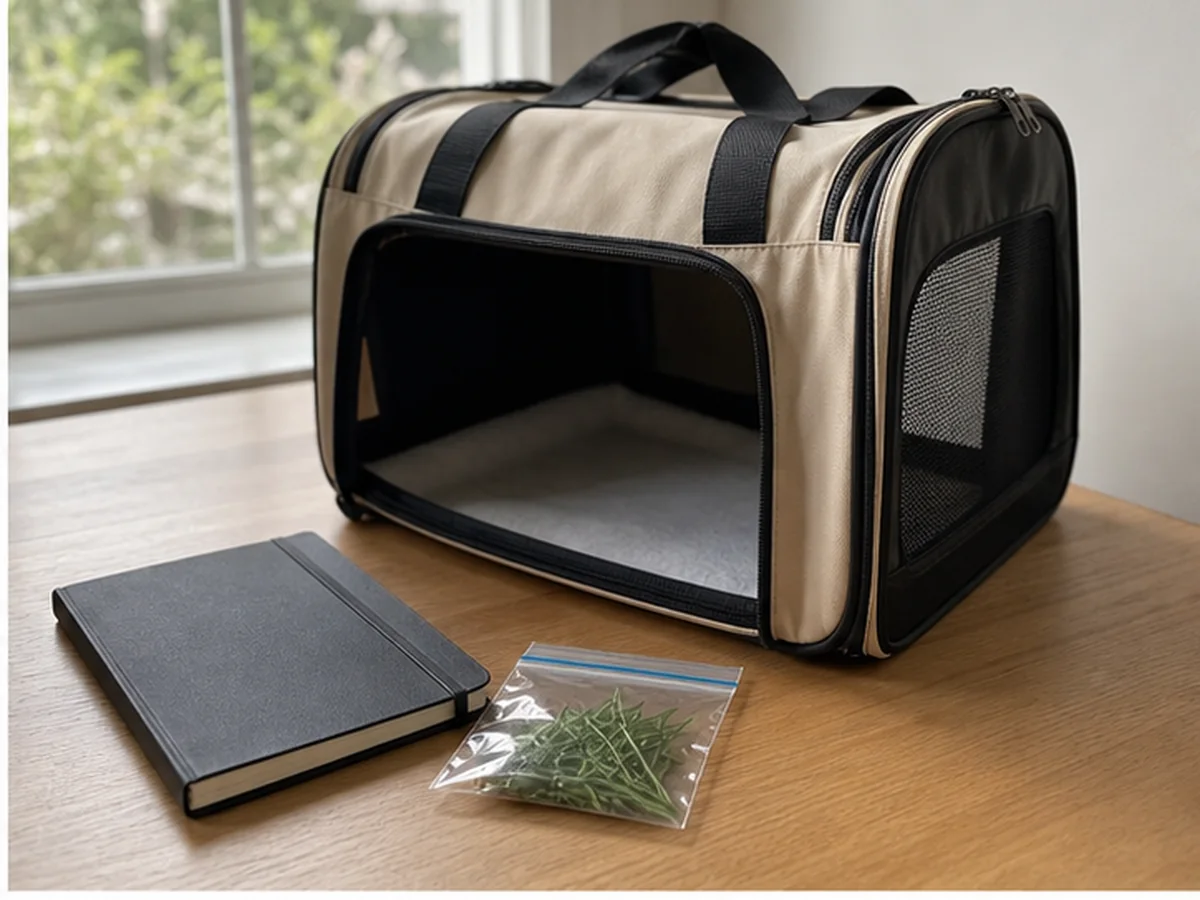
Report the plant identity, source, amount, time, symptoms, lawn products, weather, and whether a blade or string is visible. Send label and plant photos, and mention pesticides applied by neighbors or property managers.
The clinic may recommend poison consultation, oral examination, imaging, endoscopy, laboratory testing, or monitoring based on the suspected hazard. Chemicals, toxic plants, foxtails, and ordinary grass do not share one treatment.
Frequently asked questions
Is cat grass safe for kittens?
Known untreated tender cat grass can be offered under supervision once a veterinarian agrees, but kittens may uproot soil or gulp blades. Complete kitten food remains the nutrition.
Should cats vomit after eating grass?
Some do, but vomiting is not a required or beneficial result. Repeated vomiting, distress, appetite loss, or weight change needs veterinary evaluation.
Can cats eat outdoor grass?
Outdoor grass adds chemical, waste, parasite, foxtail, and plant-identification risks. A controlled pot of known untreated cat grass is the safer option.
The bottom line
Clean known cat grass can be a supervised enrichment option, but lawns and mystery greenery carry hazards that the blade itself cannot reveal. Verify the plant, control chemicals and mold, never pull stringy material, and investigate persistent grazing or vomiting instead of dismissing it as normal.