Can Cats Eat Steak? Doneness, Fat, Bones, Seasoning, and Portions
A healthy cat may have one pea-size bite of fully cooked, plain, lean, boneless steak. Trim fat and gristle, cool the meat, and keep raw or rare centers, bones, garlic butter, marinades, steak sauce, skewers, butcher string, and absorbent pads away.
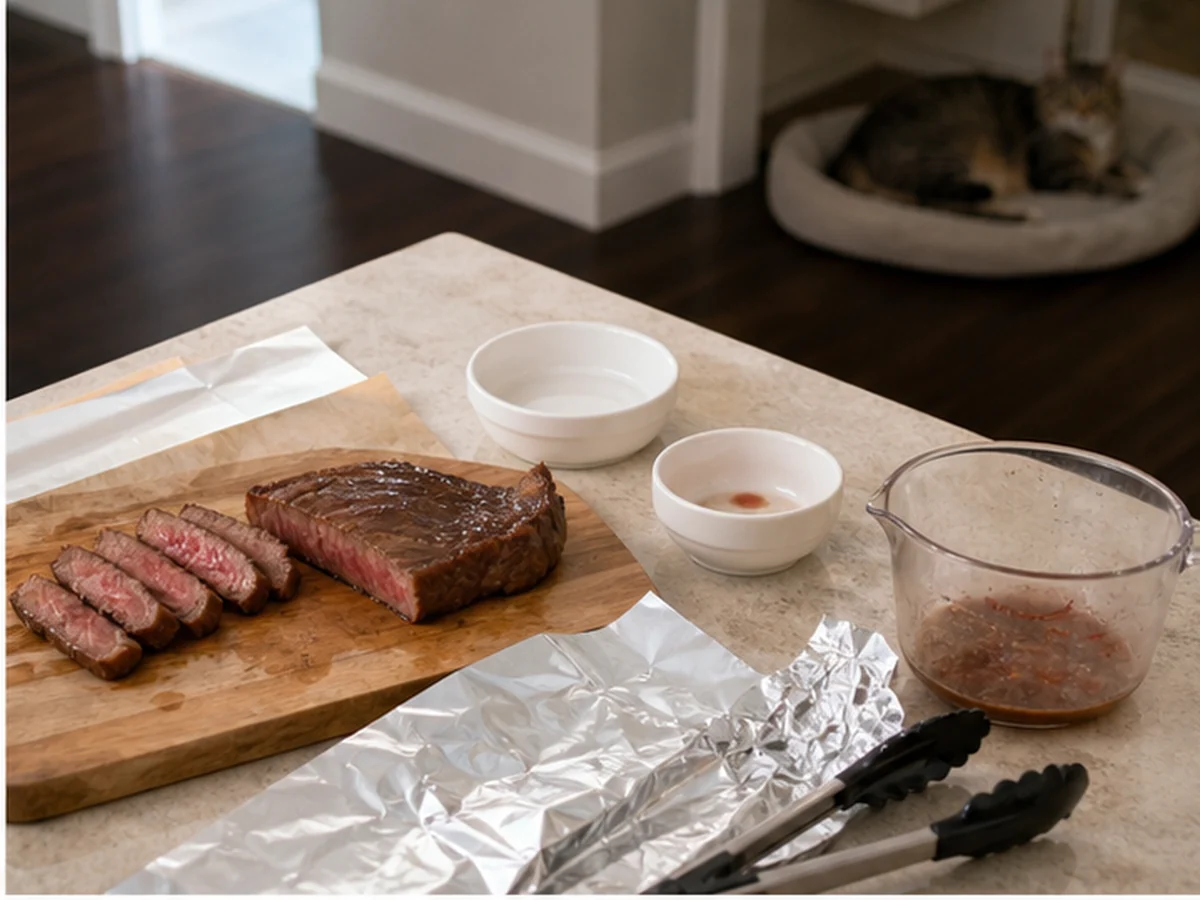
After a plate theft, identify doneness, seasoning, fat, bone, and missing table hardware. Gagging, repeated vomiting, severe pain, or a missing skewer requires urgent veterinary advice.
Cook for safety, then cut for the cat
The USDA temperature chart recommends 145°F plus a three-minute rest for whole beef steaks. Ground beef needs 160°F because grinding distributes surface contamination throughout.
Set aside an unseasoned lean section before the steak enters a marinade or butter baste. Rest it, cool it, trim visible fat, and cut across the fibers into a soft piece smaller than a fingernail.
Color alone is an unreliable doneness test, and a seared outside does not guarantee a safe center. Use a clean food thermometer rather than a guess based on grill marks.
Why tartare and rare scraps stay on the human side
Raw beef can carry pathogens, and cats can become ill or shed organisms into the household. Freezing and a premium butcher label do not sterilize meat.
Steak tartare may add raw egg, capers, onion, Worcestershire sauce, mustard, and alcohol. Carpaccio brings raw thin meat plus oil, cheese, pepper, citrus, and garnish, making both more complex than plain beef.
Keep raw trays, juices, knives, and boards away from the cat, then wash hands and surfaces. The same hygiene protects people who touch bowls, floors, fur, and litter later.
The fat cap is not a prize
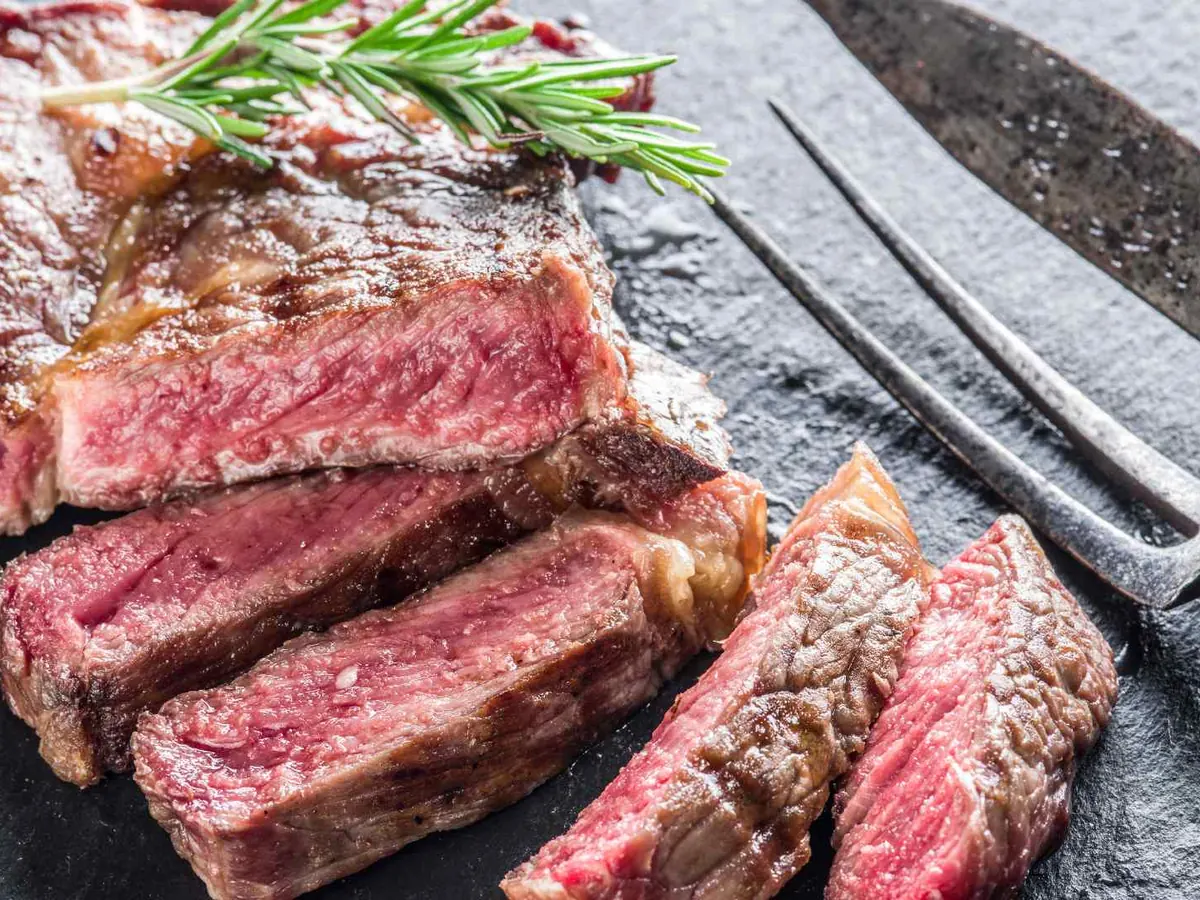
Fat and pan drippings add dense calories and can cause vomiting or diarrhea. Rich food is especially unwise for cats with pancreatitis history, obesity, digestive disease, or a veterinary fat restriction.
Gristle is tough enough to choke or be swallowed in a large rubbery strip. Remove silver skin, connective tissue, and chewy edges before cutting the approved bite.
A cat who swallows rather than chews needs a flat tiny piece. Enthusiasm does not improve esophageal diameter, although many cats appear willing to test the theory.
Bones are not dental care
Raw and cooked steak bones can fracture teeth, choke, lodge in the esophagus, obstruct the intestine, or perforate tissue. Cooked bones may splinter, but raw bones are not harmless toothbrushes.
Never pull bone or string visible from the mouth or rectum if it resists. Drooling, retching, repeated swallowing, abdominal pain, straining, or reduced stool needs prompt assessment.
Do not feed bread, pumpkin, oil, or extra meat to push a bone through. A clinician may recommend imaging or removal before symptoms become severe.
Marinades follow the meat
Onion, garlic, leek, and chive remain hazardous after cooking, and powders disappear into rubs and bottled marinades. Salt, soy sauce, alcohol, chili, and concentrated flavoring add separate concerns.
Rinsing a finished steak cannot reliably remove absorbed marinade. Our pizza article uses the same whole-recipe approach for foods whose visible headline hides seasonings underneath.
Garlic butter is particularly unsuitable because cooking does not neutralize Allium compounds. Herbed compound butter may also contain shallot, chive, alcohol, or more salt than expected.
Steak sauce, gravy, and the restaurant plate
Steak sauces can include onion, garlic, raisins, anchovy, molasses, vinegar, salt, spice, and preservatives. Gravy adds drippings, stock, flour, fat, dairy, and seasonings that vary by kitchen.
Fajita steak often shares a skillet with onion and seasoned peppers, while cheesesteak adds cheese, bread, grease, and perhaps hot peppers. Restaurant staff may not know every ingredient in a premixed rub.
Toothpicks, skewers, foil, steak knives, absorbent pads, butcher twine, and plastic wrap can cause emergencies without any toxic ingredient. Account for them before focusing on ounces of beef.
How much steak fits a cat?
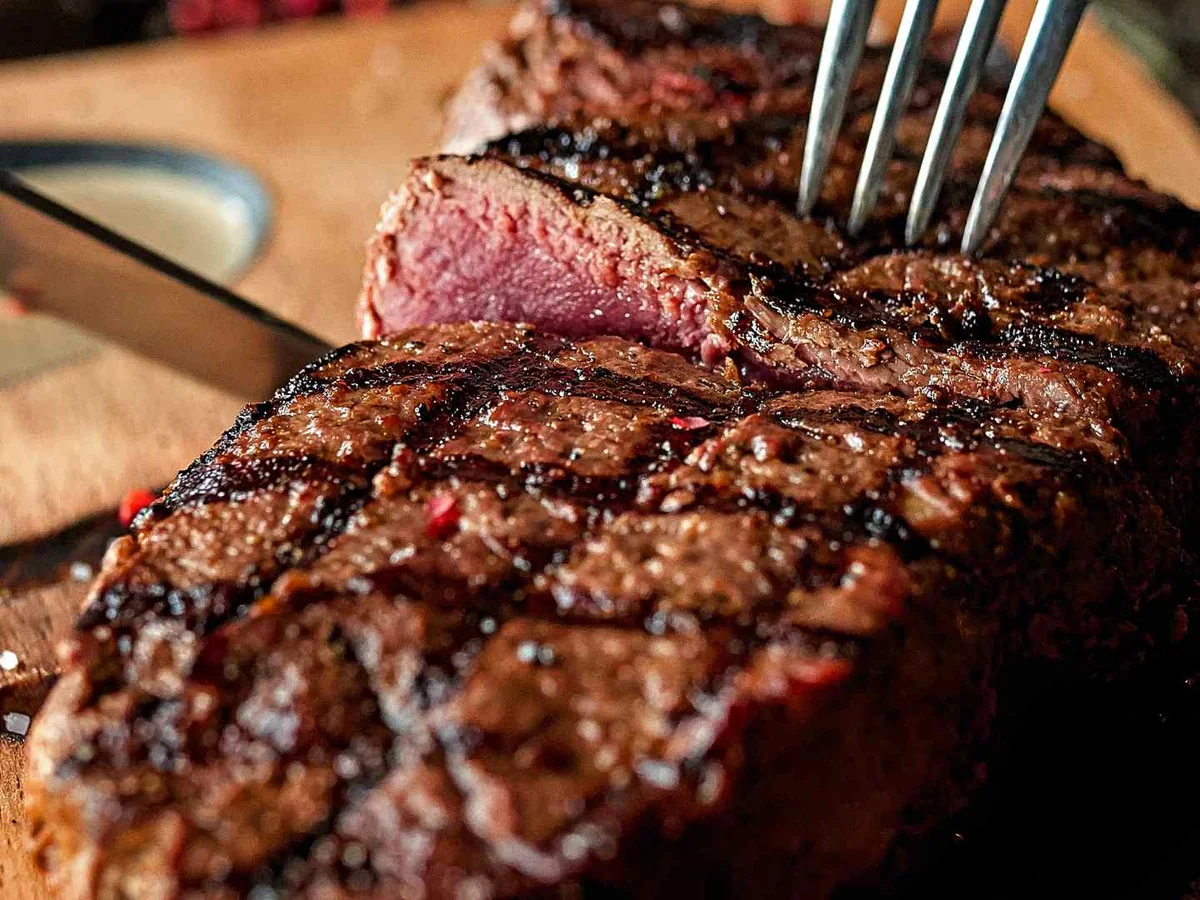
One pea-size piece is a taste, while several cubes can become a meaningful share of a small cat’s calories. Measure before serving instead of trimming bites directly from the board.
Steak provides protein but not every feline nutrient in the right amount and ratio. Cornell’s feeding guidance explains why complete food or expert-formulated recipes matter.
Cats with kidney disease may need controlled phosphorus and protein, while heart disease may require sodium attention. Prescription-food cats should receive only treats approved by the prescribing clinic.
Leftovers and grill cleanup
Refrigerate cooked steak promptly in a clean covered container. Discard meat left warm too long, smelling sour, feeling slimy, or showing mold rather than turning it into a pet treat.
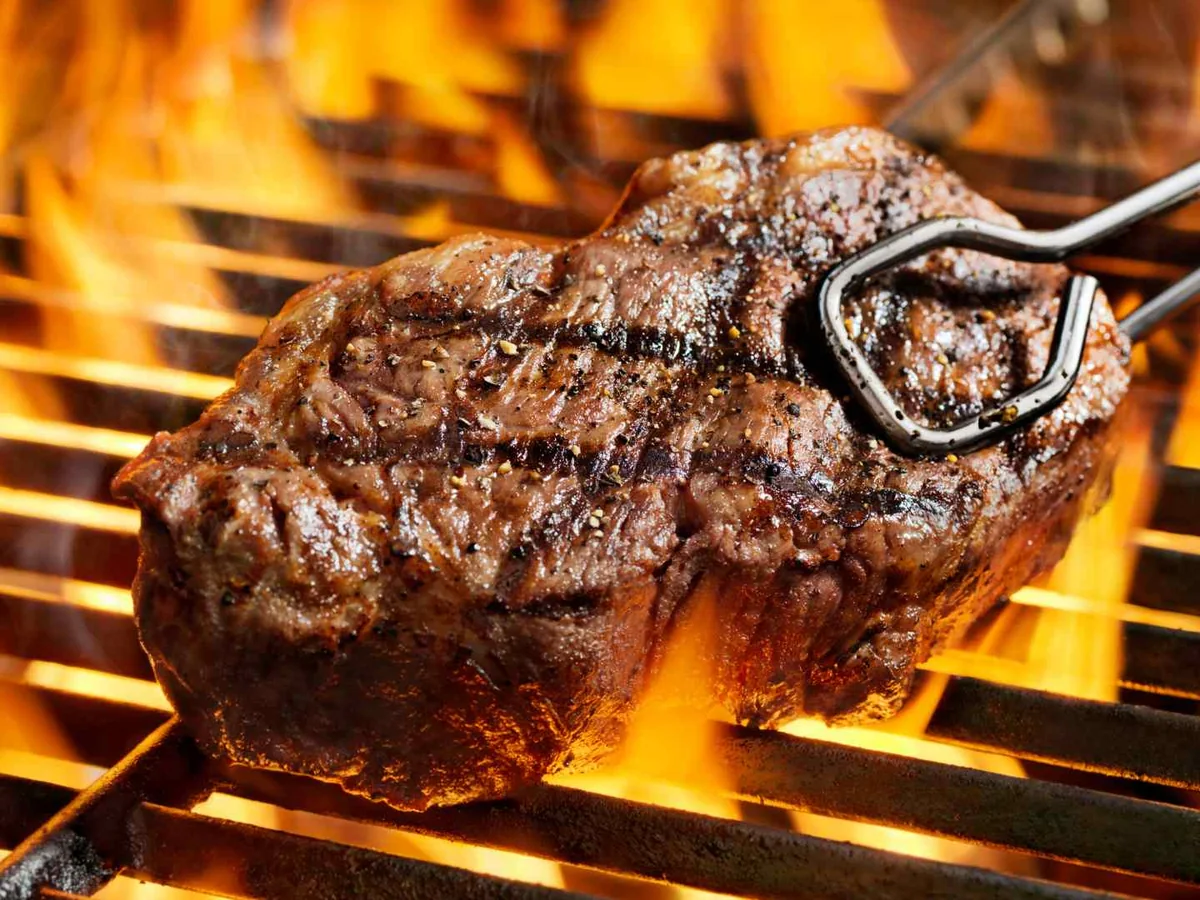
Charred debris and grill-cleaning chemicals do not belong in the bowl. Keep cats away from hot grates, grease trays, charcoal, lighter fluid, wooden skewers, and discarded corn cobs.
Write the cooking date on leftovers, since memory becomes generous around day four. A cat has no need to serve as the final freshness committee.
If the plate lands on the floor
- Secure sharp objects. Locate knives, picks, bone, foil, and broken plate pieces.
- Describe the steak. Record cut, doneness, marinade, sauce, fat, and maximum amount.
- Save labels. Photograph bottled sauce, rub, butter, and packaged meat.
- Call for hazards. Seek advice for raw meat, alliums, alcohol, swallowed objects, or symptoms.
- Do not induce vomiting. Sharp material can injure the esophagus on the way back.
Steak questions from the carving board
Can kittens eat steak?
Kittens need complete growth nutrition, and raw-meat infection is a larger concern in young animals. Use kitten food as rewards instead.
Is well-done steak bad for cats?
Thorough cooking is desirable, but burned, heavily charred, dry, seasoned meat is not. Serve a moist interior piece cooked to a safe temperature, then cooled and finely cut.
Can steak improve anemia?
Anemia has many causes and requires diagnosis. Feeding steak cannot replace blood tests, treatment, or a balanced diet, and onion-seasoned meat can actually damage red blood cells.
A plain answer from the carving board
Keep the cat away while the meat rests and juices collect.
A sensible reward plan after steak disappears
Counter theft succeeds because the payoff is spectacular and immediate. Prevent rehearsal by moving resting meat beyond the jump path, closing the kitchen during carving, and giving the cat a puzzle meal elsewhere.
Do not punish after the fact, since the cat cannot connect a delayed reaction with the earlier bite. Change access, supervise cleanup, and reward staying on an approved perch during future meals.
If hunger seems relentless despite measured complete food, ask the veterinarian to review body condition, calories, medications, and disease. Hyperthyroidism and diabetes can increase appetite, while simple boredom may respond to enrichment.
One plain beef-flavored training treat may be easier to measure than table steak, provided its label and calories fit. The useful goal is not zero enjoyment but predictable portions without bones, sauce, or conflict.
Jerky, deli beef, and steak-flavored snacks
Beef jerky is dried, chewy, concentrated, and commonly seasoned with salt, garlic, onion, smoke, sugar, or hot pepper. It is not a shelf-stable version of the plain cooked steak described here.
Deli roast beef can contain sodium, brine, preservatives, and flavoring that penetrates every slice. Our processed-meat guide covers the label and wrapper questions shared by cured beef products.
Steak-flavored pet treats should be judged by their own ingredients, calories, target species, and feeding directions. A flavor name does not establish that the product contains a useful amount of steak or suits a prescription diet.
Medical diets change the carving plan
A cat with chronic kidney disease may have an individualized protein and phosphorus target, while a cardiac patient may need sodium control. The veterinarian managing current laboratory results should decide whether beef treats fit.
During an elimination-diet trial, grocery beef may invalidate weeks of strict feeding if it is not the chosen test protein. Even pan contact with butter or another meat can complicate interpretation.
Diabetic cats benefit from predictable meals and medication timing, while overweight cats need calorie accounting. A cube cut by eye can be considerably larger than a clinic-approved treat allowance.
Dental disease can hide behind steak refusal
A cat who approaches meat, chews on one side, drops pieces, or walks away may have oral pain rather than refined culinary standards. Schedule a dental examination instead of mincing richer steak indefinitely.
Hard gristle and jerky can fracture diseased teeth and do not scrub the gumline clean. Use veterinarian-recommended dental care rather than assigning connective tissue the job of a toothbrush.
What a poison specialist needs from dinner
Report product labels for rub, sauce, butter, broth, and marinade along with the steak cut and cooking method. The largest possible amount matters more than a confident estimate based on what crumbs remain.
Mention symptoms and the exact timeline, including repeated access over several days. Allium-related red-blood-cell injury can be delayed, so a normal first hour does not close the case.
If multiple pets shared the plate, identify each animal’s weight and likely portion separately. The boldest thief may not be the only one exposed.
Balanced food can still feature beef
A complete beef-based cat food combines ingredients and supplements to meet feline nutrient standards. That finished formula is not nutritionally equivalent to steak plus an online vitamin powder.
The FDA adequacy statement resource explains how main diets communicate intended life stage and feeding role. Treats marked supplemental or intermittent remain extras even when beef leads the list.
A veterinarian or qualified veterinary nutrition specialist should formulate any long-term home-cooked diet. Ingredient ratios copied from social media can create calcium, taurine, vitamin, or fatty-acid deficiencies that remain invisible for months.
Keep steak rare in frequency but not rare in doneness: fully cooked, lean, plain, boneless, cooled, and pea-size. For another simple protein, compare our boiled egg guide, and let complete cat food own the everyday menu.