Halloween Candy and Cats: Chocolate, Wrappers, Xylitol, and Party Foods
Cats are less likely than dogs to inhale a candy bowl, but Halloween still creates a remarkable collection of feline hazards. Chocolate, ribbon, string, wrappers, lollipop sticks, caffeine, alcohol, allium-heavy party food, THC edibles, and glow sticks are the things I watch most closely.
My first Halloween rule is to inventory food and nonfood items
After a cat gets into Halloween supplies, I check more than candy. Cats may chew ribbon, bat foil wrappers across the floor, swallow string, bite glow sticks, or steal a piece of chocolate while ignoring most of the bowl.
Save packages, count missing wrappers and sticks, and note exactly what the cat had access to. One chocolate truffle and one swallowed ribbon create completely different emergencies.

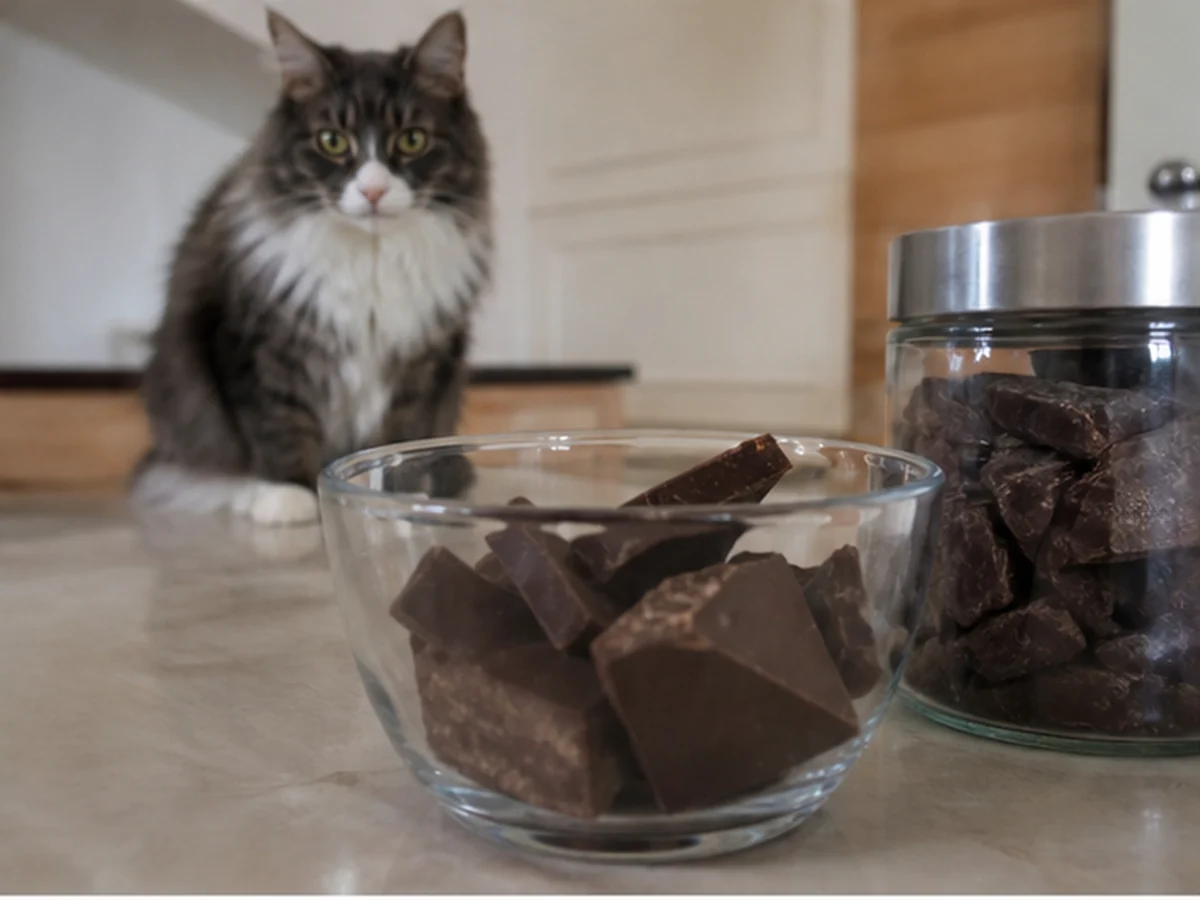
Chocolate is unsafe for cats
Chocolate contains the methylxanthines theobromine and caffeine. Cocoa powder, baking chocolate, and dark chocolate are more concentrated than milk chocolate, though no form is a useful feline food.
If a cat eats a meaningful amount, save the wrapper, estimate the product weight, and call with the timing. Vomiting, restlessness, rapid heart rate, tremors, seizures, weakness, or collapse deserves urgent veterinary attention.
Cats may be less drawn to sweet foods than dogs, but that does not lower the toxicity of the chocolate that is actually swallowed. Risk depends on dose, not the stereotype that cats do not like candy.
Dark chocolate and cocoa deserve more concern than milk chocolate
Higher cocoa content usually means more methylxanthines per ounce. A small piece of dark baking chocolate can therefore create a more meaningful dose than a similar-sized piece of milk chocolate.
Keep the cocoa percentage or exact product name when possible. “Dark chocolate” is useful, while “72 percent dark chocolate, about one ounce missing” is much more useful.

Wrappers can be more realistic cat hazards than the candy
Foil, plastic, cellophane, wax paper, and candy-bag material can be swallowed during play or while licking food residue. Small scraps may pass, while larger pieces can choke or obstruct the gastrointestinal tract.
Repeated vomiting, abdominal pain, refusal to eat, marked lethargy, or inability to keep water down after swallowed packaging deserves veterinary evaluation. Cats should not go long without eating when they are ill.
Ribbon and string are major Halloween problems for cats
Curling ribbon, costume string, candy-bag handles, yarn, dental floss, and decorative cord can become linear foreign bodies. If one end becomes anchored, the intestines can bunch along the material and suffer severe injury.
Do not pull string from the mouth or rectum if it appears stuck. That can worsen internal injury, and the veterinary team may need imaging or surgery.
A cat that suddenly stops eating, vomits repeatedly, hides, becomes painful, or has string visible from the mouth deserves prompt care. I treat string ingestion as much more than an inconvenient craft project.
Lollipop sticks and small plastic decorations can puncture or obstruct
Wooden sticks, plastic picks, small costume pieces, and toy accessories can be swallowed. Sharp or rigid objects can injure the mouth, esophagus, stomach, or intestines.
If a stick or pointed decoration disappears, call rather than waiting for symptoms. A small cat has very little room for a rigid foreign object to travel harmlessly.

Sugar-free candy still deserves a label check
Xylitol is a major dog toxin, while feline sensitivity is much less clearly established. I still would not treat sugar-free candy as cat-safe because the product can contain chocolate, caffeine, packaging, other sweeteners, and ingredients a cat should not eat.
Save the exact ingredient list rather than assuming the sweetener is xylitol or assuming xylitol is harmless to cats. The veterinary team can assess the actual product and amount.
Caffeinated candy can affect a small cat quickly
Chocolate-covered coffee beans, espresso candy, energy gum, and caffeinated chews can contain concentrated caffeine. Cats have small body weights, so a human product can create a relatively large dose.
Rapid heart rate, agitation, tremors, overheating, seizures, or collapse after caffeine exposure deserves urgent veterinary care. Save any milligram-per-serving information from the package.
THC edibles require complete honesty
Cannabis chocolates, gummies, brownies, and baked goods can cause neurologic signs in cats, and chocolate edibles can create two exposures at once. Sleepiness, wobbliness, altered responsiveness, tremors, vomiting, or unusual heart rate may occur.
Tell the veterinary team exactly what the product contained and the estimated THC amount. Accurate ingredient information matters more than explaining why the edible existed.
Party dips and savory food can hide alliums
Halloween parties often include pizza, wings, ranch, onion dip, queso, chili, hummus, and seasoned meat. Cats are particularly sensitive to onion, garlic, shallots, chives, and leeks, which can damage red blood cells.
Cooking alliums into dips or sauces does not remove the risk. A tiny lick is different from a bowlful, but a meaningful exposure deserves a recipe check.
Weakness, pale gums, rapid breathing, dark urine, reduced appetite, or collapse can appear after significant allium exposure and may be delayed.
Alcoholic party drinks can be easy for cats to sample
Cocktails, hard cider, wine, beer, and sweet mixed drinks can expose cats to ethanol. A cat only has to lap a small volume for the dose to matter more than it would to an adult person.
Vomiting, unusual sleepiness, poor coordination, weakness, low body temperature, breathing depression, or collapse deserves urgent care. Save the drink recipe and approximate amount.
Glow sticks create dramatic drooling and a plastic hazard
Glow-stick liquid is intensely bitter and can cause sudden drooling, foaming, and mouth irritation when a cat bites the tube. The plastic tube itself can also be swallowed.
Wipe the mouth gently if possible, rinse contaminated fur so the cat does not groom more material, and call if plastic was swallowed or symptoms persist. The glow can look alarming, but the bitter taste often drives the immediate reaction.
Costume pieces can become foreign bodies
Elastic bands, bells, feathers, wire, foam, fake cobwebs, and costume trim can be chewed or swallowed. Small decorative pieces can lodge, while long fibers behave like string.
Supervise costumes and remove them when nobody is watching. I do not trust a dangling costume tassel around an unsupervised cat any more than I trust ribbon on a gift.
Do not try to induce vomiting at home
Hydrogen peroxide should not be used to make cats vomit. Salt, mustard, oil, or other improvised home methods can also cause injury and are not substitutes for veterinary decontamination.
Call with the product, amount, timing, cat’s weight, and symptoms. The veterinary team can decide whether monitoring, laboratory testing, imaging, or treatment is appropriate.
What to do after a Halloween raid
- Collect wrappers, labels, and product packages.
- Check for chocolate, caffeine, alcohol, THC, alliums, and unusual sweeteners.
- Count missing ribbon, string, sticks, bags, glow sticks, and plastic pieces.
- Estimate the maximum amount and time of exposure.
- Call promptly for chocolate, caffeine, alcohol, THC, string, sharp objects, or significant allium exposure.
How I prevent Halloween trouble
I keep candy in closed cabinets and ribbon or costume supplies in drawers or bins the cat cannot open. Candy bags on the floor and curling ribbon on the table are invitations, not storage.
I also clear wrappers and party food promptly before bed. Cats are excellent at waiting until the house gets quiet before inspecting whatever everyone forgot.
Frequently asked questions
Can cats eat Halloween chocolate?
No. Chocolate contains methylxanthines and can cause serious illness after a meaningful dose.
My cat ate a candy wrapper. What should I do?
One tiny thin wrapper may pass, but larger pieces or multiple wrappers can obstruct. Call if the amount is significant or vomiting, pain, or appetite loss develops.
What if my cat swallowed ribbon?
Call promptly and do not pull ribbon from the mouth or rectum if it is visible and stuck. Linear foreign bodies can cause severe intestinal injury.
Can cats have sugar-free candy?
I would not offer it. Feline xylitol sensitivity is less defined than canine sensitivity, but sugar-free candy can contain other problematic ingredients and packaging.
Bottom line
Halloween hazards for cats go well beyond candy. Keep chocolate, caffeine, alcohol, THC edibles, allium-heavy party food, ribbon, string, wrappers, lollipop sticks, glow sticks, and costume pieces out of reach, and call promptly when a high-risk ingredient or foreign body is involved.