Can Cats Eat Greek Yogurt? Lactose, Labels, Cultures, and Portions
Some healthy adult cats can tolerate a tiny lick of plain, unsweetened, pasteurized Greek yogurt, but many should skip it. Greek yogurt still contains lactose and dairy proteins, while flavored cups can add sugar, chocolate, coffee, grapes, raisins, citrus, sweeteners, supplements, or packaging that changes the risk.
If your cat already licked the yogurt
Read the complete label and estimate the amount. A small lick of plain yogurt usually calls for observation, while chocolate, coffee, raisins, alcohol, medication, a missing foil lid, or a large serving deserves a veterinary call.
- Plain pasteurized yogurt, tiny lick: monitor for gas, vomiting, diarrhea, itching, or appetite change.
- Flavored, sugar-free, protein-fortified, or supplement yogurt: save the label and assess every ingredient.
- Foil, plastic film, spoon, or cup piece missing: call when gagging, vomiting, pain, or appetite loss develops.
- Breathing difficulty, facial swelling, collapse, repeated vomiting, tremors, or seizures: seek urgent veterinary care.
Do not induce vomiting or force water. Keep the cup, lid, lot code, and ingredient panel until the cat is clearly well.
Greek yogurt is not lactose-free
Straining removes some whey and changes the protein, carbohydrate, and texture compared with ordinary yogurt. Fermentation also reduces some lactose, but the final amount varies by brand and recipe.
Many adult cats have limited lactase activity and can develop gas, cramping, loose stool, or diarrhea after dairy. A product being easier for some lactose-intolerant people does not establish a safe feline portion.
The FDA discusses how fermentation cultures can improve lactose digestion in human yogurt research while emphasizing that raw milk does not supply the same reliable cultured product. Human digestive findings should not be converted into a promise for an individual cat.
What plain means
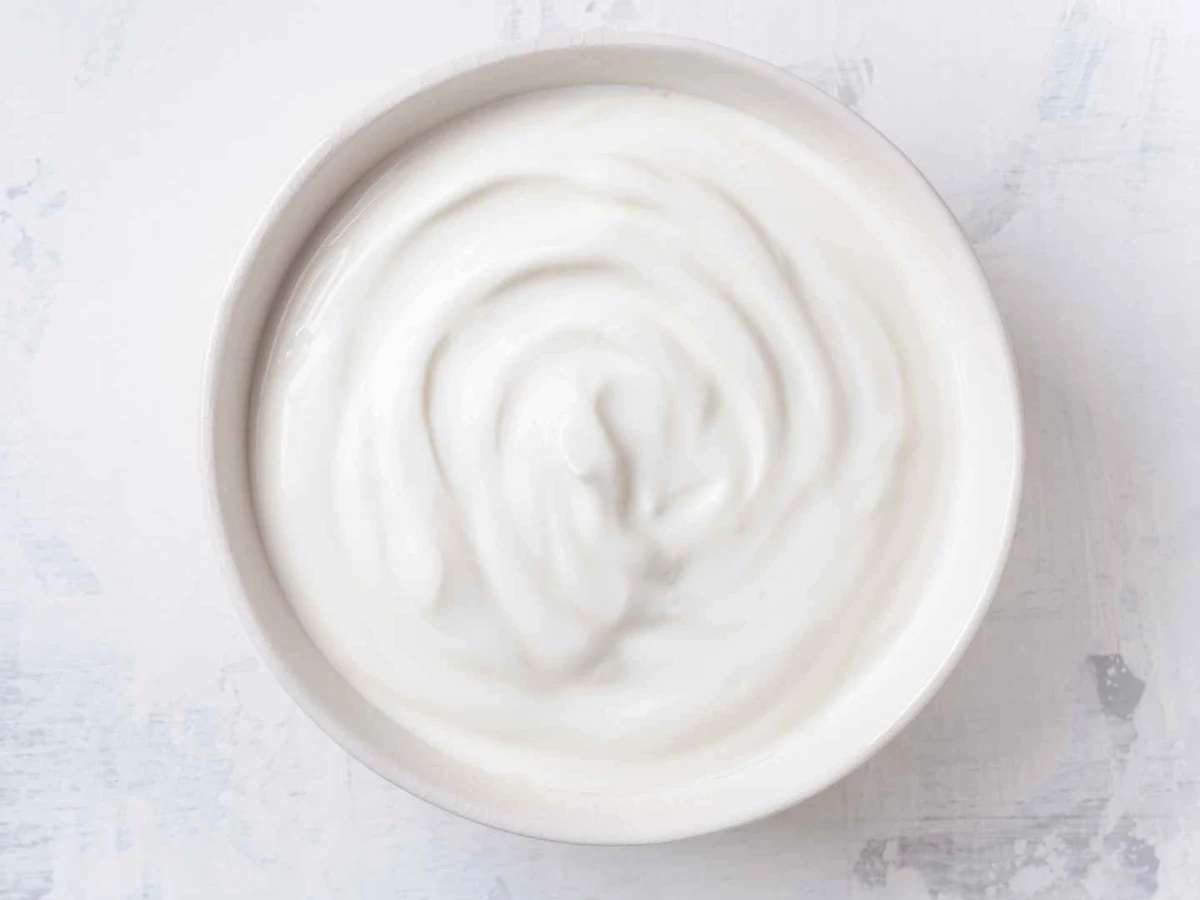
The lower-risk product is pasteurized Greek yogurt with no flavor, fruit, syrup, honey, sugar, artificial sweetener, chocolate, coffee, granola, or supplement. Plain on the front still requires confirmation on the ingredient list.
Vanilla yogurt may contain sugar and flavoring, while a fruit-on-the-bottom cup can hide grapes, raisins, citrus, cherries, pits, or sweetened puree. Savory Greek yogurt dips often contain garlic, onion, chives, salt, oil, and herbs.
Our applesauce label guide uses the same whole-product approach, and the pickle guide helps with garlicky yogurt sauces and brine-heavy dips.
Fat level and calories
Nonfat, low-fat, and whole-milk Greek yogurts differ in calorie density and texture. Whole-milk versions are richer, while flavored nonfat products can compensate with sugar, starch, gums, or sweetener.
A lick is not expected to cause pancreatitis, and feline pancreatitis often lacks one identifiable trigger. Cats with a pancreatitis history, fat-sensitive gastrointestinal disease, obesity, diabetes, or a prescription diet should still avoid unapproved dairy extras.
The Cornell Feline Health Center says milk is generally not recommended because many cats are lactose-intolerant and recommends keeping treats occasional. Yogurt should never displace complete cat food.
Sugar and dessert-style yogurt
Added sugar provides calories without a feline nutrition benefit. Repeated sweet yogurt can contribute to weight gain and crowd balanced food, even if the cat appears uninterested in sweetness itself.
Cheesecake, cookie, brownie, tiramisu, mocha, and chocolate flavors can add cocoa, caffeine, alcohol flavor, raw dough ingredients, nuts, or wrappers. Call promptly after a chocolate or caffeine product with the exact amount and cocoa type.
Our guides to butter and pizza explain why dairy becomes a different question when fat, salt, seasonings, and a full recipe join the bowl.
Xylitol needs species-specific accuracy
Xylitol may appear in sugar-free human products as xylitol, birch sugar, or wood sugar. Its potentially fatal insulin effect is well established in dogs, while current evidence does not show the same danger in cats.
The FDA’s xylitol guidance explicitly says it does not seem as dangerous for cats. Still call after a xylitol yogurt because the amount, other ingredients, packaging, and limited feline data require product-specific judgment.
Do not repeat canine toxic doses as feline facts. Accurate caution is more helpful than dramatic certainty.
Do probiotic cultures help cats?
Live-culture yogurt is not interchangeable with a veterinary probiotic studied for a particular feline condition. Strains, viable counts, storage, dose, dairy tolerance, and evidence all matter.
Do not use yogurt to treat diarrhea, constipation, antibiotics-associated signs, inflammatory bowel disease, or an appetite problem without guidance. Persistent digestive signs can reflect parasites, diet sensitivity, infection, obstruction, pancreatic disease, or other causes.
The Merck introduction to feline digestive disorders describes the many causes of vomiting and diarrhea and the danger of dehydration. Diagnosis should come before a cultured dairy experiment.
Raw-milk and homemade yogurt
Do not give raw-milk yogurt to a cat. Unpasteurized dairy can carry pathogens that threaten animals and people, while homemade fermentation may not control temperature, acidity, contamination, or culture viability reliably.
Pregnant people, young children, older adults, and immunocompromised household members can be particularly vulnerable to foodborne illness. A cat may also spread organisms on the face, fur, bowl, litter area, and surfaces.
Pasteurization is the practical baseline, not proof that every pasteurized flavored yogurt is suitable. The recipe still matters.
Dairy allergy versus lactose intolerance
Lactose intolerance is a digestive enzyme problem that commonly produces gas or diarrhea. Food allergy is an immune reaction to protein and may cause itching, skin or ear disease, vomiting, diarrhea, hives, facial swelling, coughing, or breathing changes.
Rapid swelling, collapse, or breathing difficulty is an emergency. A cat on a hydrolyzed or novel-protein elimination diet should receive no yogurt unless the prescribing veterinarian approves it.
Can yogurt hide medication?
Ask the prescribing veterinarian before mixing a drug into yogurt. Some medication should not be crushed, split, combined with dairy, given with food, or redosed when the swallowed amount is uncertain.
If approved, use only a tiny measured amount that the cat will finish, then confirm the dose was swallowed. Do not mix essential medication into a full meal that the cat may reject after tasting bitterness.
Foil lids, cups, and spoons
Foil lids have sharp edges and smell strongly of dairy, while plastic film, cup fragments, and disposable spoons can be chewed or swallowed. A cat can also trap the head in a large tub.
Call for gagging, repeated vomiting, abdominal pain, refusal to eat, inability to keep water down, straining, or marked lethargy after packaging disappears. Do not pull plastic from the mouth or rectum if it may be anchored internally.
Storage and spoilage
Keep yogurt refrigerated, follow the use-by and after-opening directions, and discard cups that are swollen, moldy, contaminated, unexpectedly fizzy, or left at unsafe temperature. A sour product does not become safe because yogurt began sour.
Use a clean spoon rather than direct tub licking, then return the product promptly. Save the lot code after a suspected product problem.
Greek yogurt versus kefir, skyr, and frozen yogurt
Kefir is a fermented dairy drink with different cultures, consistency, lactose, and sometimes alcohol from fermentation. Skyr is another strained cultured product, while frozen yogurt adds sugar, flavoring, stabilizers, and a colder choking-prone texture.
Do not transfer a tolerance result from one product to another. Read each label and treat drinkable, frozen, protein-fortified, and supplement products as distinct recipes.
Plant-based yogurt avoids lactose but can contain coconut fat, nuts, soy, oats, pea protein, sugar, chocolate, coffee, gums, sweeteners, or supplements. Dairy-free does not mean cat-formulated.
When digestive signs need a call
One soft stool after a tiny plain lick may settle, but repeated vomiting, watery or bloody diarrhea, abdominal pain, worsening lethargy, dehydration, or refusal to eat needs veterinary attention. Keep water available and do not force food or fluid into a nauseated cat.
Record the product, amount, time, stool, vomiting, appetite, and activity. Mention recent antibiotics, diet changes, raw dairy, other pets with illness, and immunocompromised people in the home.
Do not abruptly starve an overweight cat after dietary upset because prolonged inadequate intake can contribute to hepatic lipidosis. Contact the clinic early when normal food is refused.
Keeping snack time clean
Serve any approved taste on a washable shallow dish rather than from the tub, then wash the dish promptly. Wipe yogurt from whiskers and paws with a damp cloth so grooming does not turn a tiny sample into a larger serving while nobody is watching from the nearest counter.
Put foil, cups, and spoons directly into a lidded bin and wipe drips from floors and counters. A closed refrigerator door is more reliable than asking a cat to respect a cooling breakfast bowl.
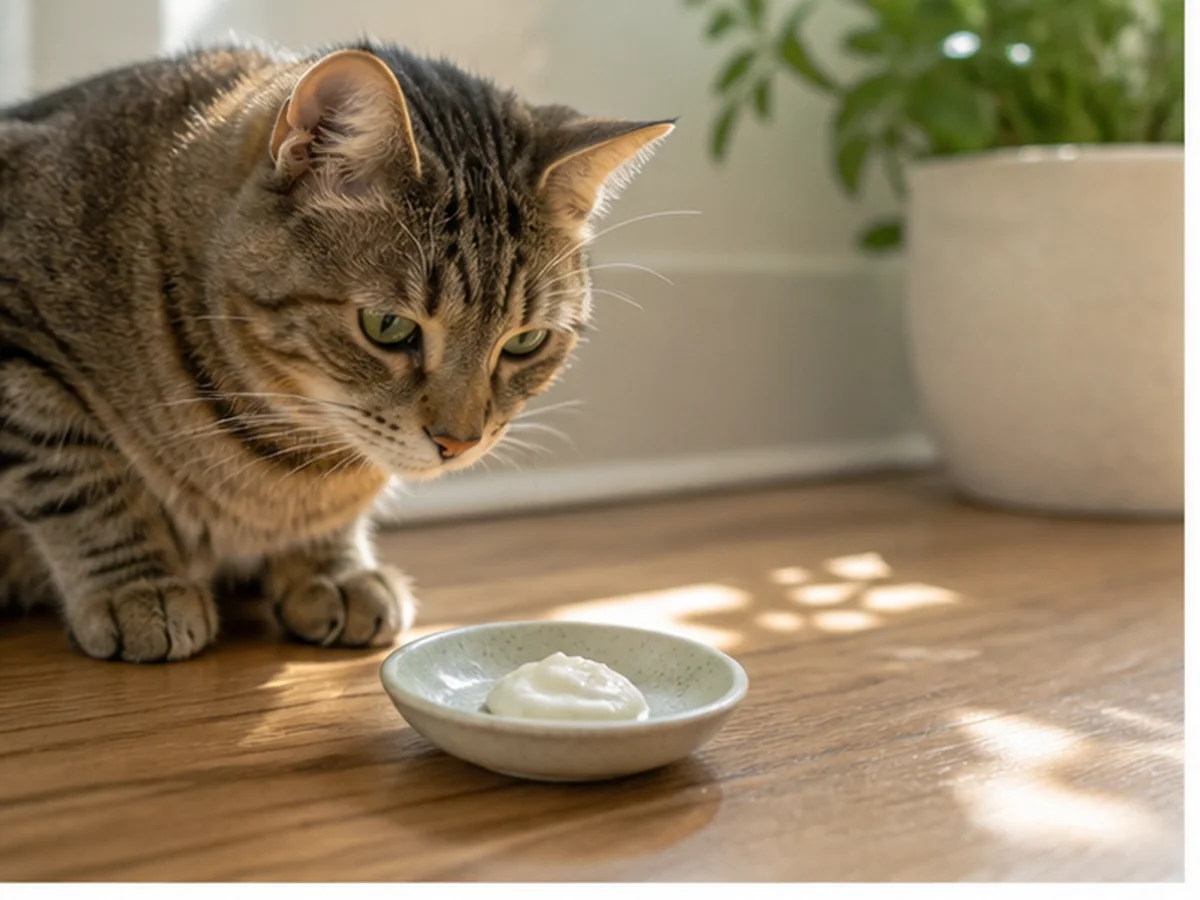
How to test a tiny amount
- Confirm the cat is healthy and the veterinarian has no diet objection.
- Choose plain, unsweetened, pasteurized Greek yogurt.
- Offer a lick no larger than a pea, not a spoonful.
- Introduce no other new food that day.
- Stop after gas, vomiting, diarrhea, itching, or appetite change.
Part of the regular complete ration is an easier reward with no lactose experiment. Our boiled egg guide covers another animal-source extra for healthy cats whose veterinarians approve treats.
Frequently asked questions
Can kittens eat Greek yogurt?
Skip routine yogurt because kittens need complete growth nutrition and can develop digestive upset from dairy. Ask a veterinarian after an accidental serving.
Is nonfat Greek yogurt safer?
It contains less fat but may still contain lactose, dairy protein, sugar, gums, flavoring, or sweetener. The full label and individual cat matter.
Can Greek yogurt treat diarrhea?
No reliable one-size-fits-all treatment uses grocery yogurt. Diarrhea has many causes, and dairy may worsen it in a lactose-intolerant cat.
The bottom line
A pea-sized lick of plain pasteurized Greek yogurt may suit some healthy adult cats, but it is optional and not a probiotic prescription. Check the label, respect lactose and allergy signs, secure the foil, and let complete cat food do the nutritional heavy lifting.