Can Dogs Eat Turkey? A Safe Serving Guide
Dogs can eat small amounts of plain, fully cooked, boneless, skinless turkey. Skip the skin, bones, gravy, stuffing, deli slices, and seasoned scraps, because the extras that make turkey festive can also make a dog sick.
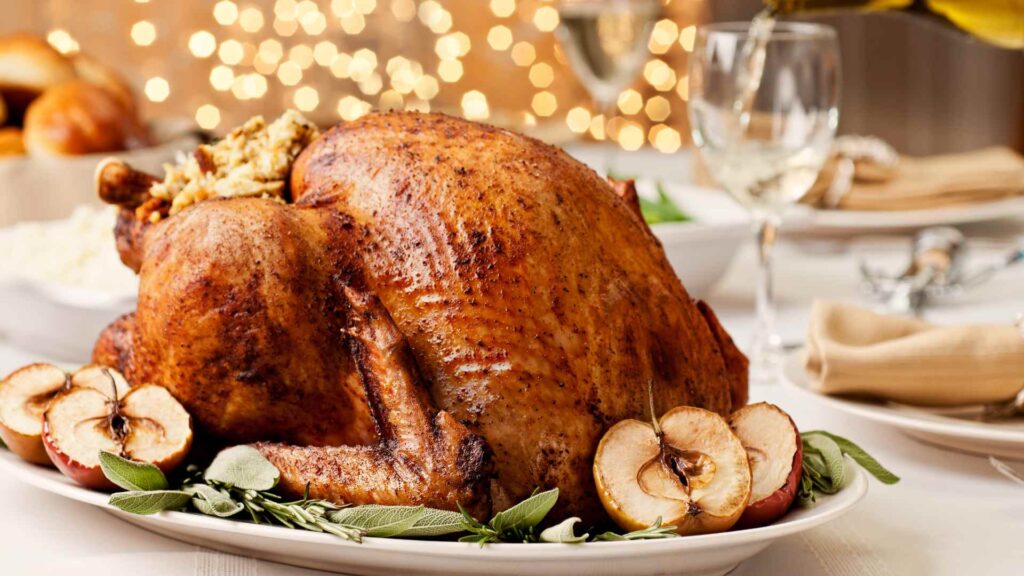
The useful answer in one plate
Turkey meat is not toxic to dogs, and unseasoned cooked turkey can work as an occasional treat. It should not replace a complete dog food, and it stops being simple once it comes with butter, skin, bones, stuffing, gravy, or curing salt.
Think “plain center meat,” not “Thanksgiving plate.” A bite carved before seasoning is very different from a greasy scrap dragged through gravy.
Turkey is generally a better sharing choice than cured meat, but preparation still decides the outcome. Our guide to ham and dogs explains why processed holiday meats carry different sodium and fat concerns.
How to prepare turkey for a dog
Use fresh turkey that has been refrigerated and handled safely. Cook it thoroughly without onion, garlic, excess salt, butter, oil, rubs, marinades, or sauce.
The U.S. Department of Agriculture says turkey should reach a safe minimum internal temperature of 165°F in the innermost thigh and wing and the thickest part of the breast. Its turkey safety guide recommends confirming temperature with a food thermometer rather than relying on color.
Remove all skin, visible fat, cartilage, and every fragment of bone after cooking. Cut the meat into small pieces sized for your dog, because a large slippery chunk can become a choking hazard even when the food itself is safe.
Offer a small taste and watch for digestive upset, especially if turkey is new to your dog. A few pieces are enough to make the moment feel special without turning the bowl into leftovers night.
Turkey parts and products, sorted by risk
Plain breast meat
Boneless, skinless breast meat is usually the easiest portion to share because it is relatively lean. It still needs to be fully cooked and free from seasoning, brine, sauce, and pan drippings.
Dark meat
Plain, boneless dark meat is not poisonous, but it generally contains more fat than breast meat. Trim it closely and keep the portion smaller, particularly for a dog that needs a low-fat diet.
Turkey skin
Skin collects fat, salt, butter, rubs, smoke, and drippings, so it is an easy “no.” A fatty feast may trigger vomiting or diarrhea and may contribute to pancreatitis in a susceptible dog.
Watch for repeated vomiting, poor appetite, lethargy, or abdominal pain after a rich meal. Those signs deserve veterinary advice rather than a second helping of bland table food.
Turkey bones
Do not give cooked or raw turkey bones. They can break teeth, lodge in the mouth or esophagus, cause choking, splinter, or obstruct and injure the stomach and intestines.
The ASPCA’s people-food guidance warns that bones can lead to serious gastrointestinal injury or obstruction. Raw bones also add bacterial contamination risk, so “uncooked” does not mean “safe.”
Giblets
The heart and gizzard can be offered in small amounts if thoroughly cooked in plain water and chopped, with no neck bone included. Liver is nutrient-dense and rich, so a tiny occasional piece is plenty unless your veterinarian has built it into a balanced recipe.
Do not use the giblet packet if it was cooked inside plastic or includes seasoning. When in doubt, discard it rather than turning dinner into detective work.
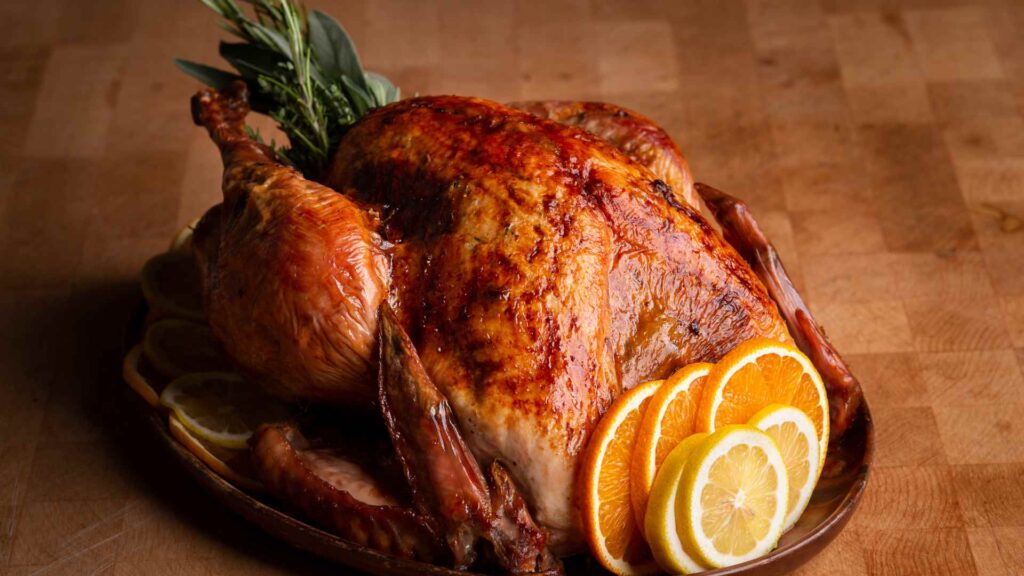
Why stuffing, gravy, and seasoning are the real problem
Stuffing and gravy are designed to absorb flavor, which often means onion, garlic, butter, stock, salt, and meat fat. Some recipes also contain raisins, sausage, alcohol, mushrooms, or nuts, so there is no reliable “standard spoonful.”
Onion and garlic can damage red blood cells in dogs when enough is eaten, and concentrated powders can be especially easy to miss. Check every seasoning packet, stock cube, gravy mix, and stuffing label, then use our guides to onions and garlic for ingredient-specific next steps.
Salt and fat may cause thirst or digestive upset long before they cause a dramatic emergency. Dogs with kidney disease, heart disease, pancreatitis history, or a prescribed low-fat or sodium-restricted diet should not receive table turkey without their veterinarian’s approval.
A turkey injected with broth or labeled “self-basting” may contain more sodium before you add anything at home. The ingredient panel tells you more than words such as natural, premium, roasted, or homestyle.
What about deli turkey, smoked turkey, and turkey bacon?
Deli turkey is processed meat, not plain roast turkey in convenient clothing. It may contain substantial sodium, sugar, smoke flavor, preservatives, and seasoning, so it is a poor everyday training treat.
Smoked turkey and cured turkey legs bring similar concerns, often with concentrated salt and a bone attached. Fairground turkey legs are especially unsuitable because the seasoning, skin, fat, and large cooked bone create several hazards at once.
Turkey bacon and turkey sausage may sound leaner, but both are typically seasoned and processed. Never assume a poultry label makes the product dog-friendly.
Commercial turkey jerky made specifically for dogs is a different product, yet calories, ingredients, and serving size still matter. Choose a reputable product and follow the label rather than making human jerky a routine snack.
Can dogs eat ground turkey?
Yes, if the ground turkey is cooked to 165°F, drained, and served plain. Do not cook it with taco seasoning, onion, garlic, butter, excess oil, or a salty sauce.
Ground poultry should be cooked all the way through because bacteria can be mixed throughout the meat. The USDA’s doneness and safety guidance lists 165°F as the safe minimum for ground poultry.
Plain ground turkey can make a useful high-value bite, but it is not a balanced meal by itself. Long-term homemade feeding requires a recipe formulated for the individual dog by a qualified veterinary nutrition professional.
Why raw turkey is not the safer shortcut
Raw turkey can carry pathogens such as Salmonella, and raw juices can contaminate hands, counters, bowls, floors, and other food. The FDA notes that dogs can shed Salmonella in stool and saliva without showing symptoms, creating risk for people in the household.
The risk matters even more around young children, older adults, pregnant people, and anyone with a weakened immune system. Wash hands, clean surfaces, keep raw poultry away from ready-to-eat food, and do not let a dog lick packaging or preparation tools.
Do not wash raw turkey in the sink, because splashing can spread contaminated droplets. Cook it properly instead, and keep the dog out of the kitchen while raw poultry is being handled.
How much turkey can a dog have?
There is no honest one-size-fits-all scoop. A toy breed, a large active dog, and a dog on a therapeutic diet have very different calorie budgets and health considerations.
The World Small Animal Veterinary Association recommends keeping treats to no more than about 10 percent of daily calories. The remaining diet should be complete and balanced, so turkey stays a garnish rather than becoming the meal plan.
For a first taste, use one or two small pieces and wait. If your dog develops vomiting, diarrhea, itchiness, or another repeatable reaction, stop offering turkey and discuss the pattern with a veterinarian.
Can dogs be allergic to turkey?
Dogs can react to many proteins, including turkey, but a single itchy afternoon does not diagnose a food allergy. Food allergy evaluation usually requires a structured elimination diet and controlled reintroduction supervised by a veterinarian.
Do not casually switch among novel proteins if your dog is undergoing a diet trial. Even one turkey treat can muddy the results and extend the process.
My dog ate turkey scraps: what now?
Put the platter and trash out of reach, then identify the missing parts. Record the approximate amount, time, ingredients, whether skin or bones were involved, your dog’s weight, medical conditions, and current symptoms.
A healthy dog that ate a small amount of plain, boneless cooked turkey can usually be observed. Provide normal water access, return to the usual diet, and skip extra treats while you watch for stomach upset.
Call your veterinarian promptly after a large rich meal, a swallowed bone or wrapper, raw turkey exposure in a vulnerable dog, or food containing onion, garlic, raisins, xylitol, or alcohol. Do not wait for symptoms when a known toxic ingredient is involved.
Go to urgent veterinary care for choking, breathing trouble, repeated gagging, collapse, pale or blue gums, repeated vomiting, a swollen or painful abdomen, blood, severe weakness, tremors, or seizures. If a bone was swallowed, do not induce vomiting or feed bread to push it through unless a veterinarian directs you.
Do not give human antidiarrheal drugs, pain relievers, oil, salt, or hydrogen peroxide on your own. The safest next step depends on the exact exposure and the dog’s condition, not a universal kitchen remedy.
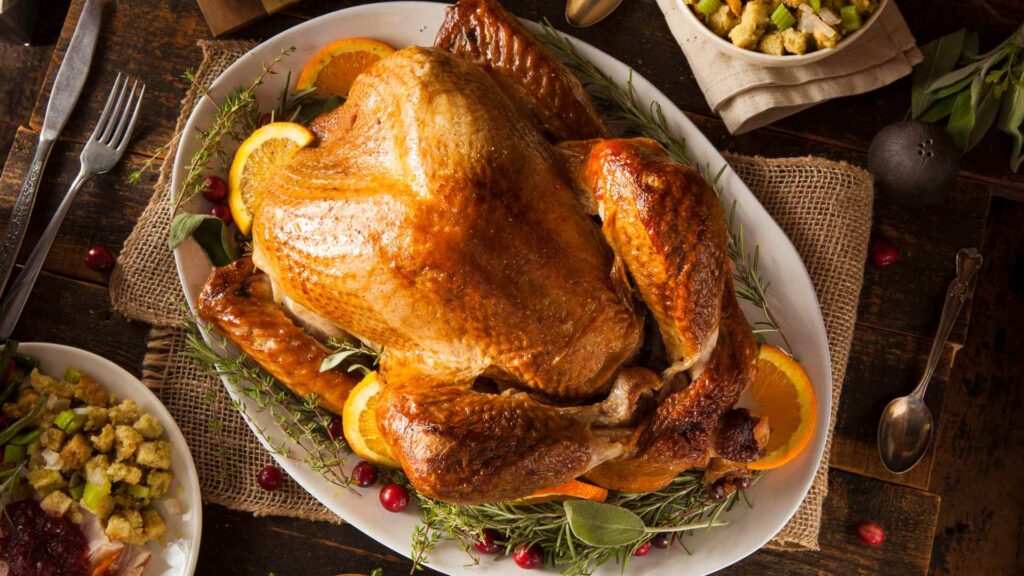
Build a dog-friendly holiday plate
If your veterinarian has not restricted these foods, start with a few pieces of plain skinless turkey. Add a small amount of plain cooked carrot or green bean, with no butter, salt, casserole sauce, or sweetener.
Serve the treat in the dog’s regular bowl rather than from the table. That keeps portions visible and reduces the parade of “just one bite” gifts from well-meaning guests.
Ask visitors not to feed the dog, secure the trash, and refrigerate leftovers promptly. The carcass, twine, foil, skewers, absorbent pads, and food bags can all be more dangerous than a neat cube of meat.
Frequently asked questions
Can puppies eat turkey?
A puppy can have a tiny piece of plain, fully cooked, boneless, skinless turkey if treats fit the puppy’s diet. Keep portions especially small and protect the puppy from bones, rich scraps, and raw poultry.
Can dogs eat turkey every day?
Plain turkey can appear in a complete commercial diet or a properly formulated veterinary recipe, but loose pieces of meat are not complete nutrition. Daily extras also add calories and can unbalance the diet, so ask your veterinarian how turkey fits your dog’s plan.
Is leftover turkey safe cold?
Temperature is not the main issue if the meat was cooked safely, refrigerated promptly, and has not spoiled. It still must be plain, boneless, skinless, and cut into a safe size.
Can dogs eat turkey necks?
Turkey necks contain many small bones and are not a risk-free chew, whether raw or cooked. Choose a dog-appropriate dental product or chew recommended for your dog’s size and chewing style instead.
The bottom line
Plain, fully cooked, boneless, skinless turkey can be a pleasant occasional treat. The safest piece is carved before seasoning and served in a portion small enough to remain a treat.
Keep bones, skin, stuffing, gravy, cured products, and raw poultry away from the dog. If the turkey theft involved a bone, toxic ingredient, large fatty meal, or concerning symptom, call a veterinarian with the package or recipe in hand.