Can Dogs Eat Pepperoni? Risks and What to Do
Dogs should not be offered pepperoni as a treat. One small slice is unlikely to poison a healthy medium or large dog, but pepperoni is salty, fatty, calorie-dense, and often seasoned with garlic or onion, so it is a poor routine choice and a bigger theft deserves a veterinary call.
The quick decision
If your dog snagged one ordinary slice, take away the rest, check the ingredient label, provide normal access to fresh water, and watch closely. A toy breed, puppy, dog on a sodium-restricted diet, or dog with pancreatitis, heart disease, kidney disease, or another prescribed diet needs a lower threshold for professional advice.
Call your veterinarian promptly after a large or uncertain amount, repeated vomiting, marked thirst, diarrhea, weakness, belly pain, tremors, poor coordination, collapse, or seizures. If the product contains xylitol, sometimes labeled birch sugar or wood sugar, treat that as an emergency and call immediately.
Why pepperoni and dogs are a bad match
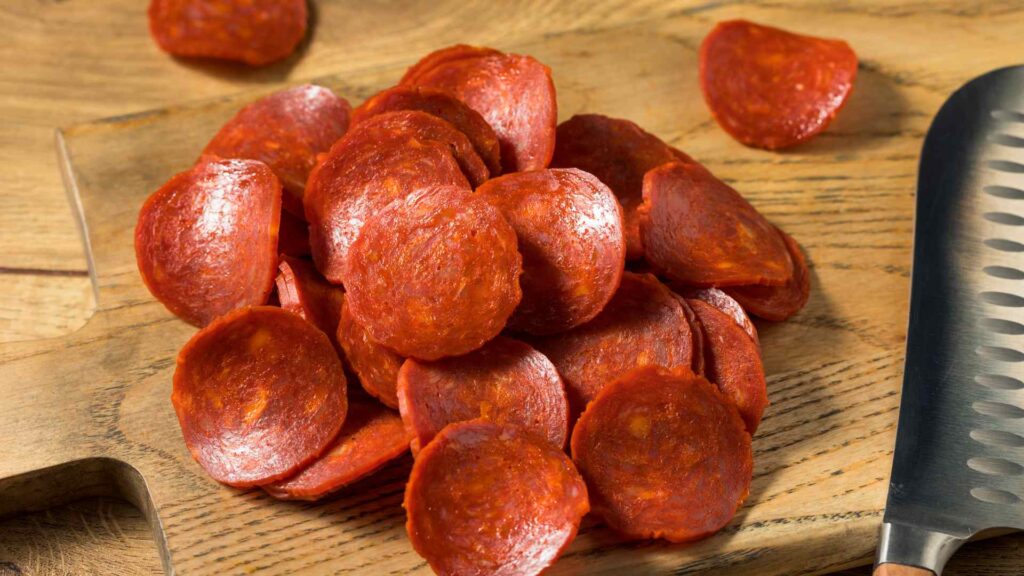
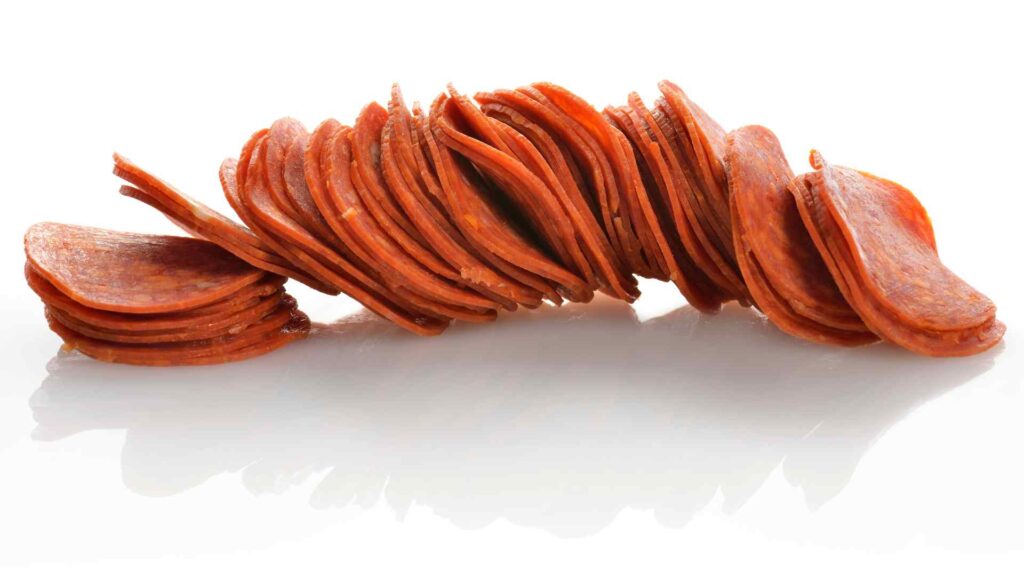
Pepperoni is cured, seasoned meat made for flavor and shelf life, not a nutritionally complete dog treat. Recipes vary, which means the actual concern depends on the sodium, fat, seasoning blend, portion, and the dog who ate it.
The practical distinction matters: a lick of pizza grease is not the same exposure as eating a whole package. It is equally inaccurate to call every tiny bite a poisoning emergency or to dismiss a large theft because pepperoni is “just meat.”
Salt is the first label check
Pepperoni is usually high in sodium, and multiple slices can add up quickly for a small dog. The FDA explains how to find sodium per serving on the Nutrition Facts label, so check both the milligrams and the number of servings your dog may have eaten.
True salt toxicosis generally involves excessive sodium exposure, especially when water is limited. The Merck Veterinary Manual lists vomiting, weakness, diarrhea, tremors, poor coordination, and seizures among possible signs after excessive salt intake.
Do not force a dog to gulp a large volume of water after a concerning salty-food exposure. Leave normal fresh water available unless a veterinarian directs otherwise, and get individualized instructions because severe hypernatremia must be corrected carefully.
Fat, calories, and pancreatitis
Pepperoni packs substantial fat into a small, easy-to-gobble package. A fatty food raid can cause vomiting or diarrhea, and it can be especially concerning for a dog with prior pancreatitis or a veterinarian-prescribed low-fat diet.
The Merck Veterinary Manual notes that eating large amounts of table scraps or inappropriate food is believed to be a common pancreatitis risk factor in dogs. Common warning signs include appetite loss, vomiting, weakness, abdominal pain, dehydration, and diarrhea.
A dog in the classic “prayer” posture, with the front end down and rear up, may be showing abdominal discomfort, but posture alone cannot diagnose pancreatitis. Persistent vomiting, pain, lethargy, or refusal to eat warrants veterinary assessment.
Garlic, onion, and spice blends
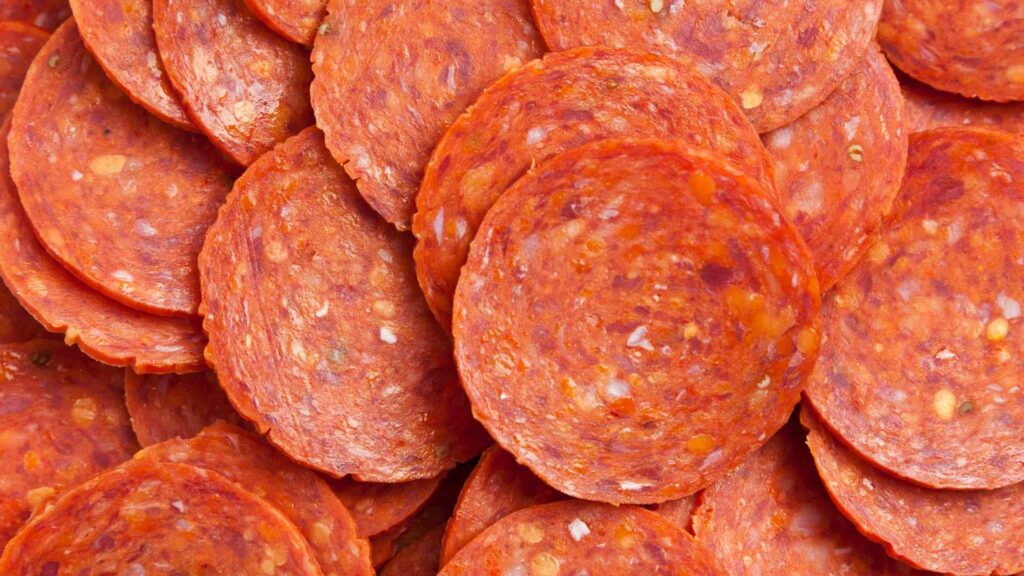
Pepperoni may contain garlic powder, onion powder, paprika, chili, fennel, smoke flavor, or proprietary spices. Garlic and onion belong to the Allium family and can injure red blood cells when enough is consumed, while spicy ingredients may irritate the digestive tract.
The ASPCA Animal Poison Control Center explains that Alliums can cause gastrointestinal irritation and red blood cell damage, with risk depending on the amount ingested. Powdered forms can be concentrated, so the ingredient list and quantity matter more than whether visible onion pieces are present.
Do not try to calculate safety from the ingredient order alone. Manufacturers rarely state how many grams of each spice are present, and your veterinarian or poison-control clinician can interpret the label in the context of your dog’s weight and health.
What about one pepperoni slice?
For many healthy medium or large adult dogs, one standard slice causes no sign or only brief stomach upset. That is reassurance, not an invitation to make it a treat, because small dogs get more salt, fat, and calories per pound from the same slice.
A tiny taste from plain pepperoni is less concerning than several thick deli slices, a stick, or a bag. Call sooner when the amount is unknown, the recipe is unusually spicy, the dog is very small, or the dog already has a relevant medical condition.
Pizza pepperoni brings extra baggage
Pepperoni pizza adds cheese, grease, crust, sauce, and often garlic or onion seasoning. A stolen topping and a swallowed half-pizza are different events, so estimate the amount of each component rather than reporting only “pepperoni.”
The cheese and oil raise the fat and calorie load, while sauce and seasoned crust may add more sodium and Alliums. Our separate guides to cheese and garlic explain those ingredients in more detail.
Hot pizza can also burn the mouth, and skewers, toothpicks, foil, plastic film, or a pizza-saver may cause injury or obstruction if swallowed. Packaging ingestion changes the problem from a food question to a possible foreign-body emergency.
Spoiled pepperoni is a different problem
Curing does not make opened pepperoni immortal. Discard meat that is moldy, slimy, smells wrong, has been stored contrary to its label, or sat at unsafe temperatures, and do not let a dog serve as the disposal system.
Foodborne illness may cause vomiting, diarrhea, fever, reduced appetite, or lethargy, and some dogs can shed pathogens without dramatic signs. Wash hands and clean contaminated surfaces if a dog tears into questionable meat or trash.
A practical response plan
- Remove the food, pizza, package, skewer, or wrapper so the exposure stops.
- Photograph the front, ingredient list, Nutrition Facts panel, and any lot information before throwing anything away.
- Estimate how many slices or how much of the stick is missing, and note when the event occurred.
- Record your dog’s weight, current medications, known conditions, and any symptoms.
- Call your veterinarian, an emergency clinic, or animal poison control when the amount is large, uncertain, xylitol is listed, packaging was swallowed, or symptoms appear.
Do not give salt, mustard, oil, milk, or another kitchen remedy to cause vomiting. Do not use hydrogen peroxide unless a veterinary professional who knows the exact exposure instructs you to do so, because inducing vomiting is unsafe in some situations.
Who deserves extra caution?
Dogs with a history of pancreatitis, high blood triglycerides, obesity, heart disease, kidney disease, or a prescription diet should not receive pepperoni unless their veterinarian has specifically approved it. The same caution applies to dogs taking medication with food restrictions.
Puppies and toy breeds have less room for error because a slice represents a larger exposure relative to body size. Senior dogs and dogs with chronic gastrointestinal disease may also tolerate fatty, salty food poorly.
Better ways to share snack time
Use part of your dog’s normal kibble, a veterinary-approved low-fat treat, or a tiny piece of plain cooked lean meat with no bones, skin, salt, sauce, onion, or garlic. The goal is not to find a pepperoni-sized “allowance,” but to choose something that fits the dog’s whole diet.
UC Davis advises that treats and extras stay at or below 10 percent of daily calories, with at least 90 percent coming from a complete and balanced diet. Pepperoni can burn through that small treat budget surprisingly fast without adding anything the regular diet needs.
If processed meat is what your dog targets, review our guides to hot dogs, bacon, and other common counter-surfing prizes. The same household strategy works for all of them: cool food away from the edge, secure trash, and put packages out of reach.
Frequently asked questions
Can dogs eat turkey pepperoni?
Turkey pepperoni may contain less fat than some pork-and-beef versions, but it can still be salty and seasoned with garlic or onion. Read the actual label and do not assume the word “turkey” makes it dog-safe.
Can dogs eat pepperoni sticks?
Pepperoni sticks can deliver much more meat than a thin slice, and their shape encourages gulping. They may also come with an inedible casing, plastic wrapper, clip, or oxygen absorber, so find the packaging and call if any nonfood item is missing.
Should I feed bland food after one slice?
Do not automatically change a healthy dog’s diet after a tiny theft. Continue the regular food unless your veterinarian recommends a temporary adjustment, and seek advice if vomiting, diarrhea, appetite loss, or pain develops.
When is it an emergency?
Urgent signs include repeated vomiting, a painful or swollen abdomen, weakness, tremors, poor coordination, collapse, seizures, breathing difficulty, or inability to keep water down. Xylitol on the label, a large unknown amount, or swallowed packaging also justifies immediate professional guidance.
Keep the facts ready for triage
A veterinary team can give a faster answer when you provide the dog’s current weight, the product label, package size, amount missing, time of exposure, medical conditions, medications, and symptoms. Weighing what remains can help, but never delay an urgent call while trying to reconstruct every crumb.
Bottom line
Pepperoni is not a suitable dog treat, but one small slice in an otherwise healthy dog is usually a monitoring situation rather than a reason to panic. The amount, label, dog’s size, medical history, and symptoms determine the next step, so keep the package and call early when any of those details raise concern.