Can Cats Eat Pretzels? Salt, Flavors, Dough, and Packages
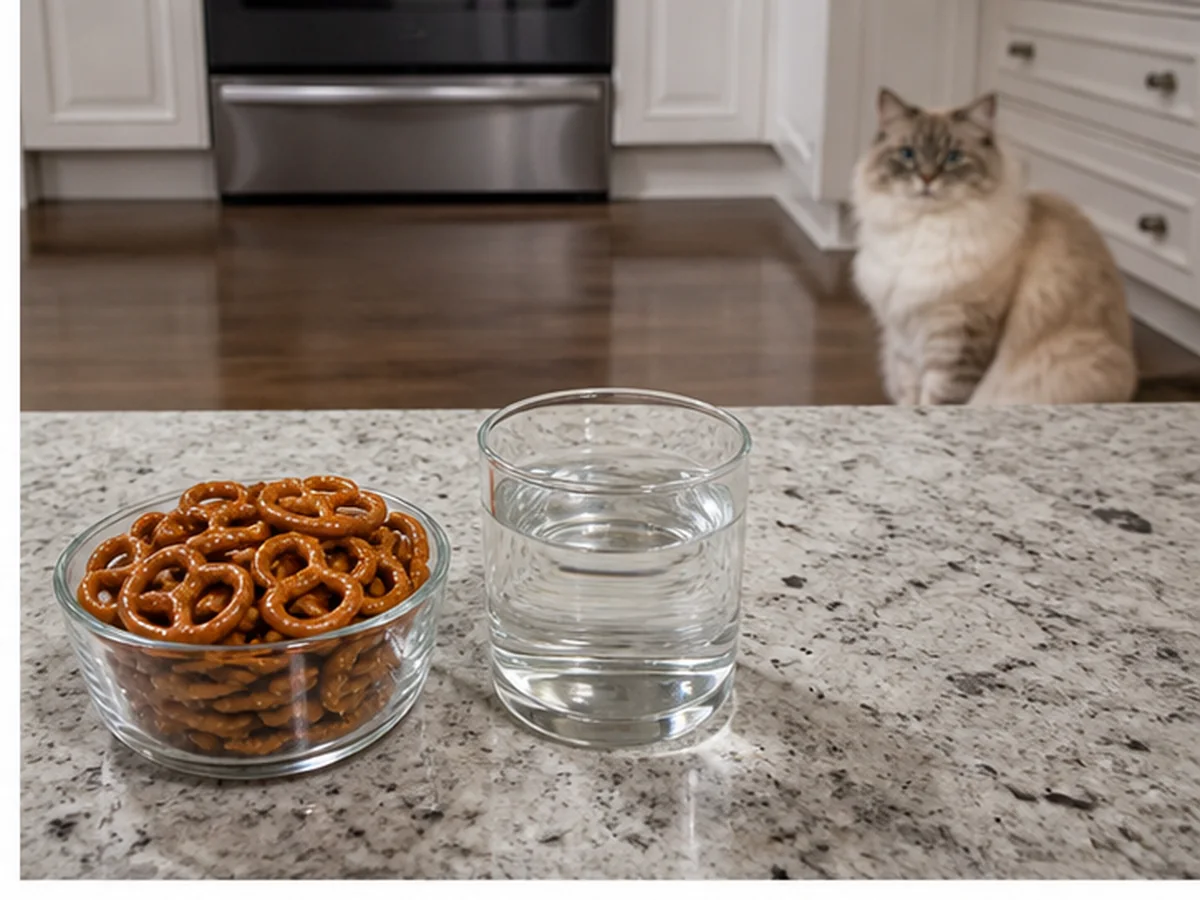
One small crumb from a plain baked pretzel is unlikely to poison a healthy cat, but pretzels are salty starch rather than feline nutrition. Large amounts, coarse salt, hard shapes, flavor powders, chocolate, dips, raw dough, and packaging change the answer.
Count pieces and find the package
Identify hard twists, rods, nuggets, soft pretzel, filled bites, seasoning, dip, or raw dough. Estimate the amount and inspect bags, cups, foil, and freshness packets.
A plain crumb often needs observation; call about a bag raid, concentrated salt, chocolate coating, allium flavor, raw yeast dough, choking, or swallowed packaging.
Do not induce vomiting or give extra salt. Breathing trouble, repeated vomiting, tremors, seizures, collapse, or severe belly pain is urgent.
Plain baked pretzel is optional starch
Flour, water, yeast or leavening, oil, and salt make a human snack, not complete cat food. A crumb may pass without signs.
The Cornell Feline Health Center recommends complete feline nutrition and limited treats. Crunch does not add taurine.
Choose pieces of normal kibble for shared snack time instead of teaching the cat to investigate every crinkly bag.
Coarse salt changes proportion
Pretzel crystals can cling to a piece or collect at the bottom of a bag. A cat may lick salt without eating many pretzels.
One lightly salted crumb is unlikely to cause sodium poisoning, while many pretzels or direct salt ingestion needs advice. Kidney and heart disease lower tolerance for casual salty snacks.
Vomiting, extreme thirst, weakness, disorientation, tremors, seizures, or collapse after a substantial exposure requires urgent care.
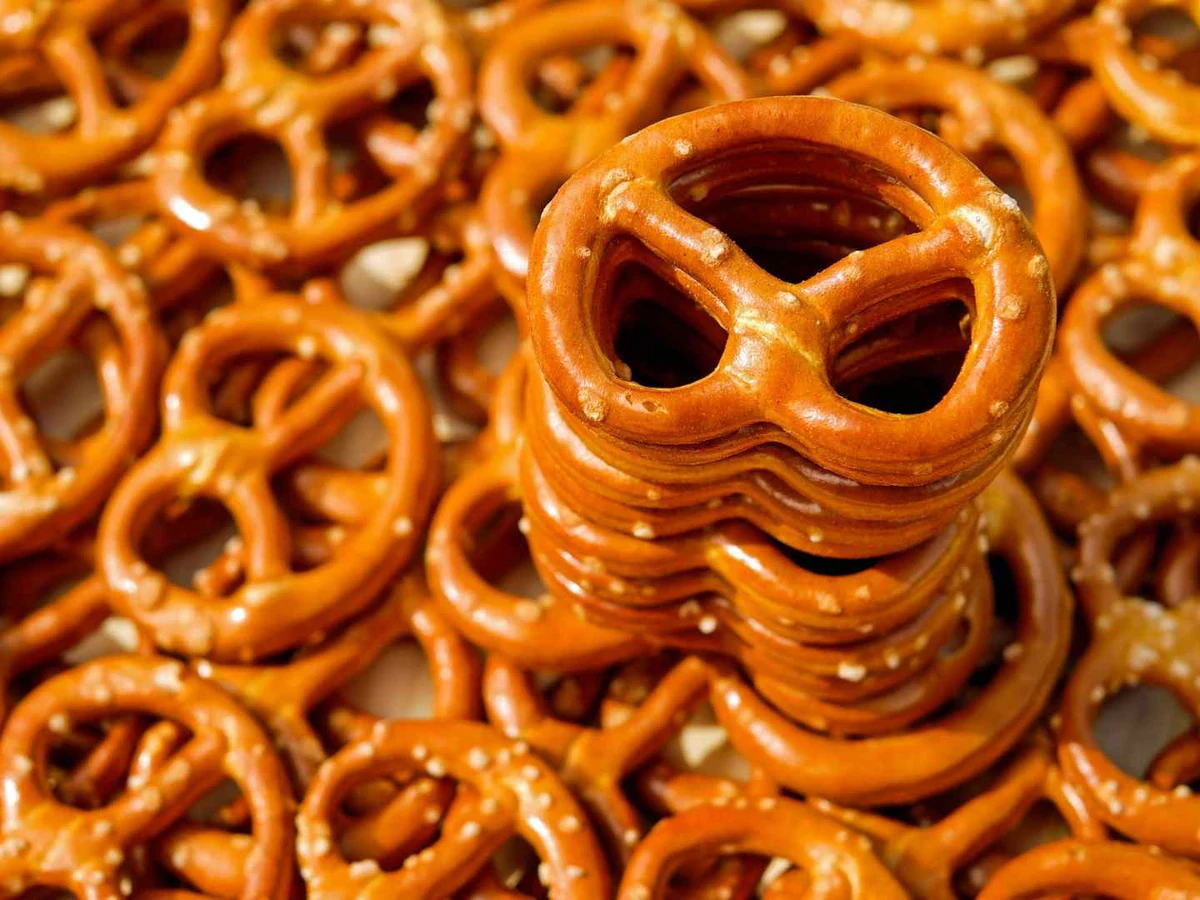
Hard twists, rods, and nuggets
Hard pretzels can fracture into sharp pieces, lodge in the throat, or damage painful teeth. Large rods and dense nuggets are poor feline shapes.
Do not offer whole pieces. Silent gagging, little or no air movement, blue-gray gums, or collapse is an emergency.
Call if a large fragment was swallowed and later vomiting, appetite loss, lethargy, or abdominal pain develops.
Soft pretzels have their own hazards
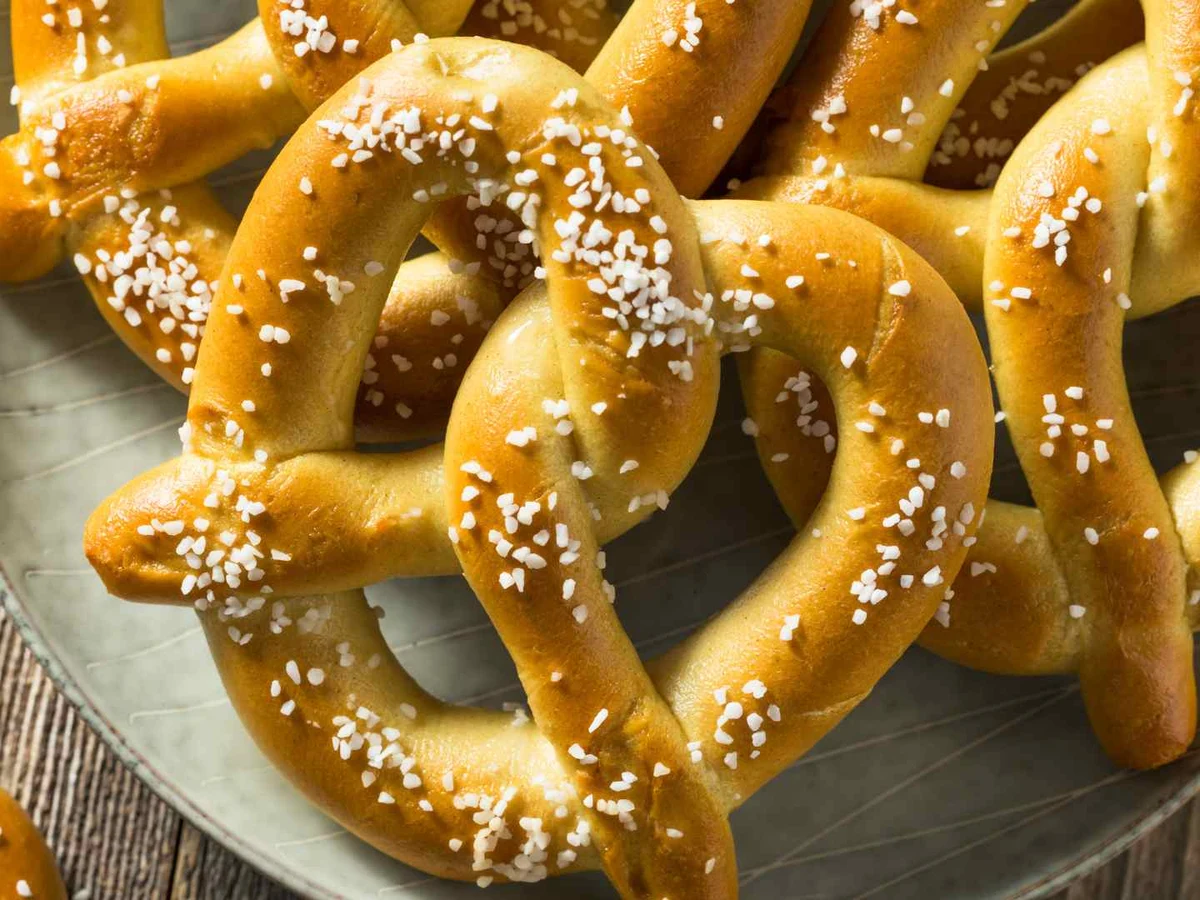
A warm soft pretzel is easier to chew but can form a sticky doughy wad. It may carry butter, cheese, salt, cinnamon sugar, garlic, or jalapeño.
Hot pretzels and cheese dip can burn the mouth. Cool a minor surface contact with room-temperature water and seek care for blistering or persistent pain.
The live pretzel product guide helps identify formats, but dog portions do not define cat safety.
Raw yeast dough is urgent
Unbaked yeast dough can expand in the stomach and generate ethanol during fermentation. This differs sharply from a finished pretzel crumb.
The FDA includes yeast products among dangerous pet items. Call immediately after rising-dough ingestion.
Abdominal distension, retching, weakness, poor coordination, sleepiness, low temperature, or collapse can occur. Do not wait for dough to rise visibly.
Raw flour and egg additions
Non-yeasted pretzel dough still contains untreated flour, and some recipes use egg. FDA raw-dough safety information explains that untreated flour can harbor harmful microbes.
Report vomiting, diarrhea, feverish behavior, lethargy, or food refusal after raw dough. Preserve the recipe.
Do not let cats lick mixing bowls or flour dust. Powder can also irritate eyes and airways.
Garlic, onion, ranch, and pizza flavors
Seasoning powders may contain garlic, onion, chives, cheese, yeast, chili, and salt. Cats are unusually vulnerable to allium-related red blood cell damage.
The ASPCA people-food guidance supports prompt review of allium-containing snacks. Call with the exact label.
Weakness, pale gums, rapid breathing, and dark urine can appear later. A normal first hour does not clear a meaningful powder exposure.
Chocolate and yogurt coatings
Chocolate-covered pretzels contain methylxanthines cats handle poorly, while yogurt-style coatings may include dairy, sugar, and fat.
The cat chocolate guide explains cocoa type, amount, timing, and weight. Call before restlessness, racing heart, tremors, or seizures.
White coating does not clear coffee, cocoa drizzle, raisins, or wrapper ingestion elsewhere in the snack mix.
Cinnamon sugar and sweet pretzels
Culinary cinnamon on one crumb is different from powder inhalation or essential oil. Sugar adds calories without feline benefit.
Call for direct spice ingestion, coughing, eye contact, repeated vomiting, or concentrated oil. Do not apply another oil to the coat.
Sugar-free glaze requires its ingredient list. Dog xylitol certainty should not be copied to cats, although mixed products still need assessment.
Dips and stuffed bites
Cheese sauce, mustard, hummus, peanut butter, caramel, and frosting add dairy, fat, alliums, chocolate, spice, sweeteners, or nuts.
The cat mustard guide separates condiment from seed, powder, and oil. Assess every dip on its own label.
Stuffed bites hide how much filling disappeared. Photograph a cut remaining piece for the clinic.
Bags and party bowls
Plastic bags, foil liners, clips, desiccants, paper trays, and condiment cups retain food scent. Swallowed material can choke or obstruct.
Call whenever packaging is missing and watch for vomiting, appetite loss, lethargy, abdominal pain, or reduced stool. Never pull film from the mouth or anus.
Empty bowls before pets enter the party room and put bags into lidded trash. Floor salt deserves cleanup too.
Medical diets and monitoring
Cats with kidney or heart disease, diabetes, obesity, dental pain, swallowing trouble, food allergy, or prescription diets should not receive pretzels.
After one plain baked crumb, continue normal food and water while observing appetite, vomiting, stool, swallowing, thirst, and energy.
A plain crumb is generally low risk, but salt, shape, flavor, coatings, dips, raw dough, and packaging determine whether the pretzel theft needs help.
Mustard pretzels
Mustard-coated snacks may contain condiment powder, vinegar, salt, sugar, garlic, and onion.
The exact formula matters more than the flavor name, and concentrated dust can be inhaled.
Save the bag and use the mustard guide for form-specific context.
Peanut-butter pretzels
Filled pretzel nuggets add dense nut butter, fat, salt, and sometimes sweeteners.
A whole nugget can choke, while chocolate versions add methylxanthines.
Check the filling label and count intact pieces rather than estimating crumbs.
Beer-cheese and pub platters
Pub pretzels often arrive with beer cheese, mustard, cured meat, pickles, and skewers.
Alcohol, dairy, sodium, alliums, and packaging turn the plate into mixed-dish triage.
Photograph the menu and report every dip the cat could reach.
Pretzel buns
A bun is soft bread rather than a hard twist but may contain coarse salt and form a large doughy wad.
Sandwich fillings can add onion, garlic, cheese, hot dogs, sauces, and toothpicks.
A bun raid should be described as the whole sandwich, not a pretzel crumb.
Mold and stale snacks
Staleness mainly affects quality, while visible mold can introduce gastrointestinal or neurologic hazards.
Discard musty or fuzzy pretzels securely and call for tremors, seizures, or repeated vomiting.
Do not feed old snacks simply to avoid waste.
Dental fractures
Hard rods can crack damaged teeth or lodge between molars.
Drooling, blood, facial swelling, one-sided chewing, or food refusal deserves examination.
Choose no human hard snack as dental enrichment.
Sodium math
Record serving size, sodium per serving, and estimated fraction eaten.
A cat licking crystals from the bag may consume more salt than the pretzel count suggests.
Provide normal water and follow the clinic’s observation window.
Pretzel necklaces add string that can injure intestines if swallowed.
Never pull visible string from a cat’s mouth or anus.
Festival pretzels may be brushed repeatedly with butter and salt.
Frozen soft pretzels often include separate seasoning packets.
A desiccant packet is not a seasoning sachet and needs identification.
Pretzel cereal mixes can contain raisins, chocolate, nuts, and candy.
Count every mix component before calling the clinic.
A cat with dental pain may drop crunchy crumbs or chew one-sidedly.
Do not use hard pretzels as tooth-cleaning treats.
Cinnamon pretzel bites may carry sticky icing and dairy dip.
Garlic butter can soak through the dough instead of sitting on top.
Store party snacks in rigid lidded containers rather than open bowls.
Pretzel salt sometimes falls into upholstery, carpet, or a cat bed after a party. Vacuum crystals and crumbs before the cat grooms them from paws, and inspect beneath furniture for chocolate pieces or packets carried away from the bowl.
A pretzel used as a cocktail garnish may be soaked with beer or another alcoholic drink. Report the beverage, approximate volume, and whether the snack was swallowed, because finished baked dough and alcohol-soaked bread require different advice.
Pretzel dog treats and cat treats should be judged by their own complete labels, not by resemblance to the human snack. A product made for another species may still be inappropriate for a cat’s calories, minerals, allergies, or prescription diet.
If several cats had access, separate them while counting the remaining pieces. Report the maximum each could have eaten rather than dividing the missing amount evenly, since one quick eater may account for most of the raid.
Keep the package until monitoring ends because ingredient formulas, lot information, and serving size may become useful if symptoms emerge. A photo saved before disposal is better than reconstructing a flavor from memory.
Children’s snack cups often hide pretzel crumbs beneath seats and cushions, so a quick floor check after eating prevents the cat from assembling a much larger serving piece by piece.
FAQ
Can cats eat one pretzel?
One small plain baked crumb is generally low risk, but salty pretzels should not be offered.
What if my cat ate many pretzels?
Call with the package, amount, sodium, and symptoms, especially for kidney or heart disease.
Can cats eat soft pretzels?
They remain unnecessary and may include butter, cheese, garlic, salt, or hot doughy pieces.
Is raw pretzel dough dangerous?
Yeast dough is urgent because it can expand and produce ethanol. Call immediately.
Bottom line
A plain crumb is generally low risk, but salt, shape, flavor, coatings, dips, raw dough, and packaging determine whether the pretzel theft needs help.