Can Cats Eat Rice Cakes? Dry Texture, Flavors, Toppings, and Wrappers
A tiny crumb of a plain, unsalted rice cake is unlikely to poison a healthy cat, but the full dry disc is a poor treat. Its airy appearance hides a hard, expanding mouthful, while flavors, chocolate coatings, nut butter, cheese, salt, mini bags, and plastic wrappers can change the risk faster than the rice itself.
The snap test tells you more than the calorie count
Break the product in your hand and watch what it becomes: a soft crumble, a jagged shard, sticky compressed grains, or powdery dust. Cats often bite once and swallow, so a food that dissolves eventually in a human mouth can still be awkward at the moment it crosses a smaller throat.
| Rice-cake form | What deserves attention |
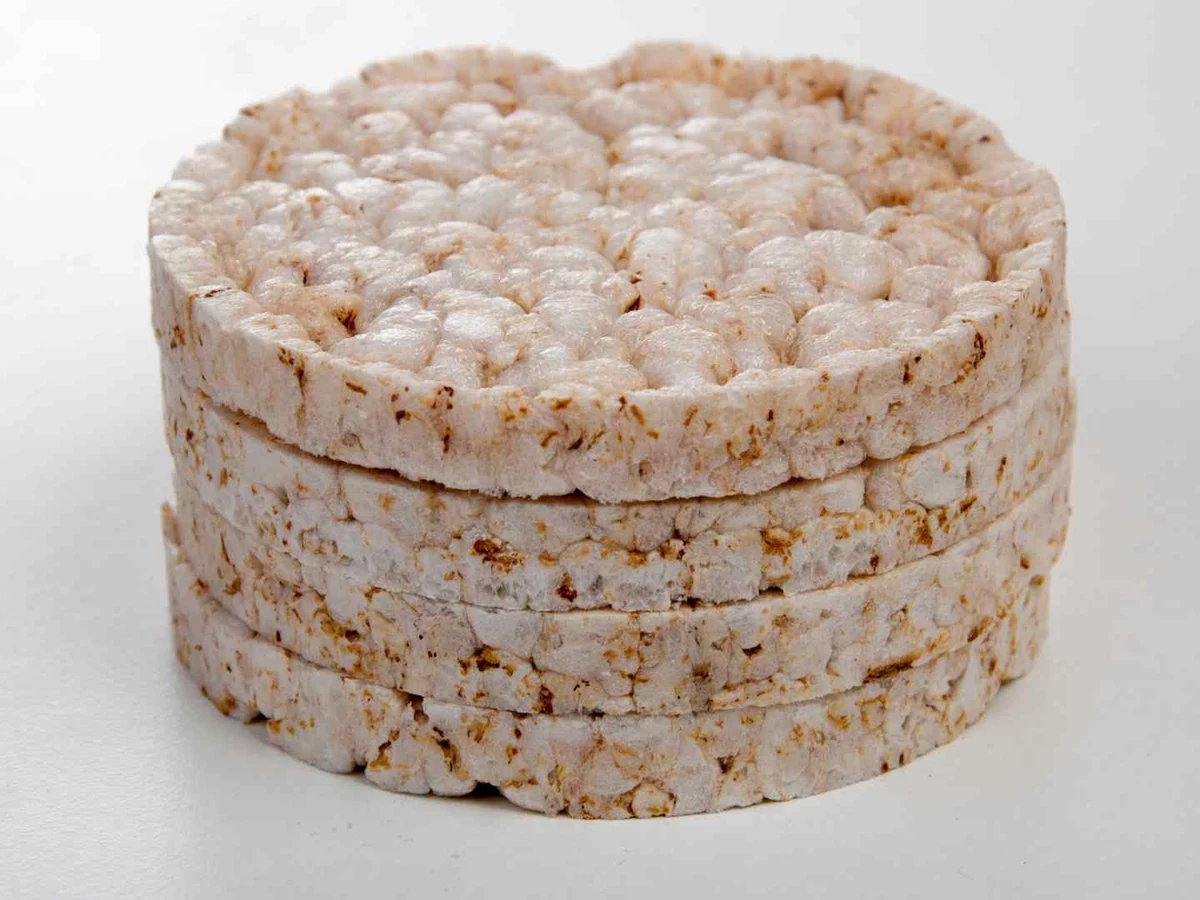
| Plain full-size disc | Hard dry bite, choking size, little nutritional value |
| Mini rice cake | Easy to gulp whole, often seasoned |
| Puffed rice cracker or chip | Sharp edges, oil, sodium, flavor powders |
| Chocolate-coated cake | Chocolate type, coating amount, package quantity |
| Cake with spread | Nut butter, sweetener, dairy, fruit, seeds, or Alliums |
| Wrapper or freshness packet | Suffocation, choking, or obstruction |
Plain puffed rice is not toxic, just nutritionally underqualified
Rice is used in some formulated cat foods, but an isolated rice cake is mostly a human snack made from puffed grain. It does not provide the animal-based protein, taurine, fatty acids, vitamins, and mineral balance expected from a complete feline diet.
The FDA explains how to find a complete and balanced claim on pet food. A human product’s low-calorie marketing, whole-grain badge, or short ingredient list does not make the disc a nutritionally complete cat treat.
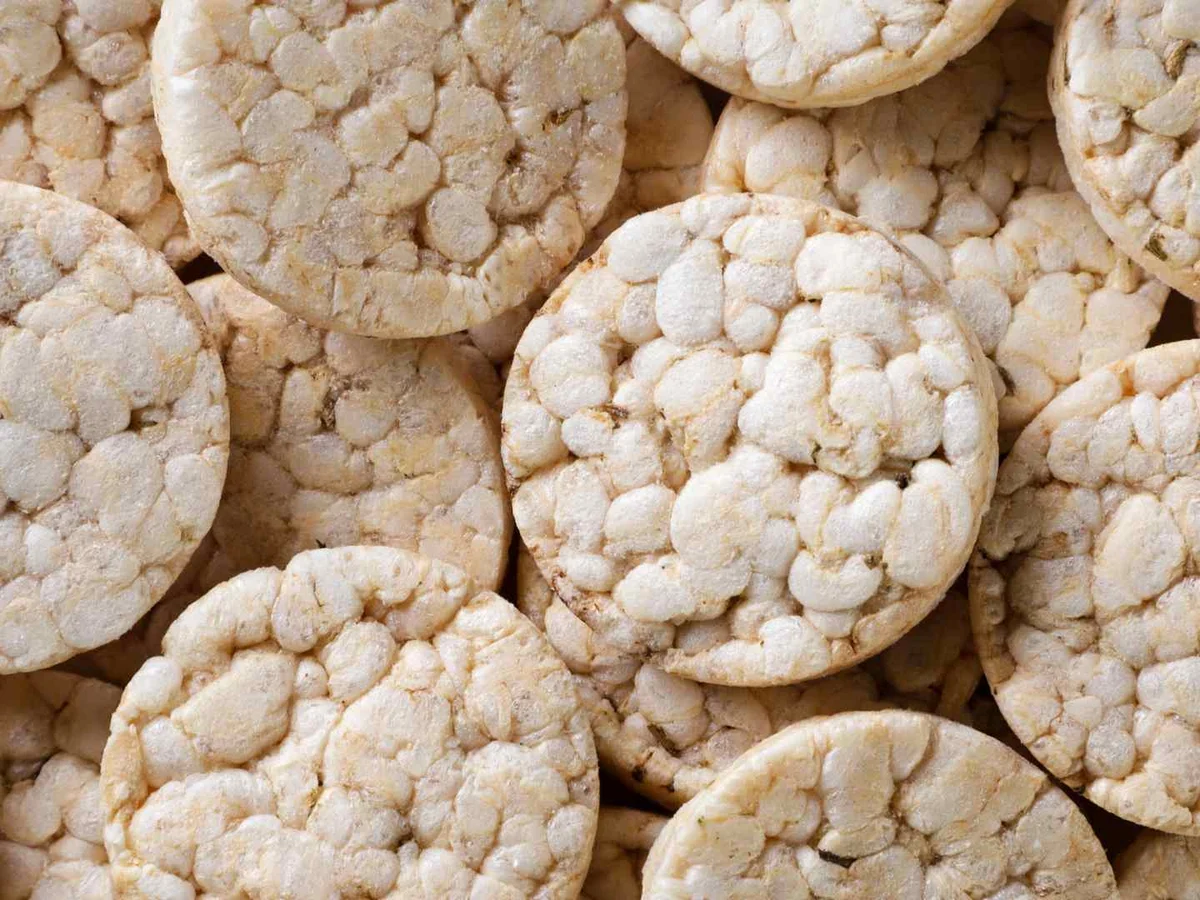
A whole circle is much too large
A standard rice cake can fracture unpredictably as a cat bites, leaving a wedge wider than the airway or a wad of damp compressed crumbs. Mini cakes are smaller but may be swallowed intact, which trades one shape problem for another.
Urgent signs include choking, frantic mouth pawing, repeated gagging, labored breathing, blue or pale gums, or collapse. Do not push the cake deeper with water or food and do not sweep blindly inside the mouth.
Dry crumbs can bother teeth and airways
A cat with dental pain, missing teeth, oral ulcers, or swallowing disease may struggle with an edge that seems fragile to a person. Powder can also provoke coughing or sneezing when a bag is crushed near the face.
Move the cat into clean air after a dust spill and contact a veterinarian for persistent coughing, wheezing, open-mouth breathing, or eye irritation. Vacuum only after the cat leaves the area, since a roaring machine can scatter both crumbs and panic.
Salted and flavored versions require the back label
Caramel corn, white cheddar, ranch, barbecue, sea salt, cinnamon sugar, and spicy varieties may share a shelf while having very different formulas. Garlic or onion powder can appear in savory seasoning, and cheese flavors add dairy components, fat, and more sodium.
The FDA notes on its sodium label resource that sodium can come from salt and other sodium-containing ingredients. Use the current package rather than assuming one brand’s “lightly salted” version matches another bag.
Chocolate coating moves the incident into another category
Chocolate-covered rice cakes may use dark, milk, white, yogurt-style, or cocoa-flavored coating, and the cacao content changes toxicology. Save the product, count the missing cakes, and contact a veterinarian or animal poison service promptly when actual chocolate was eaten.
Do not wait for vomiting, restlessness, fast heart rate, tremors, or seizures before calling about a meaningful chocolate exposure. White confectionery coating may contain little or no cocoa, but fat, sugar, dairy, and the exact label still matter.
Nut butter can glue dry crumbs into a larger bite
Peanut, almond, cashew, and seed butter make a rice cake more aromatic and far stickier. Thick spread can adhere to the palate, while added salt, oil, chocolate, honey, raisins, or sweeteners create new questions.
Severe xylitol poisoning is well established in dogs, but equivalent feline susceptibility is not well characterized, so neither a canine dose nor a claim of immunity belongs in a cat article. If a sugar-free spread contains xylitol or another unfamiliar sweetener, call with the exact product and amount.
Sweet toppings are not all the same kind of sweet
Jam, jelly, fruit spread, banana, frosting, marshmallow creme, syrup, and dried fruit can sit on the same neutral-looking base. Genuine grape or raisin ingredients deserve a professional call with feline evidence uncertainty stated clearly, while fruit pits, cherry stems, and sticky wrappers add physical hazards.
A plain cake smeared with frosting should be assessed as frosting on a carrier, not as rice with a decorative detail. The site’s guide to jelly for cats helps sort fruit source, sweetener, and jar concerns.
Savory toppings can hide Alliums in a thin layer
Cream cheese, hummus, tuna salad, egg salad, avocado spread, deli meat, smoked salmon, and seasoning blends may contain onion, garlic, chives, leek, or shallot. Those ingredients can damage feline red blood cells even when blended smoothly and left in only a glossy smear.
Save the recipe, especially after a party tray where several spreads touched the same stack. If cream cheese is the topping, consult the cream cheese guide while remembering that flavored versions may add Alliums.
Brown rice, multigrain, and “organic” do not settle safety
Brown-rice cakes may retain more grain components, while multigrain products can include corn, quinoa, millet, seeds, legumes, or wheat. Organic certification addresses production standards, not choking size, feline nutrient balance, sodium, or the safety of every flavor.
A gluten-free label has meaning for human labeling but does not turn the product into veterinary therapy. Cats undergoing a food-elimination trial should receive only the prescribed ingredients, because one crumb can introduce a grain, seed, or flavoring the trial was designed to exclude.
The bag may be the fastest emergency in the room
Rice cakes often come in flexible plastic sleeves or snack bags that retain a strong food odor after the last crumb. The FDA warns that pets can suffocate in snack bags when the material seals around the nose and mouth.
Remove a bag from the head immediately and call an emergency clinic, even if the cat appears to recover. Cut open discarded flexible bags, secure the trash, and count clips, twist ties, zip strips, cardboard tabs, and freshness packets.
Storage and staleness affect texture before appearance
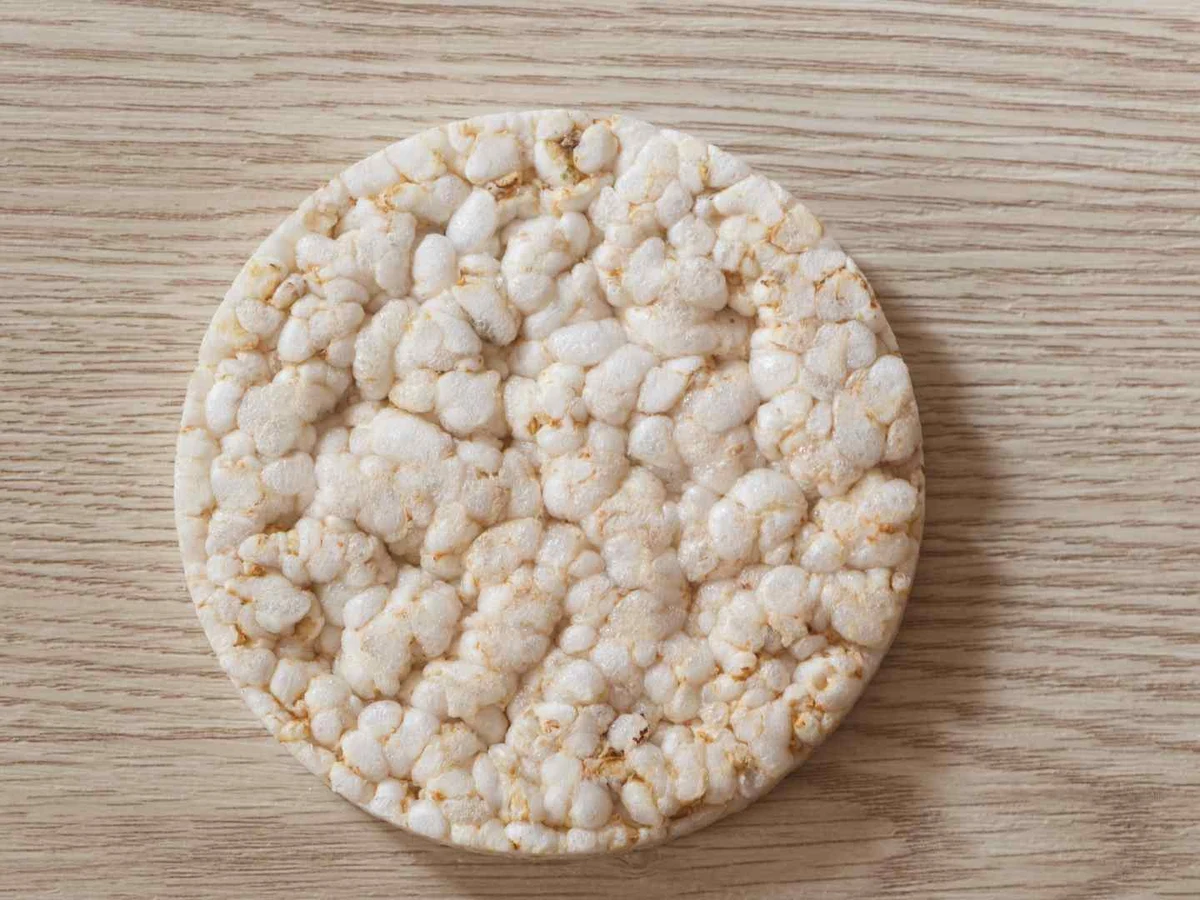
An opened cake can absorb humidity, become chewy, then dry into a tougher piece, while rancid toppings or visible mold make the product unfit for any animal. A stale disc is not a dental chew and should not be used to occupy a cat.
Discard packages with moisture, insects, off odor, damaged seals, or an unexplained puncture. If a freshness packet is missing, report the printed packet text and product lot rather than guessing whether its contents were harmless.
What to do after the crunch from the other room
- Take away the remaining cake, toppings, crumbs, bag, clips, and packets.
- Identify the exact flavor and every spread or garnish, then photograph the label.
- Estimate whether the cat licked dust, ate a fragment, swallowed a mini cake, or removed a whole disc.
- Call for choking signs, chocolate, Alliums, xylitol-containing products, a large amount, packaging, or uncertainty.
- If advised to observe, monitor breathing, swallowing, appetite, vomiting, stool, energy, and oral comfort.
Do not induce vomiting or give oil, milk, bread, salt, peroxide, or an extra meal to push the snack through. A lodged piece, sticky spread, sharp object, or toxic topping requires a response tailored to that exposure.
Who should skip even a plain crumb
Kittens, frail seniors, and cats with dental disease, swallowing difficulty, diabetes, obesity, kidney or heart disease, food allergy, gastrointestinal illness, or prescription diets have little reason to experiment. Their normal ration can provide a safer crunchy reward if the texture is medically appropriate.
A cat repeatedly seeking rice cakes may enjoy the sound, human attention, or rolling disc more than the taste. Offer a safe toy too large to swallow or a food puzzle filled with measured cat food instead of turning the snack sleeve into enrichment.
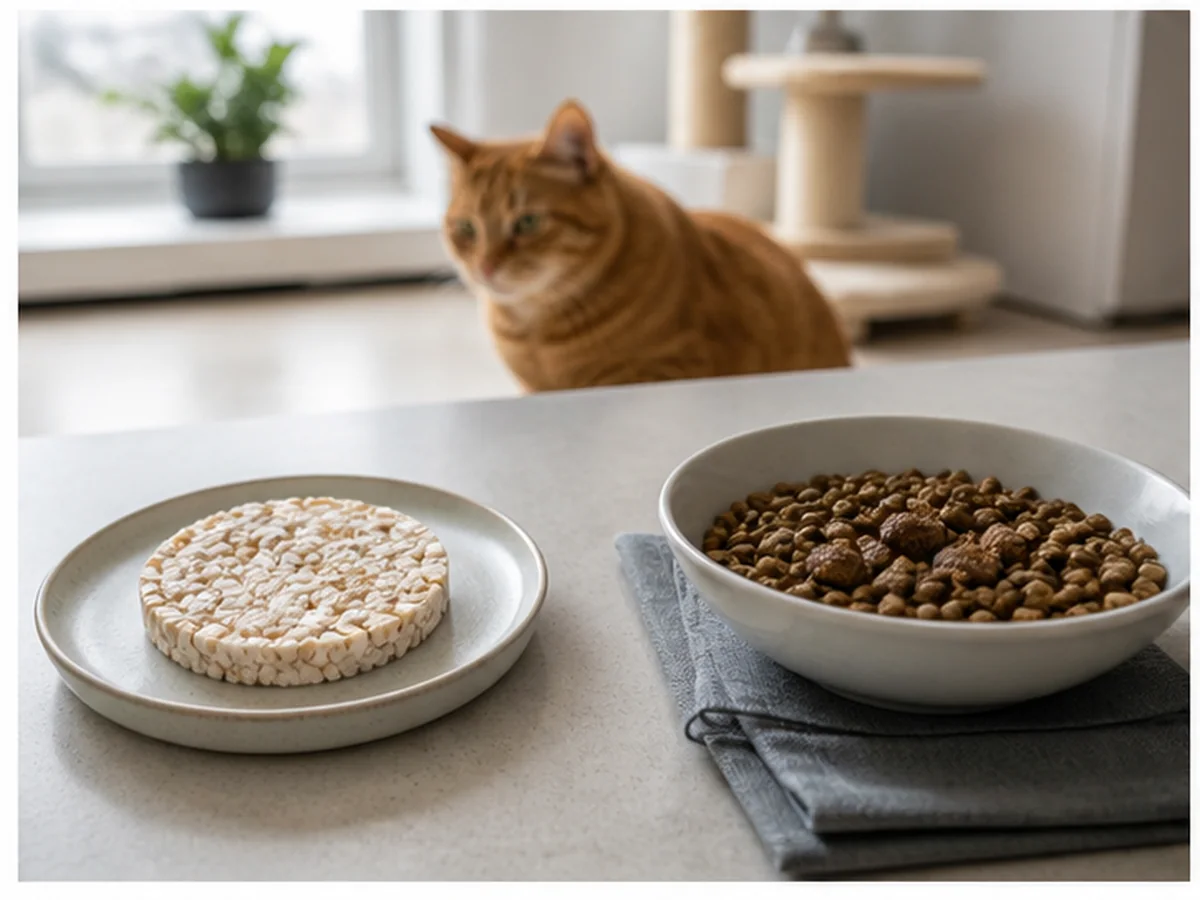
Rice in cat food does not validate the human cake
A formulated food can use cooked rice in a tested recipe while supplying protein, taurine, vitamins, minerals, and fat in the finished nutrient profile. The site’s rice guide explains why preparation and dietary context matter more than spotting one shared grain on two labels.
For other dry human snacks, the cracker guide provides a label-first comparison. Puffed discs remain unusually bulky and friable, so a safe-size piece is smaller than many owners expect.
Frequently asked questions
Can cats eat plain unsalted rice cakes?
A tiny soft crumb is unlikely to be toxic, but a full or mini cake is dry and awkward to swallow. Rice cakes offer no advantage over a measured cat treat.
Can cats eat caramel rice cakes?
They are best avoided because sugar, flavoring, salt, hard coating, and package quantity add risk without feline benefit. Check for chocolate, raisins, and sweeteners after a theft.
What if my cat swallowed a whole mini rice cake?
Call a veterinary clinic promptly and report the diameter, flavor, time, cat’s size, and any gagging, drooling, vomiting, pain, or breathing change. Do not force food or water behind it.
Are rice cakes good for an overweight cat?
No human low-calorie snack should replace a veterinary weight plan. Cats need adequate protein and carefully controlled total nutrition during weight loss, and overly aggressive calorie restriction can be dangerous.
Bottom line
Plain rice-cake crumbs are generally low concern, but the dry disc, flavored dust, coatings, spreads, and wrapper create the useful safety questions. Keep portions out of feline reach, call about hazardous toppings or swallowing problems, and choose complete cat food for nutrition and rewards.