Can Dogs Eat Cottage Cheese? Dairy Tolerance and Safe Portions
Many healthy adult dogs can eat a small taste of plain cottage cheese, but plenty of dogs cannot tolerate dairy. Choose a lower-sodium, lower-fat product, avoid flavored varieties, and skip it for dogs with lactose sensitivity, dairy allergy, pancreatitis, or a veterinary diet unless their clinician approves.
The useful answer is in your dog and the label
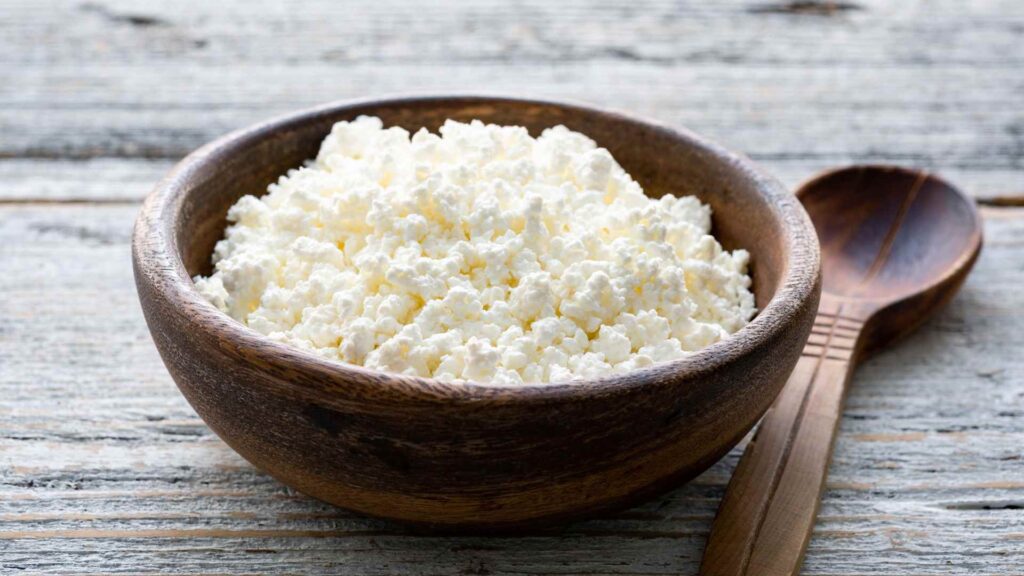
Cottage cheese is fresh cheese curd mixed with a creamy dressing, so its lactose, fat, sodium, and ingredient profile varies by brand. Small-curd versus large-curd barely matters for safety, while the nutrition label and ingredient list matter quite a bit.
A lick from a spoon is not the same as replacing half a meal. Cottage cheese is an optional treat or medication helper, not a calcium supplement, probiotic prescription, muscle-building plan, or automatically gentle food for an upset stomach.
For the broader dairy picture, our guides to milk for dogs and cheese for dogs explain why tolerance differs from one product and dog to another.
Check these five things before sharing
- Choose plain cottage cheese with no fruit, herbs, onion, garlic, chives, pepper, or dessert flavoring.
- Compare sodium per serving and pick a lower-sodium option when available.
- Choose lower fat if the veterinarian has not prescribed another product, and avoid it entirely on a fat-restricted plan unless approved.
- Confirm there is no xylitol or unfamiliar sweetener in a flavored or reduced-sugar product.
- Offer one small lick first and watch for gas, loose stool, vomiting, itching, or swelling.
Low-fat and low-sodium are comparative label terms, not guarantees that a product suits a particular dog. A prescription diet can have targets that an ordinary grocery product cannot meet.
Why dairy can cause digestive trouble
Lactose is the milk sugar digested by the enzyme lactase. Lactase activity can decline after weaning, and gastrointestinal disease can also reduce the intestinal surface’s ability to handle lactose.
The Merck Veterinary Manual review of malabsorption notes that dogs and cats can develop lactose intolerance after intestinal damage and specifically advises avoiding dairy in animals with diarrhea. That is an important counterweight to old-fashioned blanket bland-diet advice.
The ASPCA people-food guidance likewise explains that pets may have limited lactase, so milk and dairy products can cause diarrhea or other digestive upset.
Cottage cheese may contain less lactose than milk, but less is not zero and recipes vary. A dog’s previous reaction is more useful than assuming all cultured dairy is easy to digest.
Signs of poor lactose tolerance
- Gas, audible gut sounds, or abdominal bloating.
- Loose stool or diarrhea.
- Vomiting or nausea-like lip licking.
- Restlessness, a tense abdomen, or reluctance to eat.
Stop the cottage cheese if those signs appear. Repeated vomiting, profuse or bloody diarrhea, black stool, marked pain, weakness, dehydration, or illness in a puppy or medically fragile dog needs veterinary care.
Milk-protein allergy is different from lactose intolerance
Lactose intolerance is a digestive problem with milk sugar, while a food allergy involves an immune response to protein. Lactose-free cottage cheese can still contain dairy proteins and does not solve a milk-protein allergy.
Dairy is among the more commonly reported canine food allergens, but no symptom or mail-order panel can confirm it alone. The Merck Veterinary Manual food-allergy review identifies a strict elimination diet followed by a controlled rechallenge as the reliable diagnostic approach.
Possible signs include ongoing itching, recurrent ear or skin problems, vomiting, and diarrhea, yet each has many other causes. Facial swelling, widespread hives, breathing difficulty, weakness, or collapse after eating requires emergency care.
Do not offer cottage cheese during a veterinary elimination trial unless it is explicitly included. One creamy pill-hiding shortcut can invalidate weeks of careful feeding.
Protein and calcium do not make it necessary
Cottage cheese contains protein and calcium, but a complete and balanced dog food already provides essential amino acids and minerals in planned proportions. Adding calcium casually can be especially unhelpful for growing puppies, whose skeletal nutrition needs tight control.
A spoonful is not a balanced recovery meal for an underweight or ill dog either. Unplanned weight loss, muscle loss, poor growth, or reduced appetite deserves veterinary assessment before calories are patched in with dairy.
Not every cottage cheese contains live probiotic organisms, and the strains and viable counts are rarely selected for canine clinical use. Unless the label specifies live cultures, calling the product probiotic is an assumption, and even live cultures do not make it a substitute for a veterinary probiotic.
Fat, calories, and pancreatitis
Full-fat cottage cheese is richer than lower-fat versions, and a bowlful adds calories quickly. Repeated extras can slow weight loss or produce weight gain even when the ingredient sounds wholesome.
Dogs with current or previous pancreatitis, hyperlipidemia, or a prescribed low-fat diet should not receive cottage cheese without approval. A low-fat label may still exceed the targets of a therapeutic diet.
The World Small Animal Veterinary Association treat guide recommends that treats stay below 10 percent of daily calories. Every chew, table scrap, training reward, and spoonful of cottage cheese shares that allowance.
Use 10 percent as a ceiling, not a goal. For a healthy dog trying cottage cheese, one small lick gives you the information you need without committing to a tablespoon chart that ignores body size and calorie needs.
Sodium is a label problem, not a panic button
Cottage cheese can contain substantial sodium because salt helps flavor and manufacture the product. One accidental lick is unlikely to cause salt toxicosis in a healthy dog with water available, but routine high-sodium extras are needless and may conflict with cardiac, kidney, or other medical diets.
Compare products by the same serving size and remember that human serving sizes are much larger than canine tastes. Rinsing cottage cheese is messy and unreliable, so buying the better-suited product or choosing another treat is simpler.
Should cottage cheese be used for diarrhea?
Veterinary advice has not always been uniform. A Texas A&M veterinary article on diarrhea lists cottage cheese with white rice as one possible short-term bland diet, while warning that the mixture is not balanced and should not be fed for more than a couple of days.
Merck’s clinical nutrition guidance cautions that intestinal damage can create secondary lactose intolerance and advises avoiding dairy in animals with diarrhea. Because the cause, severity, and dog determine which advice applies, do not automatically reach for cottage cheese when the stool turns loose.
Call the veterinarian for diarrhea that is frequent, profuse, bloody, black, painful, accompanied by vomiting or weakness, or occurring in a puppy, senior, or dog with another illness. A purpose-formulated gastrointestinal diet is often more predictable than a homemade dairy-and-rice mixture.
Can cottage cheese hide medication?
A tiny amount can work if the dog tolerates dairy and the medicine may be taken with food. Confirm the administration instructions, because some drugs require an empty stomach or should not be paired with calcium-rich foods.
Use only enough to conceal the full dose, then watch the dog swallow it. Do not crush a tablet or open a capsule unless the veterinarian or pharmacist says the formulation permits it.
If dairy is unsuitable, plain Greek yogurt is not automatically a loophole because it still contains dairy protein and may contain lactose. A veterinary pill pocket or a bite of the prescribed canned diet is often easier.
Dogs that should skip cottage cheese
- Dogs that develop gas, vomiting, or diarrhea after dairy.
- Dogs with a diagnosed or suspected dairy-protein allergy.
- Dogs on a veterinary elimination diet.
- Dogs with pancreatitis, hyperlipidemia, or a prescribed low-fat plan unless approved.
- Dogs on sodium-restricted or other therapeutic diets unless approved.
- Puppies whose complete growth diet should not be displaced by calcium-rich extras.
Senior dogs are not excluded by age alone, but dental pain, appetite loss, kidney disease, heart disease, and medication schedules become more common with age. Soft texture can be convenient without making the food medically appropriate.
What about flavored cottage cheese?
Fruit varieties may contain added sugar or sweeteners, and savory varieties can contain onion, garlic, chives, herbs, or pepper. Dessert-style tubs may add chocolate or other ingredients that change the risk entirely.
Read the complete label, including mix-ins hidden under a separate lid. If a dog eats a product containing xylitol, chocolate, onion, or garlic, contact a veterinarian or animal poison-control service promptly with the package in hand.
Other creamy foods are not automatically better: sour cream for dogs is typically richer, and our yogurt guide covers sugar, sweetener, and dairy-tolerance checks.
What to do after an accidental cottage-cheese raid
- Remove the container and save the ingredient and nutrition labels.
- Estimate the amount, time, and whether plastic, foil, or a desiccant packet is missing.
- Check for xylitol, chocolate, onion, garlic, chives, raisins, and other mix-ins.
- Call a veterinarian for a dangerous ingredient, missing packaging, a large amount, a medically restricted dog, or any significant symptoms.
- Do not induce vomiting unless a veterinary professional specifically directs you.
A healthy dog who licked a little plain cottage cheese and feels normal can usually be monitored. Keep water available, stop extra treats for the day, and call if gastrointestinal or allergic signs develop.
Frequently asked questions
Can puppies eat cottage cheese?
A tiny taste may be tolerated, but puppies do not need extra calcium or protein when eating a complete growth diet. Ask the veterinarian before making it a regular topper.
Is lactose-free cottage cheese safe?
It may reduce the lactose issue, but it still contains dairy protein, sodium, fat, and calories. The same label and medical-diet checks apply.
Is low-fat cottage cheese good for weight loss?
It is not a weight-loss food by default. Weight loss depends on total calories and a nutritionally complete plan, and measured kibble often makes a more efficient reward.
Can cottage cheese replace a meal?
No. It does not provide a complete canine nutrient profile and can displace the food that does.
Can dogs eat cottage cheese every day?
Daily use should be discussed with the veterinarian and counted by calories, especially when the dog has a medical condition. Most healthy dogs have no reason to need it every day.
The bottom line
A small taste of plain, lower-sodium, lower-fat cottage cheese can be an occasional treat for some healthy adult dogs. The dog’s dairy tolerance, medical diet, and total calories matter more than the protein and calcium on the label.
Do not assume it treats diarrhea, supplies canine probiotics, or improves recovery. When symptoms, flavored ingredients, a prescription diet, or swallowed packaging enter the picture, call a veterinary professional with the exact product details.