Can Cats Eat Yams? True Yams, Sweet Potatoes, and Safe Prep
Cats do not need yams, but a tiny piece of fully cooked, plain edible yam is unlikely to poison a healthy adult. The first job is figuring out whether the food was a true yam, a sweet potato sold as a “yam,” or a seasoned holiday dish, because those are three different questions.
Before you call it a yam, check the label
The produce aisle has played a long-running naming trick on American shoppers. Orange, moist “yams” in ordinary supermarkets are usually sweet potatoes, while true yams are drier, starchier tubers from plants in the Dioscorea genus.
The distinction is botanical, not fussy trivia, and the USDA Agricultural Research Service explains the yam and sweet potato mix-up clearly. If the sticker says “sweet potato” anywhere, use our guide to another soft plant purée for recipe-reading habits, but remember that apples and tubers are not interchangeable.
A practical answer for each food in front of you
| What your cat found | Main concern | Best next move |
|---|---|---|
| One soft cube of plain cooked edible yam | Minor stomach upset or an unnecessary calorie extra | Remove it and observe |
| Raw yam chunk or peel | Hard texture, choking, irritation, uncertain species | Call if a piece was swallowed or signs begin |
| Candied “yams” | Butter, sugar, marshmallows, spices, and recipe additions | Save the recipe and assess every ingredient |
| Wild tuber, garden vine, or ornamental plant | Species cannot be confirmed from a common name | Prevent more access and contact a veterinarian |
| Can lid, foil, skewer, or produce netting | Cut or foreign-body injury | Treat the object as a separate exposure |
What feline evidence can honestly tell us
There is not a useful body of controlled research that establishes a safe serving size for true yam in cats. It is more accurate to say that a minute amount of properly identified, cooked edible tuber is not recognized as a classic feline poison than to invent a veterinary “recommended portion.”
That restrained conclusion also means a wild or specialty Dioscorea species should not be assumed safe. The genus includes many plants, and a grocery food prepared for human consumption is not evidence that an unidentified backyard tuber, vine, leaf, or aerial bulbil belongs in a cat’s mouth.
Why cooking and identification matter more than color
True yams may have white, cream, purple, or pinkish flesh, and color alone does not establish the species. Buy a named edible product from a food retailer, follow its human cooking directions, and do not use a cat as the household taste tester.
Cooking softens a dense tuber into a texture less likely to lodge in the throat or be gulped as a hard plug. It does not turn every wild yam species into food, remove a dangerous recipe ingredient, or make a large serving nutritionally appropriate.
Raw yam is a poor experiment
A raw cube can be surprisingly firm and slippery once saliva coats it. That combination creates a physical problem for a small mouth before anyone reaches a debate about vitamins or starch.
Raw plant material may also be irritating or unpleasant, and preparation needs vary among edible yam species. If your cat swallowed a sizable raw chunk, report the approximate dimensions, the product name, the time, and your cat’s weight to a veterinary clinic.
The peel is not a bonus source of fiber
Yam skin can be rough, fibrous, and difficult to cut, which is precisely why it is not a clever feline snack. Soil, wax, spoilage, and surface residues add questions without adding anything a complete cat diet requires.
Wash produce under running water before preparing it and skip soap or detergent, following the FDA’s produce-cleaning guidance. Peel the tuber, remove blemished areas, cook the flesh thoroughly, and cool it before any accidental or intentional taste could happen.
If you choose to share, make the bite boring
“Boring” is a safety feature here: no salt, butter, oil, milk, cream, broth, garlic, onion, syrup, or spice blend. Mash or dice a fully cooked piece until it is soft enough to flatten easily with a fork.
For a healthy adult with no dietary restriction, one pea-size taste is plenty to answer the curiosity question. Do not make it a daily scoop, and stop offering it if the cat develops vomiting, loose stool, gas, itching, or reduced appetite.
Cats are not tiny people with orange-food goals
A cat needs nutrients in feline-appropriate amounts and proportions, not a rotating rainbow of human side dishes. Cornell’s current cat-feeding overview explains their obligate-carnivore biology and why a complete food should carry the daily nutritional workload.
Yam supplies carbohydrate and fiber, but those facts do not prove it improves feline digestion, immunity, eyesight, or coat quality. The FDA’s explanation of “complete and balanced” pet food is a more useful shopping tool than a list of human superfood claims.
Candied yams are a recipe investigation
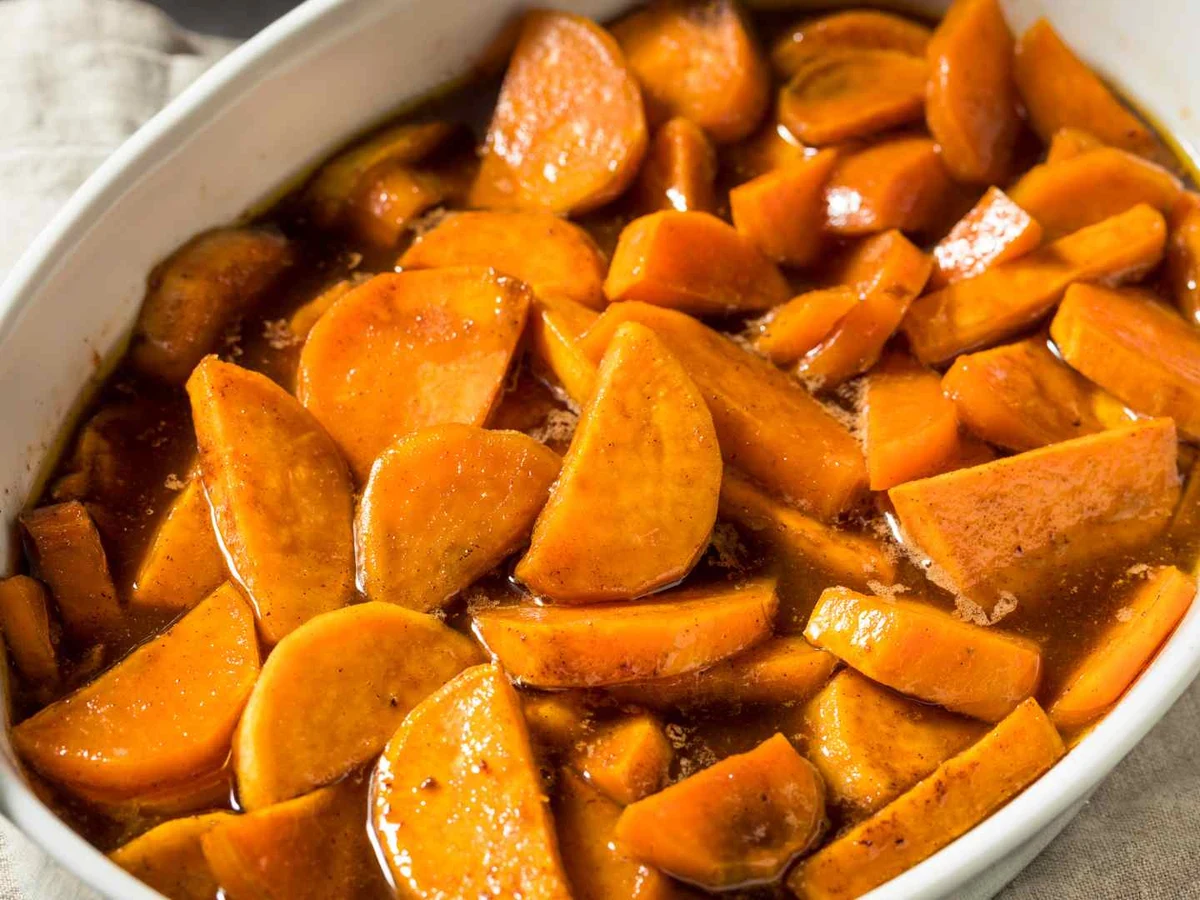
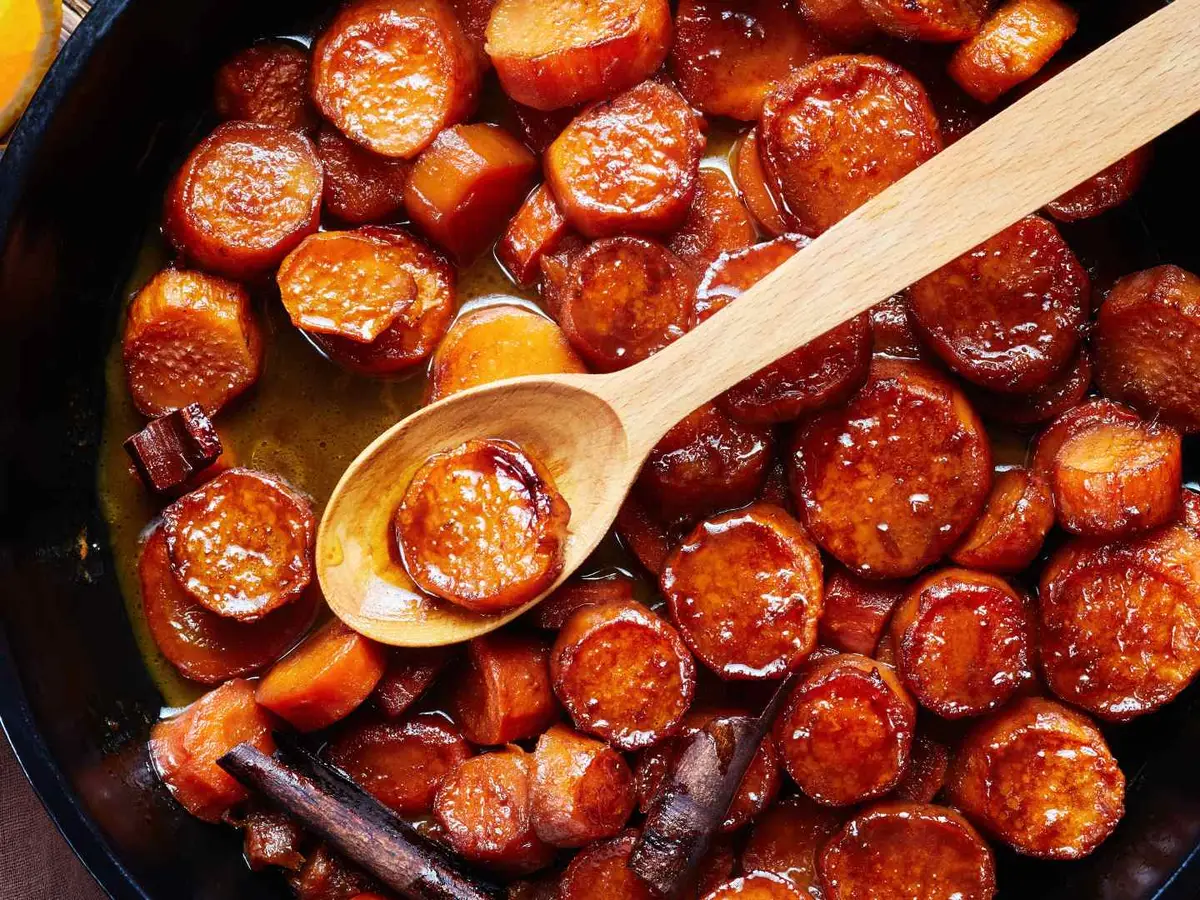
Candied yams commonly combine a sweet potato or yam with sugar, butter, syrup, marshmallows, salt, and warm spices. The tuber may be the least interesting part of the exposure once a cat has licked the casserole dish.
Check for chocolate, raisins, alcohol-containing flavoring, and sugar substitutes, then photograph the ingredient labels. Our live pizza guide uses the same whole-recipe approach when a familiar base arrives with risky toppings.
Canned yams bring syrup, lids, and naming confusion
Most canned products labeled as yams in the United States are sweet potatoes, often packed in water, juice, or syrup. Read both the identity statement and ingredient list rather than trusting the large print on the front.
A lick of drained, plain canned tuber is different from drinking heavy syrup, yet neither is a necessary treat. Place the sharp lid, pull tab, and opened can where a paw cannot turn a food question into a cut tongue or foot.
Pies, fries, chips, and purple desserts are separate foods
Yam pie may contain dairy, eggs, sugar, nutmeg, crust fat, and flavor extracts, while fries add oil and salt. Chips are crisp enough to scrape the mouth and may carry onion, garlic, chili, or cheese seasoning.
Ube desserts create extra naming trouble because purple yam can appear with condensed milk, coconut ingredients, frosting, or sweet bread. Identify the finished product, not merely the colorful tuber that inspired it.
Keep vines and mystery tubers out of reach
A climbing plant sold or shared under the name “yam” could represent one of many species or even an unrelated ornamental. Do not offer leaves, stems, bulbils, flowers, or garden tubers unless a qualified plant expert has identified the specimen and a veterinarian has addressed the exposure.
Take clear pictures of the whole plant, leaf arrangement, tuber, container tag, and planting location before moving anything. Wear gloves if the sap has irritated human skin, and keep the cat away from vomit or chewed fragments that could be sampled again.
Which cats should skip yam entirely?
- Cats eating a veterinary prescription diet unless their clinician approves the extra
- Cats with diabetes or a carefully managed weight plan
- Cats with chronic vomiting, diarrhea, constipation, or inflammatory bowel disease
- Cats with swallowing disorders or a history of intestinal obstruction
- Kittens whose growth diet should not be displaced by table food
- Cats currently refusing their usual meal
A cat who stops eating needs attention, not a buffet of increasingly unusual toppers. A veterinarian should evaluate appetite loss, especially when it comes with hiding, nausea, weight loss, jaundice, pain, or repeated vomiting.
What to do after a tiny cooked taste
- Remove the plate and confirm whether the food was true yam or sweet potato.
- Write down every seasoning, topping, and cooking fat.
- Estimate the missing amount without rounding up to panic or down to wishful thinking.
- Leave fresh water available and continue the cat’s normal food routine.
- Observe appetite, energy, stool, and vomiting as your veterinary team advises.
Do not give hydrogen peroxide, salt, oil, milk, or fingers-down-the-throat first aid to make a cat vomit. Home vomiting attempts can injure cats, delay appropriate treatment, and complicate an exposure that might otherwise have needed only calm monitoring.
When the phone call should happen now
Call promptly for an unknown plant or tuber, a raw chunk, missing peel, a large amount, a recipe containing a concerning ingredient, or any packaging swallowed. The clinic may recommend observation, examination, or poison-service consultation based on details that no generic article can supply.
Breathing trouble, collapse, repeated retching, severe weakness, persistent vomiting, a painful or swollen abdomen, blood in vomit or stool, and inability to keep water down warrant urgent veterinary care. Do not wait for every item on that list to appear.
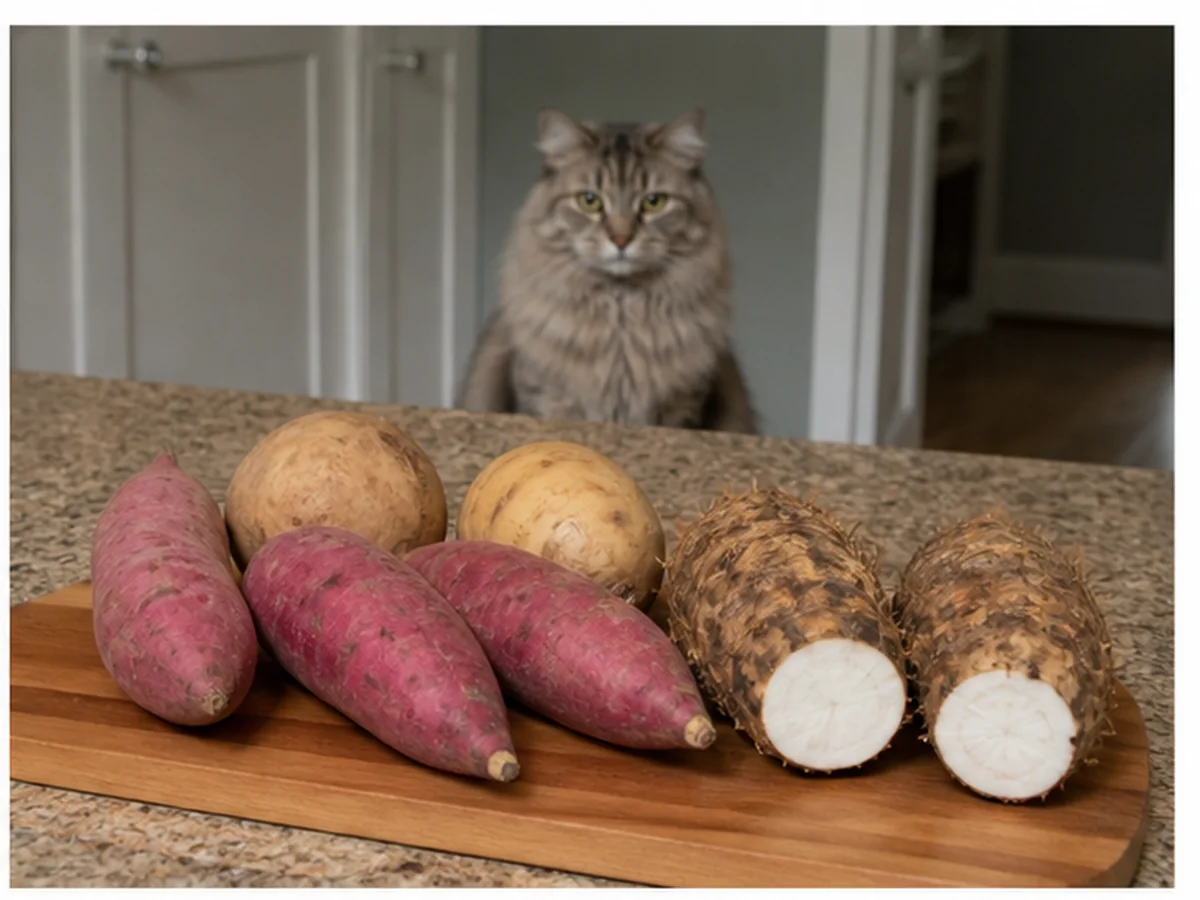
A few yam look-alikes deserve their own name
Sweet potatoes, ordinary white potatoes, taro, cassava, yuca, purple yam, and air potato are different plants with different preparation needs. A receipt, produce sticker, or photo from the seller is far more useful than the description “brown root.”
Even two tubers with similar cooked texture should not borrow one another’s safety advice. This is the same reason our pickle guide separates a cucumber from its seasoned brine rather than treating both as plain produce.
Frequently asked questions
Can cats eat cooked yams?
A pea-size piece of peeled, thoroughly cooked, plain edible yam is unlikely to poison most healthy adult cats. It remains optional table food, so do not let it displace a nutritionally complete feline meal.
Can cats eat raw yams?
Raw yam is not recommended because it can be hard, difficult to swallow, irritating, and species-dependent in its preparation requirements. Ask a veterinarian about a swallowed chunk rather than trying to push it through with bread or oil.
Are sweet potatoes and yams the same for cats?
No, true yams are Dioscorea tubers and sweet potatoes are Ipomoea batatas, although U.S. labels often use “yam” for orange sweet potatoes. Confirm the product before using advice written for either plant.
Will yam fiber fix my cat’s constipation?
Do not treat constipation with yam unless the cat’s veterinarian has chosen it as part of a specific plan. Straining can be confused with urinary blockage, and repeated unproductive litter-box visits can be an emergency.
Can kittens have mashed yam?
Kittens have little room for foods that dilute a complete growth diet, so mashed yam offers no practical advantage. Use kitten food or a veterinarian-approved kitten treat instead.
The useful bottom line
Properly identified, peeled, fully cooked, plain yam can be a very small optional taste for a healthy adult cat, but raw pieces, peel, wild plants, and unidentified species deserve caution. When “yam” arrives as casserole, pie, chips, syrup, or a garden surprise, let the actual ingredient list and physical object guide the response.