Can Cats Eat Zucchini? Raw, Cooked, and Portion Basics
Most healthy adult cats can handle one tiny, plain piece of ordinary zucchini, although they gain no special advantage from eating it. The trouble usually comes from size, seasoning, garden chemicals, baked recipes, or the rare zucchini so bitter that nobody should finish it.
Reconstruct the counter heist first
Look for tooth marks, a missing slice, drops of sauce, a nibbled bread loaf, or a tipped garden basket. What happened matters more than a yes-or-no food label, because zucchini appears raw, cooked, spiralized, fried, stuffed, pickled, and baked into sweets.
Ask who prepared it and when, then gather the package or recipe. A confident answer often arrives the moment someone remembers that the “plain zucchini” was brushed with garlic butter or held together by a wooden skewer.
Match the scene to the concern
| Zucchini form | What changes the risk |
|---|---|
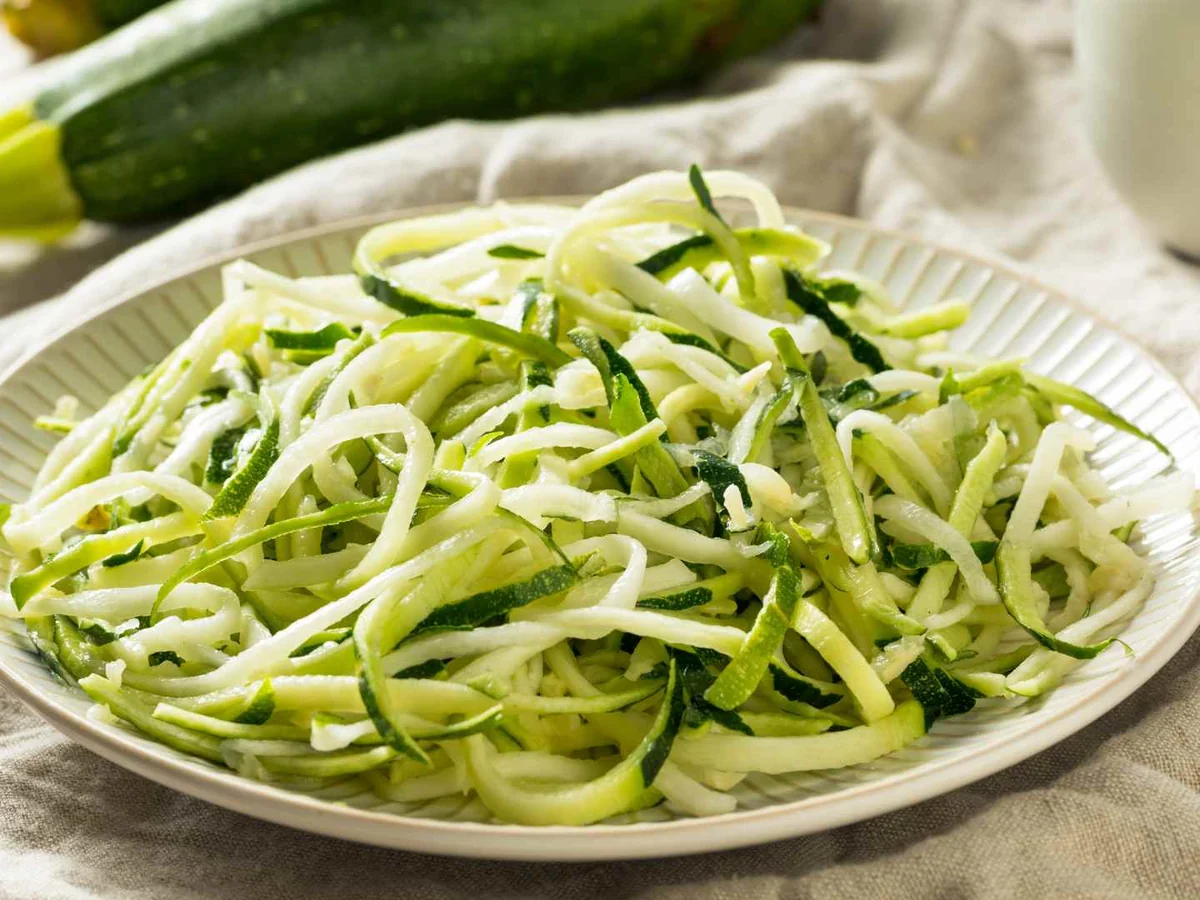
| Fine raw shred | Usually low concern; watch for stomach upset |
| Thick raw chunk | Choking and difficult swallowing |
| Plain cooked dice | Soft texture; still only an optional extra |
| Zoodles with sauce | Garlic, onion, salt, cheese, oil, meat, and hot temperature |
| Zucchini bread or muffin | Sugar, fat, chocolate, raisins, nuts, sweeteners, wrapper |
| Extremely bitter garden fruit | Possible cucurbitacin exposure and digestive injury |
Green, striped, golden, and round zucchini
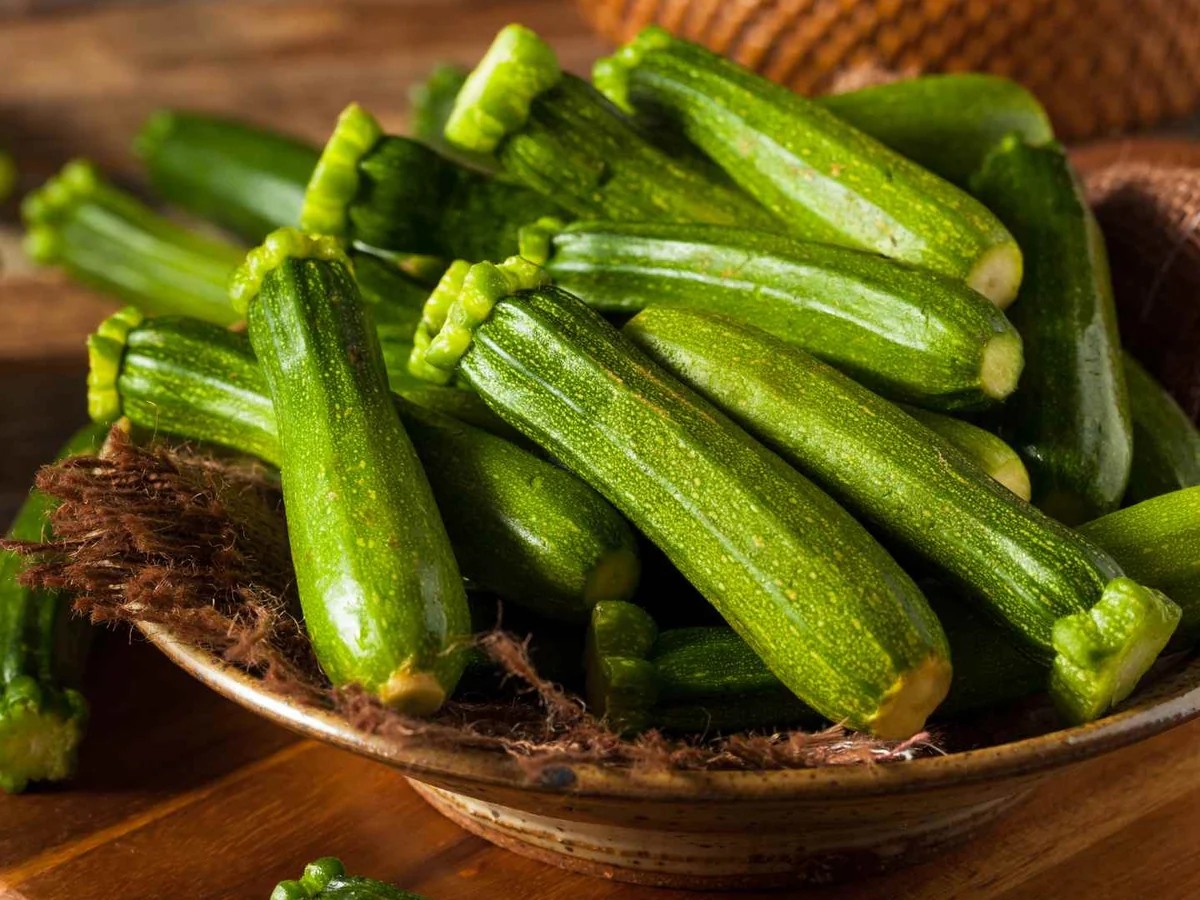
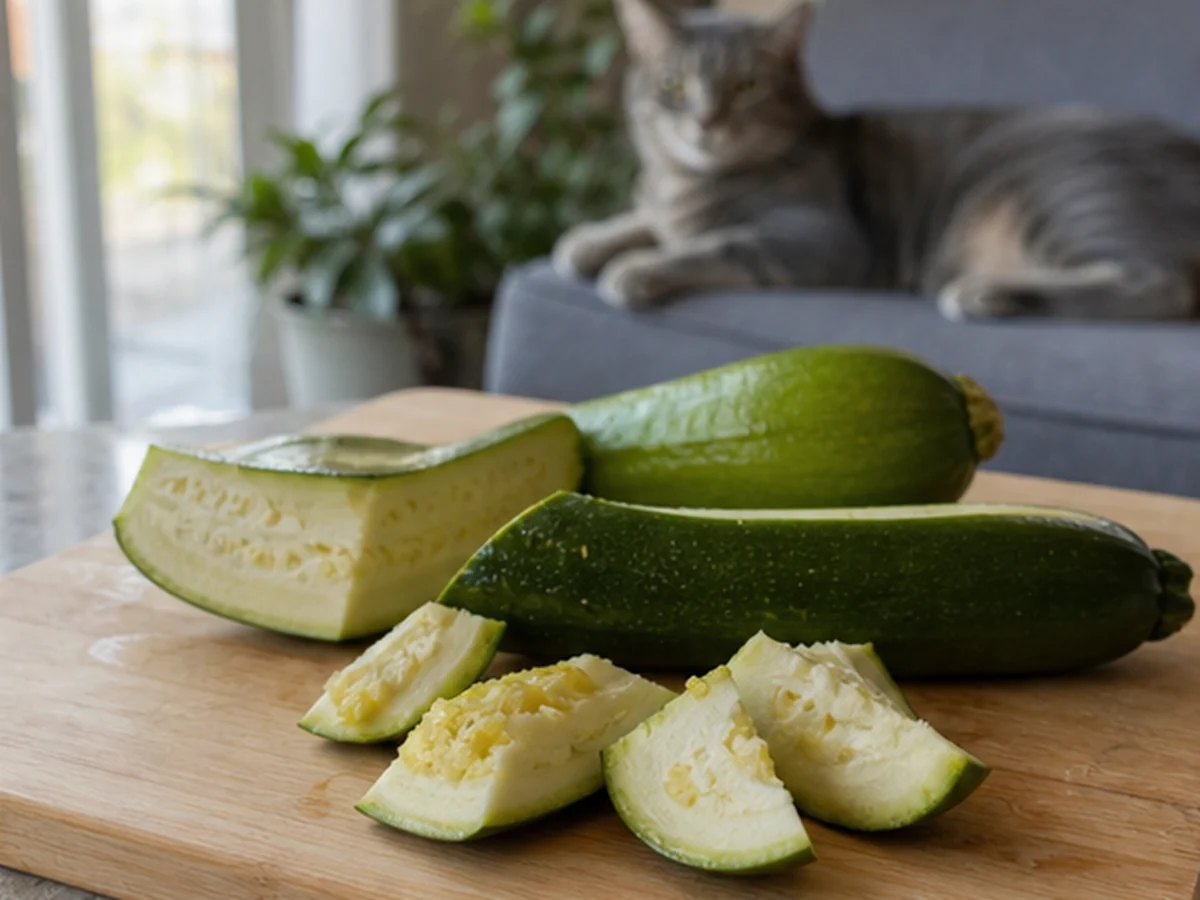
Zucchini is a summer squash, usually classified within Cucurbita pepo, and the familiar dark-green cylinder is only one cultivated form. Golden zucchini, pale-green varieties, ribbed types, and round zucchini can share the same general kitchen handling while differing in shape and maturity.
A color change does not automatically mean toxicity, but a mystery volunteer gourd should not be identified from color alone. Photograph the whole fruit and plant if the cat reached an unlabeled garden harvest.
The sensible verdict is modest, not magical
Ordinary edible zucchini is not commonly listed as poisonous to cats, and a minute plain taste usually calls for observation rather than alarm. That statement does not establish a therapeutic dose, prove a benefit, or guarantee that every cat will digest it comfortably.
A cat’s core food should deliver the full feline nutrient profile consistently. The FDA explains how a complete and balanced claim is supported, which is more meaningful than praising the vitamin list of a human vegetable.
Raw zucchini is mostly a geometry problem
A hair-thin ribbon is easier to manage than a firm coin the width of a cat’s throat. Cats often shear or gulp rather than thoughtfully grinding a vegetable, so a piece that looks snack-size to a person can still be clumsy.
If a cat is coughing or gagging, do not sweep blindly through the mouth and risk pushing material farther back. Breathing difficulty, pale or blue gums, collapse, or frantic pawing at the face requires emergency care.
Cooking makes it softer, not necessary
A small steamed or simmered piece can be cooled and mashed to remove the raw crunch. Use water alone, because salt, stock, garlic, onion, butter, and pan drippings create questions that the zucchini never asked for.
Roasting shrinks the vegetable and may concentrate the oil or seasoning on its surface, while grilling can leave char and wire-brush bristles. “Cooked” is therefore a description, not an automatic safety certificate.
Skin and seeds change as the fruit grows
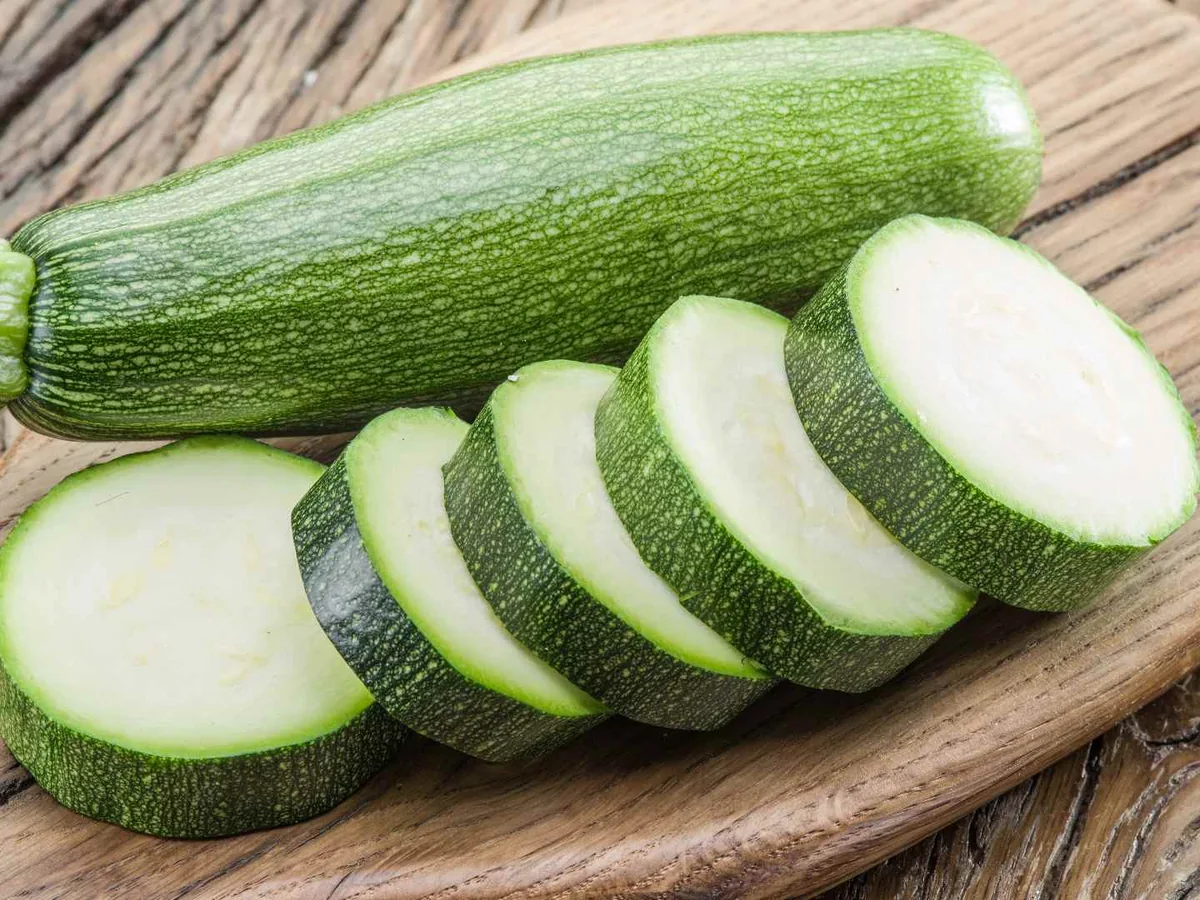
Young grocery zucchini has thin edible skin and soft undeveloped seeds, yet peeling and removing the seedy center can make a deliberate feline taste more uniform. Neither part supplies something a complete cat food is missing.
A forgotten garden zucchini can become enormous, with a thick rind, fibrous interior, and firmer seeds. That baseball-bat specimen is better suited to human recipe decisions than cat sampling.
Wash the outside before the knife moves through it
Running water and clean hands help prevent surface dirt from traveling into cut flesh. The FDA recommends washing produce without soap, detergent, or commercial produce wash, all of which can leave unwanted residues.
Discard slimy, leaking, or moldy zucchini and clean utensils that touched raw meat. A spoiled or cross-contaminated vegetable creates a food-safety exposure rather than a useful test of whether fresh zucchini is feline-friendly.
The unusually bitter bite is the important exception
Squash-family plants can contain cucurbitacins, defensive compounds with a pronounced bitter taste. Cultivated zucchini normally has levels too low to notice, but rare intensely bitter fruit has caused serious digestive illness in people.
The French food-safety agency ANSES says to discard bitter squash because heat does not eliminate these compounds. This human evidence supports caution, while the absence of a reliable feline dose means nobody should convert those cases into a homemade cat calculation.
When bitterness changes the response
If the zucchini tastes startlingly bitter to a person, remove it, save a sample, and call the cat’s veterinarian or an animal poison service after any feline ingestion. Share whether it came from a store, purchased seed, saved seed, or an unplanned volunteer plant.
Prompt advice is especially important for vomiting, diarrhea, drooling, pain, weakness, refusal to eat, or an unknown amount. Do not assume a cat is safe because a human relative ate the same batch and felt fine.
The garden adds products the supermarket does not
Slug bait, rodent bait, fertilizer, compost, weed killer, and insect-control products may sit near a zucchini plant. If a cat returns from the patch with wet paws or chewed leaves, inventory those products before focusing exclusively on the fruit.
Keep the original label and note the active ingredient, concentration, and EPA registration number where applicable. Do not use internet advice for one pesticide to manage a different bottle with a similar garden picture.
Zucchini noodles borrow the sauce’s personality
Spiralized zucchini may arrive under pesto, Alfredo sauce, tomato sauce, meat sauce, or a salty Asian-style dressing. Garlic and onion are common across those recipes, and the thin strands can carry plenty of sauce despite containing little squash.
Our live pizza article offers a useful mixed-food checklist for alliums, cheese, salt, and meat toppings. Apply that ingredient-by-ingredient habit to zoodles instead of calling the entire bowl a vegetable exposure.
Zucchini bread is cake wearing garden clothes
The batter commonly contains flour, sugar, oil or butter, eggs, salt, leavening, and spices. Variations may add chocolate chips, cocoa, raisins, walnuts, sweetener blends, frosting, or alcohol-containing extract.
Check the whole formula and the missing wrapper before deciding what to do. The presence of shredded zucchini does not cancel a concerning addition, and a tiny crumb does not automatically equal the risk of a missing slice.
Stuffed zucchini carries a dinner inside
A zucchini boat may hold seasoned meat, rice, sausage, cheese, tomato, onion, garlic, or breadcrumbs. The filling is usually more attractive to a cat and often more relevant to the veterinary assessment than the hollowed squash shell.
If cured meat was involved, compare its salt and spice issues with our salami guide. Do not infer that all beef or poultry fillings are safe merely because plain cooked meat can sometimes be offered.
Fritters and fries bring oil, crumbs, and heat
Zucchini fries and fritters may carry batter, parmesan, salt, seasoning powders, and a considerable film of cooking oil. Freshly fried food can injure the mouth, and spilled hot oil can burn paws and skin.
A single greasy nibble does not guarantee feline pancreatitis, but recurrent rich extras are not sensible. Persistent appetite loss, lethargy, vomiting, or abdominal discomfort deserves veterinary evaluation rather than a confident home diagnosis.
Pickled zucchini must be judged as a pickle
Brined zucchini may contain substantial salt, vinegar, sugar, garlic, onion, dill, chili, and preservatives. Rinsing a stolen slice cannot undo what it already absorbed or what the cat drank from the jar.
The site’s published pickle safety guide covers brine and container hazards in more depth. Glass fragments, lids, sealing rings, and tiny forks should be counted separately from the food.
Zucchini flowers need their own assessment
An accurately identified blossom from an edible plant is not equivalent to the fruit and has little cat-specific feeding research behind it. Restaurant blossoms are frequently stuffed with cheese and herbs, dipped in batter, and fried.
Unknown flowers raise plant-identification and chemical-treatment questions, so take photographs and save the nursery tag. Avoid guessing from a blossom’s color, especially when ornamental vines share the garden.
A taste is enough to satisfy the curious cat
If your veterinarian has not restricted extras, offer a soft plain fragment no bigger than a pea on an occasional day. A cat who turns away has made an excellent dietary decision, and there is no reason to disguise zucchini in favorite food.
Cornell advises keeping treats to a small share of daily calories in its cat nutrition guidance. For a small cat, all extras add up quickly even when each family member remembers giving “just one.”
Do not prescribe zucchini from the cutting board
Zucchini should not be used to treat constipation, diarrhea, obesity, diabetes, dehydration, urinary disease, or hairballs without veterinary direction. Those problems require a diagnosis and a plan whose fiber, moisture, calories, and minerals can actually be measured.
A cat repeatedly straining in the litter box may have urinary obstruction rather than constipation. Little or no urine, distress, genital licking, vomiting, or worsening lethargy warrants urgent care, not another spoonful of vegetables.
Cats who should sit this snack out
- Kittens relying on a complete growth formula
- Cats with a prescribed therapeutic diet
- Cats with swallowing or dental problems
- Cats with chronic vomiting, diarrhea, or food-responsive disease
- Cats whose calories are being carefully managed
- Any cat currently nauseated or refusing normal meals
Diet restrictions are often designed around more than one ingredient, so “healthy vegetable” is not a loophole. Ask the clinician managing the condition before adding a topper that changes calories, texture, or appetite.
After a small accidental bite
- Secure the dish and any scraps before the cat returns.
- Confirm whether the zucchini was ordinary or unusually bitter.
- List sauces, seasonings, fillings, cooking fats, and sweeteners.
- Estimate the largest plausible amount and note the time.
- Follow veterinary advice for monitoring appetite, energy, stool, and vomiting.
Leave normal drinking water available, but do not force fluids by syringe after an unsupervised food exposure. Do not induce vomiting at home with hydrogen peroxide or salt.
Signs that move this beyond watchful waiting
Seek urgent care for breathing trouble, collapse, repeated unproductive retching, severe weakness, a swollen or painful belly, repeated vomiting, bloody diarrhea, or inability to keep water down. Call earlier for a bitter fruit, toxic recipe ingredient, garden chemical, skewer, wrapper, or unknown amount.
A veterinary team can triage more accurately with the cat’s weight, medical history, exact product, amount, and time. Bring the label or send a sharp photo instead of trying to remember a long ingredient panel.
Frequently asked questions
Can cats eat zucchini skin?
The washed tender skin of normal young zucchini is not a recognized cat poison, but it can be omitted for a softer sample. Tough skin from an oversized fruit is an avoidable chewing and swallowing challenge.
Can cats eat cooked zucchini?
Yes, a tiny cooled piece cooked in plain water is a reasonable optional taste for many healthy adults. Zucchini cooked with garlic, onion, salt, cheese, or oil needs to be judged by the full recipe.
Is yellow zucchini different from green zucchini?
Golden zucchini is a cultivated summer-squash variation, so color alone does not make it unsafe. Confirm the identity when produce is homegrown, volunteered from old seed, ornamental, or intensely bitter.
Can zucchini help my cat lose weight?
Do not replace part of a cat’s balanced ration with zucchini without a veterinary calorie plan. Safe weight loss protects protein and micronutrient intake while avoiding a dangerous period of inadequate eating.
What if my cat ate zucchini bread?
Find the recipe and check for chocolate, raisins, nuts, alcohol-containing extracts, and sweetener blends, plus any missing wrapper. Call based on the complete exposure rather than the zucchini in the loaf’s name.
The final forkful
Zucchini is best treated as a minor, optional extra: washed, plain, soft, cool, and genuinely tiny. Pay closer attention to chunk size, bitterness, recipes, garden products, and packaging than to marketing claims about vegetables, and call a veterinarian whenever the details stop being ordinary.