Can Dogs Eat Rotisserie Chicken? Skin, Bones, Garlic, Onion, and Drippings
Plain boneless rotisserie chicken meat can be okay for many dogs in a small amount, but I would strip away the skin, bones, drippings, and heavily seasoned outer meat first. The chicken itself is rarely the problem. The stuff designed to make it delicious is where the trouble starts.
If your dog stole the whole bird, inventory more than the meat
- Estimate how much chicken is missing and whether the dog ate skin.
- Count legs, wings, ribs, wishbone pieces, and other bones that may have disappeared.
- Check the seasoning label for onion, garlic, salt, spice blends, or sweeteners.
- Note whether the dog drank drippings or ate stuffing, twine, a plastic lid, absorbent pad, or tray.
- Record your dog’s weight, the time, and any symptoms.
- Call promptly for swallowed cooked bones, a large fatty binge, significant allium exposure, missing packaging, or concerning symptoms.
I would not let the phrase “it was only chicken” end the investigation. A rotisserie bird is chicken plus seasoning plus skin plus bones plus whatever the dog managed to drag out of the container while everyone was looking for dinner plates.
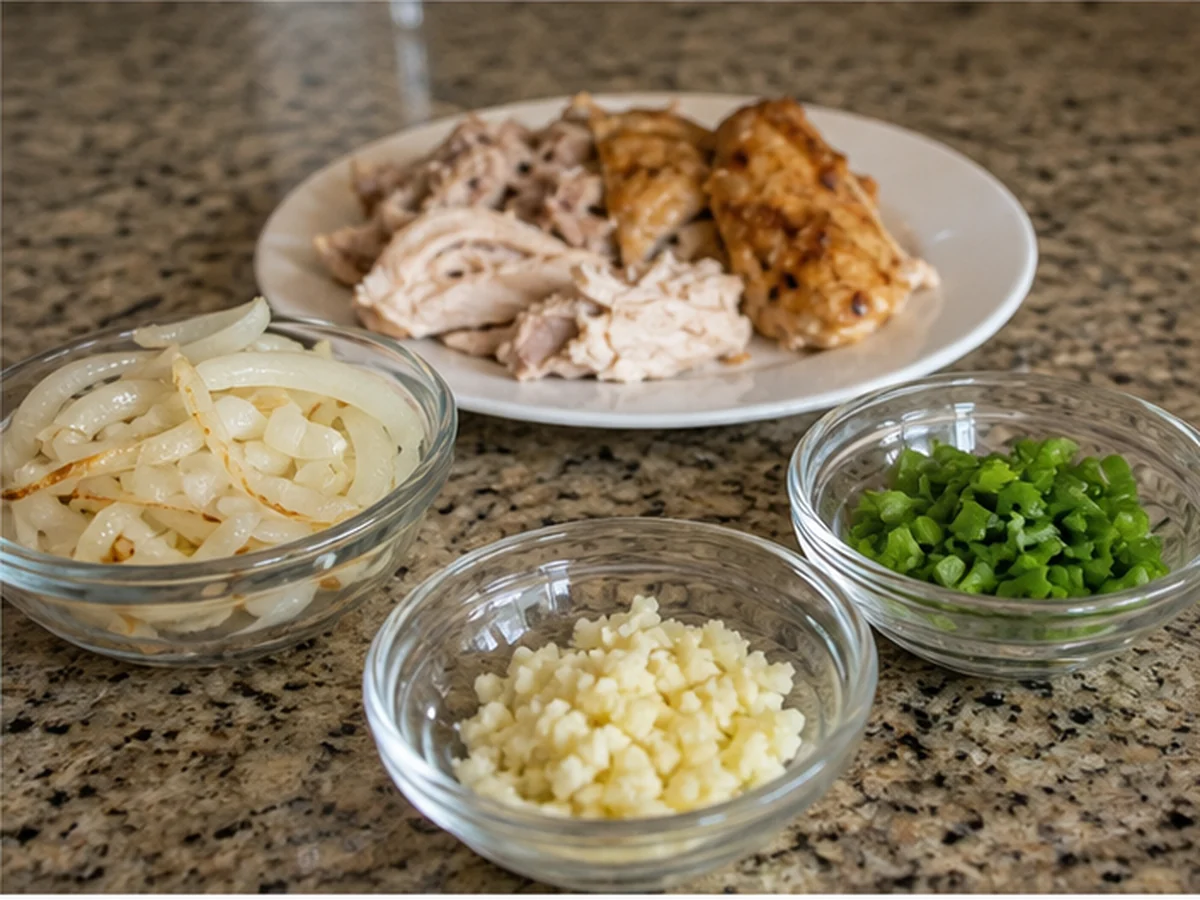
Plain boneless meat is the part I am least worried about
Fully cooked chicken meat is a common protein in commercial dog foods and can be an appropriate occasional treat when it is plain, boneless, and portioned reasonably. White breast meat with the skin removed is generally leaner than dark meat and much leaner than the skin and drippings.
If I wanted to intentionally share rotisserie chicken, I would pull meat from the inside of the bird, remove every visible bone and piece of skin, and keep the portion small. I would avoid the heavily seasoned surface rather than trying to rinse the outside and pretend the seasoning never existed.
Dogs with food allergies, inflammatory bowel disease, pancreatitis, kidney disease, or prescription diets can have different rules. A food being generally safe does not automatically make it appropriate for every dog.
The skin is where the fat can get out of hand quickly
Rotisserie skin is fatty even before butter, oil, seasoning, and rendered drippings are added. A few tiny scraps may cause no problem in a healthy dog, but a large pile of skin can trigger vomiting, diarrhea, abdominal pain, or pancreatitis in a susceptible dog.
Dogs with previous pancreatitis deserve particular caution because rich leftovers can be enough to start another episode. Repeated vomiting, refusal to eat, marked lethargy, abdominal pain, diarrhea, or a hunched uncomfortable posture after a fatty binge deserves veterinary evaluation.
I know skin is usually the part a dog considers the prize. Unfortunately, the dog’s enthusiasm is not a nutritional review.
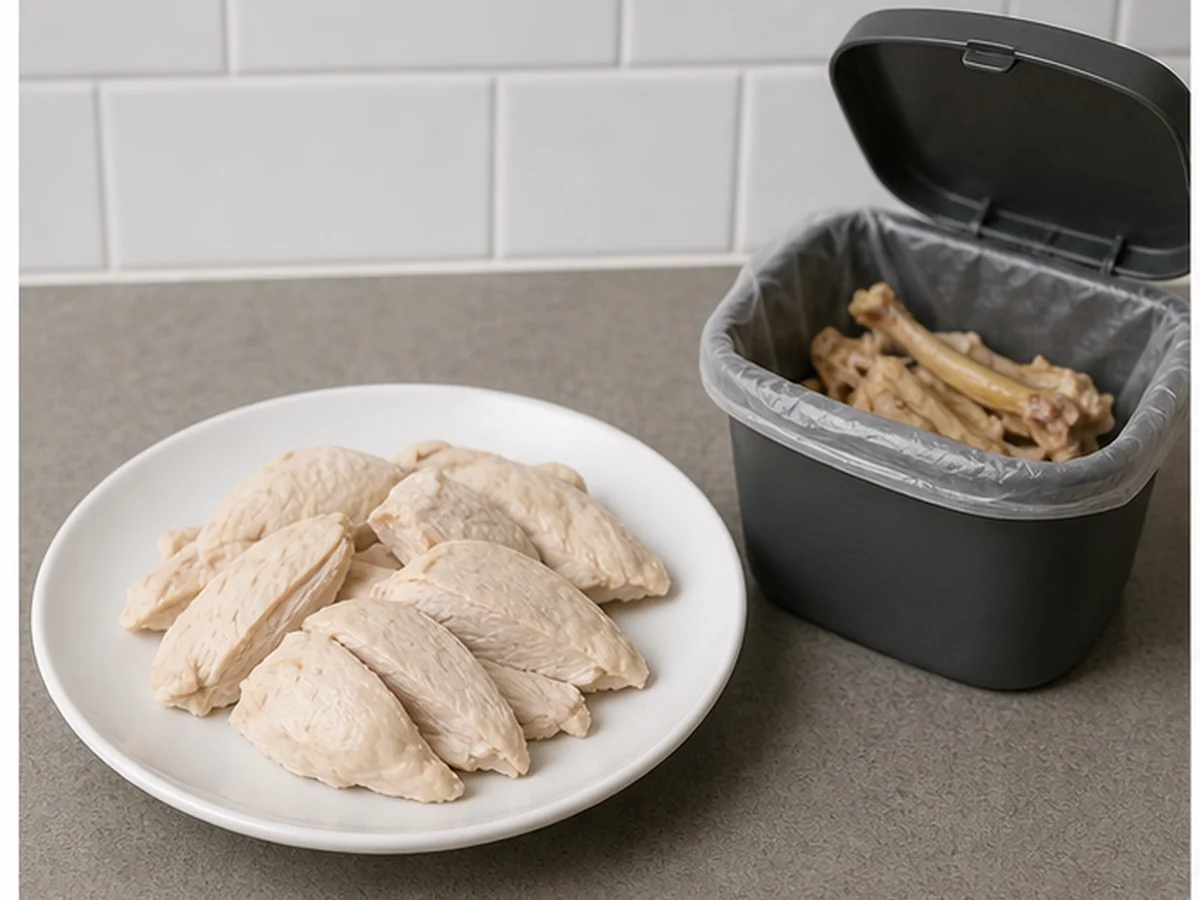
Cooked chicken bones are the part I take seriously
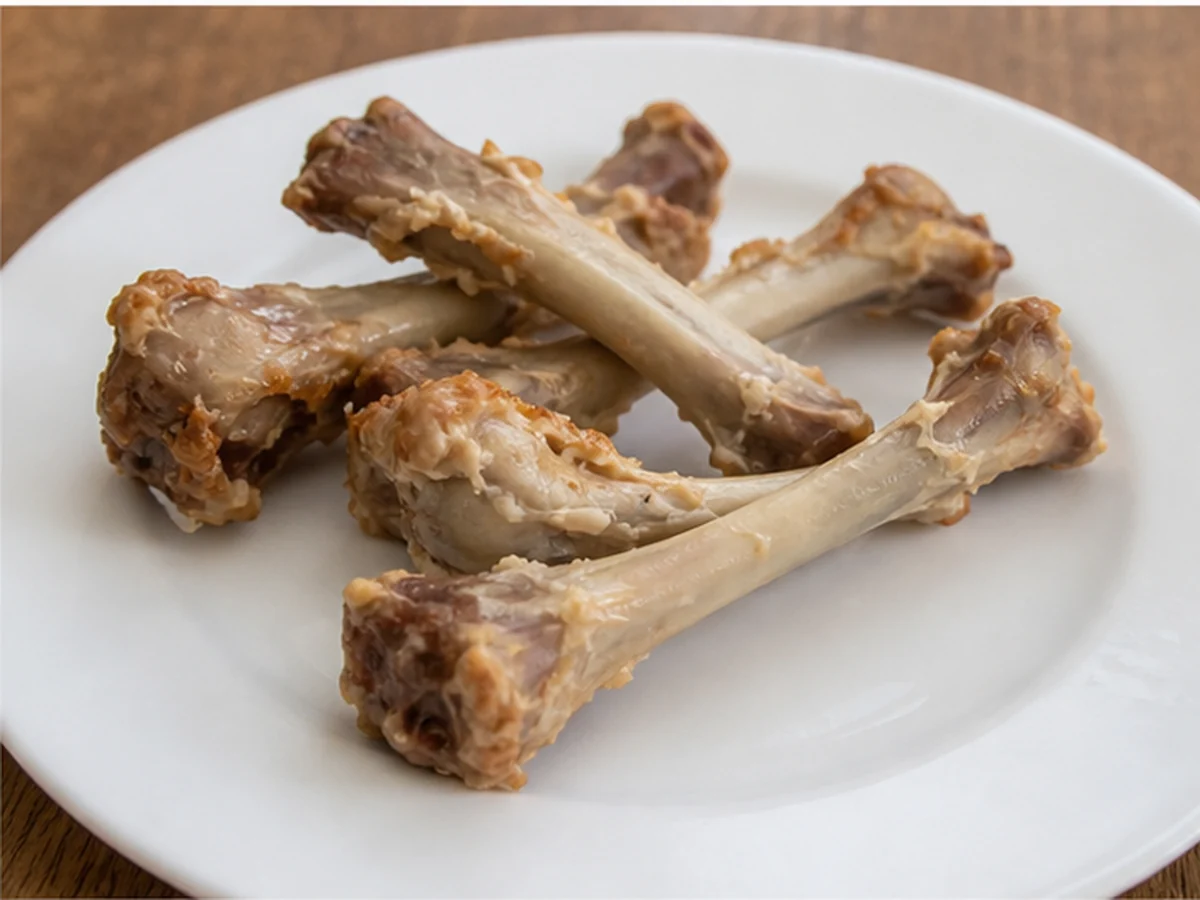
Cooked poultry bones can become brittle and break into sharp fragments. They can lodge in the mouth or esophagus, cause choking, injure the stomach or intestines, or create a gastrointestinal obstruction.
Do not assume a bone is harmless because your dog has eaten one before. Risk depends on bone size, how it fractured, dog size, what else was eaten, and where the bone travels.
Call your veterinarian after a meaningful cooked-bone exposure, especially if several bones are missing or the dog is small. Choking, repeated gagging, trouble swallowing, drooling, repeated vomiting, abdominal pain, blood in vomit or stool, marked lethargy, straining, or refusing food deserves urgent evaluation.
Do not pull blindly at a bone lodged deep in the mouth
If you can clearly see a loose object at the very front of the mouth and can remove it without pushing it deeper or being bitten, that is different from reaching blindly into the throat. A panicked dog with a painful mouth can bite even if the dog is normally gentle.
Visible breathing distress, blue or pale gums, collapse, or an inability to move air is an emergency. Get to an emergency veterinary hospital immediately rather than repeatedly sweeping fingers through the mouth.
Garlic and onion seasoning are not just flavor problems
Onion, garlic, chives, leeks, and related alliums can damage red blood cells in dogs after a sufficient dose. Rotisserie seasoning may contain garlic powder or onion powder, and powdered forms are concentrated compared with fresh pieces.
A small trace of seasoning on one interior bite is very different from a dog eating most of a heavily seasoned skin, but I would still save the label after a large theft. Allium-related anemia can be delayed, so a dog acting normal immediately afterward does not completely answer the question.
Possible delayed signs include weakness, unusual tiredness, pale gums, rapid breathing, increased heart rate, dark or reddish urine, reduced appetite, or collapse. Significant known onion or garlic exposure deserves professional advice before those signs appear.
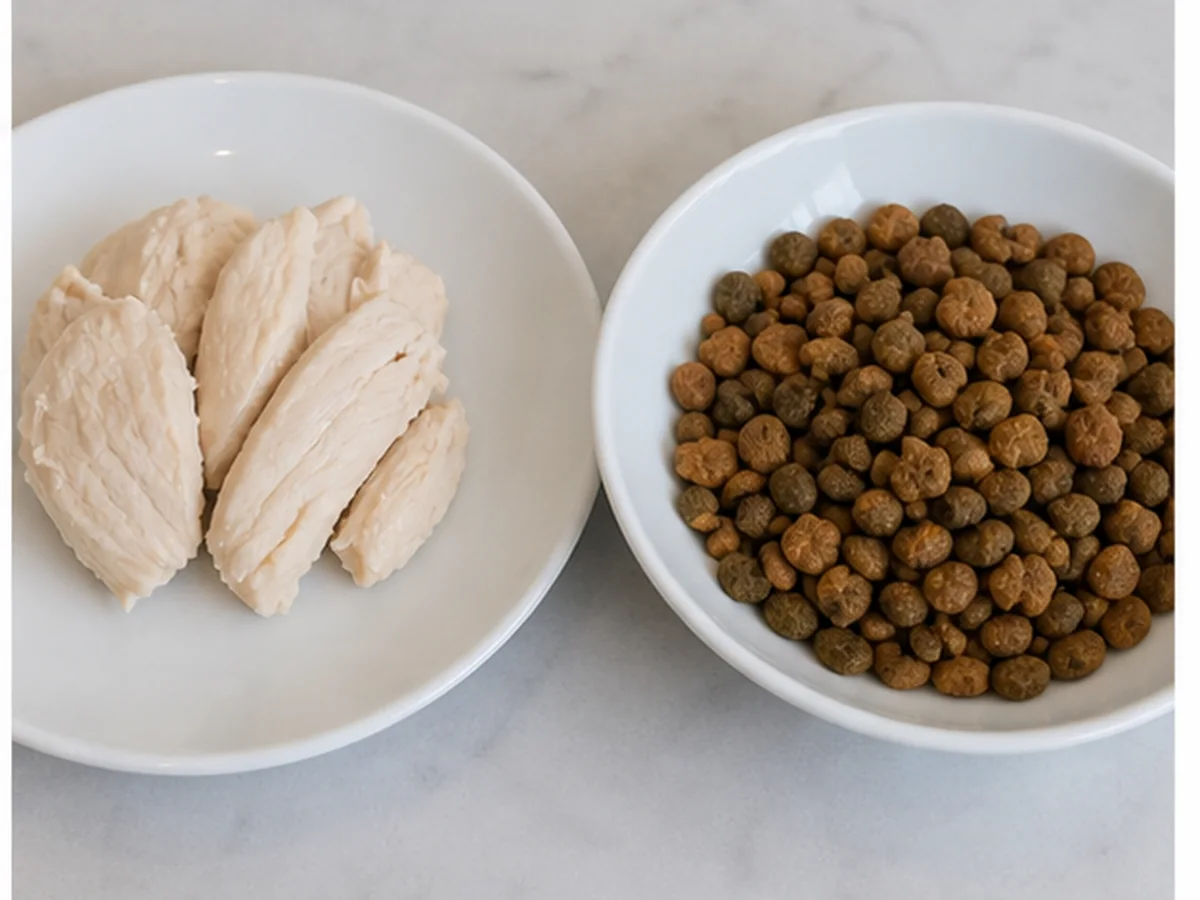
Sodium is usually a quantity problem
Rotisserie chicken is often brined or seasoned with substantial sodium. One small piece of meat is unlikely to cause salt poisoning in most healthy dogs, but a small dog eating a large portion of salty skin and meat can receive far more sodium than intended.
Dogs with heart disease, kidney disease, high blood pressure, fluid-retention problems, or veterinary sodium restrictions deserve additional caution. For those dogs, even repeated “just a little chicken” sharing can work against the medical diet.
Severe salt excess can cause vomiting, marked thirst, weakness, neurologic abnormalities, tremors, or seizures. Do not deliberately restrict water after a salty-food binge unless a veterinarian specifically tells you to.
Drippings are basically concentrated richness
The liquid at the bottom of a rotisserie container can contain rendered fat, salt, seasoning, meat juices, and sometimes concentrated onion or garlic flavor. A dog licking one drop is not the same situation as drinking a cup of drippings.
A large amount can cause substantial gastrointestinal upset and may increase pancreatitis risk in susceptible dogs. If the drippings were seasoned with onion or garlic, include that in the call instead of reporting only “chicken juice.”
The cavity can hide more than chicken
Some prepared birds contain lemon, herbs, garlic cloves, onion pieces, stuffing, or flavor packets in or near the cavity. Grocery-store rotisserie chickens vary, so I would check the ingredient label and inspect what is missing rather than assume every bird was prepared the same way.
Whole garlic cloves and onion chunks increase the allium dose, while stuffing can add more onion, garlic, sausage, raisins, butter, or salt. A dog who dismantled the whole bird deserves a broader ingredient inventory than a dog who stole one piece of breast meat.
Twine and packaging can become the problem after dinner is gone
Butcher’s twine, elastic trussing material, plastic lids, foam trays, absorbent pads, labels, and bags can be swallowed during a whole-bird raid. String-like material is especially concerning because linear foreign bodies can bunch or injure the intestines.
Do not pull string from the mouth or rectum if it appears stuck. A veterinarian should assess a suspected linear foreign body rather than turning one swallowed object into a tearing injury.
Repeated vomiting, retching, abdominal pain, refusal to eat, bloating, marked lethargy, straining, or inability to keep water down after swallowed packaging deserves veterinary evaluation. Tell the clinic what packaging is missing during the first call.
Food safety still matters once the chicken has sat out
Cooked chicken left at room temperature too long can support bacterial growth, and dogs can develop foodborne illness too. A fresh stolen bite and a bird that sat overnight in a warm kitchen are not the same exposure.
Repeated vomiting, bloody diarrhea, fever, severe lethargy, abdominal pain, weakness, or dehydration after spoiled chicken deserves veterinary attention. Very young, old, pregnant, or medically fragile dogs deserve an even lower threshold for care.
Do not induce vomiting after a bone theft without advice
Bringing sharp cooked bones back up through the esophagus can create additional injury, so I would not induce vomiting after a rotisserie-bone exposure unless a veterinarian specifically directed it. The same caution applies if the dog has breathing problems, marked weakness, poor coordination, or swallowed string or sharp packaging.
Do not use salt, mustard, oil, fingers, or another improvised method. Call with the bone count, dog size, timing, and symptoms and follow the case-specific plan.
How I would serve rotisserie chicken on purpose
If I wanted to share a little chicken, I would choose a small piece of interior meat, remove the skin, inspect carefully for bones, and avoid heavily seasoned edges. For regular treating, plain home-cooked chicken without seasoning is easier to control.
Keep treats together under roughly 10 percent of daily calories unless your veterinarian gives another plan. Rotisserie chicken should stay a small extra rather than quietly replacing a complete and balanced diet.
Frequently asked questions
Can dogs eat Costco or grocery-store rotisserie chicken?
A small amount of plain interior boneless meat may be okay for many healthy dogs, but recipes vary in sodium and seasoning. Remove skin and bones and check the ingredient label before intentionally sharing it.
My dog ate rotisserie chicken skin. What should I do?
A small piece may only cause mild stomach upset, but a large amount is fatty and can be heavily seasoned. Call if your dog has pancreatitis history, ate a large quantity, or develops repeated vomiting, pain, lethargy, or poor appetite.
My dog ate a rotisserie chicken bone but seems fine. Should I worry?
Cooked chicken bones can splinter or obstruct even before symptoms appear, so contact your veterinarian for case-specific advice. Bone size, dog size, quantity, and time since ingestion matter.
Can I rinse seasoned chicken before giving it to my dog?
Rinsing may remove some surface seasoning but cannot reliably undo brining or seasoning that has penetrated the meat. Plain unseasoned cooked chicken is a simpler intentional choice.
Bottom line
The plain boneless meat inside a rotisserie chicken is usually the least concerning part. Skin, cooked bones, garlic, onion, sodium, drippings, cavity ingredients, twine, and packaging can all change the risk, so inventory the whole theft instead of stopping at “my dog ate chicken.”