Can Dogs Eat Almond Butter? Xylitol, Fat, and Safe Portions
Dogs can have a tiny lick of plain almond butter if it contains no xylitol and no troublesome add-ins. It is high in fat and calories, offers no benefit a balanced dog food cannot provide, and is a poor choice for dogs with pancreatitis, obesity, or a prescribed diet.
Can dogs eat almond butter?
Plain almonds are not classified like macadamia nuts, which are toxic to dogs, but almonds are still difficult to justify as a routine canine snack. Grinding them into butter removes the whole-nut choking shape, yet concentrates the calories into a spoonful that disappears remarkably fast.
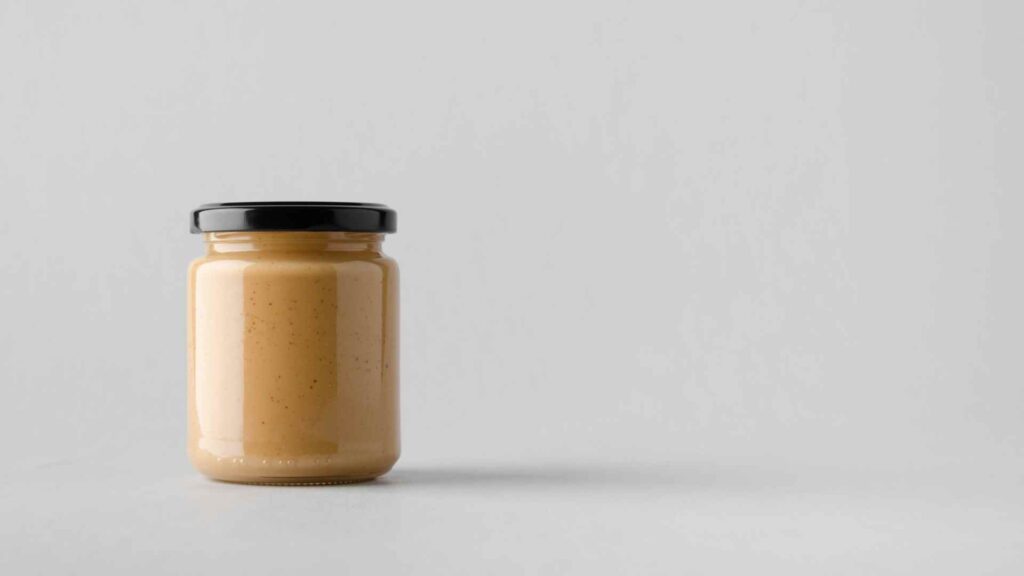
The safest label is gloriously boring: almonds, and perhaps nothing else. Salt, sugar, chocolate, raisins, flavorings, and sweeteners turn a simple ingredient question into a label-reading exercise.
If you want the whole-nut comparison, read our guide to almonds and dogs. The short version here is that almond butter is optional, not health food for a pet.
Check for xylitol before anything else
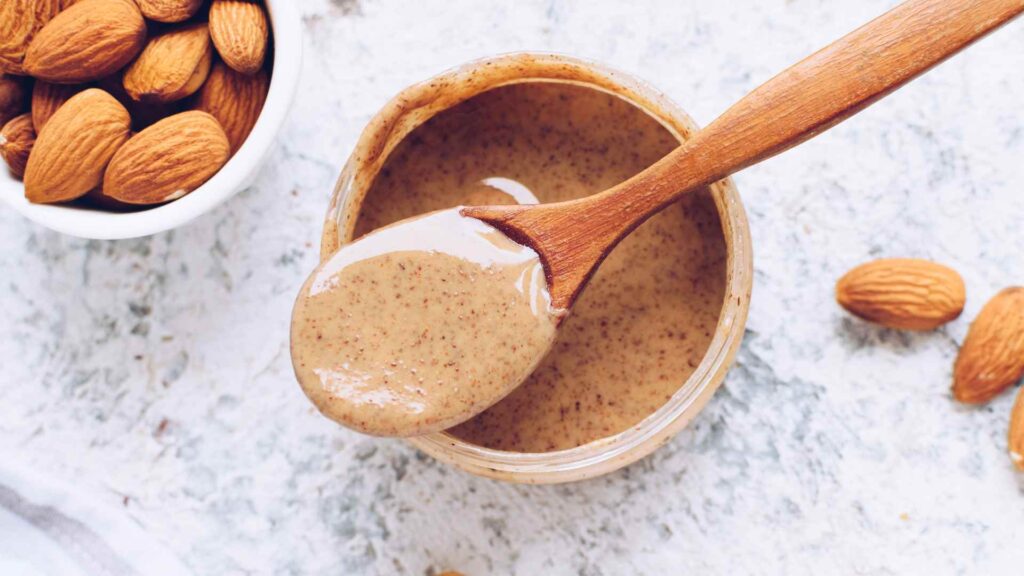
Xylitol is a sweetener that may also appear as birch sugar, wood sugar, or birch bark extract. It can trigger a dangerous insulin release in dogs, causing a rapid drop in blood glucose, and serious cases can involve seizures, liver failure, bleeding problems, coma, or death.
The FDA xylitol safety guidance for dog owners specifically warns that some peanut and nut butters may contain it. The agency advises calling a veterinarian, emergency clinic, or animal poison control center right away after possible exposure.
Do not wait for symptoms and do not calculate safety from a casual internet serving chart. The relevant dose depends on the dog’s weight and the product’s xylitol concentration, information a veterinarian or poison specialist can use more safely.
- Read the full ingredient list every time, even if you bought the brand before.
- Treat sugar-free, keto, low-sugar, and dental-health claims as prompts for extra scrutiny.
- Keep the jar or photograph the label if an accidental ingestion occurs.
- Never use a xylitol-containing butter to hide medication.
Why a tiny portion is plenty
Almond butter is energy dense because almonds naturally contain substantial fat. A generous spoonful can swallow a small dog’s treat allowance before the dog has finished licking its lips.
The World Small Animal Veterinary Association treat guide recommends keeping treats under 10 percent of daily calories. That ceiling includes every snack, dental chew, training reward, table scrap, and food used for pills, not ten percent for each category.
Use the rule as a ceiling rather than a goal. A complete and balanced diet should supply at least 90 percent of daily calories, while almond butter should remain a smear, a lick, or no treat at all.
A practical first taste
For a healthy adult dog with no dietary restrictions, put a rice-grain-sized smear on a spoon or lick mat and supervise. That is enough to test interest and tolerance without starting with a teaspoon or tablespoon that may be excessive for the individual dog.
If the dog develops vomiting, diarrhea, itching, facial swelling, or unusual lethargy, stop offering it and call the veterinarian. Breathing difficulty, collapse, severe weakness, tremors, or seizures calls for emergency care.
Fat and pancreatitis deserve respect
A single lick of xylitol-free almond butter does not automatically cause pancreatitis. Still, dogs with previous pancreatitis or a veterinarian-prescribed low-fat diet should not receive an unapproved high-fat extra.
The Merck Veterinary Manual review of canine pancreatitis identifies dietary indiscretion as a common risk factor and emphasizes low-fat feeding in affected dogs. Common severe signs include appetite loss, vomiting, weakness, abdominal pain, dehydration, and diarrhea.
A hunched stance, repeated vomiting, a tight or painful belly, refusal to eat, or marked lethargy after raiding a jar is not a wait-and-see moment. Contact a veterinarian promptly, especially if the dog has had pancreatitis before.
Ingredients that do not belong in the dog’s spoon
Chocolate or cocoa
Chocolate-flavored almond spread is not almond butter with a festive hat. Cocoa introduces methylxanthines that can be toxic to dogs, and the sugar and fat make the product even less suitable.
Raisins or grape ingredients
Some specialty spreads include dried fruit, granola-style mix-ins, or grape-derived flavor combinations. Grapes and raisins can cause kidney injury in dogs, so a product containing them needs poison-control or veterinary guidance after ingestion.
Macadamia nuts
Mixed-nut butters may include macadamias, which the ASPCA lists among people foods to avoid for pets. Our broader dogs and nuts guide helps separate non-toxic-but-unhelpful nuts from varieties that create a more urgent concern.
Salt, sugar, and added oils
A little sodium in an otherwise plain product is not the same emergency as xylitol, but unsalted is the sensible choice. Added sugar and oil increase calories without improving the treat for the dog.
Palm oil is not the same toxin as xylitol, but any rich oil can worsen digestive upset in a dog that eats a lot. Keep the container away from counter surfers, including the plastic lid and jar that may become foreign bodies.
Almond butter allergies and food trials
Dogs can react to food ingredients, but a food allergy cannot be diagnosed from one itchy afternoon or a mail-order test. The veterinarian needs the dog’s history and may use a carefully controlled elimination and challenge process.
The Merck Veterinary Manual allergy overview explains that dogs on an elimination trial must avoid unapproved treats, table food, flavored medication, and toothpaste. An almond-butter bribe can invalidate weeks of careful work.
Signs that may occur with adverse food reactions include itching, recurrent ear or skin trouble, vomiting, and diarrhea, but those signs have many other causes. Let the veterinarian sort out the pattern rather than declaring almonds guilty on the first scratch.
Who should skip almond butter?
- Dogs with current or previous pancreatitis, hyperlipidemia, or a prescribed low-fat diet.
- Dogs that are overweight or have a tightly controlled calorie plan.
- Dogs on elimination diets or prescription diets unless their veterinarian approves it.
- Dogs with chronic vomiting, diarrhea, or known almond sensitivity.
- Dogs that gulp food or become possessive around sticky, high-value treats.
- Puppies whose growth diet and small calorie allowance leave little room for extras.
Senior dogs are not excluded merely by age, but they are more likely to have medical conditions or calorie needs that make rich treats unhelpful. A familiar portion of regular food may be the kinder reward.
Safer ways to use a tiny amount
- Verify that the ingredient list contains no xylitol, chocolate, raisins, macadamia nuts, onion, garlic, or unknown sweetener.
- Choose smooth, unsalted almond butter with no added sugar or oil.
- Measure a tiny smear instead of offering the jar or a loaded spoon.
- Supervise licking so a sticky glob does not become a choking problem.
- Subtract those calories from the day’s total treat allowance.
A thin coating inside a food toy can keep a dog busy, but the word thin is doing real work. Freeze a small smear with part of the dog’s regular wet food rather than filling the toy with straight nut butter.
For pill hiding, ask whether the medication can be given with food, then use the smallest effective dab. Plain Greek yogurt for dogs may suit some pets, while others need a veterinary pill pocket or their own canned diet.
Almond butter versus peanut butter
Neither spread is automatically safe, because either can contain xylitol and both are calorie dense. Brand assumptions are unreliable, so the ingredient list wins every time.
Peanut butter is more familiar as a dog treat, but familiarity does not cancel the label check. See the full peanut butter and dogs guide before swapping one jar for another.
Sunflower-seed butter can also contain sugar, salt, or xylitol, so it is not an automatic loophole. The safest spread is whichever one has dog-appropriate ingredients, a tiny measured portion, and veterinary approval when health conditions apply.
What to do after accidental ingestion
The product contains xylitol
Call your veterinarian, the nearest emergency veterinary clinic, or animal poison control immediately, even if your dog looks normal. Take the package and the dog’s approximate weight with you, and follow professional instructions.
The product is xylitol-free but the dog ate a lot
Call the veterinarian with the brand, ingredient list, estimated amount, time of ingestion, dog’s weight, and medical history. Large amounts can cause vomiting, diarrhea, abdominal pain, or pancreatitis, and the packaging may add an obstruction risk.
The dog only had a tiny lick
If the butter is plain, xylitol-free, and the dog is healthy and comfortable, monitor at home. Stop treats for the day, keep water available, and seek advice if digestive or allergic signs appear.
Do not induce vomiting unless a veterinarian or poison specialist directs you. Sticky nut butter and home emetics can complicate the situation.
Frequently asked questions
Can dogs have almond butter every day?
Daily use makes it easy to accumulate excess calories and can crowd out balanced food. If you need a daily medication aid, ask your veterinarian for the lowest-calorie option compatible with the medicine and the dog’s diet.
Can puppies have almond butter?
A xylitol-free trace is unlikely to poison a puppy, but puppies need growth nutrition and are small enough for rich extras to matter quickly. Use puppy-appropriate training rewards unless the veterinarian suggests otherwise.
Can almond butter help my dog gain weight?
Do not use it as a do-it-yourself weight-gain plan. Unexplained weight loss needs a veterinary exam, and safe calorie increases should preserve nutritional balance.
Is homemade almond butter safer?
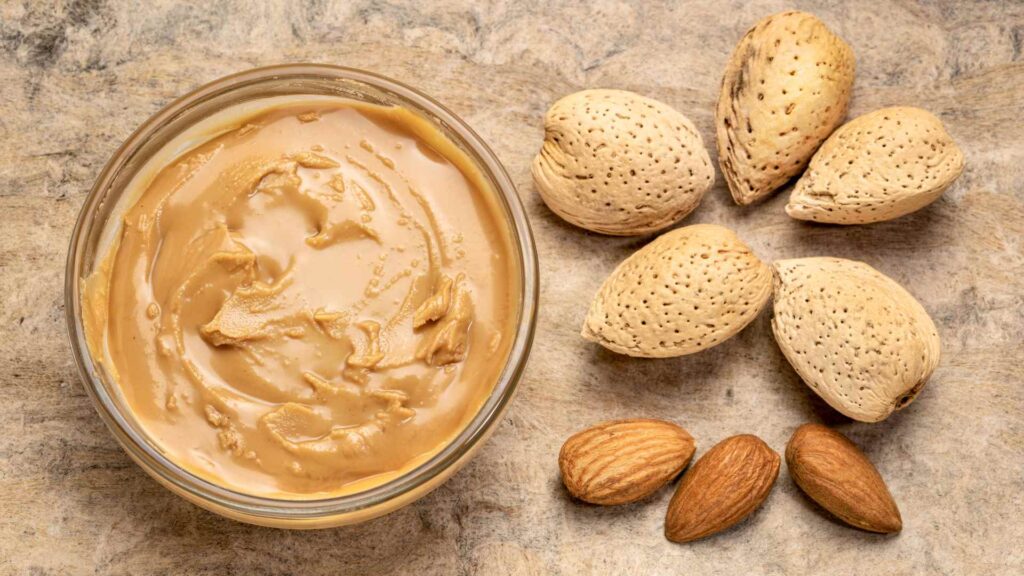
Homemade spread lets you control ingredients, but it remains high in fat and calories and food processors cannot remove medical contraindications. Plain almonds ground smooth are simpler than a commercial flavored spread, not a free pass.
The bottom line
A tiny smear of plain, smooth, unsalted, xylitol-free almond butter can be an occasional treat for some healthy adult dogs. Check every label, keep the portion comically small, and skip it entirely when fat restriction, weight control, allergy testing, or prescription nutrition is involved.
If xylitol appears anywhere on the label, call for veterinary help immediately after ingestion. That single label check is more valuable than every clever almond-butter recipe on the internet.