Can Dogs Eat Applesauce? Ingredients, Portions, and Risks
Yes, most healthy adult dogs can have a small taste of plain, unsweetened applesauce. Check the label for xylitol, avoid added sugar and unnecessary spices, and remember that sauce is a treat rather than a remedy for digestive trouble.
Can dogs eat applesauce safely?
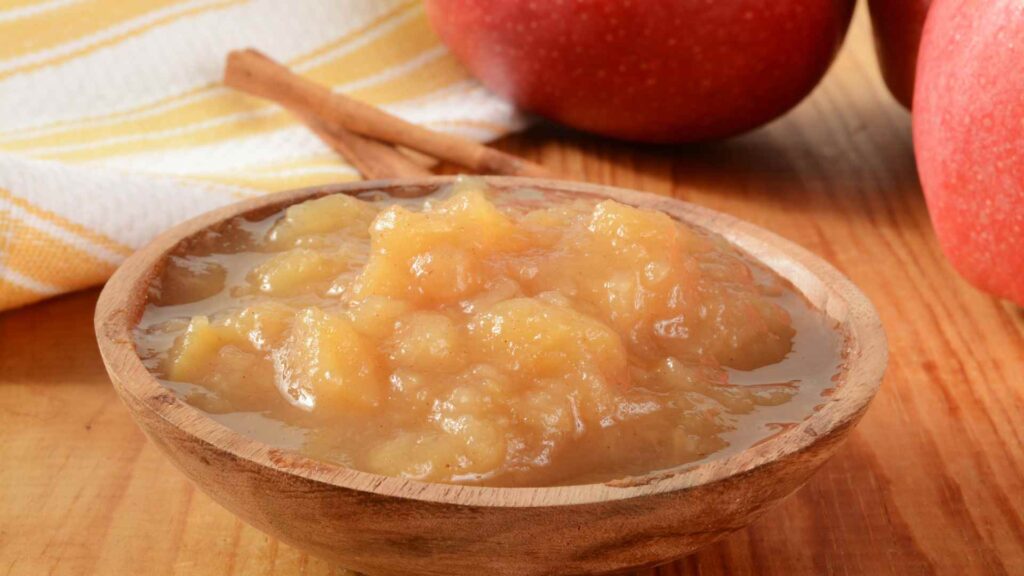
Applesauce is simply cooked, mashed apple when it is made plainly. Commercial cups and pouches may add sugar, sweeteners, flavorings, preservatives, or other fruits, so the front of the package tells only half the story.
The best dog-sharing candidate lists apples and water, with no xylitol and no added sugar. Even then, the dog needs a lick or small spoonful, not a lunchbox cup.
Whole apple has more texture and usually more intact fiber, while sauce is easy to lick and easy to overpour. For preparation details on the fruit itself, see our guide to apples for dogs.
Read the ingredient list before sharing
- Choose unsweetened applesauce with a short, recognizable ingredient list.
- Reject any product containing xylitol, birch sugar, wood sugar, or birch bark extract.
- Avoid blends containing grapes, raisins, chocolate, or unfamiliar sweeteners.
- Skip heavily spiced, caramel, pie-filling, and dessert-style sauces.
- Keep the foil lid, pouch, cap, and plastic cup away from the dog.
The FDA warns that xylitol is dangerous to dogs because it can cause a profound drop in blood glucose, sometimes followed by liver injury and other severe complications. Suspected ingestion warrants an immediate call to a veterinarian, emergency clinic, or animal poison control center.
Do not assume a product is safe because it says natural, no sugar added, keto, or diabetic-friendly. Marketing lives on the front; the ingredient truth lives on the back.
What applesauce can and cannot do
Plain applesauce supplies water, carbohydrate, and some fiber, but processing and recipe differences change the final product. It can add flavor and moisture, yet it does not meaningfully improve a complete dog food.
Dogs manufacture their own vitamin C under normal conditions, so applesauce is not needed as an immune supplement. Claims that a spoonful boosts immunity, detoxifies the body, or treats disease go well beyond the evidence.
Applesauce is also not a dependable treatment for constipation or diarrhea. Fiber affects dogs differently, and recurring stool changes may reflect parasites, dietary intolerance, infection, obstruction, pancreatic disease, or another problem that needs diagnosis.
If you want a fresh fruit alternative, compare bananas for dogs and blueberries for dogs. Different fruits have different calorie density, texture, and practical hazards, but all remain extras.
How much applesauce can a dog have?
There is no universal tablespoon allowance that fits every breed, age, and medical history. A measured lick is enough for a first exposure, particularly for a small dog.
The UC Davis School of Veterinary Medicine treat guidance recommends that treats and additional foods stay under 10 percent of daily calories. At least 90 percent should come from a complete and balanced diet.
That 10 percent includes every extra, not just applesauce. If the dog already received training treats, a dental chew, and a bite of dinner, the daily snack budget may already be spent.
For a first taste, offer a small dab on a spoon and watch for vomiting, loose stool, gas, itching, or swelling. A veterinarian can give a calorie-based portion for a dog that needs regular food toppers or medication carriers.
Apple seeds, cores, stems, and leaves
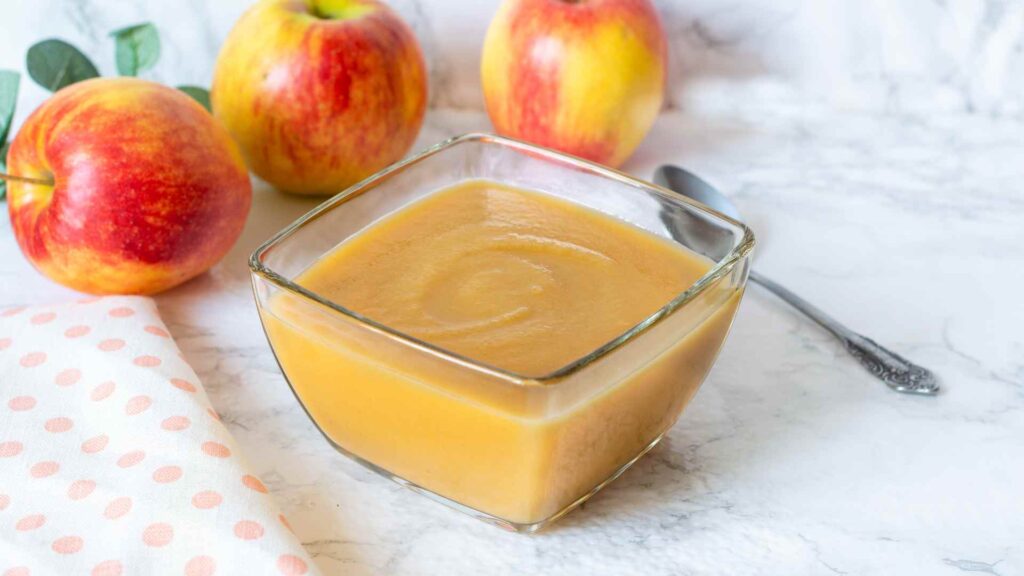
Proper applesauce is made from apple flesh after the core and seeds are removed. Homemade sauce gives you control, but only if the apples are cored carefully before cooking and blending.
The ASPCA apple safety entry identifies stems, leaves, and seeds as containing cyanogenic glycosides. A couple of accidentally swallowed seeds are unlikely to cause poisoning, especially if they were not chewed, but routinely blending cores into dog food is avoidable and unwise.
Apple cores can also be a choking or obstruction concern because they are dense and fibrous. If a dog swallowed a large core or develops repeated vomiting, abdominal pain, appetite loss, or difficulty passing stool, call a veterinarian.
Cinnamon applesauce and other flavors
A dusting of cinnamon is not generally considered poisonous to dogs, but concentrated powder can irritate the mouth or airways and flavored sauces often bring added sugar. Plain sauce is easier to assess and easier on the calorie budget.
Our cinnamon and dogs guide covers the spice in more detail. Nutmeg, which may appear in apple-pie blends, is not a dog treat ingredient and should be avoided.
Mixed-fruit sauces need individual scrutiny. Grape or raisin ingredients are an urgent concern because dogs can develop kidney injury and a safe dose has not been established.
Sugar-free is not the same as dog-safe
Unsweetened usually means no added sweetener, while sugar-free products may use a substitute. Because labeling language varies, check the ingredients rather than relying on either phrase.
If xylitol appears, act immediately even when the dog seems normal. The FDA notes that signs of low blood glucose can begin quickly and may include vomiting, decreased activity, weakness, staggering, collapse, and seizures.
Save the package, note the time and estimated amount, and know the dog’s current weight. Do not induce vomiting or give syrup, sugar, or another home treatment unless a veterinary professional directs you.
Dogs that should be more cautious
Dogs with diabetes
Do not assume unsweetened applesauce is appropriate for a diabetic dog just because it has no added sugar. Apples naturally contain carbohydrate, and food timing and insulin plans require consistency, so ask the treating veterinarian first.
Dogs on weight-loss plans
A small lick may fit, but liquid-soft foods are easy to underestimate because they do not look substantial. Measured pieces of the dog’s regular food may be simpler to count.
Dogs with gastrointestinal disease
Dogs with chronic enteropathy, pancreatitis, recurring diarrhea, or a prescription gastrointestinal diet should not receive improvised toppers without approval. A bland appearance does not make applesauce part of a veterinary bland diet.
Dogs on elimination diets
An elimination trial works only when the dog eats the prescribed food and approved extras. Even fruit can confound the plan, so keep applesauce out unless the veterinarian includes it.
Puppies
Puppies need complete growth nutrition and have small calorie allowances. If you offer a taste, wait until the puppy is comfortably eating its regular diet and use only a tiny amount after veterinary guidance for any very young or medically fragile puppy.
Senior dogs
Soft texture may be convenient for a dog with dental limitations, but applesauce should not replace an oral exam or a balanced soft diet. Age also brings more diabetes, kidney disease, and prescription diets into the conversation.
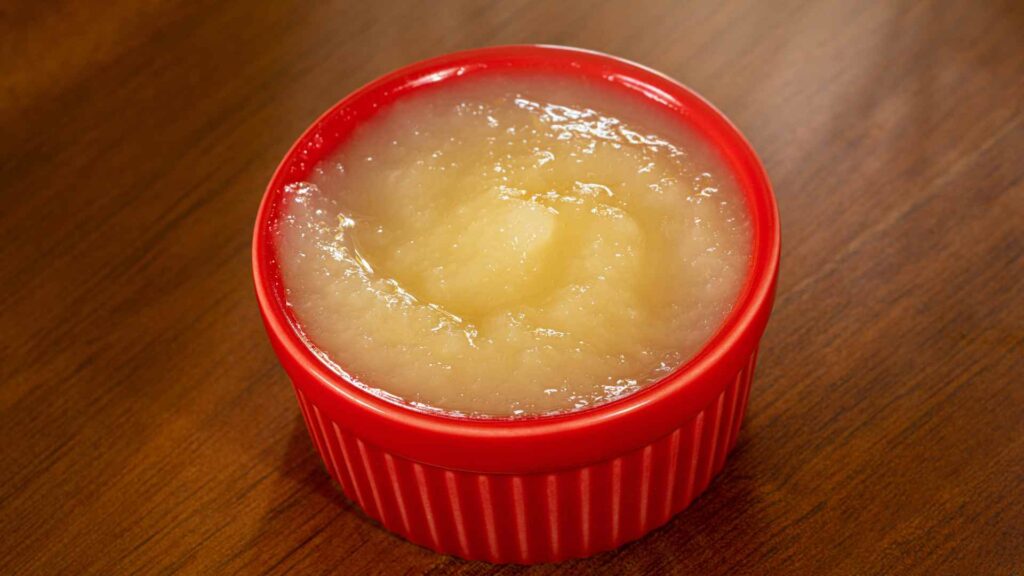
A plain homemade applesauce method
Homemade sauce is not automatically healthier, but it makes the ingredient list delightfully short. Use apples and water, and leave sweeteners and spices out of the pot.
- Wash, peel if desired, and fully core the apples, removing seeds, stems, and leaves.
- Chop the flesh into small pieces and place it in a saucepan with enough water to prevent sticking.
- Cook gently until the pieces are soft, adding only water as needed.
- Mash or blend to the texture you want, then cool completely.
- Refrigerate promptly in a clean covered container and discard it if mold, fermentation, or an off odor appears.
Freeze tiny measured dots on a lined tray rather than full ice-cube compartments. A frozen marble of sauce is still a concentrated treat, and hard chunks can be awkward for small dogs to chew.
Useful ways to serve it
A thin swipe on a lick mat can make grooming or nail care easier, provided the dog is supervised and the mat is not chewed. Mix the sauce with a portion of regular wet food to reduce the amount of fruit needed.
A dab can also accompany xylitol-free peanut butter for dogs, but combining two treats combines their calories. Check both labels and keep the total portion small.
Before using applesauce to hide medicine, confirm that the medication may be given with food. Some drugs have specific administration instructions, and a dog that refuses the mixture may receive only part of a dose.
What to do if your dog ate applesauce
Plain, unsweetened sauce
If a healthy dog ate a modest amount and is acting normally, remove the rest, offer normal water, and monitor. Call the veterinarian if vomiting, diarrhea, abdominal discomfort, itching, swelling, or unusual tiredness develops.
Sweetened sauce without xylitol
A small amount of ordinary sugar is more likely to cause digestive upset than poisoning, but a large raid can add significant calories and trigger symptoms. Check every ingredient, then call the veterinarian if the amount was large or the dog has diabetes or another condition.
Xylitol or an unknown sweetener
Treat this as urgent. Call a veterinarian, emergency clinic, or animal poison control center immediately and bring the label, because waiting for weakness or seizures wastes valuable time.
A swallowed pouch, cap, foil lid, or cup
Packaging creates a foreign-body problem unrelated to the fruit. The Merck Veterinary Manual overview of digestive signs highlights vomiting, appetite loss, abdominal distention, pain, dehydration, and abnormal stools as signs that warrant attention.
Frequently asked questions
Can dogs eat applesauce every day?
Most dogs do not need it daily, and repeated extras can unbalance calories. If a dog needs a daily topper to eat, investigate the appetite change with a veterinarian rather than endlessly sweetening the bowl.
Can applesauce stop diarrhea?
It is not a reliable treatment and can worsen loose stool in some dogs. Contact a veterinarian for repeated diarrhea, blood, black stool, vomiting, pain, weakness, dehydration, or illness in a puppy, senior, or medically fragile dog.
Can dogs have baby-food applesauce?
Only after checking every ingredient and the product’s age and storage instructions. Baby food can contain other fruits, sweeteners, vitamin additives, or flavorings, so the intended eater does not guarantee canine safety.
Is applesauce good for giving pills?
It can work for medications that may be taken with food, but use a tiny portion and confirm the full dose was swallowed. Ask the veterinarian or pharmacist when administration instructions are unclear.
The bottom line
Plain, unsweetened, xylitol-free applesauce can be a small occasional treat for many healthy adult dogs. It is convenient and tasty, but it is not a vitamin supplement, immune booster, constipation cure, or replacement for balanced food.
Read the label, measure a lick rather than a ladle, and act fast if xylitol, grapes, raisins, packaging, or concerning symptoms enter the story. That is how a simple apple snack stays simple.