Can Cats Eat Potatoes? Cooked Flesh, Green Skin, and Recipes
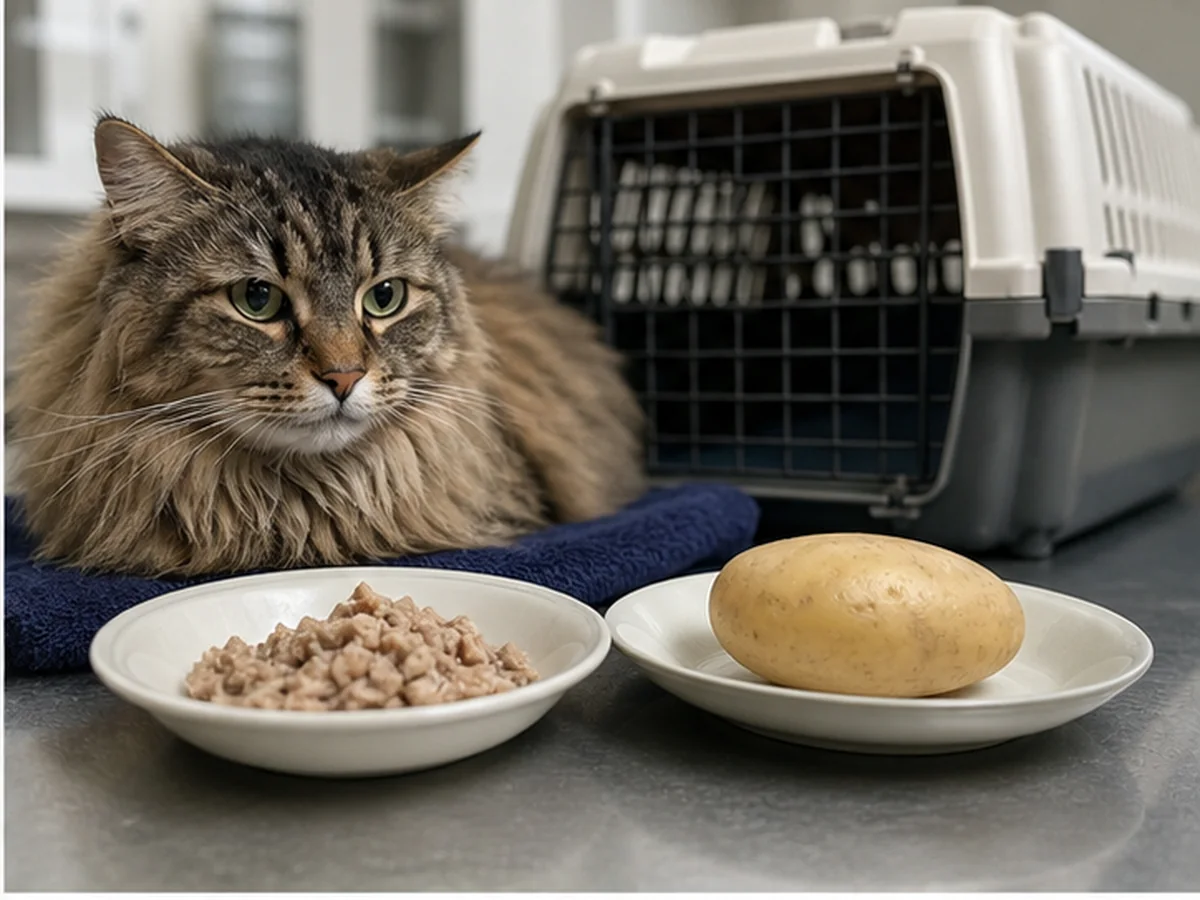
A small bite of fully cooked, plain potato flesh is usually low risk for a healthy adult cat, but potatoes are not needed in a feline diet. Raw, green, sprouted, or spoiled potatoes deserve more concern, while mash, fries, chips, soup, skins, foil, and casseroles introduce salt, fat, dairy, onion, garlic, bones, or packaging.
Sort the potato before deciding what to do
Remove access and identify whether the cat ate cooked flesh, raw peel, a green section, sprouts, plant leaves, chips, fries, mash, soup, or packaging. Save the recipe and estimate amount and time.
- One small bite of plain fully cooked flesh: offer water and observe.
- Raw, green, sprouted, bitter, spoiled potato, or potato plant material: call promptly with details.
- Onion, garlic, heavy seasoning, a bone, skewer, foil, or wrapper: contact a veterinarian.
- Repeated vomiting, severe weakness, tremors, collapse, seizures, or breathing trouble: seek urgent care.
Do not induce vomiting or force food. Keep a sample or photograph of green skin, sprouts, plant material, and labels because correct identification affects advice.
Why green and sprouted potatoes are different
Potatoes belong to the nightshade family and naturally contain glycoalkaloids, with greater concern in green tissue, sprouts, leaves, stems, and unripe or damaged portions. Cooking is not a reason to salvage a green or bitter potato for a cat.
The ASPCA potato plant entry lists solanine-related gastrointestinal and neurologic signs in pets. Call after plant material or a meaningful raw green exposure rather than calculating a home dose.
Plain cooked potato is low risk, not nutritionally useful
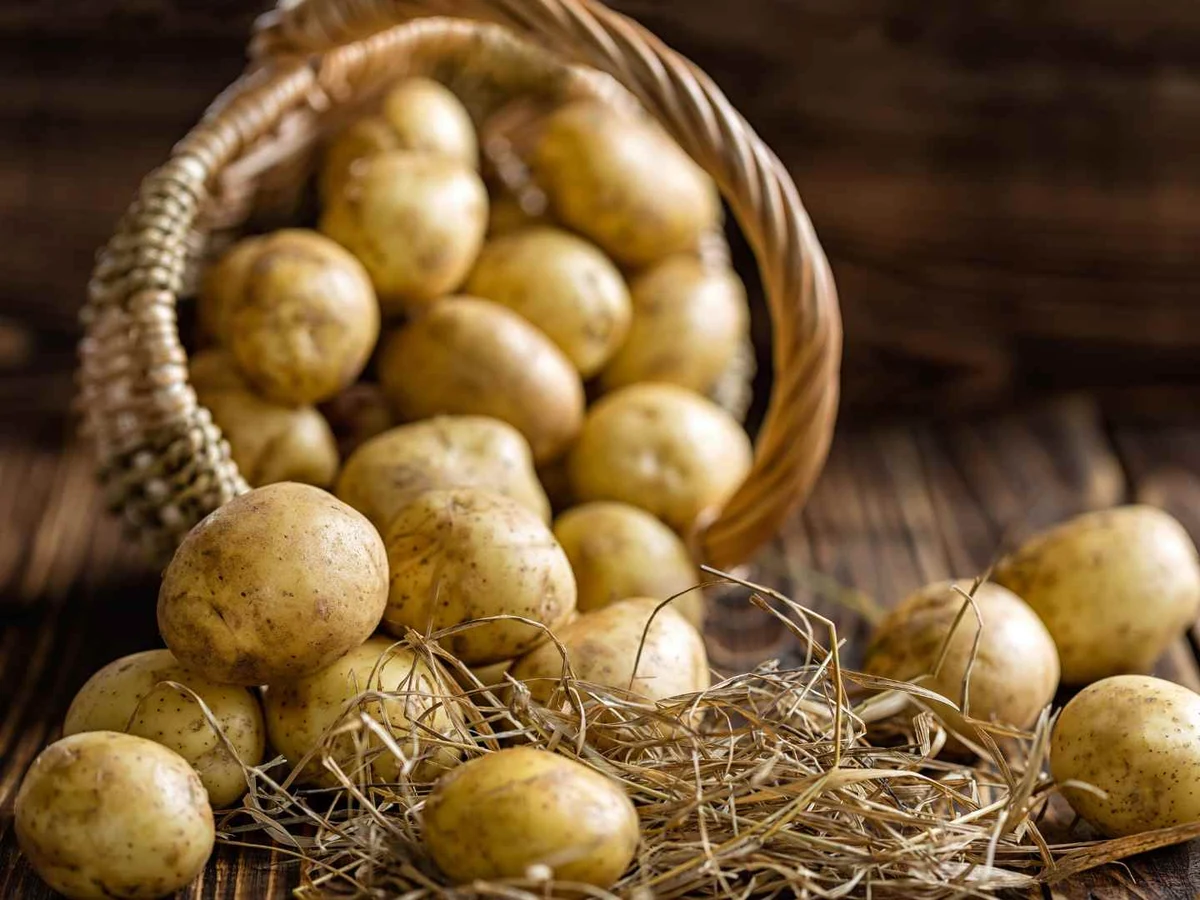
Cooking softens starch and makes ordinary ripe potato flesh easier to digest. It still supplies mostly carbohydrate rather than the animal-derived nutrient balance a cat needs.
The Cornell Feline Health Center feeding guidance recommends complete food appropriate to life stage. A teaspoon of potato can only be an occasional extra, never the base of a homemade cat meal.
White, yellow, red, and purple potatoes
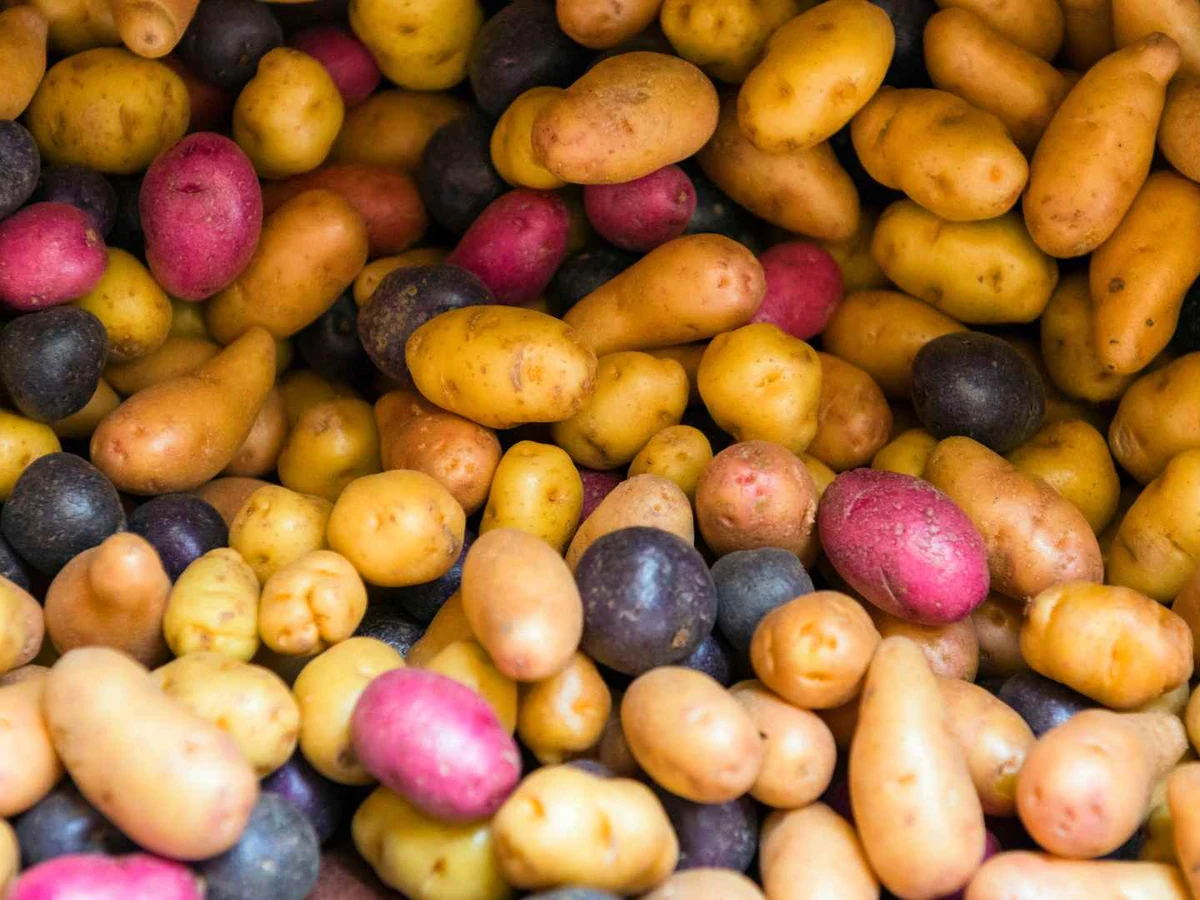
Common potato colors do not change the basic preparation rule: use only firm, non-green, non-sprouted flesh that is fully cooked and plain. Remove tough skin and cut a pea-sized piece.
A purple potato is not a nutritional loophole, and a red skin is not the same thing as green discoloration. When a tuber smells odd, tastes bitter, has extensive sprouts, or is badly damaged, discard it.
Raw potato and peel
Raw potato is hard, starchy, and difficult to chew, with greater glycoalkaloid concern than normal cooked flesh. Peel can be fibrous and may include green areas or soil contamination.
Do not offer raw peel as enrichment or let the cat play with a rolling potato. A small plain peel nibble may cause only digestive upset, but green material, larger amounts, or symptoms warrants a call.
Potato plants are not snacks
Leaves, stems, flowers, berries, and sprouts should be kept away from pets. Secure garden beds, dispose of trimmings promptly, and store seed potatoes where cats cannot investigate.
Photograph the whole plant and exposed parts if chewing occurred. Do not wait for vomiting, diarrhea, drooling, weakness, confusion, or neurologic changes before seeking case-specific advice.
Mashed potatoes hide many extras
Mash commonly contains milk, cream, butter, salt, cheese, sour cream, garlic, onion, chives, bacon, broth, or gravy. Instant packets can contain concentrated seasoning and sodium.
Our guides to butter, cheese, and garlic help assess the recipe. Rinsing a spoonful cannot reliably undo mixed-in seasoning.
Garlic and onion deserve special attention
Allium ingredients can damage feline red blood cells whether fresh, cooked, dried, or powdered. Potato soup, gratin, seasoning salt, gravy, and instant mash may hide them.
The Merck Allium toxicosis review notes cats’ particular susceptibility and the possibility of delayed anemia. Call with the recipe after a meaningful exposure instead of relying on the cat looking normal now.
French fries, hash browns, and tater tots
Fried potato adds oil, salt, coatings, and seasoning, while restaurant products may share fryers or carry sauces. Hot oil and hot potato can burn the mouth.
Read our French fries guide for portion and seasoning details. One cooled unseasoned crumb is different from several loaded fries with garlic sauce and foil.
Potato chips and crisps
Chips concentrate salt and fat into brittle pieces with sharp edges. Flavors such as sour cream and onion, barbecue, salt and vinegar, cheese, and spicy blends bring more ingredients.
Bags can be chewed, swallowed, or create a suffocation hazard, and desiccant or freshness packets should be counted. Store opened chips in a closed cupboard, not clipped at cat height.
Baked potatoes, skins, and foil
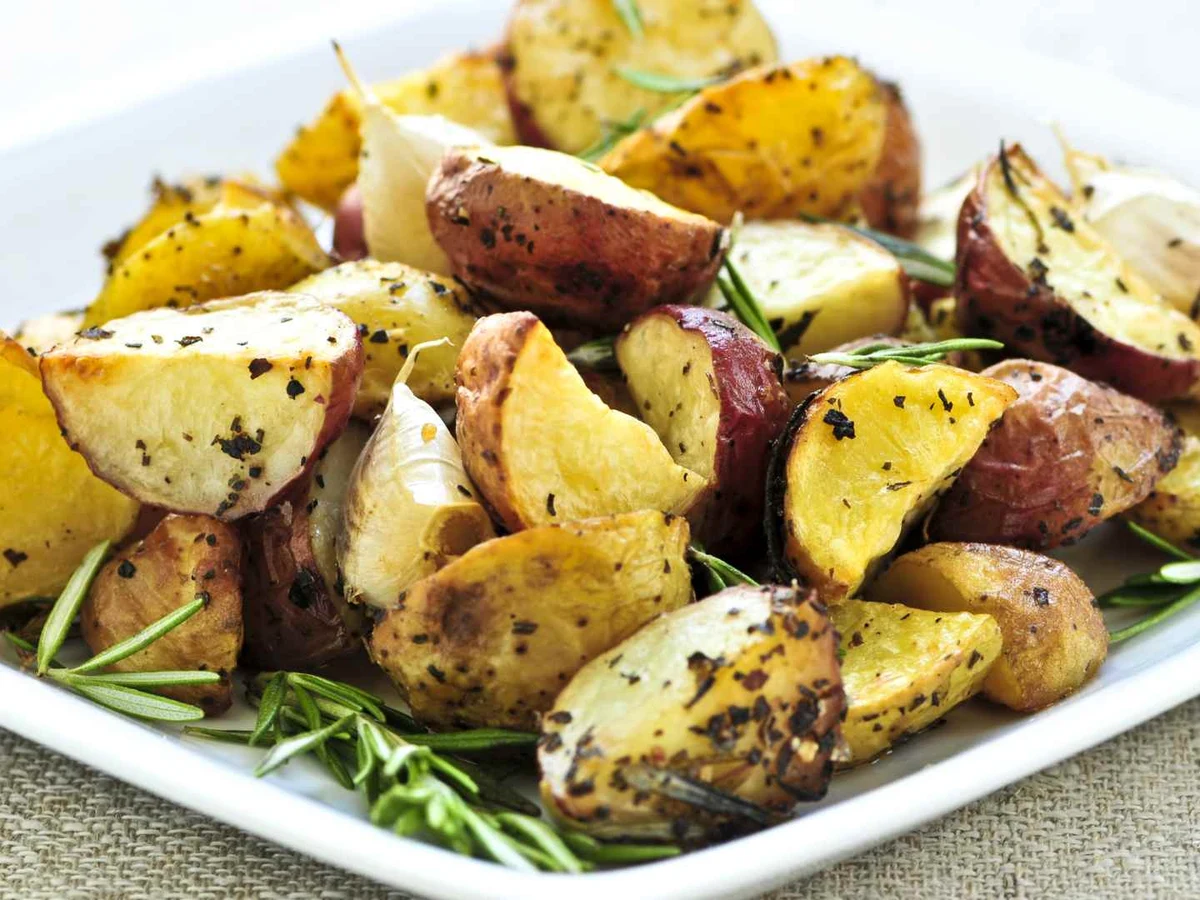
A plain baked interior is the simplest version, but loaded potatoes add butter, cheese, sour cream, bacon, chives, salt, and sauce. Tough skins can carry seasoning and form chewy strips.
Foil retains food odor and can be shredded or swallowed. Check the wrapper after a raid, and call if pieces are missing or the cat develops vomiting, appetite loss, pain, or lethargy.
Sweet potatoes are a separate plant
Sweet potatoes are not nightshade-family potatoes and do not share the same green-potato issue. They still need thorough cooking, plain preparation, small portions, and approval for medically restricted cats.
Do not transfer safety claims from one tuber to every root vegetable. Identify the product accurately, particularly with mixed frozen fries or vegetable chips.
Diabetes, obesity, and prescription diets
Starchy extras are poorly suited to cats with diabetes or weight concerns unless the treating veterinarian includes them. Kidney, urinary, gastrointestinal, and allergy diets also depend on controlled ingredients and minerals.
Ask which rewards fit the plan and pre-measure them. A few pieces of regular kibble or a spoon of usual wet food is easier to account for than potato from a seasoned family dish.
Symptoms after concerning potato material
Glycoalkaloid exposure can cause drooling, vomiting, diarrhea, abdominal pain, weakness, confusion, tremors, or other neurologic changes. The amount in a particular potato is not visible, so green color, sprouts, plant parts, and bitterness are practical warning signs.
Call before symptoms after a meaningful exposure and do not taste the potato yourself to estimate safety. Keep children and other pets away from the same batch.
Storage that reduces greening and sprouting
Store potatoes according to package guidance in a cool, dark, dry, ventilated place that pets cannot access. Light encourages greening, while damaged and aging tubers are more likely to sprout or spoil.
Discard heavily green, bitter, rotten, or extensively sprouted potatoes instead of trimming them for pet food. Secure the compost and rubbish because peels and sprouts remain attractive kitchen scraps.
Frozen potato products
Frozen hash browns, wedges, tots, and fries can arrive pre-oiled, salted, battered, or seasoned even when they look plain. Ingredient lists may include onion powder, garlic powder, cheese, dextrose, and preservatives.
A frozen hard piece may damage teeth or be gulped, while a freshly cooked one may burn. Store bags closed and put dropped pieces away before preheating the oven.
Soups, stews, and chowders
Potato soup commonly contains onion, garlic, leek, broth, cream, butter, bacon, cheese, salt, and pepper. Stew may add bones, wine, skewers, or meat packaging debris.
Do not pick out one potato cube and assume it stayed plain while simmering. Broth and seasonings soak through the dish, so use the complete recipe.
Pet foods that list potato
Potato in a commercial cat food is not equivalent to feeding a bowl of plain potato. The finished product is formulated, processed, and evaluated as an entire nutrient profile.
The FDA complete-and-balanced food guide explains nutritional adequacy statements. Judge the diet by that statement, life-stage fit, manufacturer information, and veterinary advice rather than one ingredient in isolation.
What to watch after a low-risk cooked bite
For one pea-sized plain cooked piece, monitor normal eating, drinking, comfort, and litter-box use. An unfamiliar starch may cause mild gas or soft stool in an individual cat.
Repeated vomiting, persistent diarrhea, blood, pain, weakness, tremors, abnormal behavior, or refusal of food requires a call. Mention any green color, peel, sprouts, seasoning, and packaging that were accessible.
Dental and choking considerations
Even cooked potato can form a dense sticky lump if mashed into a large ball. Offer only a small loose piece and supervise normal chewing and swallowing.
Cats with dental pain, missing teeth, swallowing disorders, or prior esophageal disease need individual advice. Drooling, repeated gulping, gagging, or neck stretching after a bite warrants a prompt call.
Cross-contamination in the kitchen
A plain potato cut on a board used for raw chicken or seasoned meat is no longer truly plain. Wash hands, knives, boards, and counters between raw animal food and ready-to-eat ingredients.
Clean the cat’s dish separately from raw-preparation tools and refrigerate cooked leftovers promptly. Food safety protects people in the household as well as the cat.
Why potato is not a bland-diet prescription
A cat vomiting or having diarrhea needs a diagnosis and a nutritionally appropriate feeding plan. Plain potato lacks the complete protein and micronutrient balance required for recovery.
Do not withhold food for prolonged periods or create a potato-heavy homemade diet without veterinary direction. Cats can develop serious complications when calorie intake remains inadequate.
Kitchen-garden prevention
Keep harvested potatoes, sprouts, peel buckets, and compost behind closed doors. Cats that ignore clean potatoes may investigate fragrant scraps mixed with meat drippings.
If potatoes are grown at home, fence off foliage and collect dropped berries or trimmed stems. Label plant samples before disposing of them when an exposure may have occurred.
Frequently asked questions
Can cats eat boiled potatoes?
A pea-sized piece of plain fully boiled, non-green flesh is generally low risk for a healthy adult. Cool it completely and skip salt, butter, milk, and seasoning.
Can cats eat potato skin?
It is best removed because it is tougher and may include green tissue, soil, or seasoning. Never feed green or sprouted skin.
What if my cat ate one raw potato bite?
Call with the amount and whether the potato was green, sprouted, bitter, damaged, or part of a plant. Monitor for digestive or neurologic signs while following professional advice.
The bottom line
Plain fully cooked potato flesh is a low-risk occasional nibble, not necessary cat food. Raw green material, sprouts, potato plants, mixed recipes, hot food, foil, packaging, symptoms, and medical diets change the decision.