Can Dogs Eat Cooked Onions? Why Heat Does Not Make Them Safe
No, dogs should not eat cooked onions. Frying, boiling, roasting, caramelizing, dehydrating, or simmering does not reliably remove the Allium compounds that can damage canine red blood cells, and signs of anemia may be delayed for several days after the meal.
Cooking changes texture, not the core hazard
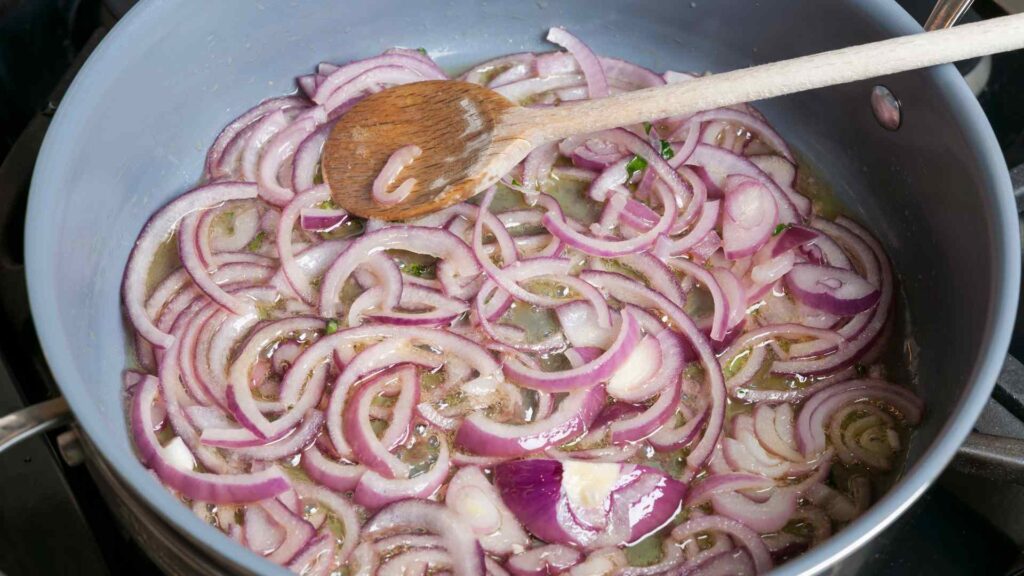
Soft translucent onion may look gentler than a raw slice, but heat is not a canine detoxification step. Cooked pieces, onion purée, reduced sauce, soup liquid, gravy, stuffing, and food seasoned with onion powder all belong in the exposure history.
Onions are Allium plants related to garlic, leeks, chives, shallots, and scallions. Their sulfur-containing compounds can create oxidative injury in red blood cells, leading to Heinz body formation and hemolytic anemia.
The Merck Veterinary Manual’s Allium toxicosis review explicitly includes raw, cooked, dehydrated, and granulated forms. Concentrated powders and dried products can make a recipe harder to quantify than visible onion pieces.
Why a dog can look fine at first
Stomach irritation may cause vomiting, diarrhea, drooling, or reduced appetite within hours, but red-blood-cell injury follows its own timeline. A normal evening after the theft does not rule out later anemia.
Merck notes that oxidative changes can begin within about 24 hours, peak later, and clinically important hemolysis may appear three to five days after exposure. Veterinary follow-up may therefore matter even when an early examination seems reassuring.
Possible delayed signs include unusual tiredness, weakness, exercise intolerance, fast breathing, rapid heart rate, pale or yellow gums, dark red-brown urine, poor appetite, collapse, and worsening vomiting. These signs are serious but not specific enough for home diagnosis.
Repeated smaller servings matter because damage can be cumulative. Tell the veterinary team about every onion, garlic, leek, chive, scallion, broth, gravy, seasoning, or supplement exposure over the previous several days.
Every cooking method still counts
Boiled onion in soup, sautéed onion under meat, caramelized onion on a sandwich, roasted onion beside vegetables, and slow-cooked onion in stew all remain relevant. Removing visible pieces after cooking does not erase the onion used in the dish.
Purées, baby foods, curry bases, pasta sauces, marinades, stocks, and gravies can hide onion completely. Restaurant recipes may use fresh onion and powder together, so ask for an ingredient list when possible.
Onion rings add batter, frying fat, salt, dipping sauce, and packaging. A large theft may combine Allium risk with pancreatitis, gastrointestinal upset, or foreign material.
Onion powder may appear in chips, crackers, seasoning packets, deli meat, sausages, meat substitutes, bouillon, and flavored pet-unfriendly snacks. Ingredient order and serving amount help a toxicologist judge concentration more accurately.
Broth and gravy are not loopholes
Liquid can contain dissolved or suspended compounds even when the solids were strained out. A dog that drinks a pot of onion broth may also receive a large sodium load and other ingredients such as garlic, fat, alcohol, or bones.
Use our salt guide for a salty stock exposure, but report the onion separately. Do not force extra water to counter sodium or onion because overwatering can be dangerous and does not reverse red-blood-cell injury.
Gravy may contain onion powder, garlic, drippings, butter, cream, and concentrated salt. Save the packet or recipe rather than describing it simply as sauce.
What to do immediately
- Remove the dish, leftovers, trash, and packaging without risking a bite from a guarding dog.
- Save the label, recipe, restaurant receipt, or a clear photograph of every ingredient and the remaining portion.
- Estimate the amount, onion form, cooking method, earliest and latest possible time, dog’s weight, and current symptoms.
- List every possible Allium exposure from the previous several days, including powders, broths, supplements, and repeated table scraps.
- Call a veterinarian, emergency hospital, or recognized animal poison service promptly for case-specific instructions.
Do not wait for pale gums or dark urine before calling. Earlier professional advice gives the team more useful options and helps them choose examination, decontamination, monitoring, and follow-up appropriately.
Do not induce vomiting unless a veterinary professional who knows the product, amount, and timing directs it. Hydrogen peroxide, salt, mustard, oil, fingers in the throat, and other online remedies can cause aspiration, irritation, poisoning, or delayed care.
Urgent signs after cooked onion
Go to emergency care for collapse, breathing difficulty, marked weakness, blue-gray or very pale gums, yellow gums or eyes, red-brown urine, seizures, repeated vomiting, or inability to stand. Do not make a symptomatic dog walk around to test its stamina.
The ASPCA onion entry lists vomiting, red-blood-cell breakdown, weakness, high heart rate, panting, and blood in urine among recognized effects. A gum check at home cannot rule out evolving anemia.
Take a short video of unusual breathing or gait if it is safe and does not delay leaving. Note urine color and symptom timing, but do not handle urine or vomit without basic hygiene.
What the veterinary team may do
The clinician will use the recipe, amount, timing, body weight, recent exposures, symptoms, and health history to assess risk. Blood work may evaluate red-cell changes, anemia, organ function, and other explanations for the signs.
Because hemolysis can evolve, one early blood count may not be the end of monitoring. Follow the recommended recheck schedule even if the dog seems brighter the next morning.
Treatment depends on timing and severity and may include professionally managed decontamination, fluids, nausea control, oxygen, and monitoring. Severe anemia can require a blood transfusion, which is why universal home dose tables are unsafe shortcuts.
Which dogs need extra caution
Small dogs receive more onion per pound from the same spoonful. Dogs with existing anemia, heart or lung disease, kidney problems, or serious illness may have less reserve if oxygen-carrying red cells are lost.
Some veterinary sources discuss breed differences in susceptibility, but no breed should be considered protected. A mixed-breed dog and a large dog still require exposure-specific assessment.
Puppies, seniors, and dogs taking medications or supplements should have their full medical history reported. Never add iron, vitamins, or blood-building products without veterinary direction.
Common meals that deserve a full inventory
Meatloaf, meatballs, burgers, tacos, stuffing, casseroles, curries, chili, fried rice, pot roast, pasta sauce, pizza, soups, and restaurant leftovers often use cooked onion. Each dish can add garlic, salt, fatty meat, cheese, hot spice, bones, skewers, foil, or raw dough.
Our pizza guide covers overlapping toppings and dough, while the tomato sauce guide explains why a red sauce is recipe-specific. Give the veterinarian the complete meal inventory.
Cooked onion mixed through a dish cannot be made safe by picking out the pieces. Do not rinse the meat and feed it anyway, because powder, juices, fat, and other ingredients can remain.
Preventing repeat exposures
Use a lidded pan or back burner and keep cutting boards away from counter edges. During dinner, put the dog behind a gate or in another comfortable area before serving guests.
Store leftovers promptly in closed containers and secure trash with a locking lid. Slow cookers, cooling pots, delivery bags, and compost bins are common weak points because food smells remain accessible for hours.
Teach household members that cooked onion is not safer than raw onion. This includes broth poured over kibble, gravy on holidays, meat scraped from stew, and baby food used to tempt a sick dog.
Keep veterinary, emergency-hospital, and animal-poison contact details in the phone before an accident. Fast access to the recipe and numbers is more useful than searching the internet for a homemade antidote.
Safer bowl options
A complete dog food needs no onion flavor. If a veterinarian approves a topper, use a measured amount of a single plain ingredient already known to be safe for that dog.
Do not substitute garlic, leek, shallot, chive, scallion, or onion-infused seasoning. Our green onion guide covers scallions, while the garlic guide addresses another Allium source.
Frequently asked questions
Does boiling destroy onion toxicity?
No. Boiled and simmered onion remains relevant, and the cooking liquid can contain onion components and other hazards.
Are caramelized onions safe?
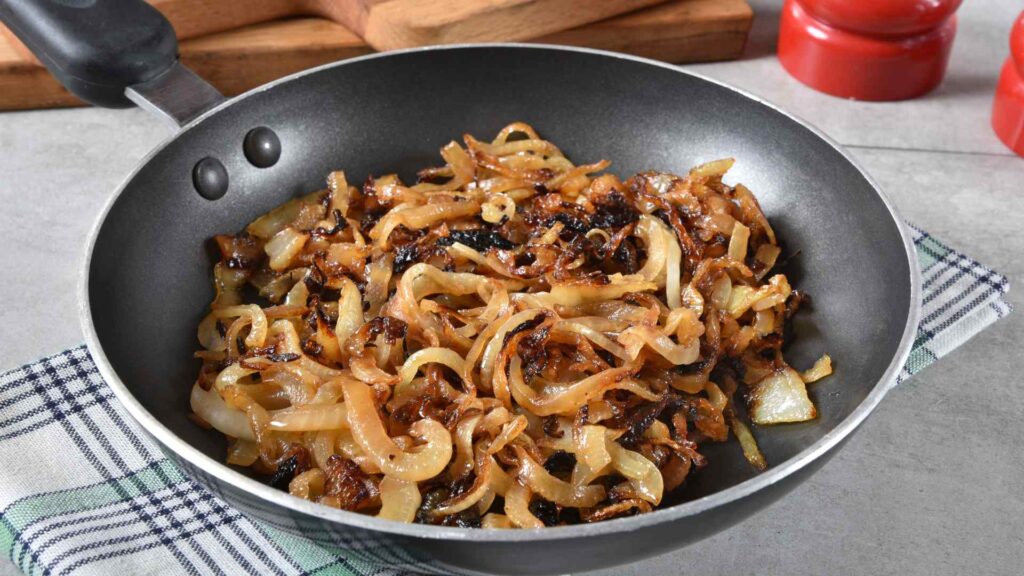
No. Browning changes flavor and texture but does not create a dog-safe onion, and butter, oil, sugar, salt, or alcohol may add concerns.
My dog ate one small cooked piece and looks fine. What now?
Call with the dog’s weight, amount, form, time, recipe, and recent Allium history because signs may be delayed. One tiny piece is not the same as a bowlful, but appearance alone cannot settle risk.
Can I give bread or milk to absorb onion?
No household food neutralizes oxidative red-blood-cell injury. Leave normal water available unless directed otherwise, but do not force food or fluids or delay the call.
The bottom line
Cooked onions remain unsafe for dogs, including pieces, purées, powders, broths, gravies, and strained dishes. Document the whole meal, call promptly, report repeated Allium access, and watch closely for delayed weakness, pale or yellow gums, fast breathing, and dark urine.
The ASPCA’s people-food guidance also warns that Allium foods can irritate the gut and damage red blood cells. Calm, accurate triage beats panic and home treatment: preserve the evidence and let a veterinary professional set the next step.