Dog Ate Gum? Xylitol, Sugar-Free Gum, Wrappers, and Emergency Steps
If your dog ate gum, check the ingredient list for xylitol immediately and call a veterinarian or animal poison service if xylitol is present or the product is unknown. Gum looks like a tiny snack, but the label can turn this from annoying to urgent in about ten seconds.
Start with the package, not the dog’s guilty face
- Take away the gum, wrappers, container, purse, backpack, or trash.
- Find the exact brand and flavor and read every ingredient.
- Look specifically for xylitol, sometimes marketed as birch sugar.
- Count how many pieces are missing and how many wrappers are missing.
- Write down your dog’s weight, the time, and any symptoms.
- Call promptly if xylitol is present, the product is unknown, several pieces are missing, or your dog is not acting normal.
I would not spend twenty minutes comparing internet gum charts while the box is sitting in my hand. Xylitol concentration varies between products, so the exact label and your dog’s weight are far more useful than a generic “one piece is safe” claim.

The first question is whether the gum contains xylitol
Xylitol is a sugar alcohol used in some sugar-free gums, mints, candies, dental products, supplements, and foods. In dogs it can trigger a rapid insulin release that causes dangerous hypoglycemia, and larger exposures can also injure the liver.
If xylitol appears anywhere in the ingredients, treat the exposure as time-sensitive and call immediately. Our xylitol emergency guide explains the low-blood-sugar and liver concerns in detail.
Do not use the position of xylitol on the ingredient list to decide the exposure is harmless. The manufacturer may not disclose the amount per piece, and some formulas change between flavors, package sizes, or markets.
Regular sugary gum is usually a different problem
Gum that contains ordinary sugar but no xylitol is not generally expected to cause the same dangerous insulin response. A small amount may still cause vomiting, diarrhea, gas, or a sticky mess, and a large amount can create more digestive trouble.
The important word is “confirmed.” If you do not have the package or cannot identify the ingredients, call rather than assuming the gum was the ordinary kind.
Other sugar alcohols are not interchangeable with xylitol. Sorbitol, maltitol, and erythritol have different veterinary risk profiles, so report the exact ingredient instead of saying only “sugar-free sweetener.”
A gum container can hold a surprisingly large dose
Large plastic tubs and car cups may contain dozens of pieces, and dogs are perfectly capable of treating the whole thing like a vending machine. If the container is shredded, use the original piece count and what remains to estimate the largest plausible number swallowed.
If two dogs had access, do not divide the missing pieces evenly unless you watched them eat. Tell the veterinary team that either dog could have consumed most of the gum, because optimistic math is not a safety plan.
Wrappers matter, especially when many are missing
One small paper wrapper may pass without drama, but foil, plastic, large quantities of wrappers, and pieces of a gum container add choking and gastrointestinal obstruction concerns. The dog’s size and the amount of packaging matter.
Report whether the packaging was chewed, shredded, or swallowed whole. Vomiting, repeated retching, abdominal pain, refusal to eat, lethargy, or inability to keep water down after a foreign-body exposure deserves veterinary attention.
Nicotine gum is a separate emergency
Nicotine gum is not ordinary chewing gum and should be treated as a potentially serious poisoning. Nicotine can cause vomiting, drooling, agitation, abnormal heart rate, weakness, tremors, seizures, collapse, and other dangerous signs.
If nicotine gum is missing, call immediately and report the milligrams of nicotine per piece and the number of pieces involved. Used nicotine gum can still contain nicotine, so do not dismiss a trash-can exposure because the pieces had already been chewed by a person.
Caffeine gum can also be concentrated
Some energy gums contain caffeine or other stimulants. Caffeine can overstimulate a dog’s heart and nervous system, causing restlessness, vomiting, rapid heart rate, tremors, seizures, overheating, or collapse at sufficiently high doses.
Report the caffeine amount per piece and every other stimulant listed. Our coffee and caffeine guide explains why concentrated caffeine products are more concerning than a lick of a weak drink.
THC or cannabis gum changes the entire call
Edible gums or chews containing THC should be treated as drug exposures, not candy accidents. Dogs can develop marked sleepiness, wobbliness, urinary dribbling, altered heart rate, temperature changes, vomiting, agitation, tremors, or more severe neurologic signs depending on the dose and product.
Be direct about what the product contains, because accurate treatment depends on accurate information. Veterinary staff care about the dose and symptoms, not judging whose nightstand the package came from.
Watch for the signs that mean stop monitoring and go
Weakness, wobbliness, unusual sleepiness, tremors, seizures, collapse, repeated vomiting, severe agitation, abnormal breathing, or a very fast or irregular heartbeat should be treated as urgent. Those signs can fit xylitol, nicotine, caffeine, drugs, or a serious gastrointestinal problem.
A dog with neurologic signs should not be forced to eat, drink, or vomit. Keep the environment quiet, prevent falls, and follow emergency transport instructions.
Do not induce vomiting on your own
Whether vomiting is appropriate depends on the product, timing, dog, symptoms, and swallowed packaging. A weak, sedated, trembling, seizing, or poorly coordinated dog can aspirate vomit, while caustic or certain drug exposures may have their own complications.
Do not use salt, mustard, fingers, oil, or another internet home remedy. Even hydrogen peroxide should be used only when a veterinarian specifically directs it for this dog and this exposure.
Do not give food or sugar just because xylitol is possible
A professional may sometimes give specific instructions involving a sugar source when low blood sugar is suspected, but that is not the same as pouring syrup into every dog that ate gum. A dog that cannot swallow normally can choke or aspirate.
If xylitol is confirmed, the veterinary team may recommend blood-glucose checks, liver monitoring, intravenous dextrose, or hospitalization depending on dose and timing. Feeding a snack at home does not replace that evaluation.
Used gum is not automatically safe
Used gum may contain less sweetener than a fresh piece, but there is no reliable home method to determine how much remains. Used nicotine or caffeine gum is especially important to identify because active ingredients may still be present.
Trash exposures also tend to be messy stories rather than single-item stories. Inventory everything else the dog could have eaten, including food scraps, coffee grounds, chocolate, medication packaging, bones, and plastic.
Prevention is mostly a purse-and-backpack problem
Gum often lives in exactly the places dogs can raid: purses on floors, backpacks beside desks, coat pockets, center consoles, cup holders, and bedside tables. Moving those items behind a door or onto a high hook is more dependable than expecting a curious dog to respect personal property.
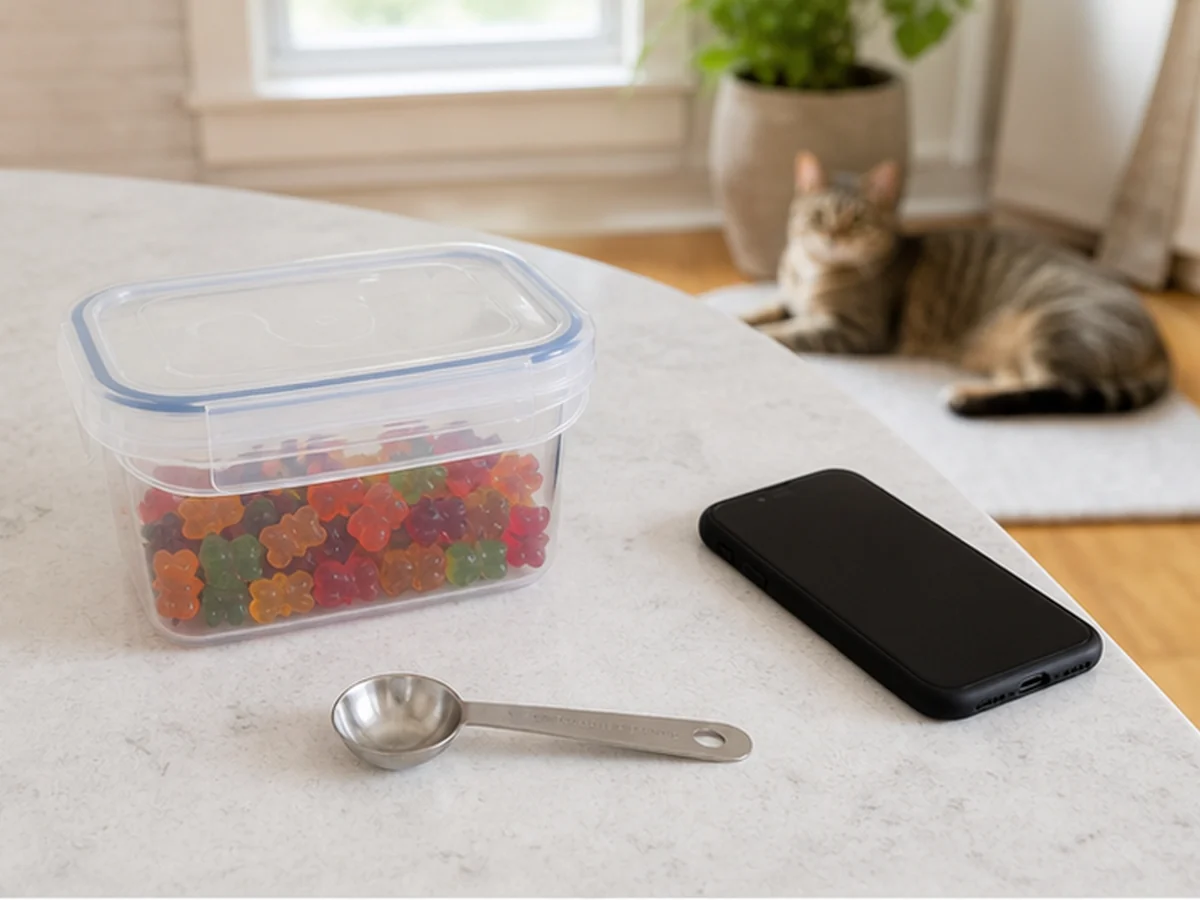
If your household buys xylitol gum regularly, consider a lidded container stored in a closed cabinet and a trash can the dog cannot open. I am a fan of prevention systems that still work when everyone is tired, distracted, or carrying groceries.
Frequently asked questions
My dog ate one piece of gum. Is that dangerous?
It depends on the gum, xylitol concentration, other active ingredients, and your dog’s weight. Check the exact package and call immediately if xylitol, nicotine, caffeine, THC, or an unknown formula is involved.
What if the gum does not contain xylitol?
Plain sugary gum is usually more of a gastrointestinal and packaging concern than a classic poisoning emergency, but large amounts or unusual ingredients can still matter. Monitor only after you have confirmed what the product contains.
Will gum get stuck in my dog’s stomach?
A small amount of gum itself often passes, but many wrappers, plastic packaging, or a large swallowed mass can create a foreign-body risk. Persistent vomiting, abdominal pain, lethargy, or refusal to eat needs veterinary evaluation.
Can I wait for symptoms if my dog seems fine?
Not when xylitol, nicotine, caffeine, THC, or an unknown product is involved. Some dangerous effects can develop after a delay, and treatment decisions are often easier before severe signs appear.
Bottom line
“My dog ate gum” is not enough information to decide the risk. Find the exact package, check for xylitol and other active ingredients, count pieces and wrappers, call promptly when the formula is concerning or unknown, and skip home vomiting unless a veterinarian directs it.