Can Cats Eat Poppy Seeds? Baked Foods, Pods, Oils, and Extracts
Do not deliberately feed poppy seeds or poppy products to cats. A few culinary seeds baked across a roll are different from loose seed, unwashed products, pods, plant sap, tea, extract, tincture, oil, supplements, garden material, dust, raw dough, and packaging, and feline exposure evidence is too limited for a reassuring home dose.
Separate the bakery crumb from the poppy plant
Food-grade culinary seeds are used as a surface topping or baking ingredient, often in small amounts spread through a recipe. They are not equivalent to a pod, concentrated tea, plant latex, pharmaceutical opioid, or unknown botanical extract.
The form determines both chemical and mechanical risk. A clinic needs the package and preparation, not just the word poppy.
One fully baked crumb with a handful of visible seeds may remain low concern in a normal adult cat, but that does not make a spoonful appropriate. Larger exposures and any symptoms deserve a call.
Why honest evidence boundaries matter
Poppy plants are associated with opiate alkaloids, yet concentrations vary by species, plant part, processing, contamination, and product. Published human, regulatory, or dog information does not create a precise feline threshold.
Do not promise that washed food seeds are alkaloid-free, and do not describe every bakery speck as an opioid overdose. Product-specific uncertainty should lead to measured triage rather than theatrical certainty.
The DEA warns about unwashed poppy seed products used to make concentrated tea. That scenario is fundamentally different from a seed stuck to baked bread.
Signs that raise urgency
Concerning changes can include unusual sleepiness, agitation, poor coordination, weakness, vomiting, abnormal pupils, slowed or difficult breathing, tremors, seizures, or collapse. Symptoms after tea, pod, extract, or unknown plant access require immediate veterinary assessment.
Breathing effort, blue-gray gums, inability to wake normally, collapse, or seizure activity is an emergency. Transport the container or photographs without delaying departure.
Do not give caffeine, salt, peroxide, activated charcoal, or a human opioid-reversal product at home. Veterinary treatment depends on examination, route, timing, and monitored dosing.
Loose seed creates dust and bulk
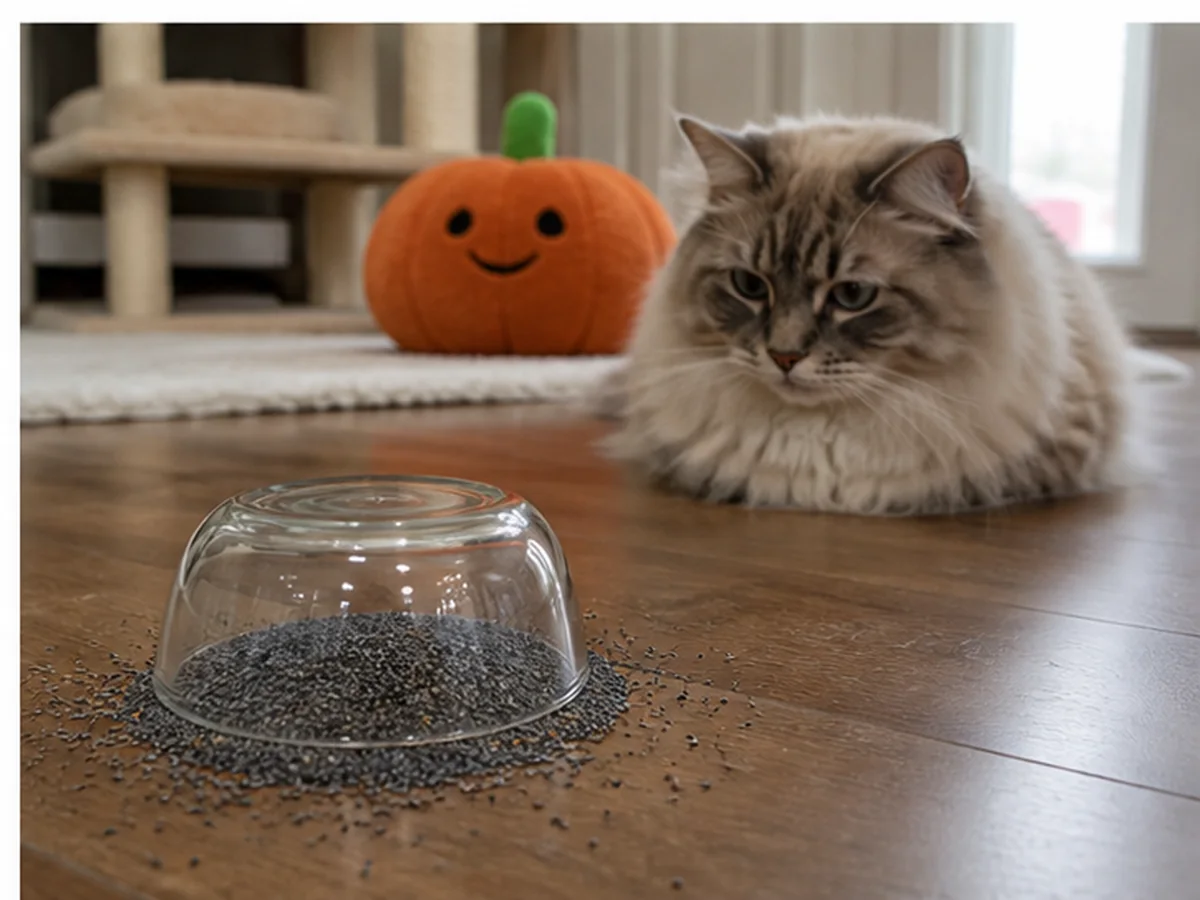
A spilled baking jar can release hundreds of tiny seeds that cling to paws and fur. Grooming turns surface contamination into ingestion, while sweeping can throw dust toward eyes and airways.
Confine the cat, collect the bulk spill gently, and ask about coat cleanup after heavy contamination. Persistent coughing, squinting, wheezing, repeated vomiting, or behavior change needs prompt advice.
Seed bags may include plastic liners, clips, ties, labels, and desiccants. Count everything before discarding the mess.
Lemon-poppy baked goods contain a full recipe
Muffins, cake, scones, rolls, and bagels add flour, sugar, fat, eggs, dairy, salt, citrus zest, icing, chocolate, raisins, or sweeteners. Raw batter adds microbial and texture concerns.
The cat bread guide separates a finished crumb from fermenting yeast dough, moldy bread, and swallowed packaging. Assess the baked product rather than isolating its seeds.
A hot muffin can burn the mouth, while a paper liner can obstruct. Check temperature and objects before deciding the seeds are the headline.
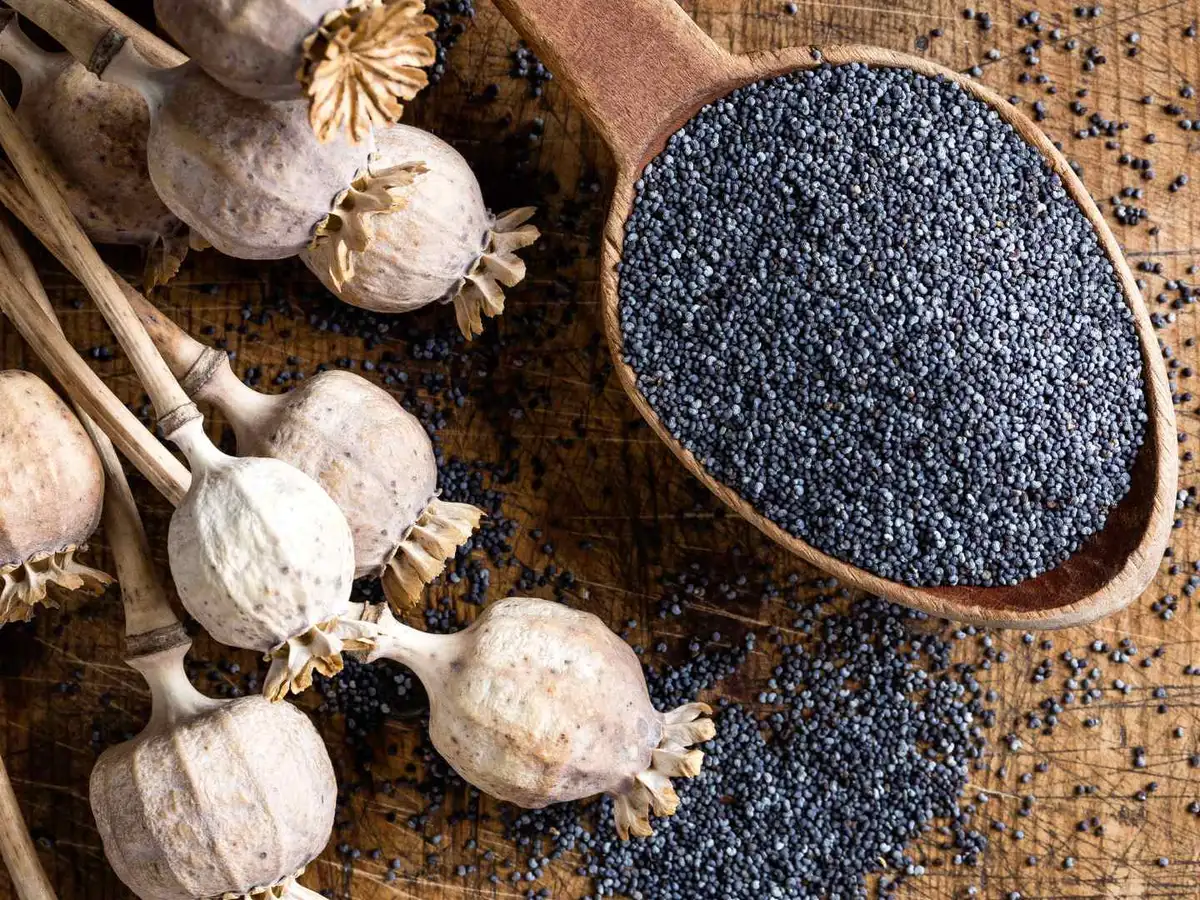
Pods, stems, leaves, and sap
Ornamental or agricultural poppies may expose cats to pods, stems, leaves, flowers, roots, sap, soil, pesticides, fertilizer, floral wire, and vase preservatives. Plant identity can be uncertain from flower color alone.
Do not let a cat play with dried seed heads, which can shatter into sharp pieces and scatter contents. Save the entire arrangement and purchase tag after chewing.
The ASPCA lists poppy as toxic to cats. Plant access plus sedation, excitement, poor coordination, or breathing change calls for urgent care.
Poppy tea is not a beverage accident
Tea made by soaking seeds or pods can extract compounds into liquid and may be intentionally concentrated. Strength cannot be judged by color, taste, or a standard kitchen volume.
A cat can lap from a brewing vessel, contact spilled liquid, or chew the wet solids. Preserve the recipe, source product, soak time, volume, and maximum missing amount.
Never wait for visible drowsiness after a meaningful tea exposure. Call immediately because respiratory effects may become dangerous.
Oil and extract labels require precision
Culinary poppy seed oil is a pressed fat, while essential oil, fragrance oil, tincture, flavor extract, and botanical concentrate can have completely different compositions. “Poppy oil” is not enough information.
Fatty culinary oil may cause vomiting or diarrhea in quantity, and slick spills encourage grooming. Concentrates and alcohol-based tinctures deserve a faster toxicology call.
The ASPCA essential-oil guidance explains why concentrated aromatic products require special caution around pets. Do not apply any poppy-derived oil to skin, ears, paws, bedding, or food.
Supplements and sleep products
Human sleep, pain, calm, or wellness products may combine poppy ingredients with melatonin, valerian, magnesium, cannabinoids, alcohol, sweeteners, or other sedating botanicals. Multiple ingredients can intensify uncertainty.
The FDA explains the regulatory limits surrounding dietary supplements. A suggested human serving is not a veterinary prescription.
Do not convert a capsule by body weight or open it over cat food. Report the Supplement Facts panel, manufacturer, lot, and missing unit count.
Poppy-seed dressing and savory dishes
Dressings can contain onion, garlic, mustard, vinegar, sugar, salt, dairy, oil, citrus, and preservatives. A single lick differs from drinking from an open cup.
Chicken salads and coleslaw add mayonnaise, vegetables, grapes, raisins, nuts, and wrappers. Use the cat chicken guide only after identifying every ingredient in the dish.
Do not rinse a dressed piece and call it plain because liquid settles in cuts and crevices. Set aside any approved meat before sauce is added.
A precise incident inventory
- Form: baked seed, loose food seed, unwashed seed, pod, plant, tea, oil, tincture, extract, capsule, dressing, or unknown.
- Amount: estimate maximum missing weight, product concentration, recipe share, liquid volume, and time.
- Route: swallowed, inhaled, splashed in eyes, applied to skin, or groomed from fur.
- Companions: report alcohol, sedatives, cannabinoids, sweeteners, chocolate, Alliums, raw dough, and mold.
- Objects: locate bags, caps, droppers, liners, wires, sticks, sachets, and broken glass.
Bagels bring salt, spreads, and toppings
A poppy bagel can be heavily coated on one side and may arrive with cream cheese, butter, smoked fish, onion, garlic, avocado, or deli meat. The topping pattern makes a “small bite” difficult to estimate by weight.
Remove access rather than scraping seeds off for the cat. Salt, rich spread, raw dough history, mold, and plastic sandwich wrap can matter alongside the culinary seed.
The cat yogurt guide gives related dairy-tolerance context when a baked product carries a cultured spread, but it does not approve the complete recipe.
Spice blends and decorative coatings
Poppy seeds can be mixed with sesame, onion, garlic, salt, caraway, and other seasonings in everything-style blends. Cats are especially susceptible to oxidative red-blood-cell damage from Alliums.
Save the jar and estimate how much blend, not how many black specks, disappeared. Cooking does not remove the onion or garlic concern.
The cat cinnamon guide is useful when a sweet seed cake contains warming spices, although poppy plant questions remain independent.
Pastry fillings can be concentrated
European-style poppy rolls and pastries may contain a dense ground-seed filling rather than a light surface sprinkle. Sugar, honey, butter, milk, nuts, raisins, citrus, and flavor extracts can be folded into the paste.
Grinding increases surface area and makes the portion harder to count. A substantial filling exposure warrants a call even when a few intact bakery seeds would not.
Chocolate glaze creates an additional methylxanthine assessment. The feline chocolate guide helps gather cocoa form, concentration, and missing product weight.
Birdseed and craft supplies are not food-grade
Wild-bird mixes may contain poppy-like seeds, millet, sunflower seed, dried fruit, dust, mold, insect debris, and treatments. Never identify one tiny seed by color alone.
Craft jars, sensory bins, wedding tosses, and floral displays may use dyed, glued, varnished, or unknown plant material. Their labels can reveal binders and preservatives unrelated to culinary products.
A spilled bulk container also increases inhalation and foreign-material exposure. Move the cat away before vacuuming or sweeping.
Garden control products can dominate
Herbicide, pesticide, slug bait, fertilizer, treated mulch, and compost may surround a poppy plant. A cat that walks through a wet application can ingest chemicals while grooming.
Photograph the product registration and directions, then call before applying soap, solvent, or oil to contaminated fur. Prevent licking without stressing a cat that already has neurologic signs.
Plant chewing and chemical contact can happen together. Report both rather than choosing the more obvious explanation.
What a low-concern monitoring plan looks like
If a veterinarian recommends observation after one tiny baked crumb, keep the cat indoors and note alertness, pupil appearance, gait, breathing, appetite, vomiting, and litter-box activity. Sedation should not be mistaken for ordinary napping if the cat is hard to wake.
Set a written callback threshold and observation window. New wobbliness, unusual agitation, repeated vomiting, weakness, slow breathing, or poor responsiveness ends home monitoring.
Do not offer a second crumb to confirm tolerance. Repetition increases exposure and makes the timeline less clear.
Frequently asked questions
What if my cat ate a poppy-seed muffin crumb?
One tiny fully baked crumb may be low concern, but verify ingredients and packaging. Call for larger amounts, raw batter, sugar-free products, loose seed, symptoms, or uncertainty.
Are poppy seeds poisonous to cats?
The evidence does not support a dependable household feline dose, and plant-related alkaloids make deliberate feeding unwise. Form and concentration matter enormously.
Can cats have poppy seed oil?
Do not offer it. Culinary oil adds unnecessary fat, while extracts and fragrance products can be more concentrated and require label-specific assessment.
What if my cat chewed a dried poppy pod?
Call promptly with a plant photograph, missing amount, time, weight, and signs. Keep other cats away and do not induce vomiting.
Bottom line
A bakery speck, loose culinary seed, unwashed product, pod, tea, and extract should never be collapsed into one poppy answer. Avoid deliberate feeding, preserve labels and plant material, and treat concentrated or symptomatic exposures as urgent without inventing a feline toxic dose.