Can Dogs Eat Noodles? Plain, Instant, Dry, and Sauced
Many healthy dogs can eat a few fully cooked plain noodles, whether wheat pasta or a simple rice noodle, but noodles are optional calories rather than a balanced meal or stomach cure. Dry noodles, seasoning packets, instant products, sauces, large portions, leftovers, allergy, and packaging change the answer.
The safest noodle is boring on purpose
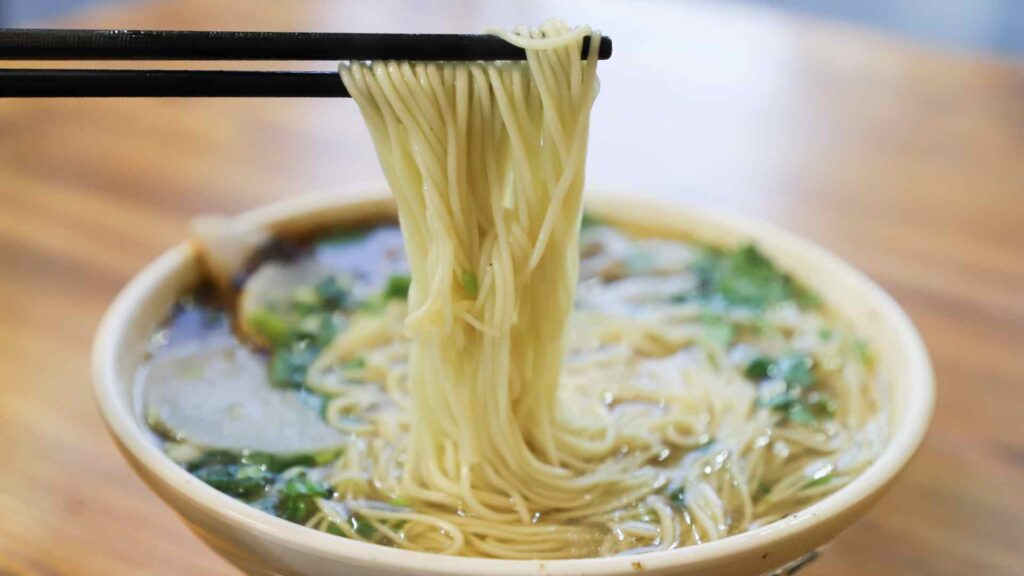
Cook noodles fully in plain water, drain them, cool them, and cut long strands into manageable pieces. Do not add salt, broth, oil, butter, sauce, seasoning, or garnish.
A tiny soft piece is easier to chew than a slippery bundle of ramen or spaghetti. Dogs that gulp, small breeds, flat-faced dogs, puppies, seniors, and dental patients need particularly careful sizing and supervision.
Noodles do not improve a complete dog food simply because they contain carbohydrate. A bowlful displaces balanced protein, fat, vitamins, minerals, and essential fatty acids.
Wheat pasta, egg noodles, and rice noodles
Plain wheat pasta is commonly made from wheat and water, while egg noodles also contain egg. Either can be acceptable in a tiny cooked amount when the dog has no relevant diet restriction or adverse reaction.
The pasta guide covers shapes, sauces, raw flour, stuffed noodles, and leftovers in detail. Noodle and pasta labels overlap, but recipes do not.
Rice noodles are not automatically healthier or easier for every dog. They remain a starchy extra and may contain tapioca, corn, additives, or egg depending on the product.
For rice-specific questions, the white rice guide separates plain cooked grains from large portions, seasoned dishes, and bland-diet myths. A rice noodle is processed differently but shares the need for portion control.
Dry noodles are not crunchy treats
Uncooked noodles are hard, can break into sharp edges, and may be awkward to swallow. Large amounts can cause digestive upset, while boxes, plastic bags, clips, and desiccants add foreign-body concerns.
Dry noodles do not guarantee a dramatic stomach expansion, so avoid internet myths. Still call for a large ingestion, repeated vomiting, pain, difficulty swallowing, a swollen abdomen, or missing packaging.
Do not force water, oil, or bulky food to push dry noodles through. Leave normal fresh water available and follow case-specific veterinary advice.
Instant noodles and ramen
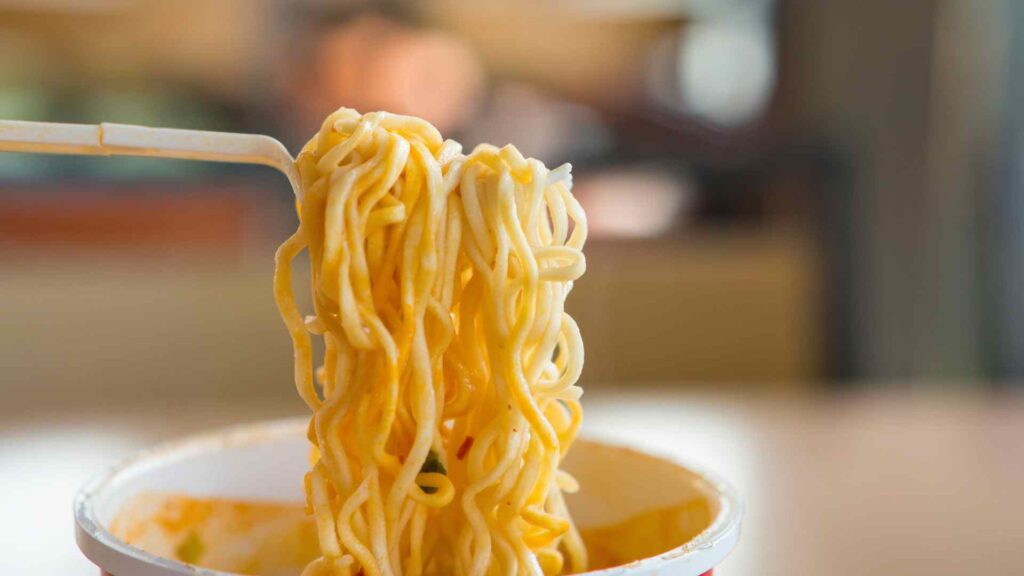
The noodle cake itself is often fried or otherwise calorie-dense, and the seasoning packet can contain substantial sodium. Onion, garlic, chile, yeast extract, flavor enhancers, sugar, and fat are common recipe variables.
Merck’s salt toxicosis guide explains that excessive sodium becomes particularly dangerous when fresh water is restricted. One plain strand is not salt poisoning, but a packet or bowl raid deserves a label-based assessment.
Cup noodles add foam cups, plastic lids, foil seals, hot broth, and sometimes disposable forks. Burns and swallowed packaging may be more urgent than the noodles.
Never use an instant seasoning packet to make dog food appealing. Sodium and concentrated flavoring make it a poor topper even when the noodles themselves are plain.
Onion and garlic hide in savory flavor
Powdered onion and garlic still count as Alliums, and concentrated powders can appear in broth, bouillon, sauce, spice blends, ramen packets, and meat flavoring. A savory smell does not identify the ingredients.
The Merck Allium guide explains that exposure can damage red blood cells and that effects can be delayed. Save the packet and contact a professional after a meaningful or uncertain exposure.
The site’s onion guide covers cumulative intake, powdered forms, delayed signs, and triage. Do not wait for pale gums or weakness when early advice is available.
Sauces turn noodles into a mixed exposure
Marinara, Alfredo, pesto, curry, pad Thai, lo mein, pho, stroganoff, macaroni and cheese, and stir-fry all bring their own ingredient lists. Fat, sodium, Alliums, chile, dairy, nuts, sweeteners, alcohol, and meat drippings may matter.
Soy sauce and fish sauce can add concentrated sodium. Restaurant dishes may contain more sauce and oil than a similar home recipe, so a bowl raid needs the restaurant or package details if available.
Rich cream, cheese, butter, or fried toppings raise calorie and pancreatitis concerns. Dogs with prior pancreatitis or prescribed low-fat diets deserve an earlier call after a large rich serving.
Pesto commonly contains garlic, oil, cheese, and nuts. Peanut sauces may be rich and salty, while sugar-free sauces need a xylitol check rather than an assumption.
Raw flour, fresh dough, and raw egg
Fresh homemade noodles before cooking are not equivalent to cooked pasta. Dough may contain raw flour, raw egg, salt, and other ingredients.
The FDA raw-flour guidance explains that flour is raw and can carry pathogens such as Escherichia coli or Salmonella. Cooking is the kill step.
Egg noodles should be fully cooked; the egg guide covers raw-egg food safety and complete preparation. Egg in a noodle does not create a high-protein meal.
Yeast dough is a different emergency because it can expand and produce alcohol in the stomach. Call promptly if a yeast-based dough is missing rather than waiting for swelling or drunken behavior.
Gluten, wheat, and food allergy
Most dogs do not need gluten-free noodles by default. A single soft stool does not diagnose wheat allergy, and rice noodles are not a universal solution.
Merck’s food-allergy guidance explains why a strict elimination diet followed by rechallenge is the reliable method. Blood and saliva panels are not a shortcut.
Dogs on a veterinary elimination trial should not receive unapproved noodles, sauces, treats, chews, or flavored medication. One casual bite can undermine weeks of controlled feeding.
Gluten-free products may contain rice, corn, chickpea, pea, lentil, potato, tapioca, egg, or other ingredients. Read the label for the actual restriction rather than trusting a front-panel claim.
Portions and diet displacement
Noodles are compact starch and can add meaningful calories without looking like a treat. Repeated handfuls are especially easy to overlook in a small dog’s daily intake.
The WSAVA treat guide recommends keeping all extras below 10 percent of daily calories. Noodles share that allowance with training treats, chews, scraps, and toppers.
There is no reliable noodles-per-pound chart because shapes, ingredients, calories, diets, and health conditions vary. One tiny cut piece is enough for a first taste.
Puppies need balanced growth nutrition, not a bowl of easy calories. Working, pregnant, lactating, underweight, or recovering dogs also need a complete plan instead of a generic energy promise.
Noodles do not cure an upset stomach
Plain noodles may look bland, but bland is not a diagnosis or a standardized treatment. Vomiting and diarrhea can come from infection, parasites, inflammation, pancreatic disease, toxins, medication, or obstruction.
Do not use noodles to treat diarrhea, constipation, poor appetite, or low energy without veterinary direction. They may worsen symptoms, delay diagnosis, or create an incomplete home diet.
Call for blood, black stool, repeated vomiting, abdominal pain, swelling, profound lethargy, dehydration, or inability to keep water down. Very young, elderly, and medically fragile dogs deserve a lower threshold.
Leftovers need prompt refrigeration
The FDA safe food-handling guidance recommends refrigerating perishables within two hours, or within one hour when temperatures exceed 90°F. Sauce, meat, egg, and dairy make prompt handling especially important.
Store cooked noodles in shallow covered containers with the refrigerator at 40°F or below. A pot left out overnight is not made safe by reheating or a normal smell.
Discard moldy, slimy, sour, old, or repeatedly warmed noodles. Dogs can become ill from contaminated food and can spread organisms through bowls, saliva, stool, hands, and surfaces.
Takeout deserves a packaging check
Delivery noodles may arrive with chopsticks, toothpicks, skewers, sauce cups, condiment packets, plastic film, staples, or absorbent pads. Count these items after a raid because a missing sharp object can require faster action than plain noodles.
Ask the restaurant about allergens and seasonings when possible, but do not expect a server to provide a veterinary safety guarantee. Share the dish name, recipe details, and estimated amount with the veterinarian or poison service.
Hot oil and broth can burn the mouth before ingestion becomes the main concern. Persistent drooling, pawing, refusal to eat, or visible oral injury needs veterinary assessment.
What to do after a noodle raid
- Identify cooked plain noodles, dry noodles, instant noodles, raw dough, sauce, broth, or a mixed dish.
- Save labels and recipes, especially seasoning packets and ingredients such as onion, garlic, salt, fat, xylitol, alcohol, and chocolate.
- Estimate the amount, time, dog weight, symptoms, medical conditions, medications, and normal diet.
- Account for cups, bags, boxes, foil, lids, forks, skewers, desiccants, glass, and other packaging.
- Call promptly for dangerous ingredients, yeast dough, large rich or salty amounts, significant symptoms, or missing foreign objects.
A healthy adult dog that ate a few fully cooked plain pieces and remains comfortable can usually be monitored. Keep normal water available and return to the complete diet.
Do not induce vomiting or give salt, oil, charcoal, antacids, anti-diarrheal medicine, or human pain relievers unless directed. The right response depends on ingredients, amount, time, and symptoms.
The bottom line
A few cooled, fully cooked plain noodles can be an occasional extra for many healthy dogs. Cut long strands, supervise, and keep portions small enough that complete food remains the meal.
Dry noodles, instant packets, rich sauces, Alliums, raw dough, unsafe leftovers, allergy trials, medical diets, and packaging change the answer. Noodles are not energy therapy or a universal bland-diet cure.