Can Dogs Eat Ground Beef? Cooking, Fat, and Diet Balance
Dogs can eat a small amount of lean, fully cooked, plain ground beef, but it should not replace a complete diet unless a veterinary nutritionist formulated the recipe. Raw meat, high fat, seasonings, burgers, leftovers, diet displacement, and packaging create the real risks.
The quick answer
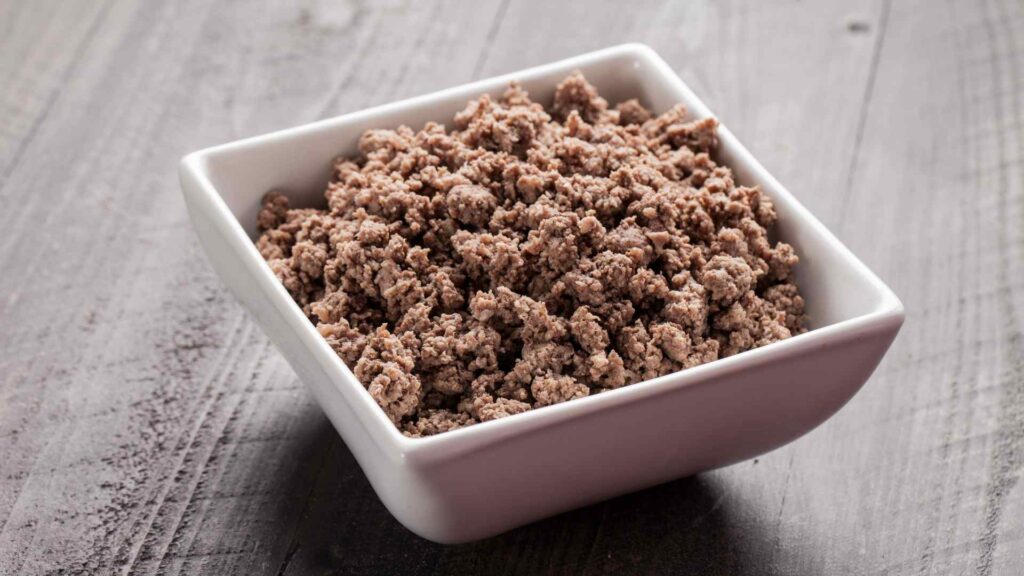
For a healthy dog, a spoonful of cooled, lean, thoroughly cooked, unseasoned crumbles can be an occasional extra. Drain excess fat, break up large clumps, and stop after vomiting, diarrhea, itching, or discomfort.
Call after raw meat, a large fatty amount, repeated vomiting, abdominal pain, serious symptoms, onion or garlic seasoning, xylitol-containing sauce, skewers, toothpicks, or swallowed plastic film, foam tray, absorbent pad, butcher paper, or string.
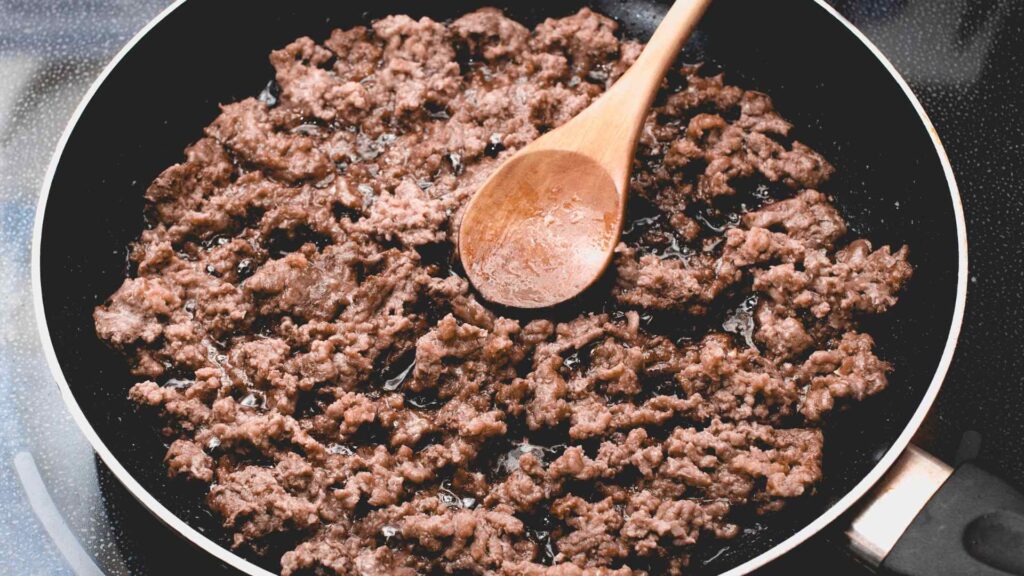
Cook ground beef thoroughly
Grinding can distribute surface bacteria throughout the meat, so browning the outside is not enough. The USDA recommends cooking ground beef to 160°F as measured with a food thermometer.
Color is not a reliable doneness test because safely cooked beef can look pink and undercooked beef can look brown. Check the thickest portion of patties and several spots in a deep pan.
Raw beef risks the dog and household
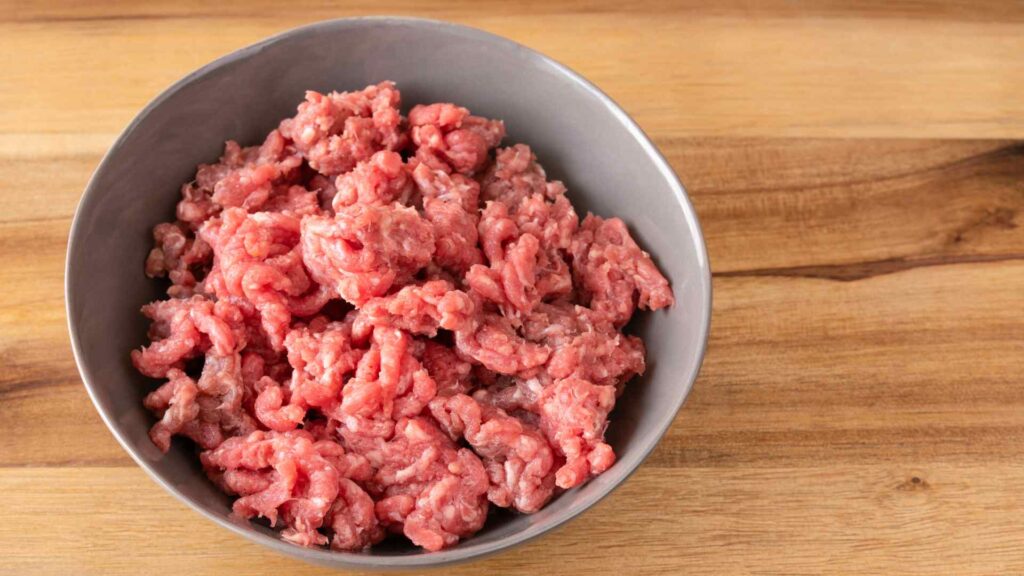
Raw ground beef can carry Salmonella, Escherichia coli, Listeria, and other germs without looking or smelling spoiled. Dogs can become ill or shed organisms around people, bowls, floors, furniture, and outdoor areas.
The CDC does not recommend raw pet food and emphasizes household contamination. Risk matters especially around young children, older adults, pregnant people, and anyone with a weakened immune system.
Freezing, freeze-drying, or buying premium meat does not guarantee pathogen elimination. Do not let the dog lick raw trays, hands, utensils, or counters, and wash hands after handling the dog’s bowl.
Avoid cross-contamination
Keep raw beef separate from ready-to-eat food, use a dedicated clean surface, and wash hands and utensils thoroughly. Do not rinse raw ground beef, because splashing can spread contamination around the sink.
Refrigerate promptly, thaw in the refrigerator, and never leave a package where pets can tear it open. Secure trash immediately after transferring meat from its tray.
Lean versus high-fat beef
Ground beef labels may list lean percentages, but cooked fat still depends on the product and preparation. Choose a lean option, drain it, and avoid adding butter, bacon grease, oil, cheese, or creamy sauce.
A large high-fat theft can cause vomiting and diarrhea and may contribute to pancreatitis in susceptible dogs. The Merck Veterinary Manual discusses pancreatitis signs and table-scrap risk.
Repeated vomiting, appetite loss, weakness, dehydration, fever, a painful abdomen, or a hunched posture needs veterinary assessment. Dogs with prior pancreatitis or a low-fat prescription diet should not receive generic beef treats.
Seasonings change the answer
Taco meat, meatloaf, chili, sloppy joes, casseroles, and restaurant crumbles may contain onion, garlic, salt, pepper, chili, bouillon, alcohol, sugar, or xylitol. Cooking does not make Alliums safe.
Our garlic guide and salt guide cover two common additions. Save spice packets and sauce labels after a theft.
Allium-related red-blood-cell injury can be delayed. Weakness, pale gums, fast breathing, dark urine, yellow tissues, or collapse after meaningful onion or garlic exposure requires urgent care.
Burgers are mixed meals
A burger can add cheese, bacon, onion, garlic sauce, ketchup, mustard, pickles, avocado, hot peppers, a salty bun, toothpicks, and wrappers. Inventory every layer instead of describing the exposure as ground beef.
Our cheese guide and ketchup guide help with common toppings. Raw burger mixture remains a separate pathogen concern.
Meatballs, meatloaf, and stuffed dishes
Meatballs and meatloaf often contain breadcrumbs, egg, milk, cheese, onion, garlic, salt, herbs, glaze, and sauce. Stuffed dishes may hide skewers, foil, string, or bones.
Do not estimate beef alone when the dog ate a whole recipe. Provide the veterinary team with ingredient amounts, finished dish weight, portion missing, time, and packaging.
Leftovers and storage
Cooked ground beef should be refrigerated promptly in a clean covered container. Follow food-safety storage windows, and discard leftovers that sat out too long or developed an off odor, slime, mold, or a damaged seal.
The USDA ground beef guidance covers cooking and leftover storage. Do not use a dog as the disposal method for questionable meat.
Vomiting, diarrhea, fever, weakness, tremors, or unusual behavior after spoiled food deserves veterinary advice. Save lot numbers and packaging if a commercial product may be involved.
Food allergy and intolerance
Beef is a possible food allergen for some dogs, but one episode of loose stool cannot diagnose allergy. Facial swelling, widespread hives, breathing difficulty, weakness, or collapse after eating is an emergency.
Recurring itching, ear disease, vomiting, or diarrhea needs a structured veterinary workup. During an elimination diet, even a small beef pill pocket or treat can invalidate the trial.
Ground beef is not a complete diet
Beef supplies protein and calories, but muscle meat alone lacks the full balance of calcium, essential fatty acids, vitamins, trace minerals, and other nutrients dogs require. More protein does not automatically mean better nutrition.
A bowl of beef can displace complete food quickly, especially for a small dog. The UC Davis treat guidance recommends keeping extras below 10 percent of daily calories.
Home-cooked diets need formulation
A long-term beef-based home diet should be created for that dog by a board-certified veterinary nutritionist and followed exactly. Internet recipes, intuition, and rotating supplements can produce serious deficiencies or excesses.
Puppies are particularly vulnerable to incorrect calcium and energy balance. Dogs with kidney, liver, pancreatic, urinary, endocrine, or heart disease also need individualized protein, fat, mineral, and calorie targets.
Ground beef for an upset stomach
Plain beef is sometimes suggested online as a bland diet, but fat level and individual tolerance vary, and it is not complete for long-term feeding. Vomiting or diarrhea can signal obstruction, infection, toxin exposure, pancreatitis, or disease.
Follow the veterinarian’s exact diet and duration if a temporary plan is recommended. Do not use beef to delay assessment of repeated vomiting, blood, pain, severe lethargy, dehydration, or inability to keep water down.
Medication use
If medication may be given with food, use the smallest approved lean crumble and confirm the dose was swallowed. Some medicines require an empty stomach or must not be crushed, split, or opened.
Keep medicated beef separated from the family pan and from other pets. A shared bowl can create both a missed dose and an accidental dose.
How to prepare an occasional taste
- Choose lean fresh ground beef from an intact, cold package.
- Prevent raw-meat cross-contamination and wash hands and surfaces.
- Cook to 160°F with a food thermometer and drain excess fat.
- Add no onion, garlic, salt, sauce, oil, butter, cheese, or spice.
- Cool, crumble finely, and count it within the dog’s treat allowance.
After a ground-beef theft
Remove access, separate pets, save every label and recipe, and estimate the amount and time. Record raw versus cooked, lean percentage, seasonings, toppings, dog’s weight, conditions, medicines, symptoms, and missing packaging or hardware.
Do not induce vomiting or give salt, oil, milk, charcoal, or another home remedy without veterinary direction. Raw meat, foreign material, and altered awareness can make improvised treatment dangerous.
Loose crumbles versus a whole patty
Fine cooled crumbles are easier to portion and chew than a dense burger patty. A dog that gulps a whole patty can choke, especially when cheese or a sticky bun keeps the mass together.
Coughing, gagging, repeated swallowing, pawing at the mouth, breathing difficulty, or blue gums is an emergency. Do not push food farther down with your fingers or another piece of bread.
Dehydrated and freeze-dried beef
Jerky, freeze-dried crumbles, and air-dried products may remain raw, use a pathogen-reduction step, or be fully cooked. They can also contain salt, smoke flavor, garlic, onion, glycerin, or sweeteners.
Read the processing and ingredient information rather than assuming “dried” means sterile or plain. Keep batch and lot numbers after a suspected product-related illness.
Cookouts and outdoor cleanup
At a cookout, raw patties, lighter fluid, grease trays, skewers, foil, bones, corn cobs, onions, alcohol, and trash may all be accessible. Secure the area before letting the dog roam.
Count patties before and after cooking, use separate plates for raw and cooked meat, and close the trash immediately. This simple inventory can turn an uncertain emergency call into a clear exposure history.
Estimating an unknown amount
Use the original package weight, patty count, recipe yield, and leftovers to calculate a minimum and maximum. Report whether multiple dogs had access and which dog is smallest or medically fragile.
Do not wait for perfect certainty before calling about a large raw or fatty theft. Veterinary triage routinely works with ranges and can update the plan as better information appears.
Constipation and protein myths
Ground beef should not be used to stop diarrhea, cure constipation, build muscle, or provide “clean protein.” Stool changes, weight loss, weakness, and poor muscle condition require diagnosis and a complete nutritional plan.
Adding more meat can worsen fat intake, unbalance minerals, and mask appetite changes. Keep the normal diet stable while seeking advice unless the veterinarian gives a specific temporary plan.
Bottom line
A small amount of lean, fully cooked, plain ground beef is usually low risk for a healthy dog. Raw pathogens, high fat, pancreatitis, seasonings, mixed dishes, spoilage, allergy, unbalanced feeding, and packaging are the practical reasons to call or skip it.