Can Cats Have Coconut Oil? Licks, Supplements, Skin Use, and Spills
A small accidental lick of plain coconut oil is unlikely to cause serious harm to most healthy cats, but there is no good reason to add it routinely. It is concentrated fat, can trigger vomiting or diarrhea, adds calories quickly, and is not a substitute for evidence-based nutrition or veterinary treatment.
The quick answer by situation
One lick from a spoon: Remove access and monitor for stomach upset. Keep the normal food and water routine unless your veterinarian says otherwise.
A large mouthful or spilled jar: Call your veterinarian with the estimated amount, timing, product label, and your cat’s health history. Oil spread over paws or fur creates ongoing ingestion as the cat grooms.
Daily supplement: Do not start one based on a social post or a human wellness claim. Ask what problem you are trying to solve, then choose a feline treatment with evidence, a measurable dose, and a monitoring plan.
Why a teaspoon is not a tiny serving
Oil is calorie-dense because it is almost entirely fat. A spoonful that looks modest beside a human breakfast can be a sizable calorie bonus for a ten-pound cat.
Regular uncounted calories can contribute to weight gain and displace complete cat food. The Cornell Feline Health Center emphasizes balanced nutrition and limiting extras rather than relying on table foods or unapproved supplements.
Even cats at a healthy weight may develop loose stool, greasy stool, vomiting, nausea, or appetite changes after an oily addition. More is not better, and gradually increasing the dose only creates a slower route to the same unnecessary experiment.
Is coconut oil toxic to cats?
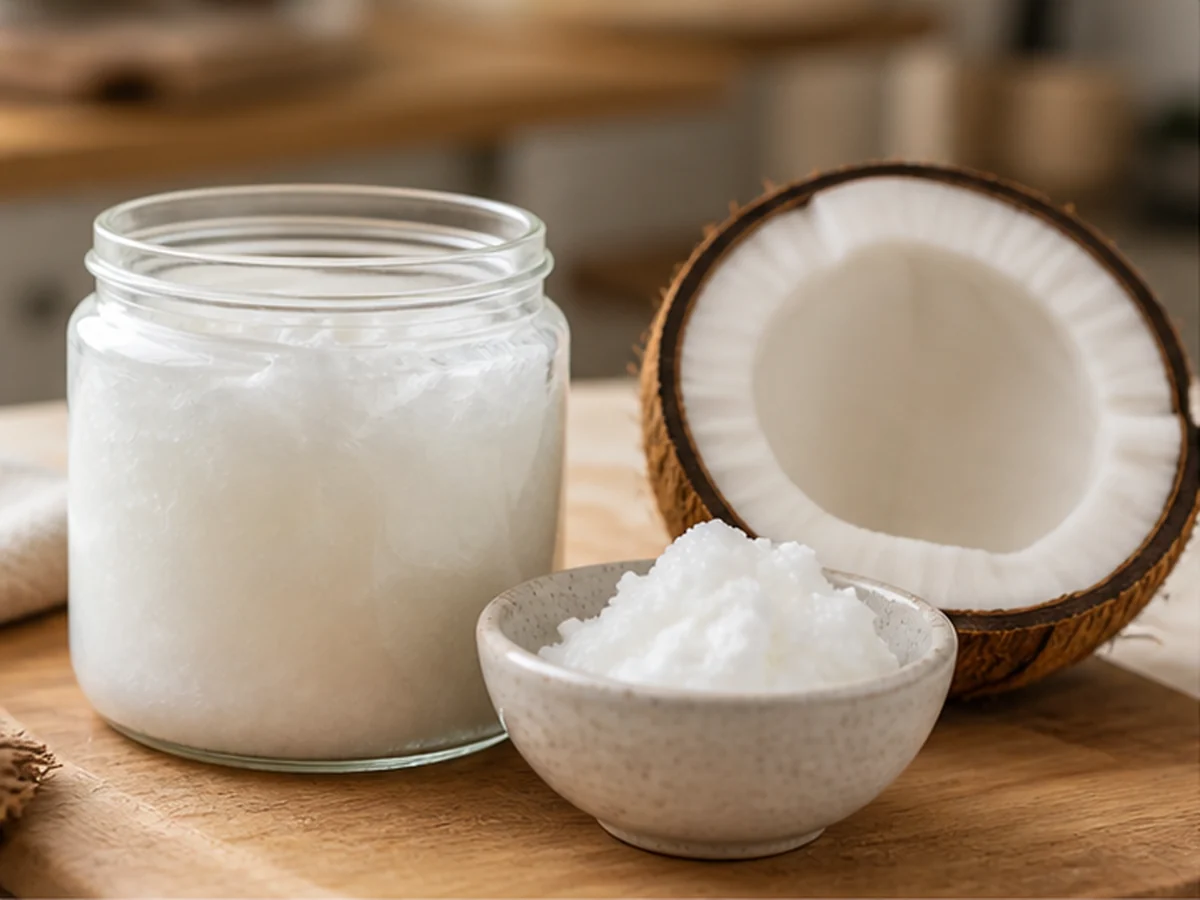
Plain food-grade coconut oil is not considered a classic feline poison. The ASPCA’s people-food guidance says small amounts of coconut and coconut-based products are unlikely to cause serious harm, while their oils may cause stomach upset, loose stool, and diarrhea.
Nontoxic does not mean beneficial, unlimited, or suitable for every cat. A cat with an underlying disease, a prescription diet, previous pancreatitis, chronic digestive signs, or obesity needs a more conservative answer.
Flavored products can add essential oils, chocolate, coffee, cannabis, sweeteners, garlic, or other ingredients that change the urgency. Read the complete label rather than stopping at coconut on the front.
Coconut oil and pancreatitis
Fatty foods can aggravate gastrointestinal signs, and dietary fat may be inappropriate for an individual cat with pancreatic or digestive disease. Feline pancreatitis is complex, so avoid promising that one lick causes it or that one spoon treats it.
Repeated vomiting, abdominal discomfort, lethargy, dehydration, or refusal to eat warrants veterinary care. Cats with pancreatitis may show vague signs, and waiting for dramatic pain can delay diagnosis.
If your cat has a history of pancreatitis, inflammatory bowel disease, high blood lipids, or fat intolerance, do not add oil without the treating veterinarian’s approval. The nutritional plan may be tailored to several conditions at once.
Does coconut oil help hairballs or constipation?
Oil may loosen stool in some cats, but diarrhea is an adverse effect, not a precise constipation treatment. Constipation can reflect dehydration, pain, kidney disease, medication, pelvic narrowing, neurologic problems, megacolon, or an obstructing object.
A cat straining in the box may be unable to urinate rather than constipated, particularly if little or no urine appears. Urinary obstruction is an emergency and should never be treated with coconut oil.
For hairballs, repeated vomiting, frequent retching, appetite loss, or weight loss deserves a veterinary assessment. A veterinarian may recommend grooming, diet changes, a purpose-made lubricant, imaging, or treatment for an underlying skin or digestive disorder.
Does it improve a cat’s coat or skin?
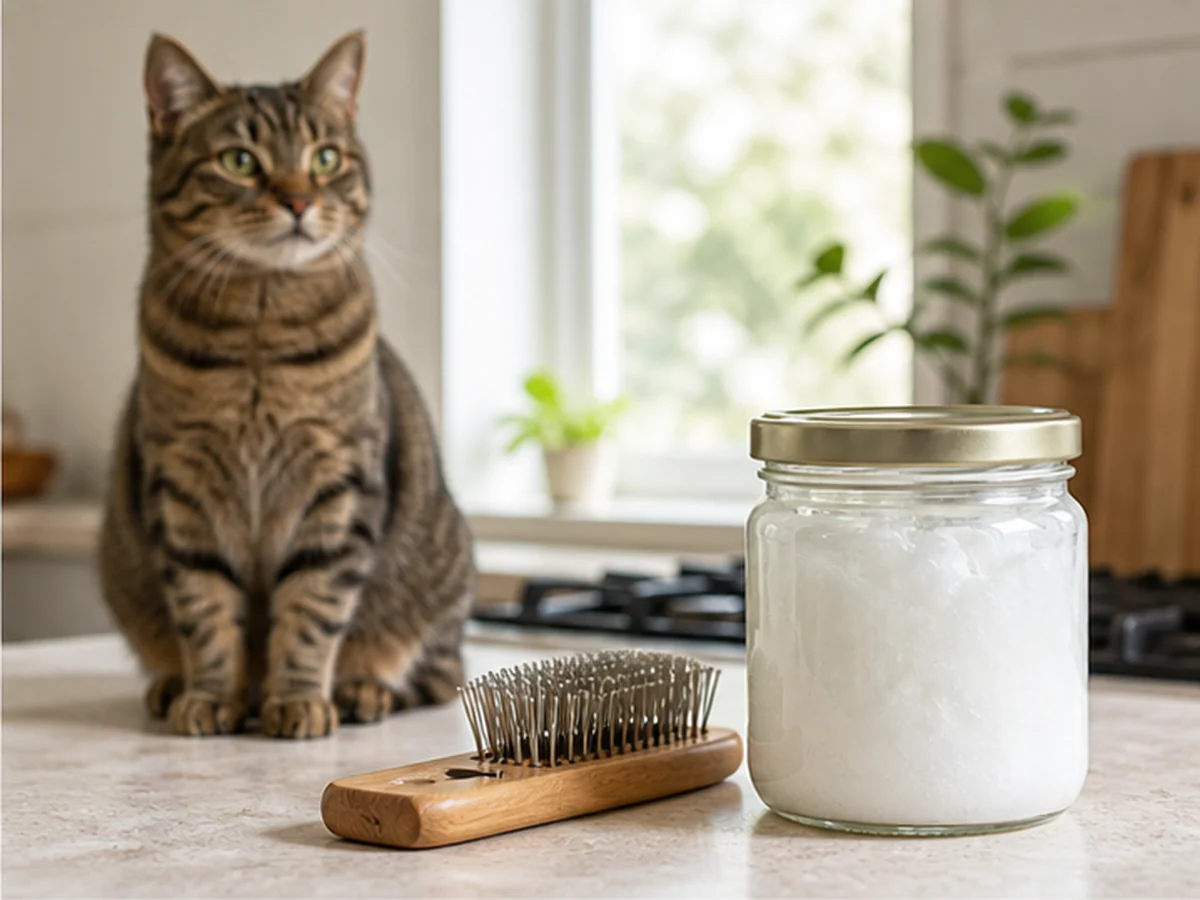
A shiny coat reflects nutrition, health, grooming, and genetics, not just surface oil. Adding calories to a balanced diet does not reliably correct fleas, allergy, ringworm, mites, bacterial infection, pain, or overgrooming.
Topical coconut oil can make fur greasy, trap debris, soil furniture, and encourage licking. A cat may ingest far more during cleanup than you intended to apply to one dry patch.
Skin redness, scabs, dandruff, bald spots, odor, or persistent scratching needs diagnosis. Applying oil can obscure lesions and complicate sample collection at the appointment.
What if coconut oil is on the paws or coat?
Prevent grooming and call your veterinarian for cleanup advice if a substantial amount spilled. Do not use solvent, essential oil, concentrated detergent, or a human degreaser on feline skin.
For a small food-grade smear, a veterinary team may advise careful washing with a cat-safe product and thorough drying. Keep the cat warm and avoid getting water or soap in the eyes, ears, nose, or mouth.
A greasy cat is also a slip-and-jump hazard, so restrict access to stairs and high furniture until the paws are clean. The cat will already be offended; adding a failed bookshelf landing is unnecessary.
Refined, virgin, MCT, and blended oils
Virgin and refined coconut oil: Both are concentrated fats, despite differences in flavor and processing. Organic, cold-pressed, and unrefined are production descriptions, not feline medical endorsements.
MCT oil: Products vary in which medium-chain triglycerides they contain and may be more concentrated in specific fatty acids. Do not substitute a human MCT product for a veterinary dietary therapy.
Blended oils: A product may combine coconut with avocado, hemp, essential oils, vitamins, herbs, or flavorings. Every added ingredient needs review, including inactive ingredients and the dropper’s dose.
Cosmetic coconut products: Hair masks, lotions, soaps, lip balm, and body butter are not food-grade coconut oil. Fragrance, medication, preservatives, and other oils can make a lick more concerning.
Coconut oil is not an essential oil
Coconut oil is a fixed edible fat, not a volatile essential oil, but it may be used as a carrier for concentrated essential oils. A bottle labeled coconut base can still contain ingredients unsafe for direct feline contact.
The Merck Veterinary Manual explains that essential oils can be absorbed through skin, lungs, and the digestive tract and that cats are particularly sensitive. Never apply an essential-oil blend to a cat simply because coconut oil dilutes it.
Diffusers, flea remedies, balms, and cleaning concentrates all deserve an exact label check. Natural and diluted do not answer whether the final concentration, route, or product is safe.
Can coconut oil treat fleas, worms, or infections?
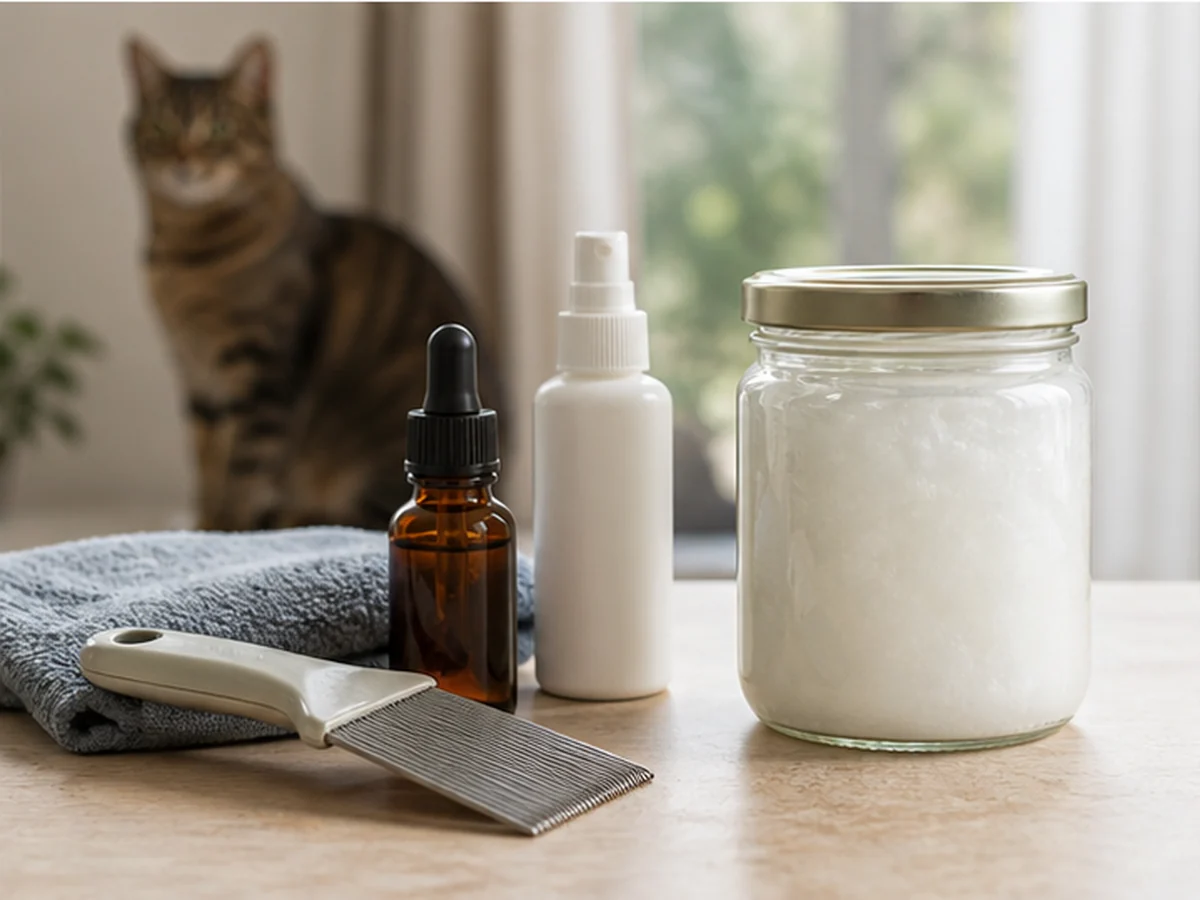
Do not rely on coconut oil to prevent or cure fleas, ticks, ear mites, intestinal parasites, ringworm, wounds, or bacterial infection. Delaying effective treatment allows parasites to reproduce, infections to spread, and itching to continue.
Use a cat-labeled parasite preventive selected for the individual animal, and confirm the dose by weight. Some dog flea products are highly dangerous to cats, which makes home mixing especially risky.
Never pour oil into the ears, eyes, mouth, or an open wound. Ear disease can involve mites, yeast, bacteria, polyps, foreign material, or a damaged eardrum, and each requires an examination.
Cats who should avoid coconut oil
Skip it for cats with recurring vomiting or diarrhea, pancreatitis history, obesity, diabetes, high blood lipids, or a veterinarian-directed fat restriction. Cats on renal, urinary, gastrointestinal, allergy, or weight-loss diets should not receive unplanned add-ons.
Kittens and seniors can dehydrate more quickly if oil causes significant diarrhea. Medically fragile cats should be assessed sooner after a large ingestion, even when the product is plain.
During an elimination diet, flavored oils and supplements can introduce hidden proteins or additives. Keep the trial strict enough to answer the question it was designed to test.
What to do after a larger ingestion
Remove the jar and packaging, estimate the missing amount, and note whether the oil was plain, infused, medicated, or cosmetic. Call the veterinary clinic with your cat’s weight, health conditions, medications, timing, and symptoms.
Watch for repeated vomiting, significant diarrhea, lethargy, abdominal discomfort, refusal to eat, weakness, coughing, or breathing changes. An open jar, broken glass, swallowed lid liner, foil seal, or dropper adds injury and obstruction concerns.
Do not withhold food for a prolonged period without veterinary direction because cats should not go casually unfed. If appetite is reduced, contact the clinic rather than offering more oil to make food smell interesting.
Better ways to meet common goals
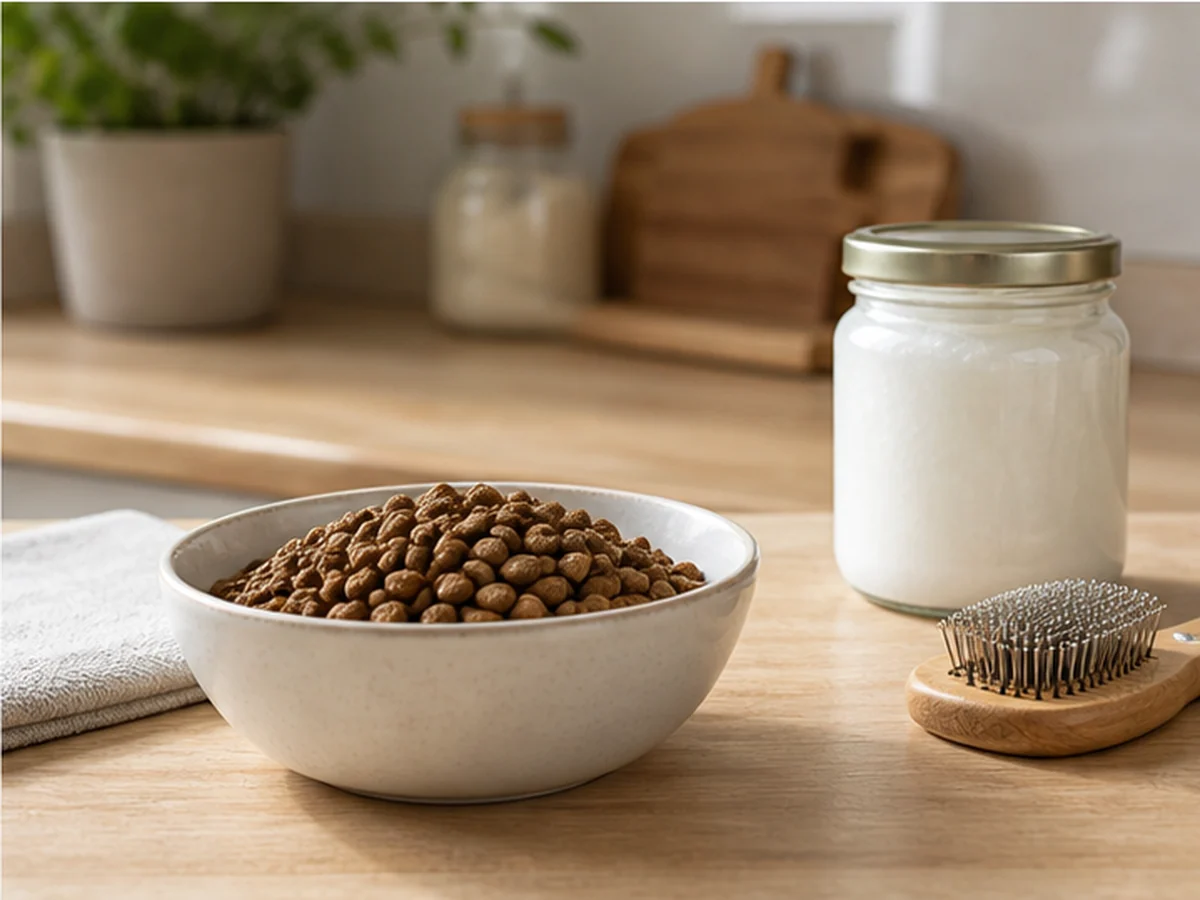
For coat support, feed a complete diet and investigate itch, dandruff, or hair loss. For weight control, measure the complete food and use part of the daily ration as treats.
For constipation, hairballs, or poor appetite, ask the veterinarian to identify the cause before selecting a product. For enrichment, use play, brushing if tolerated, food puzzles, and cat-approved treats rather than turning the pantry into a supplement aisle.
Our guide to butter and cats covers a similar concentrated-fat question. Our coconut water and oil guide for dogs helps distinguish products, but feline portions and clinical decisions must remain cat-specific.
Frequently asked questions
Can cats eat coconut oil every day?
Routine use adds calories and may cause digestive upset without a proven need. Only use it regularly if the veterinarian managing your cat gives a specific reason, amount, and monitoring plan.
Can I put coconut oil on my cat’s nose or paws?
Ask a veterinarian first because dryness, cracking, irritation, infection, allergy, and immune disease need different care. Anything applied will likely be licked, so topical and oral exposure are linked.
Does coconut oil kill ear mites?
Do not treat a suspected ear problem with household oil. A veterinarian should examine the canal and eardrum, identify the cause, and prescribe a cat-safe product.
If you are comparing pantry fats, our olive oil guide for dogs illustrates the same difference between a harmless lick and an unnecessary daily pour. Use it to frame questions, not to copy a dose across species.
Bottom line
One lick of plain coconut oil is usually a monitoring situation, but large amounts, repeated use, infused products, and coat spills can cause real problems. Keep the calories out of routine meals, avoid unproven skin and parasite treatments, and call your veterinarian when the amount, ingredients, symptoms, or cat’s health raises the stakes.