Can Cats Eat Almonds? Sweet, Bitter, Salted, and Butter Risks
Plain sweet almonds are not considered poisonous to cats, but they are still a poor treat. Their size and firmness can create a choking or blockage problem, while fat, salt, flavorings, mold, bitter almonds, and mixed-snack ingredients can turn a minor nibble into a genuine concern.
The quick verdict
A healthy adult cat that chews and swallows one plain, shelled sweet almond will often need observation rather than emergency treatment. Call a veterinarian promptly if the almond was bitter, moldy, heavily seasoned, chocolate-coated, part of an unknown mix, or swallowed with shell or packaging.
Do not offer almonds on purpose, even if your cat has perfected the stare usually reserved for opening tuna. Cats gain no nutritional advantage from adding nuts to a complete feline diet, and there are softer treats with fewer complications.
Sweet almonds are different from bitter almonds
The almonds commonly sold for snacking in the United States are sweet almonds. The ASPCA Animal Poison Control Center explains that sweet almonds are not toxic to pets, although they can cause digestive upset and other problems when eaten.
Bitter almonds are a different product because they contain cyanogenic compounds that can release cyanide. They are not the normal grocery-store snack almond, but imported products, foraged kernels, unlabeled foods, and specialty ingredients deserve caution.
The leaves, stems, and other parts of almond trees also should not become cat toys. The FDA includes almond trees among plants that may endanger pets, so a cat with access to prunings or fallen plant material needs a different risk assessment from a cat that stole one commercial kernel.
Why a plain almond is still an awkward cat snack
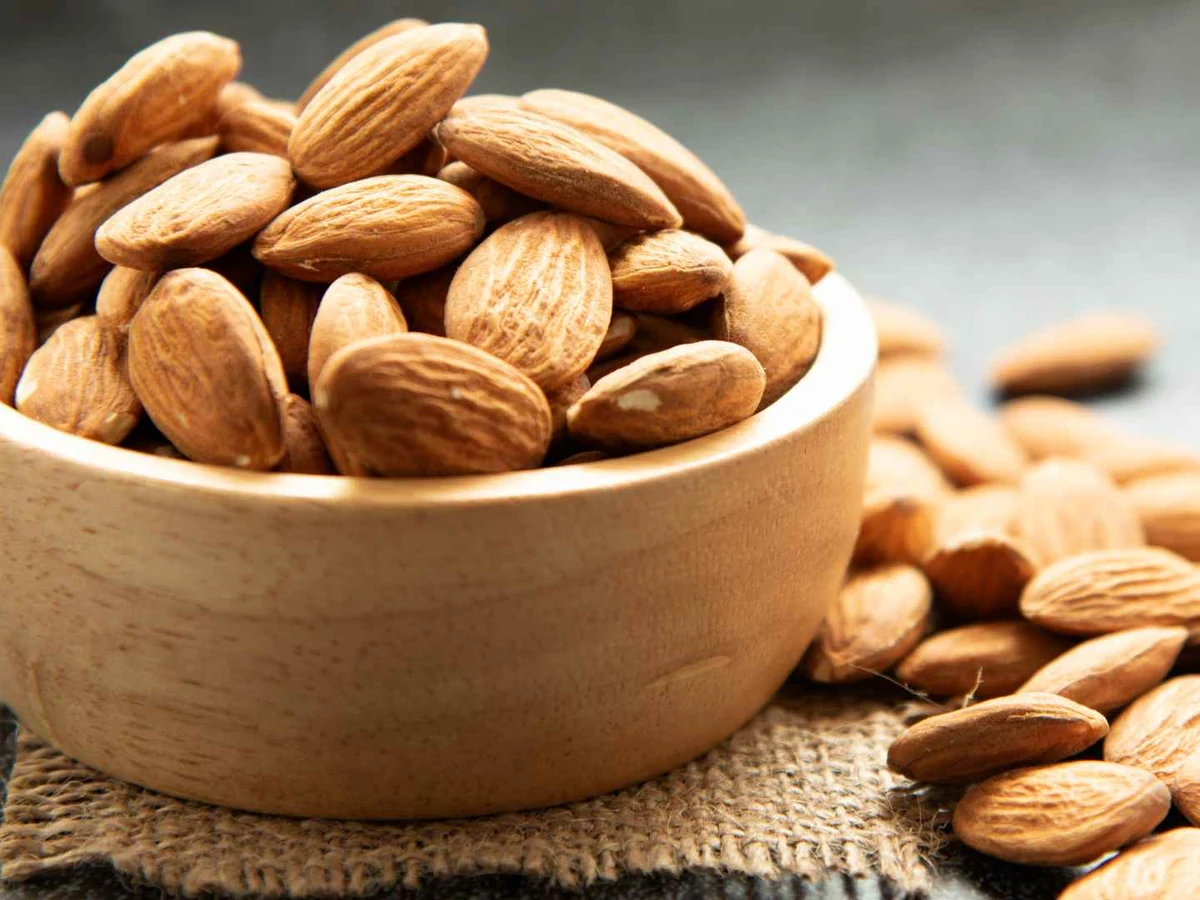
An almond is hard, smooth, and large relative to a cat’s mouth. A whole kernel can be inhaled into the airway, lodge in the esophagus, or pass into the digestive tract without being chewed well.
Young cats, cats that gulp food, and cats with dental pain or swallowing disorders deserve extra caution. Several almonds, shells, a bag clip, or part of the package can also create more mechanical risk than one chewed kernel.
The Merck Veterinary Manual review of gastrointestinal obstruction lists vomiting, appetite loss, lethargy, diarrhea, and abdominal pain among possible signs. Those signs are not specific to an almond blockage, but they are good reasons not to keep waiting at home.
Signs that need urgent help
- Open-mouth breathing, obvious choking, blue or very pale gums, collapse, or severe distress.
- Repeated gagging or retching, heavy drooling, pawing at the mouth, or trouble swallowing.
- Repeated vomiting, a painful or tense belly, profound lethargy, or refusal of food.
- Tremors, weakness, unusual agitation, difficulty breathing, or rapidly worsening behavior after an unknown or bitter almond.
- Symptoms after a mixed snack containing chocolate, raisins, macadamias, caffeine, alcohol, onion, garlic, or an unknown sweetener.
If a cat is choking, do not force water, food, oil, or bread into the mouth. Do not sweep blindly with your fingers because you can push the object deeper or be bitten by a panicked cat.
Fat and calories are the everyday problem
Almonds concentrate a lot of fat and calories into a small package. A few kernels can represent a surprisingly large extra for a small animal, even though the same amount looks trivial beside a person’s snack.
Too much rich food can lead to vomiting, loose stool, poor appetite, or abdominal discomfort. Cats with obesity, diabetes, a prescribed diet, chronic gastrointestinal disease, or a history of pancreatitis should not have their plan improvised with handfuls from the pantry.
One almond does not automatically cause pancreatitis, and it would be misleading to say otherwise. Persistent vomiting, pain, marked lethargy, or food refusal warrants veterinary assessment because cats can deteriorate while hiding how unwell they feel.
Cornell’s feline care guidance recommends a complete diet formulated for the cat’s life stage. Almonds do not supply the balanced animal protein, taurine, vitamins, and minerals a cat needs from its main food.
Salted, smoked, spiced, and coated almonds
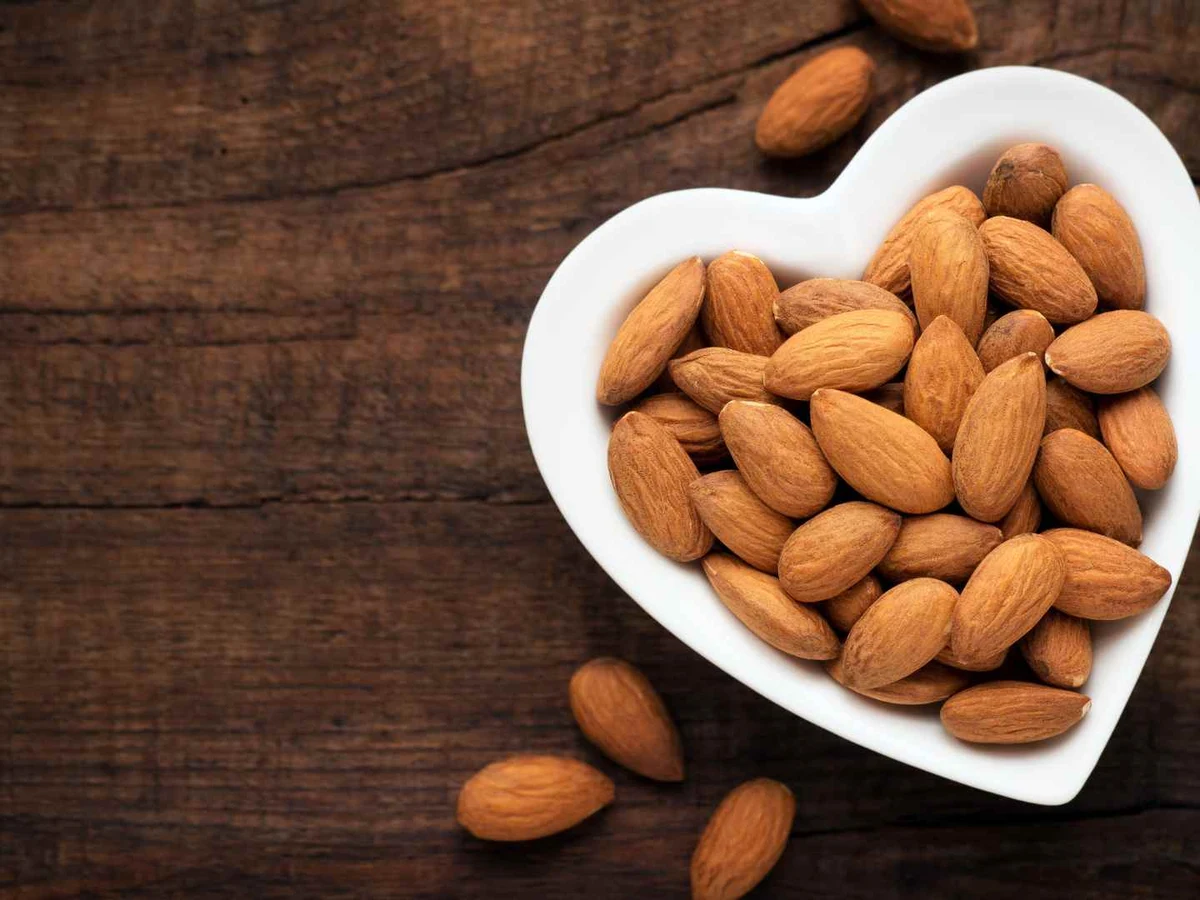
Seasoned almonds require a label check, not a guess based on the word almond. Onion and garlic powders, heavy salt, chocolate, coffee, hot spices, sweeteners, and greasy coatings can matter more than the nut itself.
A lick of seasoning and a substantial ingestion are not identical events, so collect the package and estimate the amount missing. If onion, garlic, chocolate, caffeine, alcohol, or an unknown sweetener appears on the label, call your veterinarian or a pet poison service for case-specific advice.
Mixed nuts add an identification problem because different nuts carry different risks, and snack mixes may contain raisins or chocolate pieces. Our nut-by-nut guide for dogs is useful for identifying products, but do not assume its dog-specific conclusions automatically apply to a cat.
What about almond butter?
Smooth almond butter removes the whole-kernel choking issue, but it remains high in fat and calories. It can also contain salt, sugar, chocolate, maple flavoring, oils, or sweeteners that change the decision.
Read the complete ingredient list and keep the jar available when you call for advice. Our almond butter label guide shows where sweeteners and add-ins hide, while the species-specific response still needs to come from a veterinarian familiar with cats.
A tiny smear used once to help with a prescribed medication is not the same as spoon-feeding it as a snack. Ask the prescribing clinic what to use because some medicines should not be crushed, split, or given with a fatty food.
Almond milk, flour, meal, and baked goods
Unsweetened almond milk is mostly water, but it is not a replacement for fresh water, kitten formula, or a complete cat food. Commercial versions may contain sugar, flavors, gums, oils, added vitamins, and sweeteners, and the carton can be more interesting to a cat than its contents.
Our almond milk label walkthrough can help you inspect the carton without claiming the serving advice is interchangeable across species. A few licks of a simple unsweetened product are usually a different situation from a bowlful or a flavored café drink.
Almond flour and almond meal remove the whole-nut shape, but inhaling fine baking dust can irritate the nose and airways. Doughs and baked goods may add chocolate, raisins, alcohol, raw yeast dough, spices, sugar, or a large amount of fat.
Never judge a cookie, cake, protein bar, or pastry by one headline ingredient. Photograph the label or recipe, save the wrapper, and count how much is missing before calling.
Shells, mold, and rancid nuts
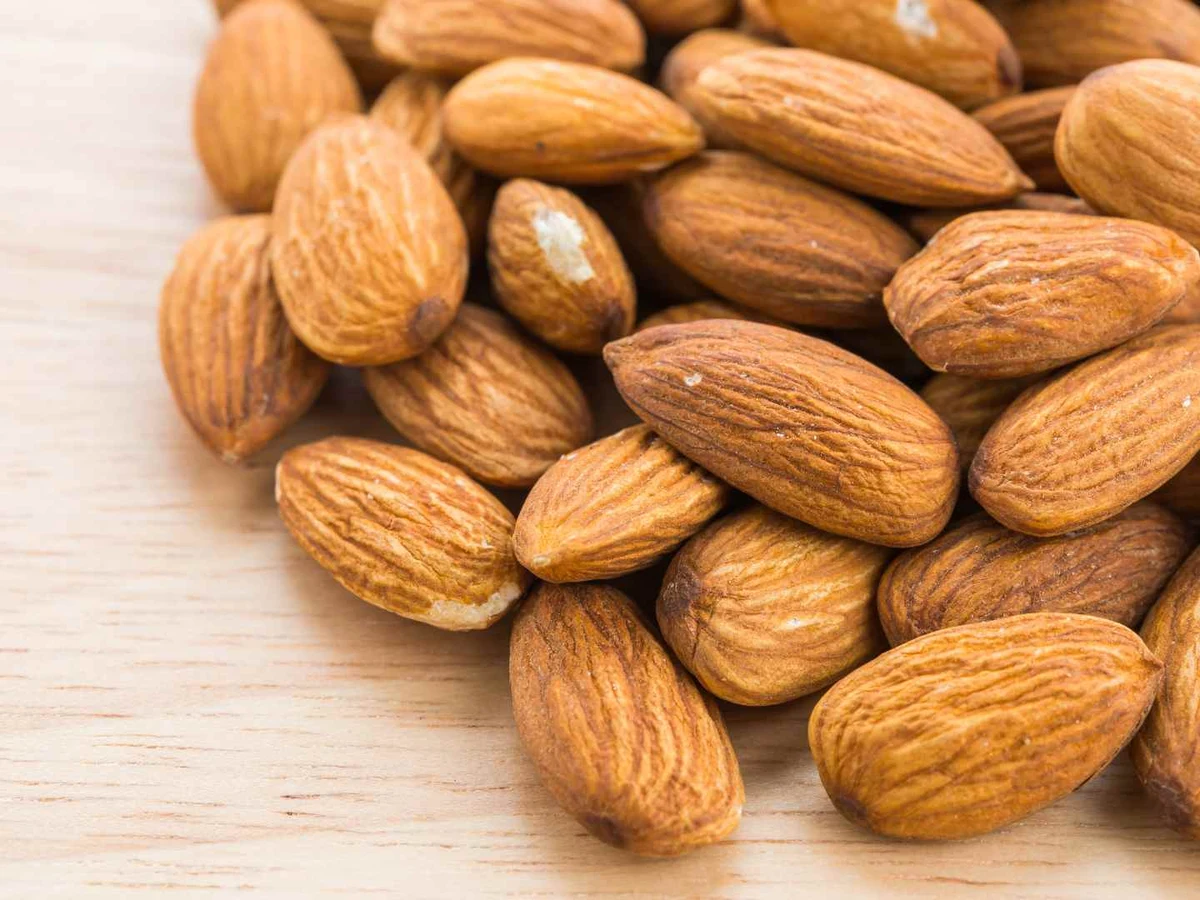
Almond shells are fibrous, hard, and difficult to digest. Sharp pieces can irritate the mouth or digestive tract, while larger fragments can become a foreign-body concern.
Moldy or rancid almonds are not salvageable pet treats. Discard nuts that smell musty, paint-like, bitter, or stale, and contact a veterinarian if your cat develops tremors, unsteadiness, repeated vomiting, or unusual agitation after getting into spoiled food.
The discarded bag matters too because food packaging can suffocate or obstruct pets. The FDA’s snack-bag safety guidance recommends storing bags securely and cutting them before disposal so an animal cannot get its head trapped.
What to do if your cat ate almonds
- Move the product, plant material, shells, and packaging out of reach.
- Check breathing and swallowing before doing anything else.
- Identify sweet versus bitter almonds and list every coating or mixed-snack ingredient.
- Estimate the number eaten, whether they were chewed, and when the exposure happened.
- Note your cat’s age, weight, health conditions, medications, and current behavior.
- Call your veterinarian, an emergency clinic, or an animal poison control service when the product is concerning, the amount is uncertain, or any symptom appears.
Do not induce vomiting unless a veterinarian or veterinary poison specialist explicitly tells you to do so. Home peroxide is not a safe do-it-yourself vomiting method for cats and can cause additional injury.
For an urgent poisoning concern in the United States, the ASPCA Animal Poison Control Center is available at 888-426-4435, and a consultation fee may apply. Your regular veterinarian is often the best first call because the clinic knows your cat’s history.
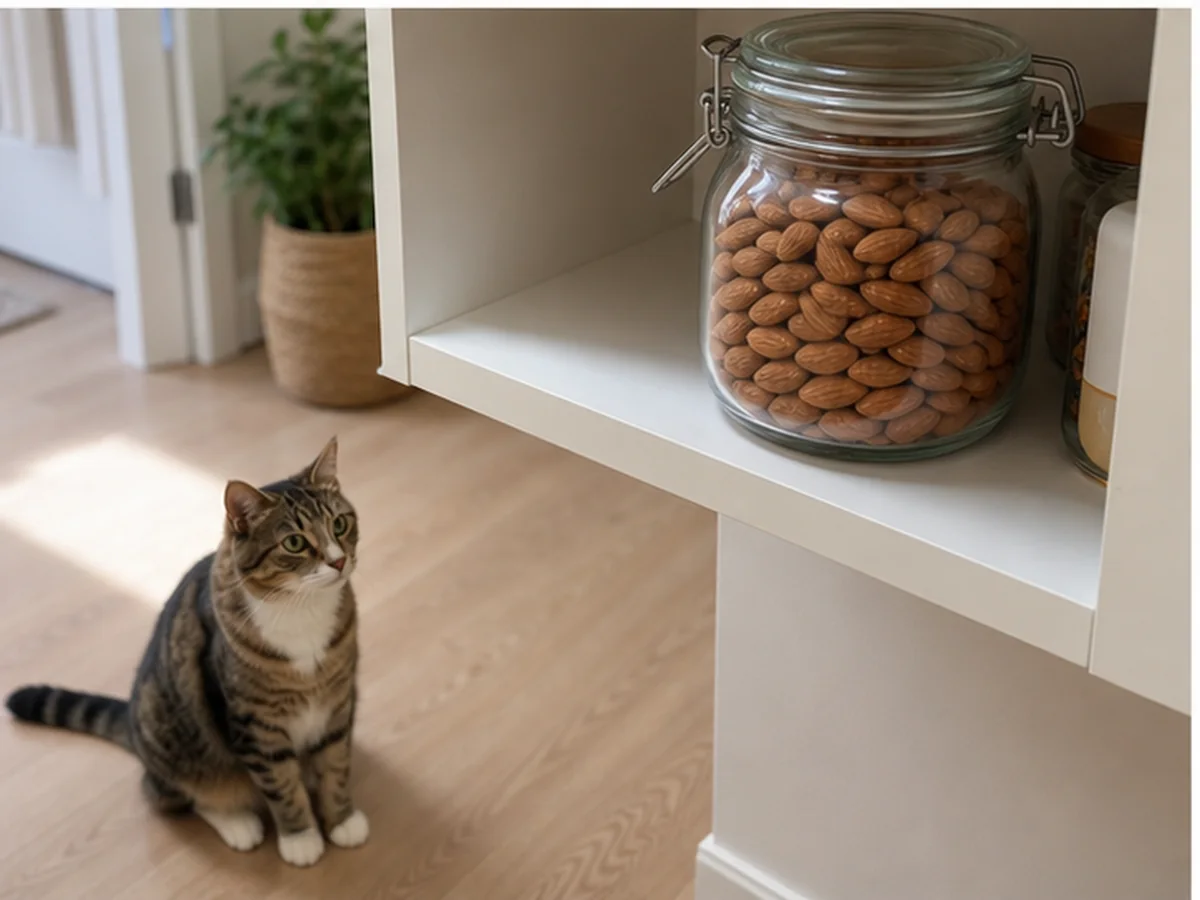
How to prevent the next almond heist
- Store nuts and nut butter in closed cabinets, not on an open shelf or counter.
- Keep bitter almonds, baking ingredients, trail mix, and coated nuts in clearly labeled containers.
- Dispose of snack bags, clips, and desiccant packets where a cat cannot pull them from the trash.
- Ask guests not to offer table food, especially if your cat has a prescription diet.
- Use small, soft cat treats or a few pieces of the cat’s usual kibble for training.
Frequently asked questions
Are almonds poisonous to cats?
Commercial sweet almonds are not considered toxic to pets, but bitter almonds and almond-tree material can be toxic. Even sweet almonds can cause choking, obstruction, stomach upset, or problems related to coatings and mixed ingredients.
My cat ate one plain almond. Should I panic?
If a healthy adult cat chewed one shelled sweet almond and remains completely normal, monitor closely and call your veterinarian if you are unsure. Breathing trouble, repeated gagging, vomiting, pain, lethargy, or food refusal needs prompt attention.
Can kittens eat almonds?
No almond is a sensible kitten treat because a kitten is smaller, has less room for dietary extras, and may be more vulnerable to choking. Feed a complete kitten food and choose treats made for the kitten’s size and life stage.
Can cats eat sliced almonds?
Slices are less bulky than whole kernels but remain fatty, unnecessary, and potentially seasoned or incorporated into unsafe food. Thin pieces can also have sharp edges, so sliced does not mean recommended.
The bottom line
One plain sweet almond is unlikely to poison a healthy cat, but almonds make an inefficient and mechanically awkward treat. Skip deliberate servings, scrutinize products and plant material, and seek veterinary help quickly for bitter almonds, unknown mixes, shells, packaging, a large exposure, or any symptom.