Can Cats Eat Ice Cream? The Scoop on Dairy, Sugar, and Flavors
A lick of plain vanilla ice cream is unlikely to poison most healthy adult cats, but ice cream is not a good feline treat. Lactose, fat, sugar, and calories can upset digestion, while chocolate, coffee, alcohol, raisins, sugar-free sweeteners, nuts, sticks, tubs, and wrappers can turn dessert into a veterinary question.
Do this after a dessert theft
Remove the bowl and photograph the ingredient panel before anyone throws away the carton. Record the flavor, amount, time, toppings, missing packaging, and the cat’s weight, age, medical conditions, and current symptoms.
- One or two licks of plain ice cream: offer water and watch for vomiting, diarrhea, gas, or reduced appetite.
- Chocolate, cocoa, coffee, espresso, alcohol, raisins, cannabis, medication, or an unknown sweetener: contact a veterinarian or animal poison service promptly.
- A missing stick, spoon, lid, foil seal, plastic film, or wrapper: call even if the ice cream ingredients look ordinary.
- Collapse, seizures, tremors, breathing trouble, severe agitation, or repeated vomiting: seek emergency care.
Do not induce vomiting unless a veterinary professional specifically directs it. Home remedies can cause aspiration, delay useful treatment, or complicate a swallowed-object problem.
Why many adult cats handle dairy poorly
Milk contains lactose, which must be broken down in the small intestine. Many cats produce less lactase after weaning, so lactose can draw water into the bowel and be fermented by intestinal microbes.
The result may be gas, abdominal discomfort, loose stool, or diarrhea, although individual tolerance varies. A cat appearing fine after one lick does not prove that a scoop will be comfortable next time.

Cream, fat, and sugar still matter without lactose
Lactose-free ice cream may avoid one digestive issue while retaining fat, sugar, flavorings, and substantial calories. Dairy-free products can use coconut, oat, soy, nut, or other bases, but “dairy-free” is not the same as cat-safe.
Rich foods can provoke vomiting or diarrhea, and repeated extras contribute to excess calorie intake. Cats with prior gastrointestinal or pancreatic disease deserve especially conservative advice from their own clinic.
The Cornell Feline Health Center’s feeding guidance emphasizes complete food matched to the cat’s life stage. Ice cream offers a sensory novelty, not a balanced nutritional contribution.
Chocolate ice cream needs a faster call
Chocolate and cocoa contain methylxanthines, including theobromine and caffeine, which cats and dogs metabolize poorly. Dark chocolate, cocoa powder, baking chocolate, concentrated sauces, and chocolate-covered espresso beans deserve particular respect.
The Merck Veterinary Manual chocolate review lists vomiting, restlessness, fast heart rate, tremors, seizures, and other possible signs. Call with the product, cocoa percentage if shown, amount, time, and cat’s weight rather than waiting for those signs.
Coffee, mocha, and tea flavors
Coffee ice cream, espresso chips, tiramisu, matcha desserts, and strong tea flavors may add caffeine. The actual dose varies widely, so the label, recipe, and amount are much more useful than the word “coffee” alone.
A quick lick of lightly flavored product is not equivalent to swallowing coffee beans or concentrated powder. That distinction is exactly why product-specific poison advice beats an internet dose guess.
Sugar-free does not mean worry-free
Some frozen desserts, sauces, candies, and gum-like mix-ins use sugar alcohols or other sweeteners. Xylitol is a proven emergency for dogs; feline evidence differs, but cats should not be test subjects for a product containing it.
The FDA’s xylitol safety page shows how many product categories can contain the sweetener. Call with the label after a cat exposure, because chocolate, caffeine, alcohol, or swallowed packaging may matter independently.

Common flavors and mix-ins, sorted by concern
Plain vanilla is generally the least complicated accidental lick, though it still carries dairy, fat, and sugar. Strawberry or fruit ice cream adds fruit pieces and syrup, while caramel often adds more sugar and sometimes salt.
Chocolate, mocha, rum raisin, liqueur, cannabis-infused products, and desserts containing medication need prompt professional assessment. Cookie dough, brownies, cheesecake pieces, nuts, candy, and sauces require their own ingredient check.
Our articles on Greek yogurt, marshmallows, peanuts, and fruit help untangle a crowded sundae. The carton’s complete list still gets the final word.
Raisins, grapes, and macadamia nuts
Grapes and raisins cause unpredictable kidney injury in dogs, while the feline evidence is limited; avoidance and prompt case-specific advice remain prudent. Do not assume rum raisin is safe for a cat merely because the best-documented cases involve dogs.
Macadamia toxicosis is also primarily documented in dogs, but nuts add fat, salt, chocolate coatings, choking risk, and hard fragments. A mixed dessert gives the veterinarian several reasons to see the actual label.
Alcohol and cannabis desserts
Rum, bourbon, liqueur, and alcohol-based extracts may remain in homemade frozen desserts, especially no-cook recipes. Cats are small, and alcohol can depress the nervous system and blood glucose.
Cannabis ice cream or toppings can cause marked sedation, wobbliness, urine dribbling, altered heart rate, and other signs. Tell the clinic exactly what was present; accurate information supports care and is more useful than embarrassment.
Cones, sticks, spoons, and tubs
A cone can carry chocolate coating, nuts, salt, or artificial sweeteners, while a wooden stick can splinter and a plastic spoon can break. Foil seals, wrappers, and carton pieces can obstruct the digestive tract.
Check under furniture for the missing object before assuming it was swallowed. Gagging, repeated swallowing, vomiting, appetite loss, painful belly, straining, or unusual lethargy warrants veterinary attention.
Kittens, seniors, and cats with medical conditions
Kittens need balanced growth food and have little room for calorie-heavy extras. Seniors may have kidney disease, diabetes, dental trouble, bowel disease, or weight loss that makes a casual dessert experiment a bad trade.
Cats with diabetes should not receive ice cream to “boost energy” unless their veterinary team gives a specific hypoglycemia plan. If a diabetic cat seems weak, disoriented, trembly, or unresponsive, treat it as urgent and follow that established plan.
Is cat ice cream better?
Products marketed for cats vary, so read the nutritional adequacy statement, calorie content, serving size, and storage directions. A frozen complementary treat may be enjoyable, but it does not replace complete food.
The FDA’s complete-and-balanced label explainer helps distinguish staple diets from treats and supplements. Freeze a spoonful of the cat’s regular wet food if you want a simple chilly option.

A practical prevention plan
Serve dessert away from the cat, put cartons back in the freezer, and clear bowls before the melting ring becomes a floor-level invitation. Use a lidded bin for sticks, wrappers, and foil seals.
If guests want to include the cat, provide a small dish holding part of the usual ration. It feels festive enough to the cat, who was mostly interested in being invited.
What symptoms can plain ice cream cause?
Digestive signs usually matter more than toxicity after a small amount of plain dairy dessert. Watch for gas, abdominal discomfort, vomiting, soft stool, diarrhea, reduced appetite, or unusual hiding during the following day.
Call if vomiting repeats, diarrhea is frequent or bloody, the belly seems painful, the cat becomes weak, or food and water will not stay down. Kittens, seniors, and cats with chronic disease can dehydrate more quickly.
Brain freeze is not the useful question
A cat licking frozen food may stop abruptly because of cold sensitivity, dental pain, or surprise. Repeated mouth pawing, chattering, drooling, one-sided chewing, or refusal of ordinary food points toward an oral examination rather than a comedy clip.
Hard frozen chunks can also be difficult for cats with missing teeth or painful gums. Thaw any veterinarian-approved frozen cat treat until it can be easily mashed with a fork.
Homemade recipes need equal scrutiny
Homemade does not guarantee a simpler exposure, since recipes may use raw egg, alcohol, concentrated extracts, protein powders, supplements, or sugar substitutes. Keep the recipe and packages until everyone is sure the cat remained well.
Raw egg mixture can carry harmful bacteria and should be cleaned from bowls, beaters, paws, and countertops. Hand washing protects people as well as pets, particularly children, older adults, pregnant people, and anyone with reduced immunity.
Soft serve, gelato, custard, and frozen yogurt
Soft serve and gelato still combine dairy, sugar, fat, flavorings, and uncertain portion sizes. Frozen custard adds egg, while frozen yogurt can remain sugary and is not guaranteed to be low in lactose.
Sherbet often contains some dairy, and sorbet can carry concentrated fruit, sugar, alcohol, or unusual sweeteners. Category names are clues, not safety certifications, so read the ingredients.
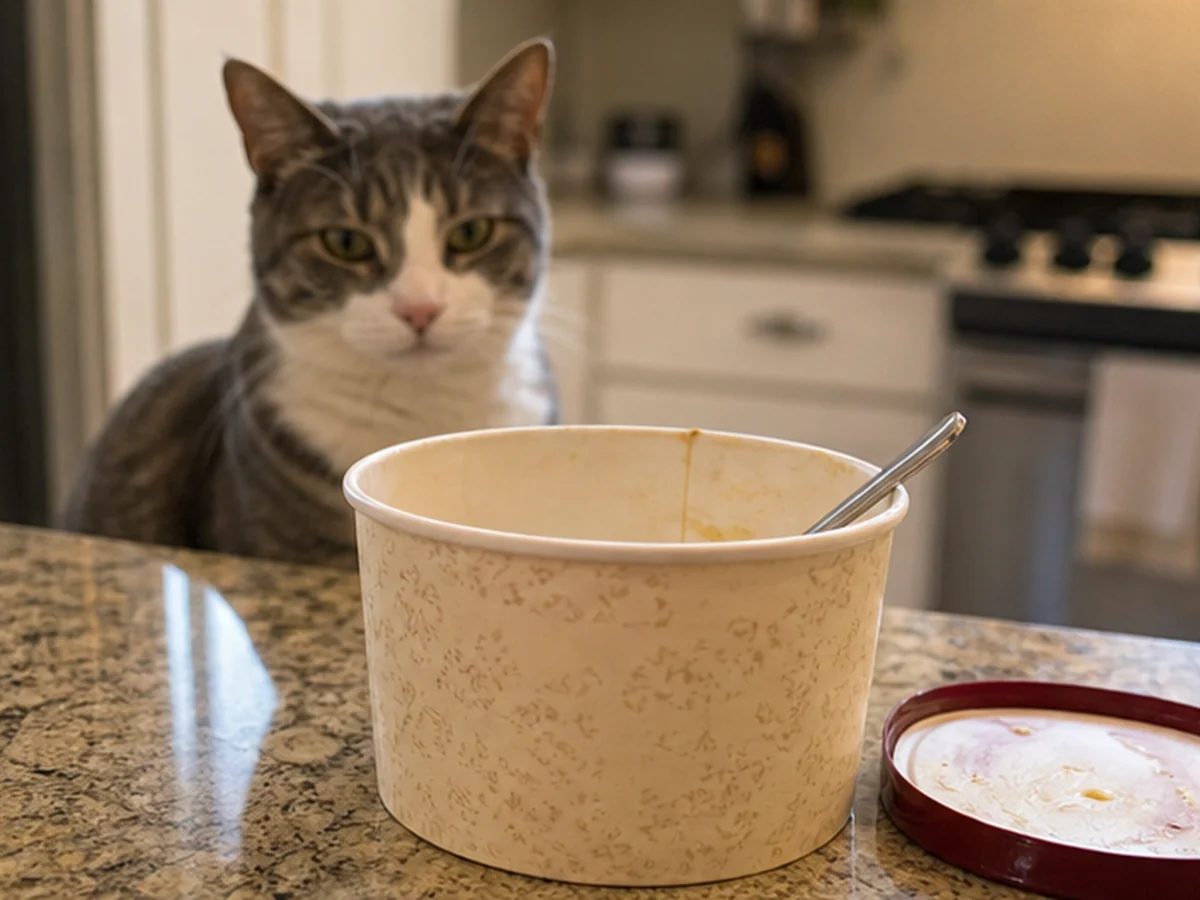
When the carton itself was the prize
Cats may lick softened dessert from cardboard, tear a paper lid, or chew the tamper seal. Food-stained packaging can bunch in the stomach or intestine even though the carton looked too flimsy to matter.
Do not wait for a known wrapper ingestion to become dramatic. Call with the material, size, amount missing, and current symptoms so the clinic can advise whether examination or imaging is appropriate.
Keep dessert boringly inaccessible
Scoop servings, close the carton, and return it to the freezer before sitting down. That single habit removes the long unattended thaw that lets a cat eat far more than one lick.
Rinse bowls or load them into a closed dishwasher, then secure rubbish. A cat who ignores a frozen tub may become intensely interested once the contents are soft, fragrant, and conveniently left at whisker height.
Frequently asked questions
Can cats eat vanilla ice cream?
One lick is usually low risk for a healthy adult, but a serving can cause digestive upset and unnecessary calorie intake. Check the sweetener and any mix-ins.
Can cats have lactose-free ice cream?
Lactose-free removes only lactose, not fat, sugar, calories, chocolate, coffee, alcohol, or unsafe toppings. It is not automatically appropriate.
Should I call after one lick of chocolate ice cream?
Call with the brand, chocolate type, amount, time, and cat’s weight so the risk can be calculated from real product details. Do not wait for symptoms if concentrated cocoa or chocolate pieces were involved.
The bottom line
A tiny lick of plain ice cream is usually a monitor-at-home event, but it is not a healthy habit. Chocolate, coffee, alcohol, cannabis, unknown sweeteners, high-risk mix-ins, symptoms, or missing packaging all justify a prompt call.