Can Cats Eat Mushrooms? Store-Bought Types, Wild Risks, and Fast Triage
A small bite of a plain, edible, store-bought mushroom is unlikely to poison a healthy cat. An unknown wild mushroom is different: some species can cause seizures, organ failure, or death, so call a veterinarian or pet poison service immediately rather than waiting for symptoms or trying to identify it yourself.
The first question is not raw or cooked. It is known or unknown.
If the mushroom came from a sealed grocery package labeled white button, cremini, portobello, oyster, shiitake, or another edible culinary species, save the label and check the recipe. If it grew in a lawn, garden, mulch bed, houseplant pot, trail, park, compost pile, or mystery corner of the yard, treat it as unknown.
- One tiny piece of plain supermarket mushroom: remove access, offer water, and monitor for stomach upset.
- Any unknown or wild mushroom: call your veterinarian or animal poison control promptly, even if the cat looks normal.
- A mushroom dish: check for onion, garlic, alcohol, rich sauce, excessive salt, and missing packaging.
- Tremors, seizures, severe weakness, trouble breathing, collapse, repeated vomiting, bloody diarrhea, yellow gums, or abnormal behavior: seek emergency veterinary care.
Do not induce vomiting or give hydrogen peroxide, salt, milk, charcoal, or oil at home. Mushroom treatment depends on the suspected toxin and timing, so improvisation can delay the care that matters.
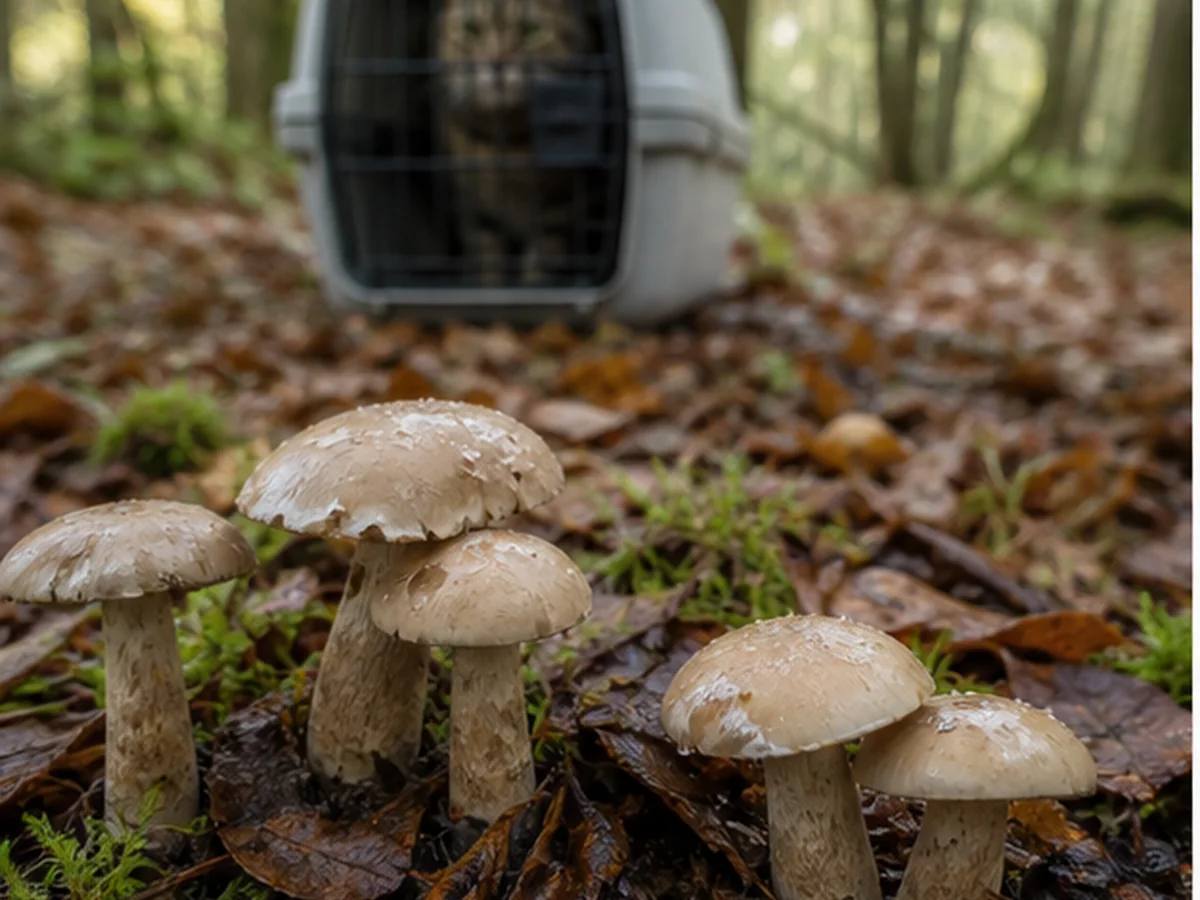
Why wild mushrooms get an immediate call
Thousands of mushroom species exist, many are difficult to tell apart, and the same yard can produce more than one species. Color, cap shape, gills, bruising, smell, and whether a squirrel nibbled it do not give a pet owner a reliable safety verdict.
The Merck Veterinary Manual overview of mushrooms toxic to animals describes toxin groups capable of causing mild stomach upset, neurologic disease, kidney injury, liver failure, and death. The history, time to symptoms, and expert identification can change treatment and prognosis.
Some amatoxin-containing mushrooms look like edible species, and their toxins withstand cooking, freezing, dehydration, and storage. The Merck review of hepatotoxins in small animals identifies death caps and related genera as serious liver threats.
A quiet cat immediately after eating a mushroom has not passed the test. Certain toxins cause rapid signs, while amatoxin-associated gastrointestinal illness and liver injury may be delayed.
What to collect without delaying the call
Note the time, estimated amount, location, and whether the mushroom was fresh, dried, cooked, or part of another product. Take clear photos from above, below, and the side with an ordinary object for scale, but do not postpone veterinary advice for a backyard photo shoot.
Wearing gloves, place an intact sample and nearby pieces in a paper bag or waxed paper rather than a sealed plastic bag, which can speed decay. Keep it away from children and pets, and wash your hands after handling soil and mushroom material.
Professional mycologists may be able to identify a specimen or good photographs, but a social-media guess is not a treatment plan. The ASPCA’s mushroom toxicosis guidance recommends immediate veterinary or poison-control advice and expert identification when possible.
Mushroom toxins do not share one symptom pattern
Some mushrooms mainly irritate the digestive tract, causing drooling, nausea, vomiting, abdominal pain, and diarrhea. Even a nonfatal exposure can require care when fluid loss becomes severe in a small animal.
Muscarinic mushrooms can produce heavy salivation, tearing, vomiting, diarrhea, slow heart rate, and breathing problems. Other species cause agitation, disorientation, abnormal vocalizing, wobbliness, tremors, seizures, or profound sleepiness.
Some toxins injure the kidneys or liver, and a cat may appear to improve between early stomach signs and later organ failure. Yellow gums or eyes, abnormal bruising, increased or decreased urination, weakness, or collapse require immediate veterinary care.
The recent CDC report on an Amanita poisoning outbreak concerns people, not cats, but it demonstrates two relevant facts: toxic wild mushrooms can resemble edible ones, and amatoxin illness can have delayed gastrointestinal and liver phases. It should not be used to calculate a feline dose.
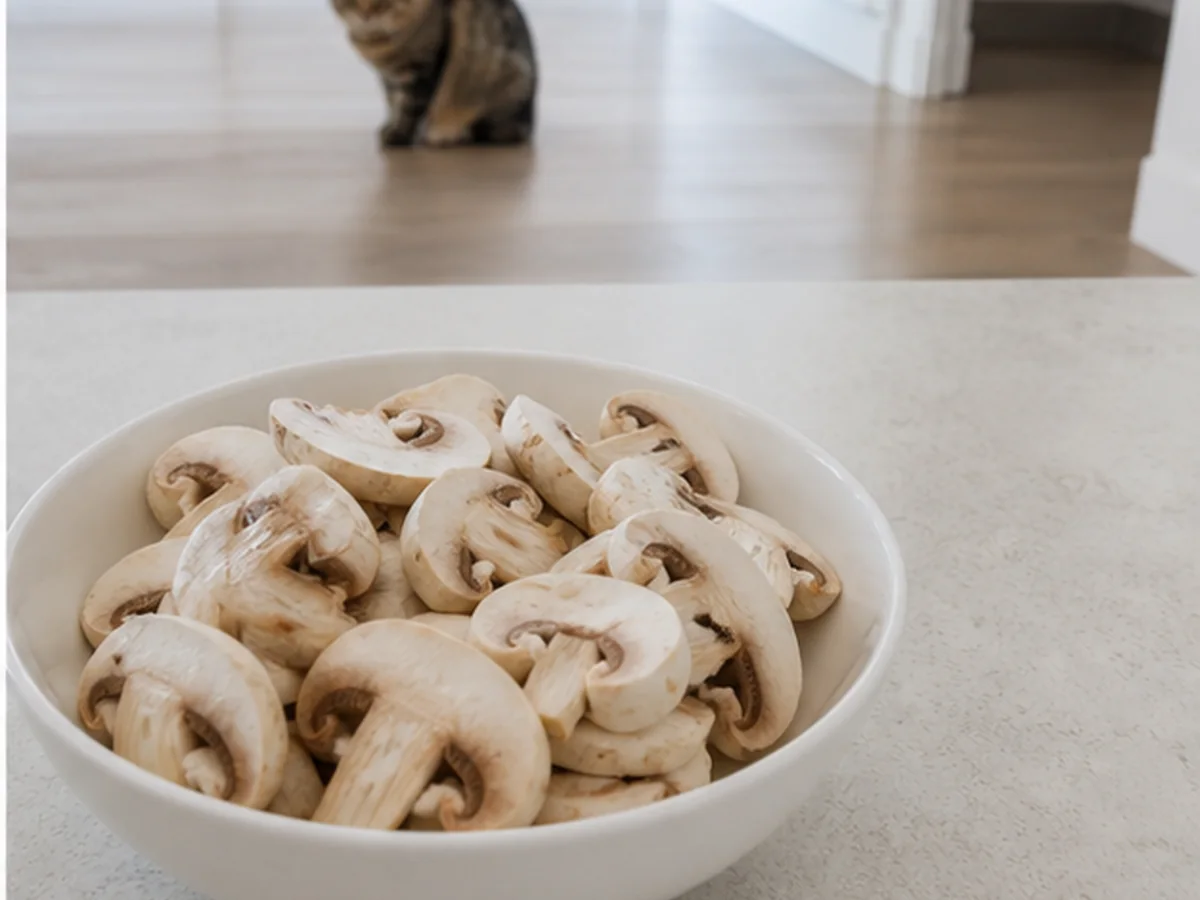
Store-bought edible mushrooms are a different category
Plain culinary mushrooms sold for human consumption are not considered inherently toxic to cats when they are fresh and correctly identified. A tiny accidental bite usually brings either no sign or mild digestive upset, but mushrooms offer no special nutritional advantage to an obligate carnivore.
Do not make them a regular treat or let them displace complete and balanced cat food. Cats have limited calorie room, and a vegetable side dish is a curious tasting project rather than a dietary requirement.
Discard slimy, moldy, fermented-smelling, or spoiled mushrooms. Spoilage creates a separate food-safety problem, and cooking does not reliably rescue food that should have gone into the bin.
Raw versus cooked grocery mushrooms
A small piece of fresh raw button mushroom is unlikely to be a poisoning emergency, but it can be rubbery and difficult to chew. A larger piece may provoke gagging, vomiting, or choking, especially in a kitten or a cat who inhales snacks like a tiny shop vacuum.
Cooking softens texture but only helps when the species is a known edible mushroom. Cooking does not neutralize every wild-mushroom toxin, so sautéing a mystery cap does not upgrade it to dinner.
If offering a taste at all, use a crumb of plain, fully cooked, cooled supermarket mushroom without oil, butter, salt, or seasoning. There is no health reason to persuade a cat who declines it.
The recipe is often riskier than the mushroom
Mushrooms are commonly cooked with garlic, onion, shallot, chives, wine, cream, butter, cheese, gravy, or salty stock. Allium seasonings can damage feline red blood cells, while alcohol and very rich or salty preparations add different concerns.
- Mushroom soup: may contain onion or garlic powder, concentrated sodium, dairy, fat, and a hot serving temperature.
- Sautéed mushrooms: often carry garlic butter, wine, pan drippings, and seasoning throughout the pieces.
- Pizza toppings: combine cheese, cured meat, sauce, garlic, onion, and possible foil or plastic ingestion.
- Stuffed mushrooms: may include onion, garlic, sausage, breadcrumbs, cheese, alcohol, and toothpicks.
- Canned mushrooms: are a known edible type but may be packed with substantial sodium or seasoning.
- Powders and broths: can be concentrated and may blend several mushrooms with onion, garlic, or supplements.
If the stolen mushroom came from a slice, our guide to pizza and cats helps triage the whole product. For salty cured toppings, see salami risks, and for garlicky or onion-heavy brine recipes, review pickles and cats.
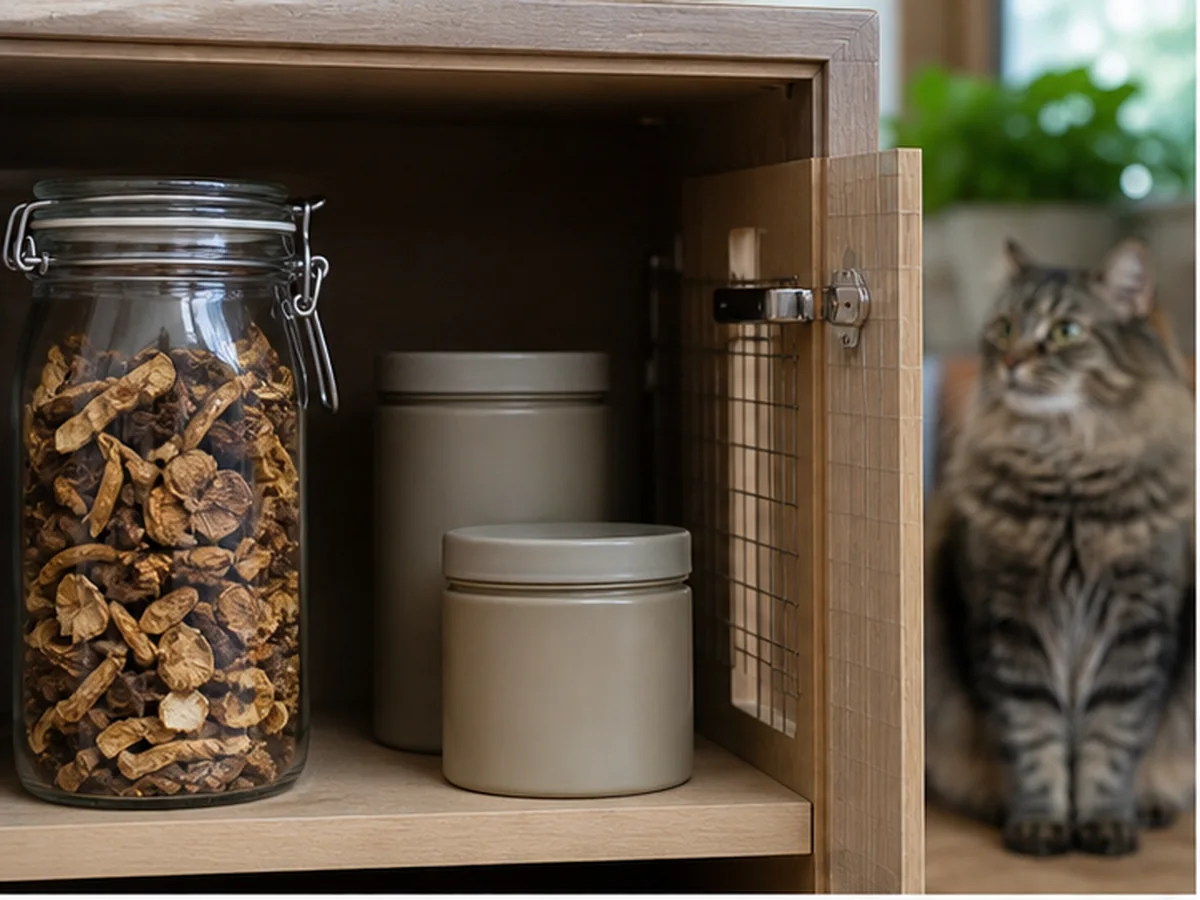
What about medicinal and functional mushrooms?
Extracts marketed for immunity, cancer support, cognition, stress, or general wellness are not equivalent to a bite of cooked button mushroom. Concentration, species, extraction method, contaminants, added herbs, and drug interactions all matter.
Do not give a human mushroom tincture, powder, coffee blend, chocolate, gummy, or capsule to a cat. These products may add alcohol, caffeine, cocoa, xylitol, herbs, or doses never evaluated for feline use.
A veterinarian should review the exact product and evidence before a supplement enters a cat’s care plan, especially during cancer treatment or with liver, kidney, clotting, immune, or endocrine disease. Natural describes an origin, not a safety guarantee.
Magic mushrooms and psychoactive products
Psilocybin-containing mushrooms and products can cause neurologic and behavioral signs, and pets may also be exposed to chocolate, cannabis, gummies, wrappers, or other ingredients packaged with them. Treat any suspected exposure as a prompt poison-control or veterinary call.
Tell the clinician what the product actually was and bring the package if it is safe to do so. Veterinary teams need accurate information to treat the cat, and guessing around the ingredient list wastes valuable time.
Cats with less margin for experimentation
Kittens are small and prone to chewing objects, while older cats may have reduced organ reserve. Cats with liver disease, kidney disease, diabetes, inflammatory bowel disease, food allergies, neurologic disease, or prescription diets need individualized advice after more than a crumb.
A cat taking medication or receiving cancer therapy should not receive mushroom supplements unless the treating veterinary team approves the exact formula. Product interactions and contamination cannot be assessed from a cheerful front label.
How to mushroom-proof a yard and home
- Walk the yard after rain and before outdoor access, checking mulch, tree roots, compost, and shaded damp areas.
- Pick mushrooms promptly with gloves and remove the underground base when practical, then bag them where pets cannot reach.
- Recheck daily during damp weather because fruiting bodies can appear quickly and removal does not eliminate the underground fungus.
- Keep cats indoors or supervise enclosed outdoor time if mushrooms are repeatedly appearing.
- Move houseplants with recurring mushrooms out of reach and replace contaminated potting material safely.
- Store culinary mushrooms and supplements in closed containers, and put recipe scraps directly into a lidded bin.
Fungicide is not a complete prevention plan and may create its own exposure question. Moisture management, prompt physical removal, and supervision are usually the practical foundation.
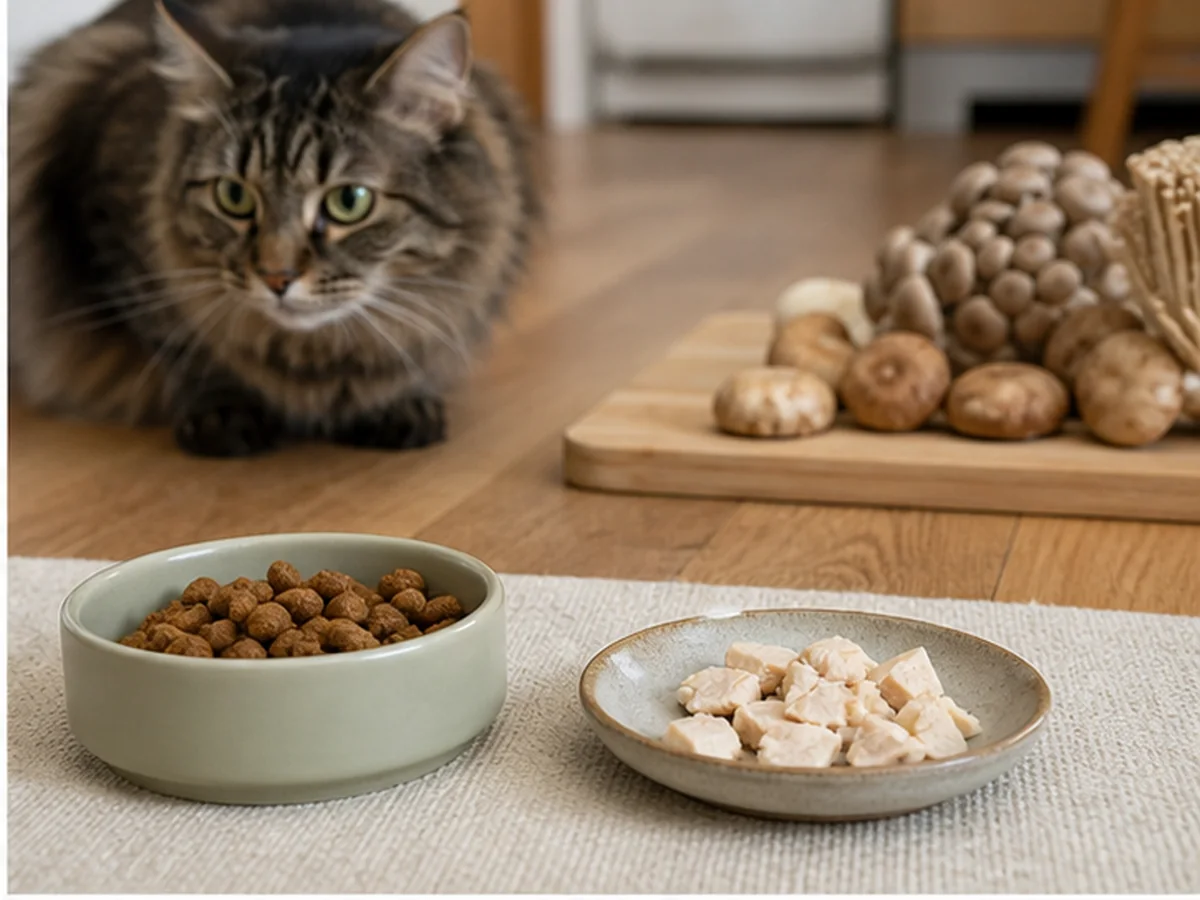
Better treats for a curious cat
Use a few pieces of the cat’s normal complete food for training or kitchen distraction. The cat still gets paid for leaving your cutting board alone, but the currency fits the nutrition plan.
Many healthy cats can have a tiny piece of plain, fully cooked egg or meat if their veterinarian has no objection. Our guides to boiled eggs and raw fish risks explain why preparation matters.
Frequently asked questions
Can cats eat white button or cremini mushrooms?
A tiny amount of fresh, plain, known grocery mushroom is unlikely to poison a healthy adult cat. It is not a useful regular treat, and cooked dishes need a separate check for garlic, onion, alcohol, salt, fat, and packaging.
Can cats eat mushroom soup?
Skip it. Many soups contain onion or garlic powder, high sodium, dairy, and fat, and the cat gains no nutritional advantage from the mushroom broth.
My cat only licked a wild mushroom. Should I call?
Yes, call promptly because the species and amount may be unknown, and even a chewed fragment can matter. Save photos and a sample if safe, but do not delay the call for identification.
Can cooking make a wild mushroom safe?
No method reliably makes an unknown wild mushroom safe. Several important toxins are heat-stable, and visual identification by a nonexpert remains unreliable before and after cooking.
The bottom line
A crumb of plain supermarket mushroom is usually a minor event, while any unknown wild mushroom is a call-now problem. Save the evidence, avoid home treatment, and let a veterinarian or poison professional handle identification and triage because mushroom safety is a terrible place for confident guessing.