Can Cats Eat Grape Jelly? Labels, Grape Ingredients, and Sweeteners
Do not feed grape jelly to a cat. Grape-related kidney injury is firmly established in dogs, while feline evidence is sparse and no reliable cat toxic dose exists, so a meaningful grape-jelly exposure deserves prompt product-and-quantity-based veterinary advice rather than either canine certainty or casual reassurance.
The jar decides what “grape jelly” means
Products can use grape juice, grape juice concentrate, fruit blends, corn syrup, sugar, pectin, acids, preservatives, flavor, color, alternative sweeteners, or no meaningful grape ingredient at all. Homemade jelly varies even more because the cook may substitute sweeteners or mix fruit.
Save the exact jar and photograph ingredients, Nutrition Facts, lot, date, and amount remaining. The clinic needs the product in your kitchen, not a generic online recipe that happens to be purple.
| Label clue | What it tells you | Why it matters |
|---|---|---|
| Grape juice or concentrate | A true Vitis-derived ingredient is present | Feline dose is unknown, so amount and product need professional review. |
| Mixed fruit juice | Other fruits may contribute most of the formula | Name each juice instead of judging by front color. |
| Sugar or syrups | Adds calories and digestive load | Not a feline poison by itself in one tiny lick. |
| Sugar free | Sweetener formula differs by product | Identify xylitol and every sugar alcohol exactly. |
| Homemade jar | Concentration and sanitation are uncertain | Keep recipe, batch size, processing, and storage history. |
| Plastic squeeze bottle | Cap, seal, and chewed plastic may be missing | Foreign-object triage can outrank the jelly. |
What is known about grapes, and what is not
Dogs can develop acute kidney injury after grapes, raisins, and some related products, with individual sensitivity and dose response that are difficult to predict. That well-established canine syndrome should not be rewritten as though equally robust cat case data exist.
The Merck Veterinary Manual describes grape and raisin toxicosis primarily in dogs and notes a report in a cat, leaving the feline evidence much thinner. A single report does not establish a household safe dose or a guaranteed feline syndrome.
Uncertainty cuts both ways: it prevents claiming every lick causes kidney failure, and it prevents declaring a meaningful exposure safe. Call so the veterinarian or animal poison service can assess actual grape content, amount, timing, body size, health, and symptoms.
Our cat grape guide separates canine evidence from proportionate feline caution. It also covers fresh fruit, raisins, currants, baked goods, vines, and the information a toxicologist will request.
How much jelly changes the call
A tongue-tip taste from a nearly clean knife is different from emptying a portion cup, licking a sandwich filling, or chewing through a family jar. Jelly can be lapped quickly, so measure the residue rather than assuming sticky whiskers prove a tiny dose.
Estimate the maximum using the original container weight, serving volume, missing sandwiches, and spilled jelly elsewhere. Report uncertainty honestly, because a cautious maximum is more useful than an artificially precise teaspoon.
Kittens and small cats receive more product per pound from the same spoon. Cats with kidney disease, dehydration, diabetes, vomiting, or prescription diets deserve especially early direction.
Sugar is unnecessary, not the Vitis question
Conventional jelly contains substantial added sugar or syrup. One small lick is not accurately described as sugar poisoning, but a large serving may cause nausea, vomiting, loose stool, abdominal discomfort, or appetite disruption.
Repeated sharing contributes calories without providing balanced feline nutrition. The FDA explains the complete-and-balanced claim on pet-food labels, which a fruit spread cannot carry for cats.
Diabetic cats should not receive jelly as an improvised glucose treatment unless their managing veterinarian has provided exact instructions. Insulin timing, measured glucose, signs, recipe, and dose all matter.
Honey sometimes sweetens artisan preserves, but it does not neutralize grape uncertainty. The feline honey guide covers sugar and portions without granting mixed jelly a clearance.
Sugar-free jelly and the xylitol boundary
Reduced-sugar and sugar-free spreads may use xylitol, erythritol, stevia, sucralose, monk-fruit blends, or other ingredients. Formulas can change, so the front claim is not enough.
Xylitol can produce dangerous hypoglycemia and liver injury in dogs. The FDA warning is explicitly centered on dogs, and comparable sensitivity has not been established in cats.
That species boundary means no dog dose chart belongs in feline advice. It does not mean a cat should eat xylitol jelly, especially when true grape concentrate or another concerning ingredient may also be present.
Call with the complete sweetener list and maximum amount. Do not give honey or corn syrup preemptively because a canine source mentions low glucose.
Peanut butter and jelly is a multi-product exposure
A sandwich adds bread, peanut butter, salt, fat, sweetener, crust, and possibly toothpicks or plastic wrap. Specialty nut butters may contain chocolate, raisins, protein powders, cannabis, or xylitol.
The cat bread guide distinguishes a baked crumb from raw yeast dough, mold, and packaging. Read the nut-butter jar separately rather than assuming peanuts are the only addition.
Sticky bread-and-jelly wads can lodge around teeth or be swallowed in a large lump. Gagging, repeated swallowing, drooling, regurgitation, or coughing deserves prompt attention.
Pastries, glazes, meatballs, and party food
Grape jelly appears in thumbprint cookies, doughnuts, cakes, glazes, barbecue meatballs, cocktail sausages, and slow-cooker sauces. These recipes can add chocolate, alcohol, onion, garlic, fat, salt, raw dough, bones, or skewers.
Savory grape-jelly sauce frequently uses chili sauce or barbecue ingredients, so the clinic needs the whole recipe. Cooked onion and garlic can still damage feline red blood cells.
Pastry wrappers, cupcake liners, foil, toothpicks, and cocktail picks can choke, puncture, or obstruct. Count serving hardware before focusing exclusively on the fruit spread.
Jars, lids, and sticky coat cleanup
A glass jar can break, while a squeeze bottle adds a flip cap, inner seal, and flexible plastic. Restrict access to shards and account for any missing packaging.
Jelly on external fur encourages grooming and mats hair. Use lukewarm water on a small cool sugar patch if the cat calmly allows it, but avoid solvents, essential oils, scissors near skin, and forceful bathing.
Eye exposure, broken glass, a large coated area, painful skin, or a cat struggling to breathe requires veterinary help. Do not turn cleanup into an aspiration or bite injury.
Homemade jelly has a food-safety history
Home canning depends on a validated recipe, proper acidity, processing, intact seals, and safe storage. A lid that bulges, leaks, spurts, or releases an odd odor means the food should be handled as spoiled, not tasted by a pet.
Mold or fermentation is not made safe by removing the surface. Discard the entire questionable product in a secured container and keep the recipe and jar if illness occurs.
The National Center for Home Food Preservation provides research-based jam and jelly methods. Those directions protect household food safety but do not make grape jelly a feline treat.
Jelly, jam, preserves, and fruit spread are not synonyms
Jelly is commonly made from strained juice, while jam and preserves may retain crushed fruit, skins, or larger pieces. Fruit spread is a flexible marketing term, and conserve can include nuts, dried fruit, or multiple fruits.
Texture changes how much a cat can lap and whether a sticky lump can lodge around teeth, but the ingredient list remains the decisive Vitis clue. Do not assume clear jelly contains less grape than chunky preserves.
A restaurant packet may show only a brand and flavor on the small wrapper. Save it, photograph any case label, and contact the manufacturer when grape percentage or sweetener is unclear.
Monitoring should follow the professional plan
A clinic may recommend home observation, examination, kidney-value testing, urine assessment, or treatment depending on the case. The correct timeline cannot be derived from one dog article because feline evidence and jelly concentration both vary.
Keep notes on appetite, vomiting, energy, water intake, and urine output without repeatedly stressing the cat at the litter box. Report changes promptly and attend scheduled rechecks even if the cat seems fine between them.
Do not withhold water or food unless the veterinarian instructs it. Maintaining the usual routine makes genuine changes easier to recognize and avoids creating a second problem through home restriction.
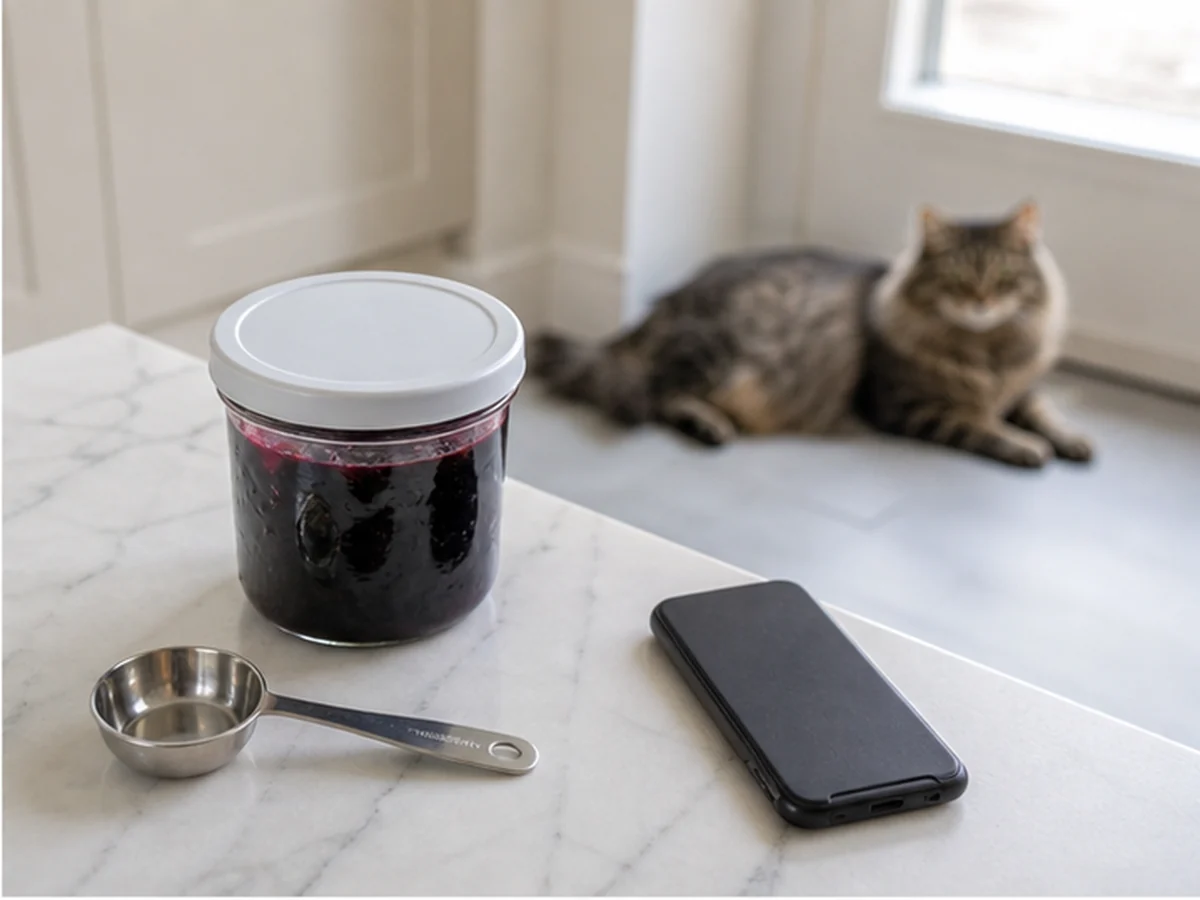
What to do after a jelly raid
- Identify grape content: photograph juice, concentrate, fruit blend, sweeteners, flavor, and serving information.
- Measure the scene: estimate the maximum missing, time, cat weight, other foods, spilled portion, and symptoms.
- Count objects: locate the lid, seal, cap, glass, wrapper, knife, toothpick, and sandwich film.
- Call promptly: seek case-specific advice for meaningful true-grape exposure, uncertain amount, sugar-free products, symptoms, or a vulnerable cat.
- Use emergency care: collapse, seizures, breathing difficulty, repeated retching, profound weakness, or severe pain cannot wait.
Do not induce vomiting unless a veterinarian specifically directs the method and timing. Continue tracking appetite, vomiting, thirst, urination, energy, and comfort for the period the clinic recommends.
Frequently asked questions
My cat licked grape jelly. Is that an emergency?
One trace lick may represent little grape, but check the exact label and call when true grape content, amount, or sweetener is uncertain. Feline evidence does not provide a dependable safe cutoff.
Is grape flavor the same as grape juice?
Not always, which is why the ingredient list matters. A flavored purple spread can differ from one made with grape juice concentrate, and color cannot identify Vitis content.
Can cats eat sugar-free grape jelly?
Do not offer it. Identify every sweetener, remember that severe xylitol evidence is dog-specific, and obtain feline advice after a meaningful or uncertain exposure.
What symptoms should I watch for?
Vomiting, low appetite, lethargy, changes in thirst or urination, weakness, and abdominal discomfort deserve attention, but do not wait for signs before calling about a meaningful true-grape exposure.
Bottom line
Grape jelly combines an uncertain feline Vitis question with a very certain lack of dietary value. Read the living label, measure the amount, keep canine certainty out of cat claims, and call with the product before sticky guesswork replaces useful evidence.