Can Cats Eat Rice? Plain Grains, Leftovers, Fried Rice, and Portions
Fully cooked, plain rice is not poisonous to cats, but it is optional carbohydrate, not a feline dietary requirement. A teaspoon or less is plenty for a healthy adult, and the answer changes when rice arrives fried, salted, buttery, moldy, undercooked, or mixed with onion, garlic, raisins, or sauce.
After a prepared-dish theft, identify every ingredient and account for packets, foil, skewers, and bones. Call for toxic additions, symptoms, or missing packaging.
Why rice appears in cat food but does not need its own bowl
A formulated cat food may use rice while still meeting a complete nutrient profile. That is different from adding home-cooked rice to meat and assuming the combination supplies taurine, calcium, fatty acids, vitamins, and minerals in the right proportions.
The FDA’s explanation of complete-and-balanced pet food is the useful label test. Rice from your saucepan has no nutritional adequacy statement because it was never designed to be a cat’s main meal.
Cornell describes cats as obligate carnivores in its feeding guidance for cat owners. Cats can digest some cooked starch, but biological capability is not the same as a need for rice at dinner.
White, brown, basmati, jasmine, and wild rice
White rice is relatively soft and low in fiber when fully cooked, which makes it easy to swallow in a tiny amount. Brown rice keeps the bran layer and offers more fiber, but that can mean more bulk and digestive upset for a sensitive cat.
Basmati and jasmine are aromatic varieties, not special feline health foods. Serve neither with seasoning, stock, coconut milk, saffron mix, or the fried onions that often accompany human recipes.
Wild rice is a different plant from true rice and has a firmer, seed-like texture. It still needs thorough cooking and fine chopping, and there is no reason to choose it over complete cat food.
Raw rice is a pantry accident, not a crunchy treat
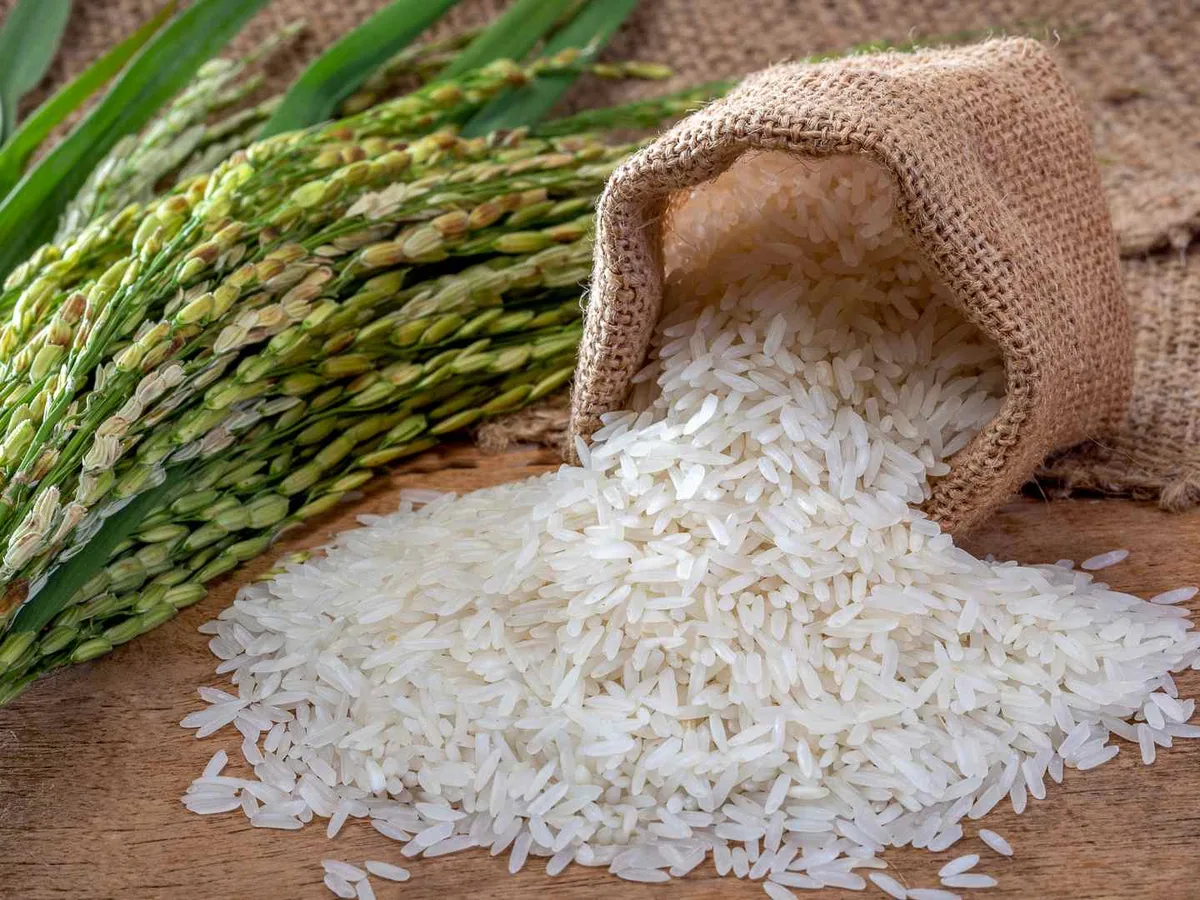
Dry grains are hard, awkward to chew, and capable of swelling as they absorb moisture. A few scattered grains are unlikely to poison a cat, but a meaningful mouthful, damaged bag, or silica packet warrants a call.
Undercooked rice has a tough center and may cause gastrointestinal discomfort. Finish cooking the cat’s approved taste, cool it, and break up sticky clumps before serving.
Cooked rice has a clock
Uncooked rice can contain spores of Bacillus cereus, and cooking does not necessarily destroy every spore. When cooked rice sits warm, surviving spores can grow and produce toxins, so storage is not a cosmetic detail.
The USDA recommends refrigerating perishable leftovers promptly and using shallow containers for faster cooling. Follow current USDA leftovers guidance rather than letting the rice cooker spend the night on the counter.
Reheating cannot reliably rescue food when heat-stable toxin has already formed. If rice was forgotten at room temperature, give it to the trash, not to the smallest person in the household.
Fried rice is an ingredient list wearing a short name
Restaurant fried rice commonly contains onion, garlic, scallion, soy sauce, oil, egg, meat, and a high sodium load. Raw, cooked, and powdered alliums can damage feline red blood cells, so picking out visible onion is not enough.
Meat bones, shrimp tails, skewers, foil takeout lids, sauce packets, and plastic forks may travel with the carton. Our pizza guide uses the same whole-dish method for evaluating complicated leftovers.
Plain steamed rice from beneath a seasoned entrée may absorb sauce and drippings. Set aside an unseasoned spoonful before cooking the human dish if a veterinarian has approved rice as a treat or medication carrier.
Rice pudding, cereal, and sweet dishes
Rice pudding adds milk or cream, sugar, butter, and frequently raisins or nutmeg. Many adult cats digest lactose poorly, and raisins warrant a prompt call because a reliable safe feline amount has not been established.
Breakfast rice can contain cinnamon, chocolate, coffee, protein powder, xylitol, or fruit blends. “One spoon” is not useful exposure information until the recipe is known.
Rice cakes and crackers are dry, salty, and easy to break into choking-size shards. Flavored versions may include onion, garlic, cheese powder, chocolate, or sweeteners.
Arsenic context without panic
Rice absorbs inorganic arsenic from soil and water more readily than many crops, and levels vary by type and growing conditions. The FDA discusses ways people can limit arsenic exposure, with special attention to varied diets and infant foods.
That population-level issue does not turn a teaspoon of cooked rice into an acute feline poisoning event. It is another reason not to construct a repetitive rice-heavy homemade cat diet without professional formulation.
Rinsing and cooking in excess water can reduce some arsenic, but those methods can also change nutrient content and texture. For a cat, the simpler solution is to keep rice incidental rather than designing a daily arsenic-reduction ritual.
Does rice help diarrhea?
The chicken-and-rice idea is borrowed largely from dog-feeding tradition and should not be treated as universal feline medicine. Cats that vomit or have diarrhea can become dehydrated, and fasting or home recipes may delay diagnosis.
Call your veterinarian for repeated diarrhea, blood, vomiting, lethargy, pain, fever, or refusal to eat. Cats can develop serious complications from inadequate intake, so a prolonged appetite problem is not a wait-for-rice situation.
A sensible portion for a healthy cat
If the veterinarian has not restricted carbohydrates or extras, begin with half a teaspoon of soft plain rice and do not keep refilling the dish. A cat who walks away has saved everyone a discussion about leftovers.
Cats with diabetes, obesity, digestive disease, grain allergy, or a therapeutic diet need individualized guidance. Medication may also be affected when a food changes absorption or encourages inconsistent meal intake.
Rice in commercial cat food
Ingredients on pet-food labels appear in descending order by weight before cooking, but the list alone cannot reveal the final nutrient balance or digestibility. Compare products by nutritional adequacy, life stage, calories, and veterinary needs rather than trying to eliminate or celebrate one grain.
A veterinary gastrointestinal formula may contain rice because the complete recipe has a clinical purpose. Do not copy one ingredient from that diet into a homemade bowl and expect the same therapeutic result.
Grain-free labeling is not proof of higher quality, and grain-containing labeling is not proof that a food suits every cat. The individual formula and the individual cat are the real comparison.
Broth can undo a plain bowl
Chicken or beef broth often contains onion, garlic, salt, yeast extract, flavor concentrates, or fat. “Low sodium” compares the product with its regular version and does not certify an appropriate sodium level for a particular cat.
Homemade stock can be equally complicated when bones, skin, pan drippings, alliums, and seasoning simmer together. Water is the safe cooking liquid for an optional rice taste.
Bouillon cubes and powdered seasoning are concentrated, so a small sprinkle may matter more than its volume suggests. Save the wrapper after an exposure instead of trying to reconstruct the brand from the color of the cube.
Sticky rice and swallowing style
Glutinous rice contains no gluten despite its name, but its sticky texture can form a cohesive lump. Break clumps apart and serve a very small cooled portion rather than a glossy ball.
Rice wrapped around sushi may bring raw fish, soy sauce, wasabi, avocado, scallion, sesame, and plastic garnish. Our raw fish guide handles the part that a rice-only answer misses.
Rice-bag and takeout triage
- Separate food from trash. Remove bags, twist ties, desiccants, foil, bones, skewers, and sauce cups.
- Name the dish. List stock, onion, garlic, meat, egg, dairy, raisins, sweetener, and seasonings.
- Check time and temperature. Discard cooked rice that was stored unsafely.
- Estimate the missing amount. Note the largest plausible quantity and when the raid occurred.
- Phone for concerns. Call after toxic ingredients, symptoms, a large dry-rice exposure, or swallowed objects.
Do not induce vomiting or give hydrogen peroxide, salt, milk, oil, or charcoal without direct veterinary instruction. Emergency signs include collapse, seizures, breathing trouble, repeated vomiting, a swollen painful abdomen, or inability to swallow.
Rice flour, noodles, and wrappers
Rice flour is a fine powder that can irritate the nose and airway when inhaled, and raw dough can contain yeast, raw egg, or unsafe additions. Keep baking bags closed and wipe dust before the cat walks through and grooms it off.
Plain cooked rice noodles are not toxic but offer the same unnecessary starch in a long, slippery form. Cut any approved taste short enough that it cannot trail from the mouth like string.
Spring-roll wrappers may arrive with raw vegetables, shrimp tails, onion, garlic, sauce, and frying oil. A wrapper theft needs the complete filling and dipping-sauce recipe, not a verdict about rice paper.
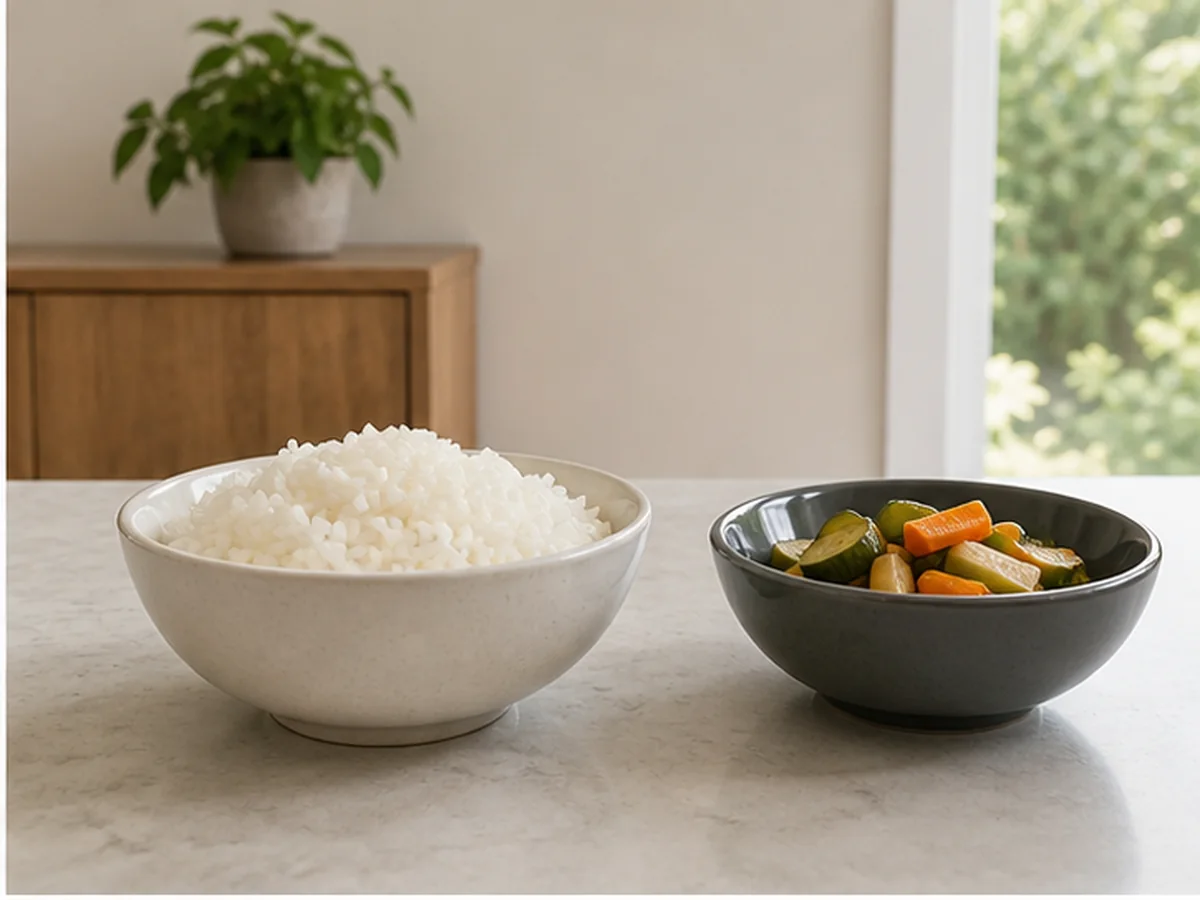
Salted rice and pickled companions
Sushi rice is seasoned with vinegar, sugar, and salt before toppings appear. Soy sauce, pickled ginger, wasabi, raw seafood, and avocado then turn a bland grain into a complete takeout investigation.
Pickled vegetables served beside rice can contribute brine and alliums. Our pickle safety guide covers jar labels, sodium, garlic, onion, and swallowed lids.
For a cat who enjoys soft texture, part of the regular wet meal is a better medication carrier than sticky rice. Ask the prescriber before changing how a drug is given because some tablets must not be crushed or divided.
Rice questions with short answers
Can kittens eat rice?
Kittens need calorie- and nutrient-dense growth food, and rice can fill their small stomachs without supplying the full package. Ask the kitten’s veterinarian before adding table food.
Can cats eat rice every day?
A complete cat food may contain rice every day because the entire formula is balanced. Daily spoonfuls added at home can distort calories and nutrients without offering a feline benefit.
Is brown rice healthier for cats?
More fiber does not automatically mean better for a carnivore or for a cat with gastrointestinal disease. Neither brown nor white rice is needed when the main food is already complete.
Bottom of the bowl
Plain, fully cooked rice can be a tiny occasional extra, but keep fried rice, pudding, stale leftovers, and dry grains out of the cat’s menu. Treat the whole dish, storage history, and packaging as part of the answer.