Can Cats Eat Banana Peels? Choking and Obstruction Explained
Banana peel is not considered a classic feline poison, but cats should not eat it. The peel is thick, stringy, difficult to digest, and capable of causing gagging or obstruction, while produce stickers, pesticide residue, dirt, mold, plastic bags, and compost scraps add hazards that soft banana flesh does not share.
When a peel vanishes
Take away the remaining fruit and estimate the missing length, width, thickness, and time. Check under furniture, inspect the produce bag and sticker, and note whether the cat is swallowing normally, breathing quietly, eating, and passing stool.
- A tiny chewed fleck with no symptoms: offer normal water and monitor closely.
- A strip, folded chunk, stem end, or uncertain amount: call a veterinarian for object-specific guidance.
- Repeated gagging, drooling, vomiting, appetite loss, abdominal pain, or reduced stool: seek prompt examination.
- Open-mouth breathing, blue gums, collapse, or severe choking distress: go to emergency care immediately.
Do not induce vomiting, force food, or pull stringy material that appears from the mouth or rectum. A peel fragment can be anchored internally, and tugging may injure the digestive tract.
Non-toxic does not mean digestible
In its plant database, the ASPCA classifies banana as non-toxic for cats, dogs, and horses. Plant toxicity classification does not promise that every physical part can pass safely through a small feline gastrointestinal tract.
Soft ripe flesh and rubbery peel behave differently during chewing and digestion. The useful risk frame is foreign material, not poisoning by banana nutrients.
Why peel texture matters
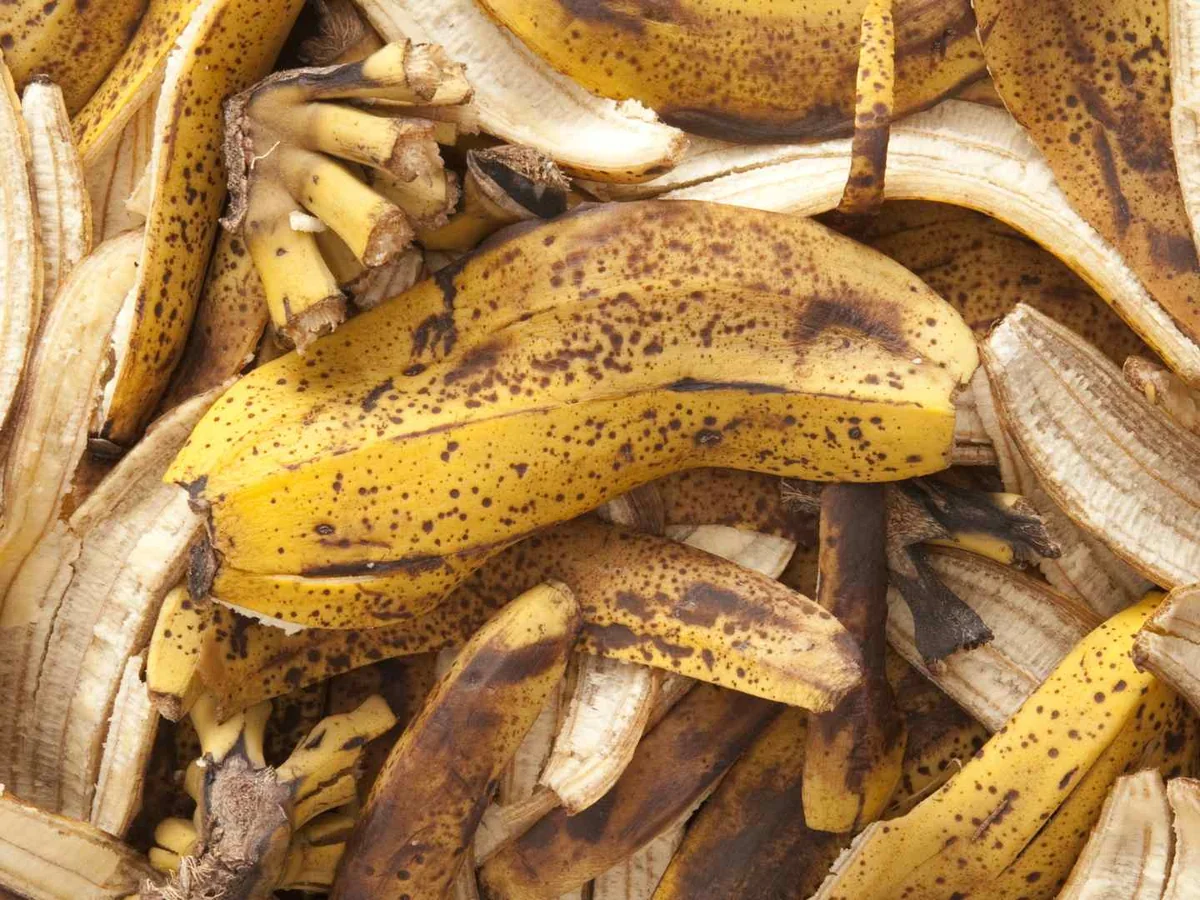
Banana peel contains tough plant fibers and string-like vascular bundles. A cat may shred it during play, then gulp a strip when someone approaches to retrieve it.
A wet folded peel can compact into a bulky piece, while a long ribbon can create linear-foreign-body behavior. Small body size and a narrow intestine leave less room for error than a casual kitchen glance suggests.
Choking happens before digestion
A peel can lodge in the mouth, pharynx, or esophagus before it ever reaches the stomach. Watch for gagging, neck extension, repeated swallowing, coughing, drooling, frantic pawing, or abnormal breathing sounds.
Do not offer water to test whether it washes down. A cat with an airway problem needs urgent hands-on help, and a conscious frightened cat may bite during mouth inspection.
Obstruction signs may emerge later
The Merck Veterinary Manual obstruction review describes vomiting, appetite loss, abdominal pain, dehydration, lethargy, and shock among possible findings. Timing varies with location, material, and whether the blockage is partial or complete.
A cat may pass one stool after swallowing an object because material already beyond the blockage can exit. That litter-box event does not prove the peel has cleared.
Imaging and treatment are case-specific
Plant material may not appear as clearly as metal on a basic radiograph, so veterinarians interpret imaging alongside examination and symptoms. Ultrasound, contrast studies, endoscopy, observation, or surgery may be considered depending on the case.
Early contact gives the clinic more options than waiting through repeated vomiting. Bring a similar peel or photo so size and texture can be understood.
Produce stickers and adhesive
Small fruit stickers are easy to overlook and can cling to a peel fragment or paw. One sticker often passes, but it adds plastic-like material and adhesive to an already unnecessary ingestion.
Inventory the label and plastic produce tie before deciding what is missing. Save any printed code if product identification or a recall becomes relevant.
Dirt, microbes, and farm residues
The outer peel contacts soil, hands, shipping surfaces, displays, and kitchen counters. Washing reduces surface contamination transferred by hands and knives, although it does not make peel a cat snack.
The FDA produce-safety guidance recommends rinsing fruit under running water and avoiding soap or detergent. Dry the fruit with a clean cloth and keep it away from raw-meat juices.
Pesticide concern without panic
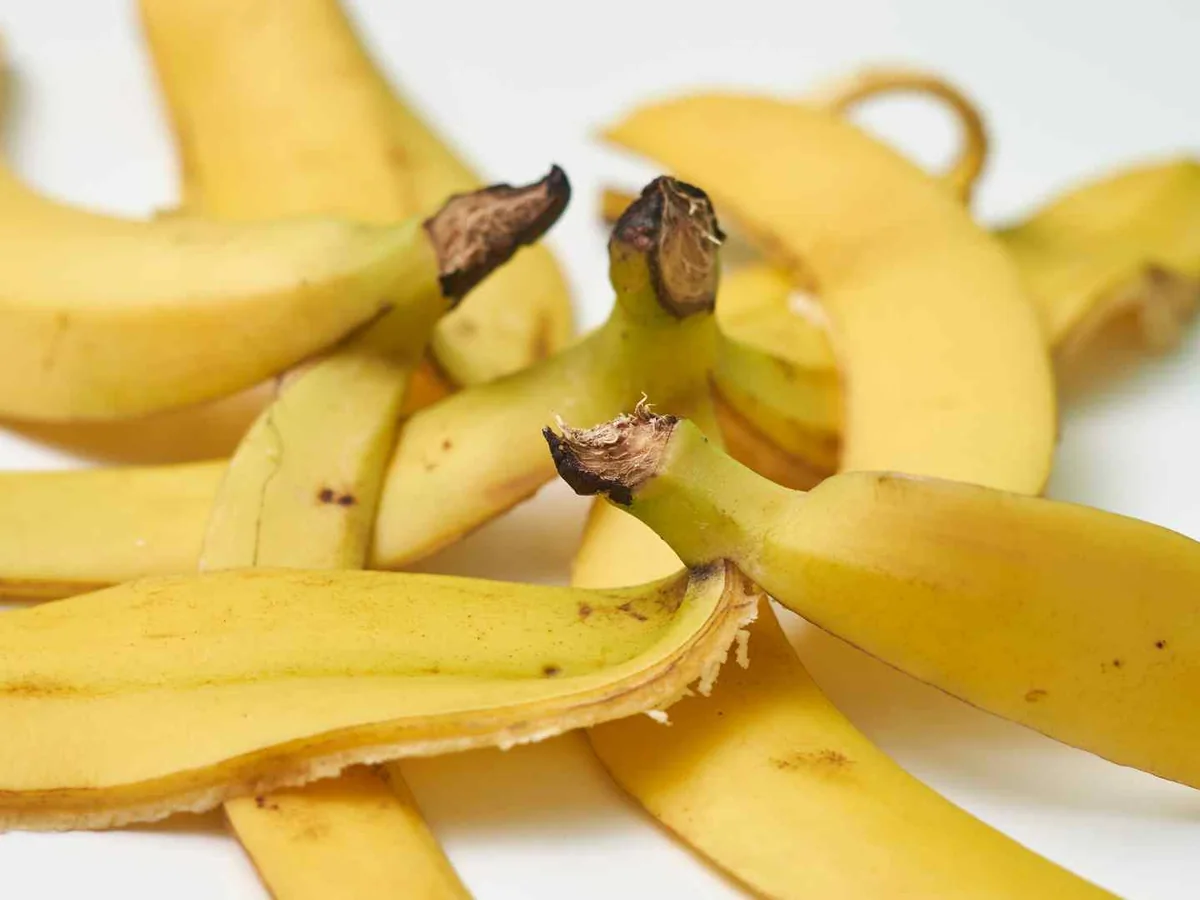
Residues on regulated produce are not the same as a direct exposure to concentrated garden pesticide. Still, a peel carries more surface contact than the protected flesh and offers no dietary reason to accept it.
If the cat chewed a peel wet with household pesticide or cleaner, call with that product label. Do not assume ordinary produce washing advice covers a chemical spill.
Moldy or fermented peels
A blackened ripe peel is not automatically moldy, but fuzzy growth, slime, leaking liquid, fermentation odor, or compost decay changes the concern. Mold toxins and alcohol production are not assessed by peel color alone.
Tremors, agitation, vomiting, weakness, seizures, or abnormal temperature after spoiled compost requires urgent care. Secure the entire bin so the cat cannot return for a second sample.
Compost contains more than banana
Kitchen compost may include onion, garlic, coffee grounds, tea bags, chocolate, grapes, raisins, moldy food, bones, string, and biodegradable liners. The peel may simply be the visible handle on a much larger exposure.
List every accessible scrap and object for the veterinary call. Do not report “banana peel” when the cat also excavated yesterday’s coffee filter and roast string.
Peels used as plant fertilizer
Soaking peels in water or burying them in houseplants can attract chewing, fungus, insects, and standing-water microbes. The pot may also contain toxic plant species, fertilizer, or pesticide.
Keep compost teas and plant amendments inaccessible, and identify every houseplant before assuming the peel is the only issue. Photograph leaves, stems, flowers, pot label, and soil products after a mixed exposure.
Kittens and habitual object eaters
Kittens explore with their mouths and have smaller airways and intestines, making peel strips particularly unsuitable. Cats with pica or prior foreign-body surgery need a prevention plan, not repeated wait-and-see episodes.
Discuss anemia, gastrointestinal disease, stress, diet, and environmental enrichment when nonfood eating recurs. Pica can be behavioral, medical, or mixed, and the peel theft may be a useful clue.
Safe banana preparation
Rinse the intact banana, remove the peel, discard the sticker, and cut one pea-sized bit of ripe flesh if the veterinarian allows fruit. Put peel and strings directly into a lidded rubbish or compost container.
Our guides to bananas, banana chips, and fruit separate safer flesh from processed and structural hazards. A rejected fruit bite should be collected before it gathers lint.
Prevention for determined counter inspectors
Use a hanging basket inside a closed pantry or a cabinet that stays latched, not an open bowl beside the cat’s launch point. Empty produce bags and peel waste should go straight into a secured bin.
Cornell’s feeding guidance supports complete cat food and limited extras. Puzzle feeders, play, and measured regular food provide enrichment without turning garbage into a gastrointestinal experiment.
The stem end is especially bulky
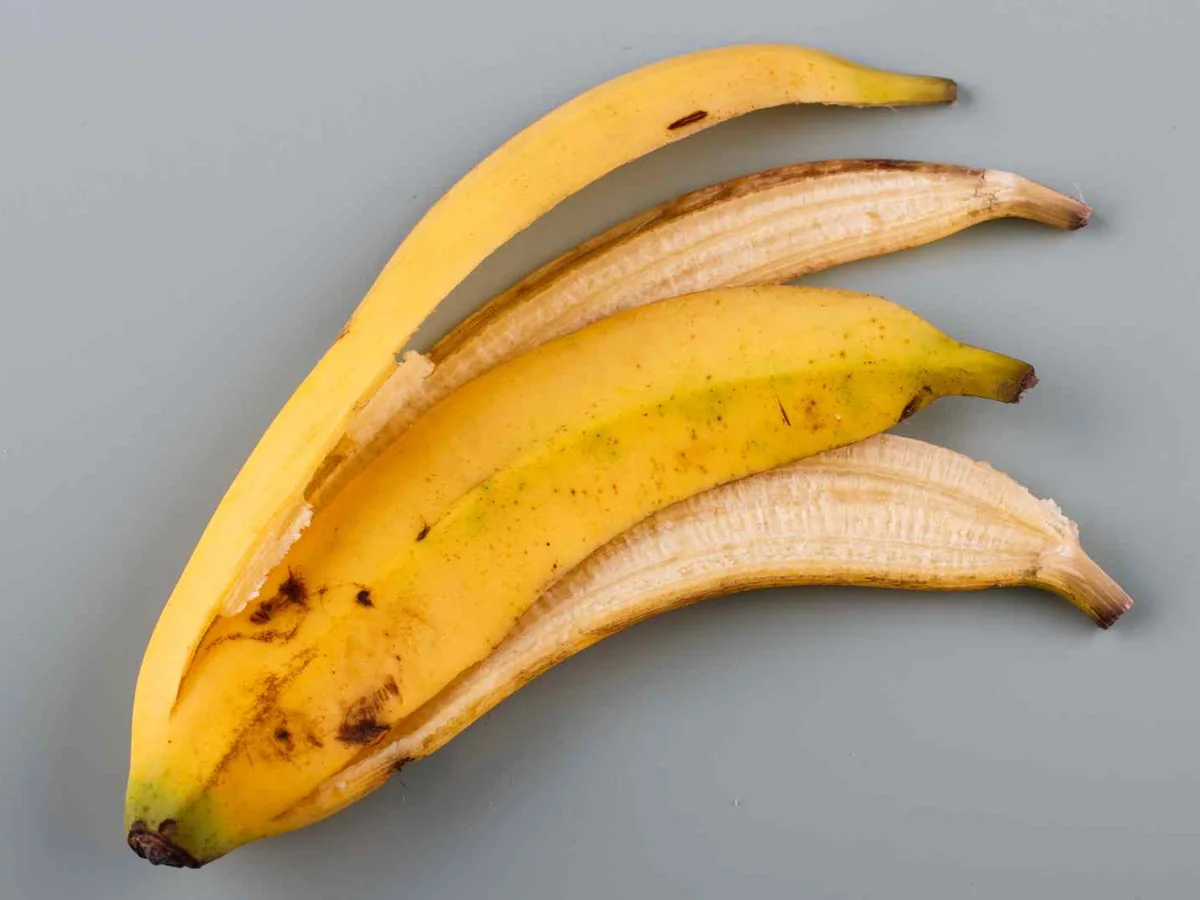
The dark stem can be woody, thick, and easy to detach as a compact piece. It may injure a tooth, lodge in the throat, or sit poorly in the stomach.
Count the stem separately when reconstructing the incident. A peel with its handle missing represents a different object than a few scraped fibers.
Colored wax, marker, and decorative fruit
Party displays sometimes use paint, edible ink, adhesive decorations, ribbons, wire, or skewers on fruit. These additions are not covered by banana’s non-toxic plant listing.
Photograph decorations and save product packages after a chew. Sharp wire, batteries, or concentrated color products can be more urgent than the peel.
What normal monitoring looks like
After a genuinely tiny fleck, note comfortable breathing, usual meals, water intake, normal posture, activity, and litter-box output. Keep the remaining peel for size comparison until the cat is clearly well.
Do not repeatedly press the abdomen or chase the cat for checks. Pain, hiding, vomiting, or behavioral change should prompt a veterinary call instead.
Why waiting for it in stool can fail
Owners may miss soft plant matter in litter, and a partial obstruction may allow some stool to pass. Lack of a recognizable peel does not prove it remains inside, but one normal bowel movement does not prove clearance either.
Follow the clinic’s stated observation period and return precautions. Seek re-evaluation if symptoms arise after an initially reassuring interval.
Multi-cat households complicate evidence
When several cats share boxes, vomit or reduced stool has no signature. Separate the exposed cat temporarily only if that can be done without creating substantial stress.
Provide its familiar resources and record meals and litter output. Tell the veterinarian when observations could belong to another household cat.
Secure bananas during ripening
A paper bag used to ripen fruit can trap a curious head or provide handles and paper to chew. Place the entire setup inside a closed pantry or latched cupboard.
Remove grocery sacks immediately and cut loop handles before disposal when local recycling rules permit. Prevention is easier than measuring a ragged missing strip.
If the cat merely licked the intact washed peel, physical obstruction is not expected from contact alone. Wipe the mouth area if sticky and monitor for unusual drooling or gastrointestinal upset.
Peel fibers around the teeth
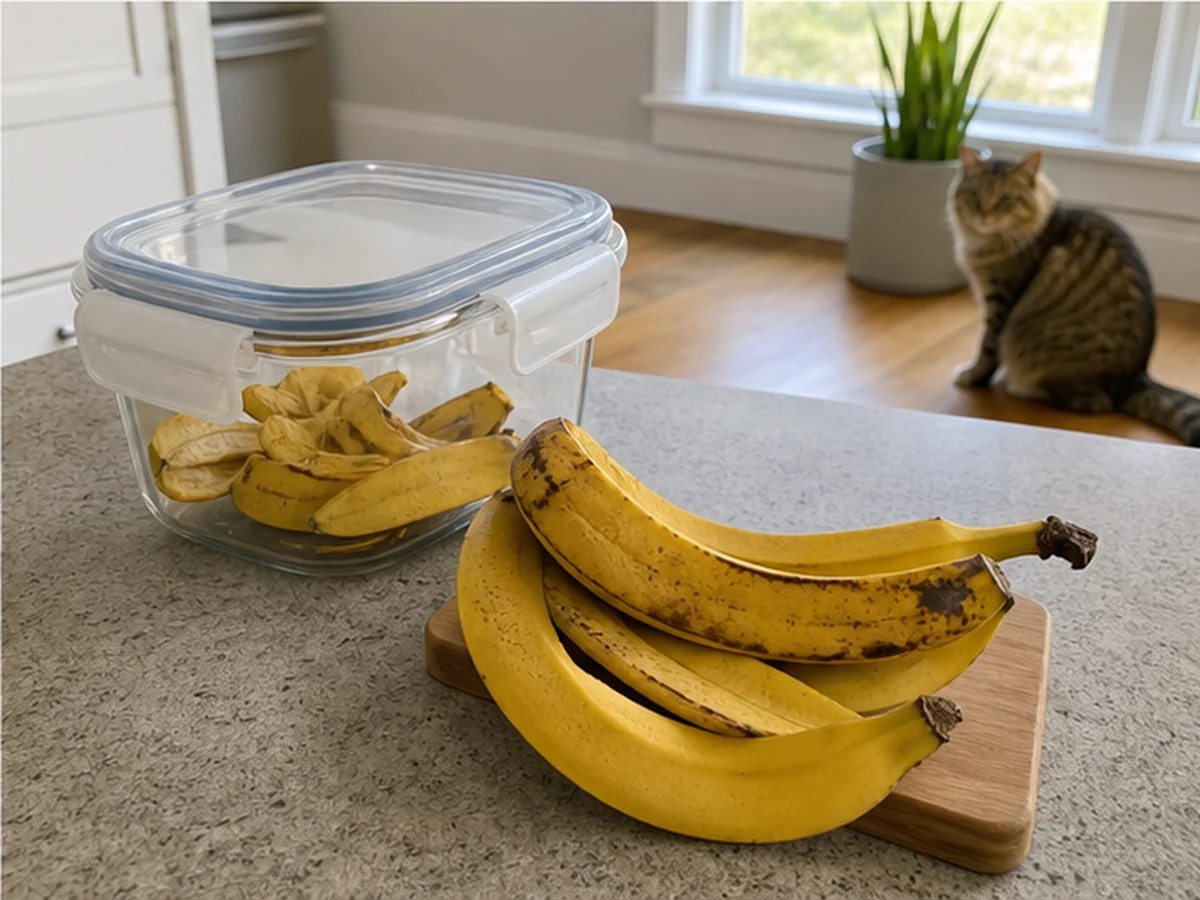
A thin strand can catch between teeth or wrap beneath the tongue, causing drooling, mouth pawing, and food avoidance. Cats may resist inspection even when the material looks easy to reach.
Do not pull a strand that disappears under the tongue or into the throat. A veterinarian can examine the mouth safely and determine whether sedation or imaging is needed.
Travel and picnic waste
Peels dropped on trails or picnic blankets may carry insect repellent, sunscreen, dirt, ants, food sauce, or a plastic produce band. Outdoor waste also makes the amount and age harder to reconstruct.
Leash or carrier management prevents scavenging, and rubbish should leave with the household. Report every plausible coating if a cat mouths an abandoned peel.
Frequently asked questions
Will a small banana peel piece pass?
It may, but size, shape, symptoms, and the individual cat determine risk. Call when a strip or chunk is missing rather than relying on a guaranteed timeline.
Can I give pumpkin to move the peel through?
Do not add fiber without veterinary direction after a suspected foreign body. More bulk cannot safely resolve every obstruction.
Is the string inside a banana dangerous?
A tiny loose fiber is usually less concerning than a broad peel strip, yet a long swallowed strand can behave unpredictably. Never pull visible anchored material.
The bottom line
Banana peel is a physical hazard rather than a typical plant poison for cats. Keep thick fibers, stickers, chemical residue, compost, and bags away, and seek prompt care for a missing strip, choking signs, vomiting, pain, appetite loss, or reduced stool.