Can Cats Eat Candy Canes? Peppermint, Xylitol, and Wrapper Risks
Candy canes are not a suitable cat treat. A lick of an ordinary sugar cane may cause no illness, but sugar-free sweeteners, chocolate coatings, concentrated peppermint oil, sharp candy fragments, and swallowed wrapper or ribbon can turn a festive nibble into a problem that needs a phone call.
First, identify the exact cane
A red-and-white hook from a familiar box is only one member of the candy-cane family. Seasonal shelves also carry chocolate-filled sticks, hot-cocoa canes, sour varieties, cinnamon candy, sugar-free products, oversized decorations, and handmade recipes with no printed ingredient list.
Keep the box and compare an intact cane with what remains. The veterinary team will care about the recipe, sweetener, flavoring, coating, size, missing wrapper, time of access, and your cat’s weight more than the holiday name.
| Cane detail | What to look for | Why it changes the answer |
|---|---|---|
| Sweetener | Sugar, corn syrup, xylitol, erythritol, mixed sweetener | Sugar-free products require exact identification and species-specific advice. |
| Flavor | Peppermint, spearmint, cinnamon, fruit, sour acid | Concentrated oils and strong irritants are different from a trace flavor. |
| Chocolate | Cocoa, dark chocolate, milk chocolate, filling | Cocoa adds methylxanthine exposure. |
| Physical form | Whole hook, pointed shard, crushed dust, sticky lump | Choking, mouth injury, and obstruction depend on shape. |
| Packaging | Cellophane, twist tie, ribbon, ornament string | A missing nonfood item may outrank the candy itself. |

Ordinary sugar candy is still a poor feline snack
Standard candy canes are mostly sugar and syrup, neither of which supplies the animal-based nutrients a cat requires. Felines do not need a dessert course, and regular candy sharing can quietly add calories while displacing balanced food.
A single tongue-tip taste of a conventional cane is unlikely to poison an otherwise healthy adult cat. Larger amounts can bring drooling, nausea, vomiting, loose stool, abdominal discomfort, or reduced appetite, especially when a sticky chunk is swallowed quickly.
Cats with diabetes, gastrointestinal disease, obesity, dental pain, or a prescription diet deserve individualized advice after more than a trivial taste. Do not change insulin, skip a prescribed meal, or improvise a glucose correction unless the cat’s veterinarian directs it.
Honey sometimes appears in artisan candy, yet its friendly pantry reputation does not make the finished sweet useful to a cat. Our guide to honey for cats explains why a sugary ingredient remains an occasional exposure question rather than a nutritional bonus.
Peppermint flavor is not the same as peppermint essential oil
Owners often hear that mint is toxic and assume every faintly minty crumb creates the same danger. Concentration, amount, formulation, and route of exposure matter, so a trace food flavor should not be described as though the cat drank essential oil.
The ASPCA lists Mentha species as toxic to cats because of their essential oils and notes vomiting and diarrhea with large ingestions. That plant entry supports keeping mint away, but it does not publish a feline poison dose for ordinary peppermint candy.
Concentrated peppermint oil deserves more urgency than a quick lick of a regular cane. Oil on fur can be swallowed during grooming, while direct mouth exposure can cause irritation, drooling, vomiting, weakness, wobbliness, or breathing concerns.
The ASPCA advises caution because concentrated essential oils can be dangerous to pets, particularly when placed directly on an animal or swallowed. Never rub peppermint oil on a cat, use it as a breath remedy, or apply it to deter chewing.
Cinnamon-flavored canes need their own label check, especially when cinnamon oil creates the heat. The cat cinnamon guide covers powder, concentrated oil, skin contact, and respiratory irritation without treating every bakery crumb as identical.

Sugar-free canes require careful feline wording
Xylitol can cause a rapid, life-threatening fall in blood sugar and liver injury in dogs. The evidence and dose guidance are canine, however, and those thresholds should not be copied onto a cat chart.
The FDA warning about xylitol specifically describes dogs. Feline sensitivity is not established in the same way, which means uncertainty should prompt product identification and professional guidance rather than either panic or casual reassurance.
Call with the complete sweetener list if a cat ate a sugar-free cane, because blends can contain several sugar alcohols and the candy may have other hazardous ingredients. Photograph both the ingredient panel and the nutrition label before the package gets misplaced.
Do not give syrup or honey preemptively because a dog article mentioned low blood sugar. Home sugar treatment can delay care, complicate diabetes, or be aspirated, and the correct plan depends on the cat’s condition and actual product.
Chocolate candy canes change the case
Chocolate-coated, cocoa-filled, mocha, and hot-cocoa canes may contain theobromine and caffeine. Dark chocolate and cocoa powder are generally more concentrated sources than milk chocolate, but the amount and recipe still need to be calculated rather than guessed from color.
Signs of methylxanthine exposure may include vomiting, restlessness, a fast heart rate, abnormal rhythm, tremors, seizures, or collapse. Contact a veterinarian promptly for a known chocolate product, especially when the cocoa percentage or missing portion is uncertain.
Our detailed chocolate guidance for cats helps organize cocoa type and quantity. Keep the cane wrapper too, since a chocolate-flavored product and a product containing actual chocolate are not always the same thing.
Hard hooks can cause soft-tissue trouble
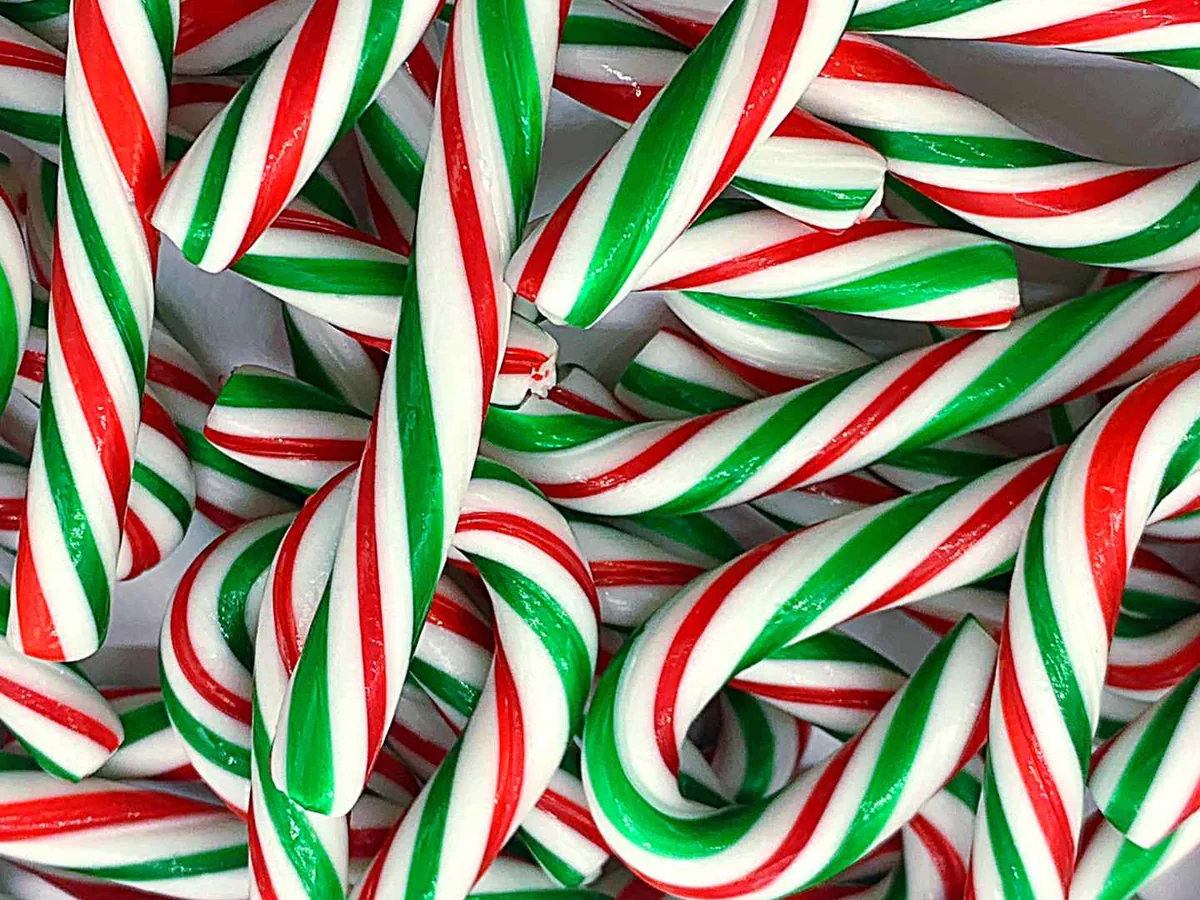
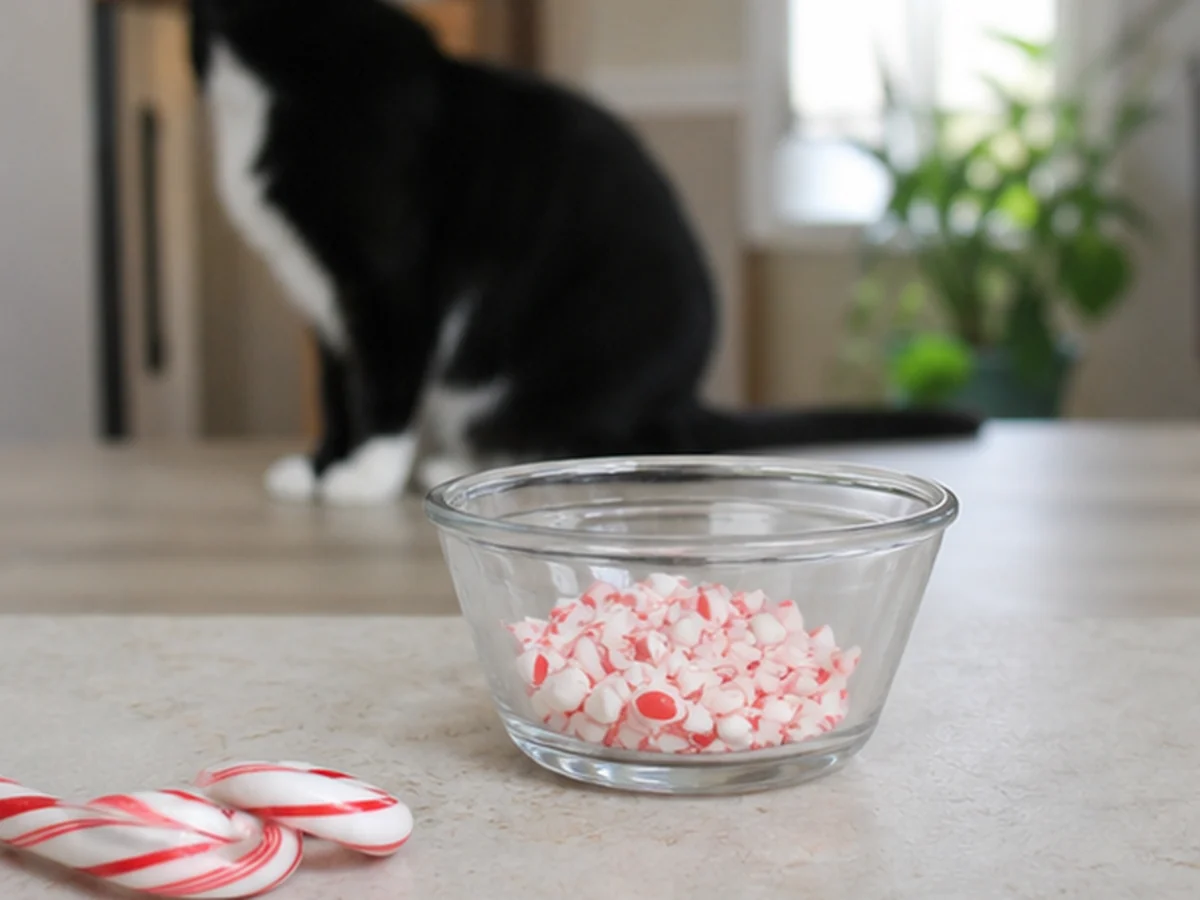
A candy cane begins as a hard curved object and ends as sticky, jagged shards. A cat that bats, bites, or pounces on it can crack a tooth, cut a gum, lodge a point across the roof of the mouth, or gulp a piece too large for comfort.
Sudden drooling, blood at the mouth, refusal to close the jaw, pawing at the face, gagging, repeated swallowing, or regurgitation warrants prompt examination. Difficulty moving air, blue-gray gums, or collapse is an immediate emergency.
Do not reach deeply into a struggling cat’s throat or pull an embedded fragment that resists. A painful animal may bite, and an unseen sharp edge can be driven farther into tissue.
Sticky candy can also mat long fur around the lips, chest, paws, or tail. Soften an external sugar patch with lukewarm water if the cat tolerates handling, but avoid scissors near skin and call a clinic when the mouth, eyes, or a large coat area is involved.
The wrapper belongs in the exposure inventory
Clear cellophane can be nearly invisible on the floor, and a cat may swallow it while licking the sweet residue. Twist ties, ribbon, ornament cord, and plastic hooks add puncture, choking, or intestinal-obstruction concerns.
String is particularly dangerous because one end can anchor while the intestines gather along it. Never pull visible ribbon or cord from the mouth or rectum, even when removal looks easy.
Repeated vomiting, appetite loss, hiding, abdominal pain, low energy, reduced stool, straining, or a missing length of wrapping deserves veterinary assessment. Bring an identical wrapper or measure the remaining decoration so the team can estimate the object.
Candy canes on trees create a second set of hazards
A dangling striped hook is essentially a sweet-smelling cat toy placed above climbable branches. The fall can scatter shards, topple a tree, break glass ornaments, pull down lights, or expose electrical cord.
Hang edible decorations outside feline areas or skip them entirely in a cat household. A closed container is safer than relying on height, because agile cats regard upper shelves as a scheduling challenge.
Discard canes that are dusty, damp, chewed through the wrapper, or stored with unknown ornaments. Food safety and foreign-body risk both become harder to judge once the package is compromised.
What to do after a candy-cane raid
- Remove access: collect shards, wrappers, ribbon, hooks, and matching pieces before another pet joins the investigation.
- Read everything: record brand, flavor, sweeteners, chocolate or cocoa, essential oils, size, and estimated amount missing.
- Check the cat: look for normal breathing, gum color, alertness, swallowing, walking, and evidence of mouth injury without forcing the jaw open.
- Call promptly: seek advice for sugar-free candy, chocolate, concentrated oil, a substantial amount, an unknown recipe, or missing packaging.
- Go urgently: breathing difficulty, collapse, seizures, tremors, severe weakness, persistent gagging, repeated vomiting, or obvious obstruction cannot wait.
Do not induce vomiting unless a veterinarian specifically instructs you. A hard or sharp fragment can injure the esophagus on the return trip, and home peroxide is not a safe feline shortcut.
A treat that actually fits a cat
If holiday participation matters, offer part of the cat’s measured meal, a veterinarian-approved feline treat, or a short wand-toy session away from ribbon and food ornaments. The festive part is the attention, not the peppermint.
The FDA explains that foods marketed as complete and balanced must meet defined nutritional criteria. Candy makes no such promise and should never replace even a small regular meal for a kitten or adult.
Frequently asked questions
My cat only licked a candy cane. Is that dangerous?
One lick of a standard sugar cane may cause nothing beyond sticky whiskers, but confirm the product is not sugar-free, chocolate-filled, or made with concentrated oil. Monitor normally and call if symptoms appear or the label raises concern.
Are peppermint candy canes poisonous to cats?
They are inappropriate treats, although trace peppermint flavor in one lick is not equivalent to ingesting concentrated peppermint essential oil. Amount, concentration, wrapper loss, and the cat’s signs determine urgency.
What if the candy cane contained xylitol?
Save the package and call a veterinarian or animal poison service for feline-specific advice. Xylitol’s severe syndrome is established in dogs, so neither a dog threshold nor the assumption that cats are completely safe is a responsible answer.
Can a cat play with a wrapped candy cane?
No, because teeth can pierce the film and release candy shards, plastic, or a twist tie. Choose a purpose-built cat toy without edible coating or long detachable string.
Bottom line
Keep candy canes in a closed human treat box, not on the feline menu or toy list. If one disappears, identify the sweetener and flavor, account for every piece of wrapping, inspect for mouth trouble, and call early when chocolate, concentrated oil, or an unknown formula is involved.