Can Cats Eat Cheez-Its? Sodium, Cheese Powder, and Cracker Risks
One Cheez-It crumb is unlikely to seriously harm a healthy adult cat, but these salty cheese crackers should not become a treat. Sodium, fat, dairy powder, onion or garlic seasoning, toasted hardness, flavor coatings, crumbs, boxes, inner bags, clips, and large portions create avoidable dietary and physical problems.
Read this cracker through three lenses
The useful questions are simpler than the ingredient panel first makes them look: how salty was it, how much vanished, and did a hard square or piece of packaging go down whole? Flavor still matters, but portion and texture often decide the immediate response.
One ordinary crumb with normal swallowing usually calls for water access and observation. Several crackers, a flavored variety, a prescription diet, or digestive signs justify a call with the current box in hand.
Move faster for suspected onion, garlic, medication, unknown coating, or swallowed packaging. Choking, breathing difficulty, collapse, tremors, seizures, or vomiting that will not stop belongs in emergency care.
Trying to make the cat vomit or forcing another bite downward can add harm. The exact variety, amount, time, cat’s weight, and symptoms will guide useful advice.
Additional browning changes flavor and brittleness, not nutritional suitability. Darker crackers may fracture more sharply and still carry salt, oil, and cheese seasoning.
Burnt food concerns should not distract from the ordinary reasons to avoid it. Cats do not need a toast-level preference survey.
Hot and spicy versions
Hot seasoning can irritate the mouth, stomach, eyes, and airways, while blends may include onion or garlic. Dust transferred to paws is swallowed later during grooming.
A baked cracker is still human snack food
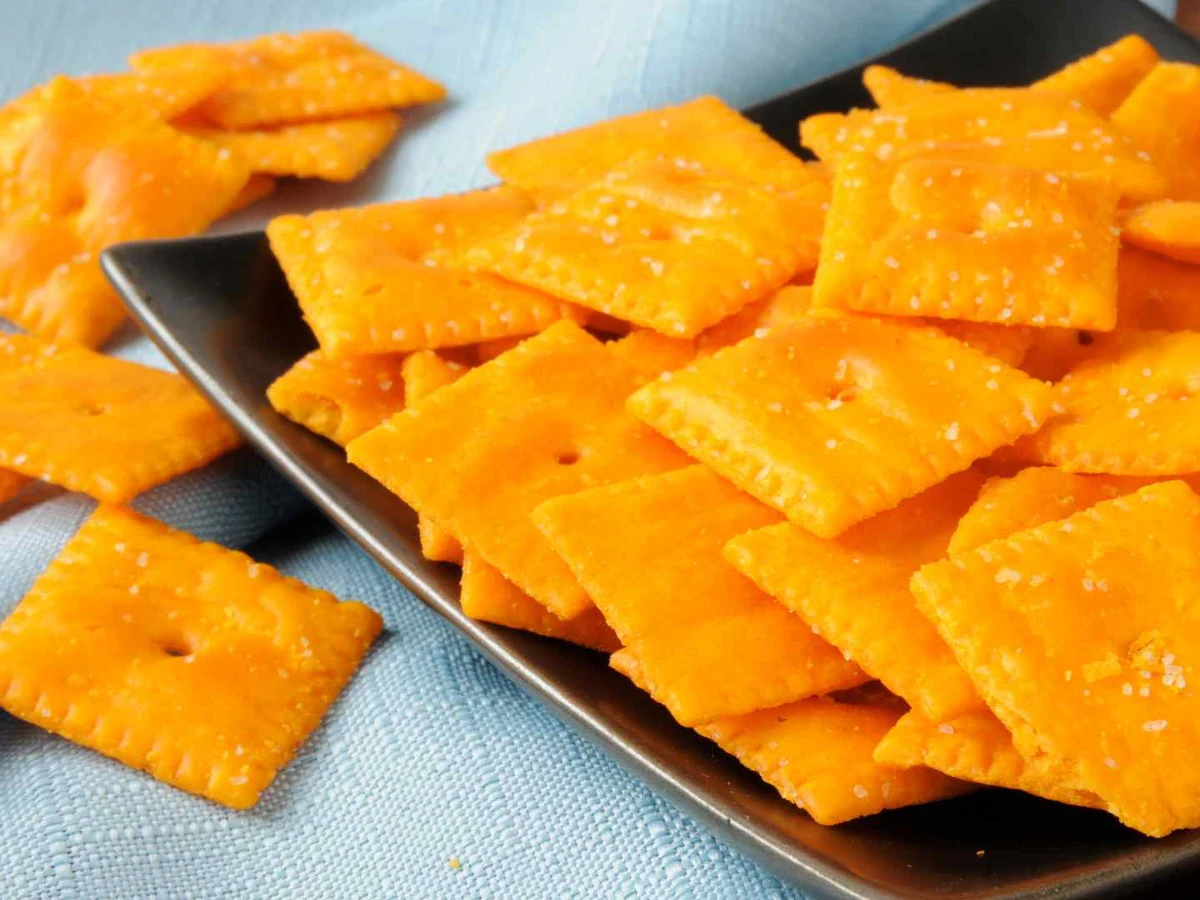
Cheez-Its combine enriched flour, oil, cheese ingredients, salt, and formulation components chosen for shelf life and flavor. The recipe is not designed to meet feline nutritional requirements.
The Merck feline nutrition chapter describes cats’ need for taurine, arachidonic acid, preformed vitamin A, and balanced animal protein. A cracker supplies none of that as a complete package.
Sodium is the predictable limitation
Crackers are seasoned for human taste, and a few squares are proportionally substantial for a cat. Reduced sodium or a smaller cracker remains relative to another human snack.
The Merck salt toxicosis guide includes thirst, vomiting, diarrhea, abnormal coordination, tremors, and seizures after excessive sodium. One crumb does not equal toxicosis, but a large packet theft needs quantity-based advice.
Cheese powder is not simply cheese
Seasoning can combine cheese, whey, milk proteins, salt, acids, color, and flavors, with exact components depending on the variety. Dairy-sensitive cats may develop gas or loose stool.
A trace coating differs from a bowl of milk, so avoid exaggerated lactose claims. The better conclusion is that the powder adds calories and complexity without feline benefit.
Onion and garlic in flavored crackers
Some cheese-cracker flavors or snack mixes may include onion or garlic powder, and formulations can change. Always reread the current label.
The Merck Allium chapter explains feline red-cell injury and delayed anemia. A meaningful amount containing these seasonings deserves a call before weakness or pale gums develops.
Hard corners and dry crumbs
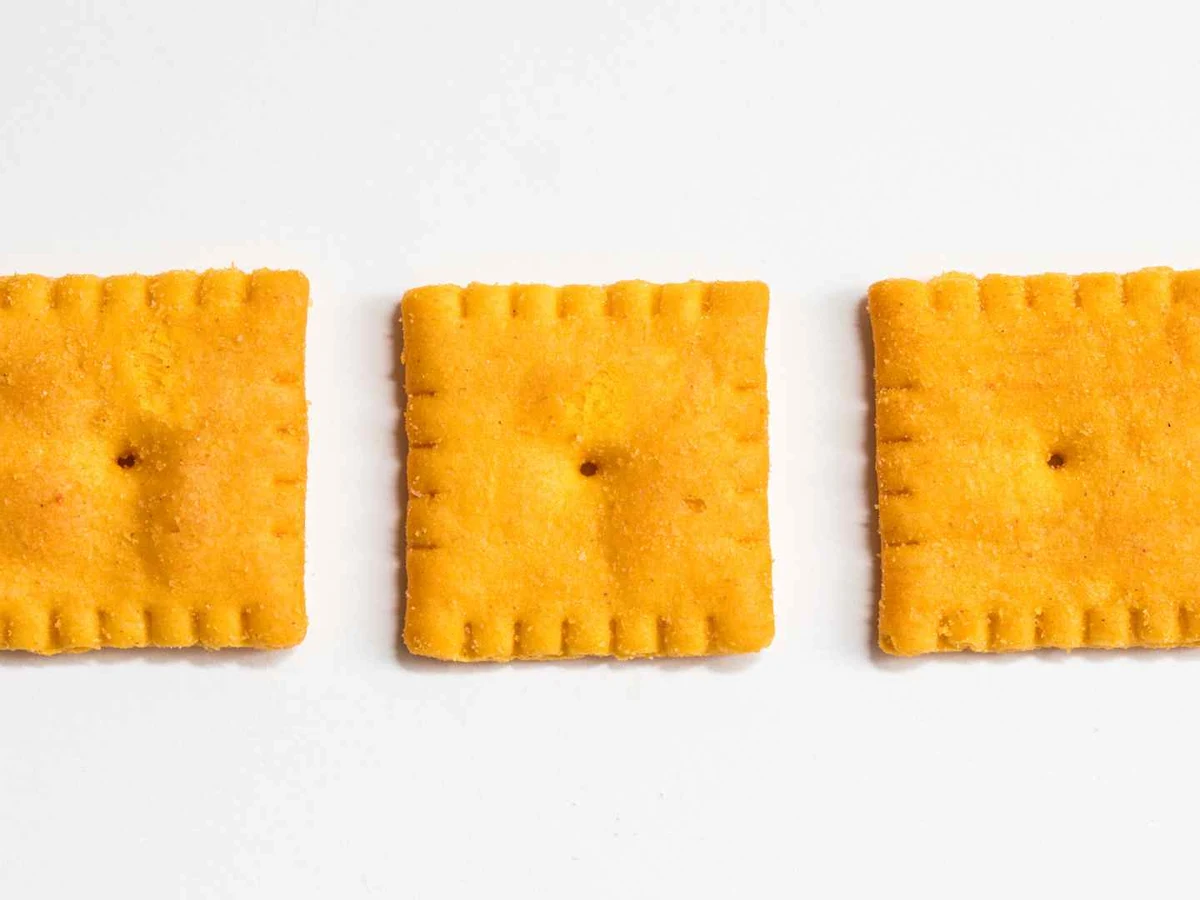
A toasted square can break into sharp corners, lodge across the palate, or be gulped with little chewing. Dry crumbs can trigger coughing or nose irritation.
Gagging, repeated swallowing, drooling, mouth pawing, panic, or abnormal breathing needs urgent attention. Never flick crackers for a cat to chase and catch.
Extra-toasty does not mean safer
Wipe the coat with lukewarm water and remove the cat during cleanup. Persistent drooling, vomiting, squinting, cough, or respiratory effort warrants advice.
Snack mixes add hidden pieces
Cheese-cracker mixes may include pretzels, cereal, nuts, popcorn, chocolate, raisins, or spicy components. Count everything disturbed instead of assuming the cat selected one orange square.
Our guides to cheese, popcorn, peanuts, and bread and crackers help review the mix. Keep all labels.
Boxes, bags, and tabs
Cats may chew the greasy inner bag, swallow a plastic corner, eat a clip, or gnaw cardboard. A mostly intact snack count does not rule out foreign material.
Repeated vomiting, appetite loss, abdominal pain, straining, or lethargy after missing packaging needs veterinary examination. Search beneath furniture before assuming ingestion.
Crackers cannot clean feline teeth
Crunching a cracker does not brush below the gumline or treat periodontal disease. Crumbs can stick around painful teeth while salt and starch add no dental benefit.
Bad breath, drooling, dropped food, one-sided chewing, or face sensitivity deserves an oral examination. Do not use table snacks as a dental test.
Weight, diabetes, and prescribed diets
Oil and starch add calories quickly, while sodium and dairy ingredients may conflict with kidney, heart, urinary, bowel, allergy, or weight plans. Diabetic feeding works best when carbohydrates and timing remain predictable.
Do not use a cracker to hide medication unless the prescribing clinic approves it. A feline pill treat gives better portion control.
When observation is enough, and when it is not
Observe comfortable swallowing, normal breathing, ordinary thirst, appetite, activity, and stool during the following day. One crumb often causes nothing.
Repeated sickness, extreme thirst, weakness, abnormal gums, neurologic signs, or food refusal warrants a call. Report the current flavor rather than relying on the brand name alone.
Choose rewards made for the species
The FDA nutritional adequacy explainer shows how complete pet foods are labeled. Crackers remain optional human calories even when cheese provides a familiar animal-derived smell.
Cornell’s feeding guidance limits treats and centers complete food. A measured piece of the usual ration provides crunch with far less detective work.
White cheddar and other varieties
Pale coating does not mean lower sodium or simpler ingredients, and specialty flavors can add seasoning blends. Current packaging is the only dependable formulation source.
Save the box until the cat is well. Brand familiarity should not replace reading a changed label.
Cheez-It crumbs in couch cushions
Old crumbs can collect dust, thread, hair, medication, or cleaning-product residue under furniture. A cat may swallow those companions while searching for cheese smell.
Vacuum eating areas and keep craft string away from snacks. What looks like scavenging may become a linear-object exposure.
Mold and pantry moisture
Crackers stored damp can grow mold even when some squares look normal. Rancid oil may create an abnormal paint-like or stale odor.
Discard the entire questionable package securely. Tremors, agitation, seizures, or overheating after moldy food requires emergency help.
Homemade cheese crackers
A home recipe may contain real cheese, butter, flour, salt, egg, garlic, onion, chili, or raw dough. Homemade describes location, not feline safety.
Keep the recipe and baking ingredients available after a theft. Raw flour and egg introduce foodborne-microbe considerations before cooking.
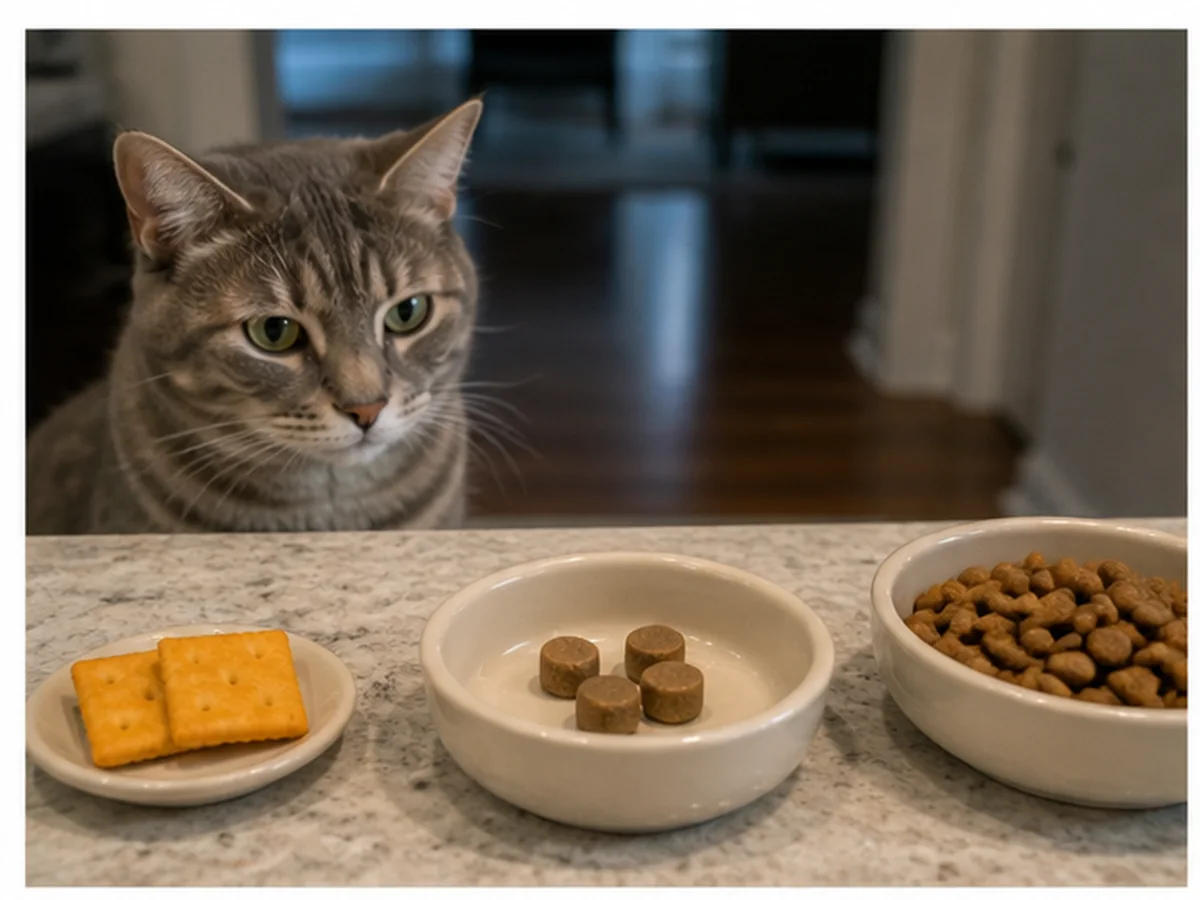
Cheese crackers around medication
People sometimes hide pills in soft cheese beside crackers, and the cat may steal the medicated portion. Identify drug name, strength, and missing amount immediately.
Call before repeating any scheduled dose. Partial ingestion followed by automatic redosing can cause overdose.
Why begging is not deficiency
Cheese aroma, oil, salt, routine, and social attention make crackers interesting. A cat does not seek them because its balanced food lacks orange squares.
Sudden generalized hunger paired with weight loss, thirst, or extra urination merits a medical check rather than larger snacks.
Safer game-day inclusion
Put part of the cat’s usual ration into a puzzle toy before opening snack boxes, and clear inner bags as soon as they empty. Provide a perch away from the coffee table.
The cat receives entertainment and the humans keep their crackers. This is a rare negotiation in which everyone can win.
When to call after several crackers
Report variety, number, time, body weight, medical diet, water access, and any symptoms. Extreme thirst, repeated vomiting, weakness, or neurologic changes deserves faster care.
Do not syringe water after a salty theft. Clinically important sodium imbalance needs careful correction.
Serving-size math fails cats
The printed serving describes human nutrition, and dividing by body weight alone does not create a feline recommendation. Cats differ in health, daily energy need, and sodium tolerance.
The practical serving is none, with one accidental crumb observed. There is no benefit that requires calculating a cracker allowance.
Cracker dust in the airway
Fine crumbs can be inhaled during enthusiastic sniffing, particularly from a crushed bag. Coughing may settle after leaving the dusty area, but persistent signs are not normal.
Move the cat to clean air without using aerosols or fragranced sprays. Open-mouth breathing is an emergency.
Cats with food-responsive disease
Hydrolyzed and novel-protein trials require strict avoidance of unapproved flour, dairy, flavor, and shared snacks. One cheese cracker can interrupt the diagnostic logic.
Keep a written list of exposures and ask about compatible treats. Do not hide a cracker theft from the clinician interpreting results.
Travel packs and car hazards
Single-serve bags are easy to tear and leave under seats with clips, napkins, and condiment packets. A cat loose in a vehicle can also create driving danger while pursuing crumbs.
Transport cats in secured carriers and remove snack rubbish after trips. Inventory the carrier if a bag was packed beside it.
Cheez-It crumbs and ants
Floor crumbs attract insects, leading owners to place baits or sprays where the cat also investigates. Pest-control products can be more serious than the food.
Use pet-aware control and store bait exactly as directed. Save the label after any chewing or leakage.
Frequently asked questions
Can kittens eat Cheez-Its?
Skip them. Kittens need complete growth food and have small mouths, airways, and calorie budgets.
Is one Cheez-It an emergency?
Usually not for a healthy adult, but a whole square is unnecessary and can be gulped. Check flavor and packaging.
Are reduced-fat Cheez-Its safer?
Changing fat does not remove sodium, starch, dairy seasoning, hard texture, or dietary imbalance.
The bottom line
A Cheez-It crumb is generally a small monitoring event, but the cracker offers no feline benefit. Sodium, oil, cheese powder, Allium seasoning, spice, choking, medical diets, and packaging make cat-specific treats the better choice.