Can Cats Eat Twizzlers? Ingredients, Sticky Pieces, Xylitol Facts, and Wrappers
Twizzlers should not be a cat treat. One tiny conventional candy crumb may cause no obvious problem, but sticky ropes can choke or lodge, sugar and flour offer no benefit, specialty flavors change ingredients, and missing wrappers may be more urgent than the candy.
Find the exact Twizzlers product
Save the bag and identify Strawberry Twists, Cherry, Pull ‘n’ Peel, Bites, Nibs, Filled Twists, chocolate-flavored products, seasonal assortment, or another market. Recipes differ by flavor, size, and country.
Estimate pieces or inches and check whether wrapper film, tear strips, clips, desiccants, or individual wraps are missing. Note any vomiting, coughing, gagging, or unusual behavior.
Call promptly for choking, breathing trouble, repeated vomiting, chocolate ingredients, an unknown sugar-free product, a large quantity, or missing packaging. Do not induce vomiting.
The familiar red twist is not licorice medicine
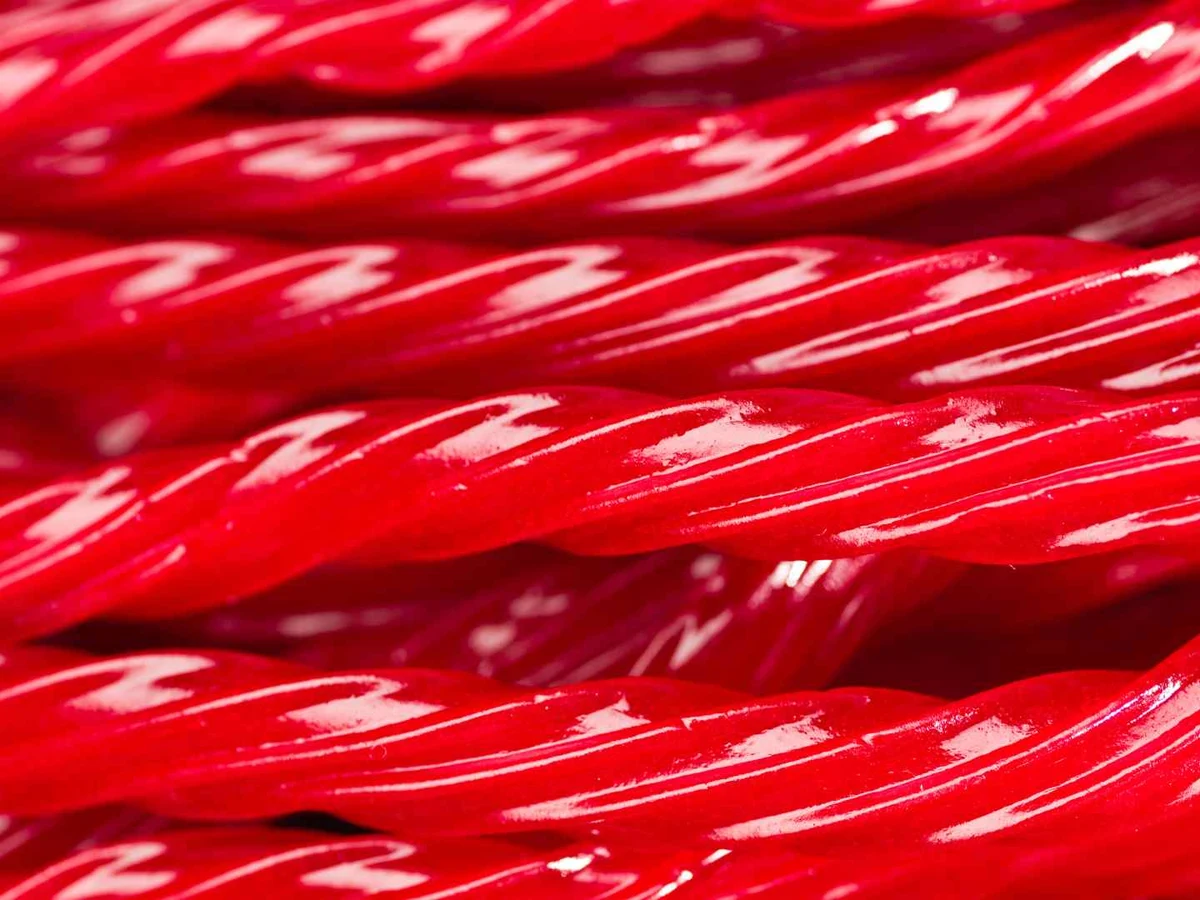
Twizzlers Strawberry Twists are a flavored confection rather than an herbal licorice preparation. The product name, color, and shape do not establish meaningful licorice-root content.
Read the actual ingredients instead of applying claims about botanical licorice. Human candy marketing does not create a therapeutic effect for cats.
A cat’s complete food supplies nutrition; candy contributes carbohydrate and additives while displacing appropriate calories. The right planned serving is none.
Sugar is unnecessary, not an instant poison
A small sugar-containing crumb is unlikely to cause a specific acute poisoning in a healthy cat. Larger candy portions can cause vomiting, diarrhea, abdominal discomfort, or appetite disruption.
Repeated access contributes calories and is especially inappropriate for obesity or diabetes. Cats lack the same sweet-taste response people have, but fat, starch, novelty, and play can still attract them.
Do not frame ordinary sugar like xylitol and do not call one bite diabetes. Accurate proportion keeps triage useful.
The xylitol boundary must stay feline-specific
Xylitol causes profound hypoglycemia and liver injury in dogs, but the same severe response has not been demonstrated in cats. Dog toxic doses should never be copied into feline advice.
FDA’s updated xylitol guidance says it does not seem as dangerous for cats, which is cautious wording rather than proof that every feline amount is safe.
Conventional Twizzlers products should be checked by their current label, especially sugar-free, imported, or specialty candy. Call about an unknown sweetener because ingredients and amount still need professional review.
Sticky candy can become a physical problem
A softened rope can fold into a gummy plug and adhere to teeth, palate, fur, or packaging. A whole twist is large relative to a cat’s airway.
Coughing, gagging, repeated swallowing, frantic pawing, blue or gray gums, or collapse is an emergency. Do not pour water or push fingers blindly into the throat.
If candy is lightly stuck to outer fur, prevent grooming and ask how to remove it. Scissors close to skin can cause severe cuts when a cat moves.
Pull ‘n’ Peel changes the shape
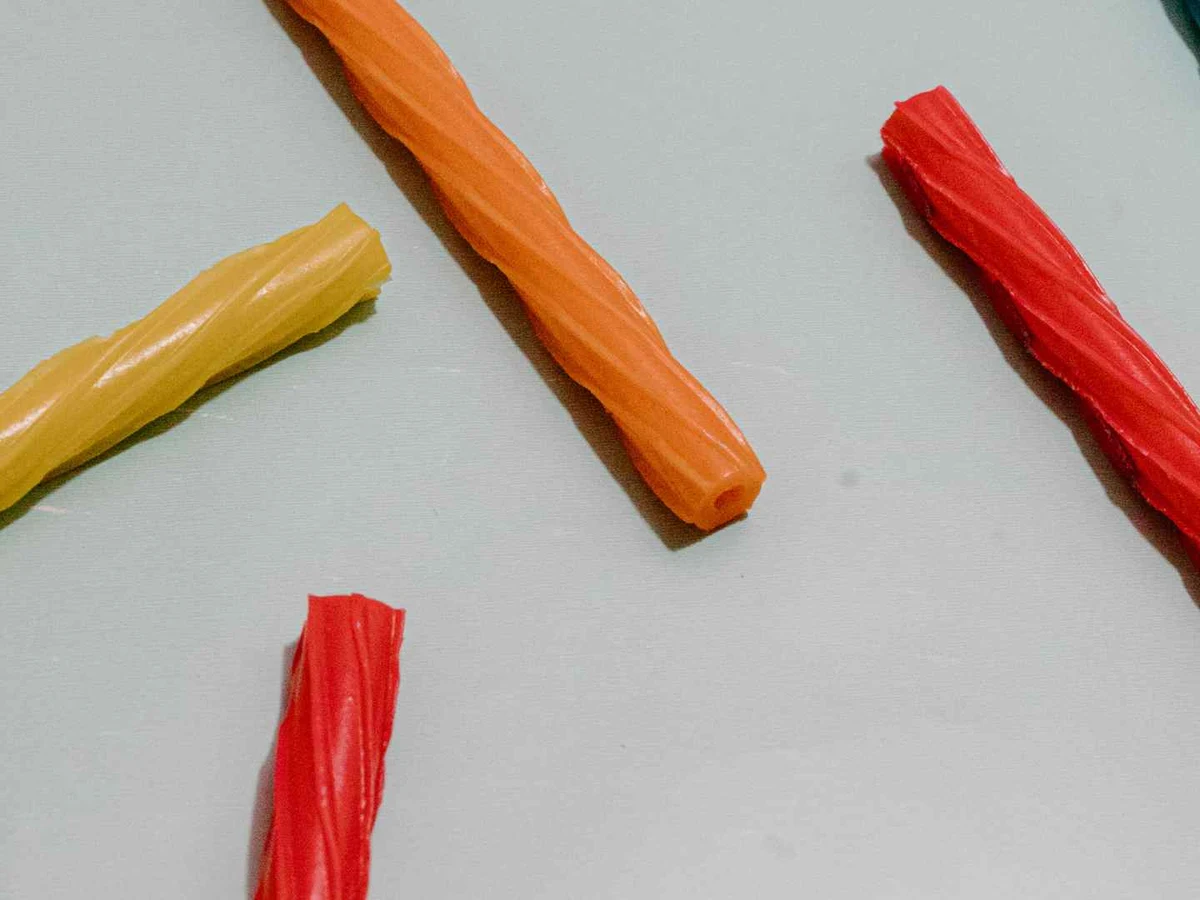
Thin strands tangle around teeth and can be swallowed as a long string. Never pull a strand protruding from the mouth or anus because it may be anchored internally.
The Merck Veterinary Manual warns against pulling linear foreign bodies. Cats are particularly prone to string-type obstruction.
Count strands and call when any substantial length is missing. Repeated vomiting, appetite loss, abdominal pain, lethargy, or straining may develop later.
Wheat, corn syrup, and texture ingredients
Many versions use wheat flour, corn syrup, sugar, starches, oils, acids, flavor, and color. None makes the candy balanced feline food.
A cat in a food-allergy elimination trial must avoid candy because even a small unapproved protein or flavor can invalidate the trial. Gluten-free labeling serves a human purpose.
The cat corn guide covers corn forms, while candy syrup is assessed as part of a processed recipe rather than a kernel.

Chocolate-flavored candy needs separate triage
Twizzlers has sold chocolate-flavored products, and assortments or lookalike candies may contain cocoa. Chocolate risk depends on cocoa content, product amount, and cat size.
The cat chocolate guide helps organize methylxanthine concerns. Save the wrapper rather than judging brown color.
Agitation, rapid heart rate, repeated vomiting, tremors, seizures, or collapse after chocolate needs urgent care. Adding a meal will not reliably dilute chocolate and may complicate urgent treatment, so follow professional directions instead.
Sour, filled, and flavored varieties
Sour candy adds food acids and surface powder that may irritate the mouth, eyes, or stomach. Filled twists add a soft center with its own sweeteners and flavors.
Watermelon, cherry, orange, grape-flavored, and mystery flavors are not equivalent to eating those fruits. Flavor names rarely indicate meaningful fruit content.
Move a coughing cat away from sour dust without sweeping it upward. Eye pain, squinting, or breathing change deserves prompt advice.
Red color is not the medical issue
Food colors can trigger dramatic online claims, but label identity, quantity, symptoms, and physical form are more useful. Do not invent feline toxicity from the appearance of one twist.
An individual cat can have an adverse reaction to a food ingredient, yet vomiting after mixed candy does not diagnose a dye allergy. Veterinary evaluation determines likely causes.
If a reaction includes facial swelling, hives, or breathing difficulty, seek urgent help regardless of which ingredient is suspected.
Wrappers smell like candy
Soft plastic, tear strips, cardboard, and display-box film retain sweet and oily scents. Cats may bat a wrapper before swallowing part of it.
FDA’s pet-hazard guidance identifies food bags as risks. Count the packaging and call whenever a piece is unaccounted for.
Do not wait for plastic to appear in stool. Vomiting, food refusal, lethargy, pain, or reduced stool after a missing wrapper needs assessment.
Halloween bowls mix hazards
A communal bowl can include chocolate, xylitol gum, raisins, hard candy, cannabis edibles, medication-like mints, lollipop sticks, foil, and glow products. Identify every missing item.
The cat gummy-bear guide covers sticky candy, vitamins, cannabis, and wrappers. Twizzlers labels cannot answer for the neighboring sweets.
Photograph the bowl before sorting it and preserve brand packages. Do not let several cats share the scene while you estimate.
Dental disease and mouth cleanup
Sticky candy clings around fractured teeth and inflamed gums, but brushing a distressed cat’s mouth can cause pain or bites. Do not use human toothpaste because it may contain inappropriate ingredients.
Call for persistent drooling, mouth bleeding, jaw chattering, facial swelling, bad odor, or refusal to chew. A veterinary oral examination may be needed.
Routine feline dental care comes from professional assessment and cat-appropriate home care, not crunchy or sticky human treats.
Kittens, diabetes, and gastrointestinal disease
Kittens can choke on smaller pieces and dehydrate quickly after digestive upset. Cats with diabetes, obesity, inflammatory bowel disease, or food allergy should receive no candy experiments.
Do not hide medicine inside a twist because the dose may remain stuck in the candy or be spat out. Some drugs must not be crushed or taken with food.
Appetite loss after candy is not cured by a sweeter food. Cats that stop eating deserve timely care.
Watching after a tiny conventional crumb
For a healthy adult that ate one tiny piece from a verified non-chocolate conventional product with all packaging present, continue normal food and water while watching vomiting, diarrhea, coughing, appetite, energy, and stool.
Call if signs appear, more candy is missing, or the label reveals an unfamiliar sweetener. Keep the bag and note the product size.
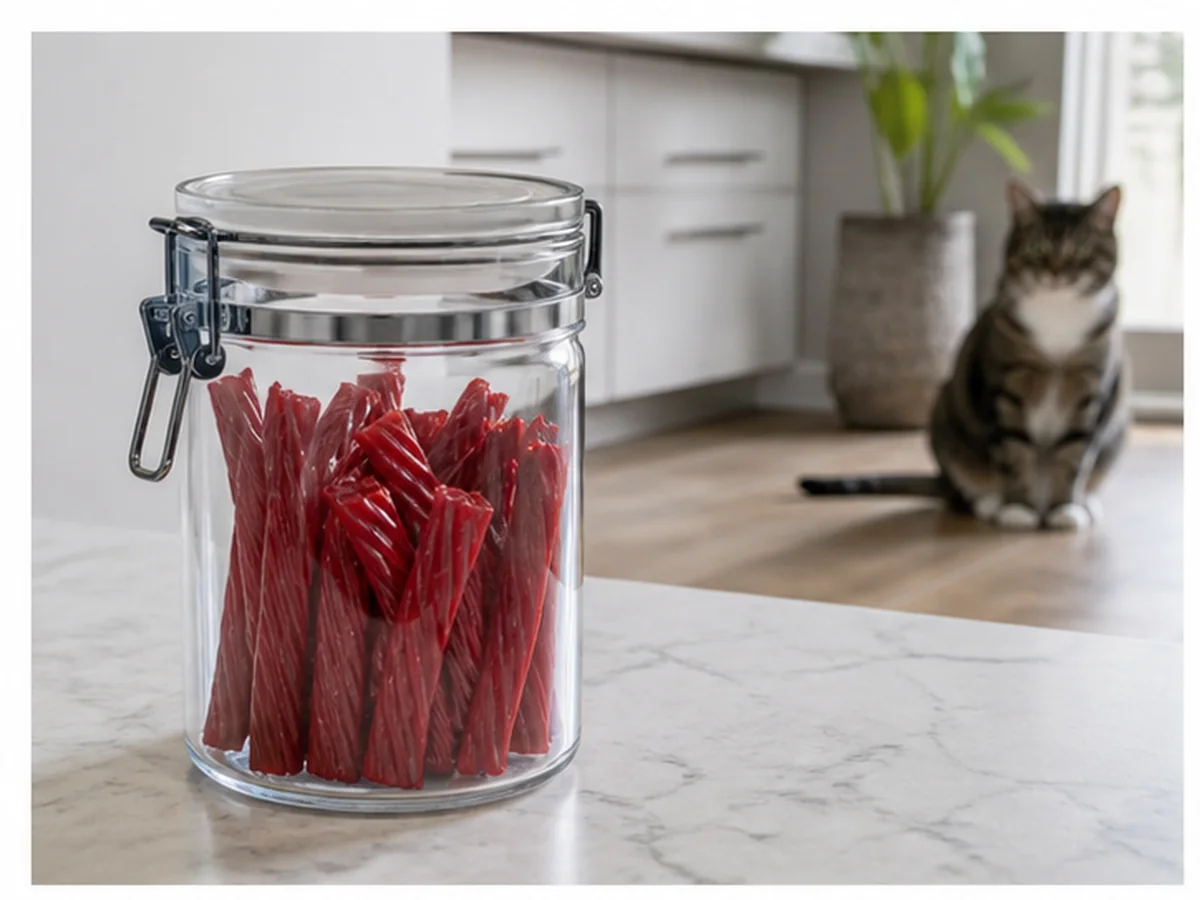
Store candy in a rigid closed container, not an open bowl. A cat may not taste sweetness like a person, but dangling red string is excellent contraband.
Warm cars and melted candy
Twizzlers left in a warm car or sunny window can soften into a single sticky mass that adheres to upholstery, paws, and fur. Melted size is harder to estimate than intact twists.
Prevent grooming and call for cleaning advice when a large patch coats the cat. Do not use solvents, essential oils, or adhesive removers on skin.
Count the candy by package weight and remaining pieces when possible. Photograph the spill before cleanup so the amount is not lost.
Lookalike licorice candy
Black licorice candies from other brands may contain licorice extract, anise flavor, salt, ammonium chloride, or different sweeteners. Twizzlers advice cannot be copied to every rope-shaped candy.
True licorice root can affect electrolytes and blood pressure in people at meaningful exposures, while feline dose evidence is limited. Call with the exact label instead of inventing a threshold.
Salty licorice and imported candy may use unfamiliar ingredient names. Photograph all panels and the country label for review.
Candy used in crafts can be attached with glue, wire, toothpicks, paint, glitter, or frosting. A missing decoration should be treated as a mixed foreign-object exposure, not ordinary snack theft.
Photograph the project and gather product labels without handling sharp debris bare-handed. Call promptly for wire, picks, glue, or unknown craft coatings.
FAQ
Are regular Twizzlers toxic to cats?
A tiny conventional crumb is unlikely to cause acute poisoning, but sticky texture, excess sugar, chocolate varieties, and wrappers make the candy unsuitable.
Do Twizzlers contain xylitol?
Recipes vary, so check the current label. Standard products generally use sugar and corn syrup, but specialty or imported candy must be verified.
Is xylitol poisonous to cats like dogs?
Severe canine toxicity is established, while comparable feline toxicity has not been demonstrated; do not transfer dog doses, and call about unknown products.
What if my cat swallowed a whole twist?
Call promptly because a rope can choke, lodge, or behave like a long foreign object, especially with gagging, vomiting, or appetite loss.
Bottom line
Twizzlers are an avoidable mix of sticky shape, unnecessary sugar, product variation, and enticing wrappers. Keep the feline xylitol boundary accurate, check chocolate and specialty labels, and prioritize choking or missing packaging over candy folklore.