Can Cats Eat Chicken Nuggets? Labels, Sauces, Bones, and Packaging
One small bite of a fully cooked chicken nugget is unlikely to poison a healthy adult cat, but nuggets are salty, fatty, breaded products rather than plain chicken. Check the exact brand, seasoning, doneness, sauce, possible bones, amount eaten, and missing packaging before deciding that the chicken settles the question.
What to do while the nugget is still warm
Remove the food, sauces, box, liner, and wrappers, then estimate how much disappeared. For one small bite from a confirmed fully cooked, bone-free nugget with no hazardous seasoning, offer water and monitor at home.
Call a veterinarian promptly for onion or garlic, raw or undercooked poultry, a large amount, a bone or skewer, unknown homemade ingredients, missing foil or plastic, or a cat who vomits repeatedly, seems painful, becomes weak, or stops eating. Breathing difficulty, choking, collapse, or severe lethargy needs emergency care.
Do not induce vomiting or give oil, milk, salt, bread, or human stomach medication. Bring the package, receipt, restaurant name, sauce label, possible amount, time, and your cat’s medical history to the call.
A nugget is a recipe, not a piece of chicken
Commercial nuggets may combine chopped chicken, skin, fat, water, starch, flour, oil, salt, phosphate ingredients, flavorings, and leavening. Breading adds another layer of ingredients, and frying changes the calorie and fat load.
Chicken itself can fit a feline diet when appropriately prepared, but muscle meat alone is not complete nutrition and a nugget is even farther from that target. Cats require a controlled balance of protein, amino acids, fats, vitamins, and minerals rather than whichever part of lunch resembles prey.
The Cornell Feline Health Center recommends complete and balanced cat food and limiting extras. A measured feline treat provides the shared-snack ceremony without the breading, salt, and product detective work.
Brand and flavor change the ingredient list
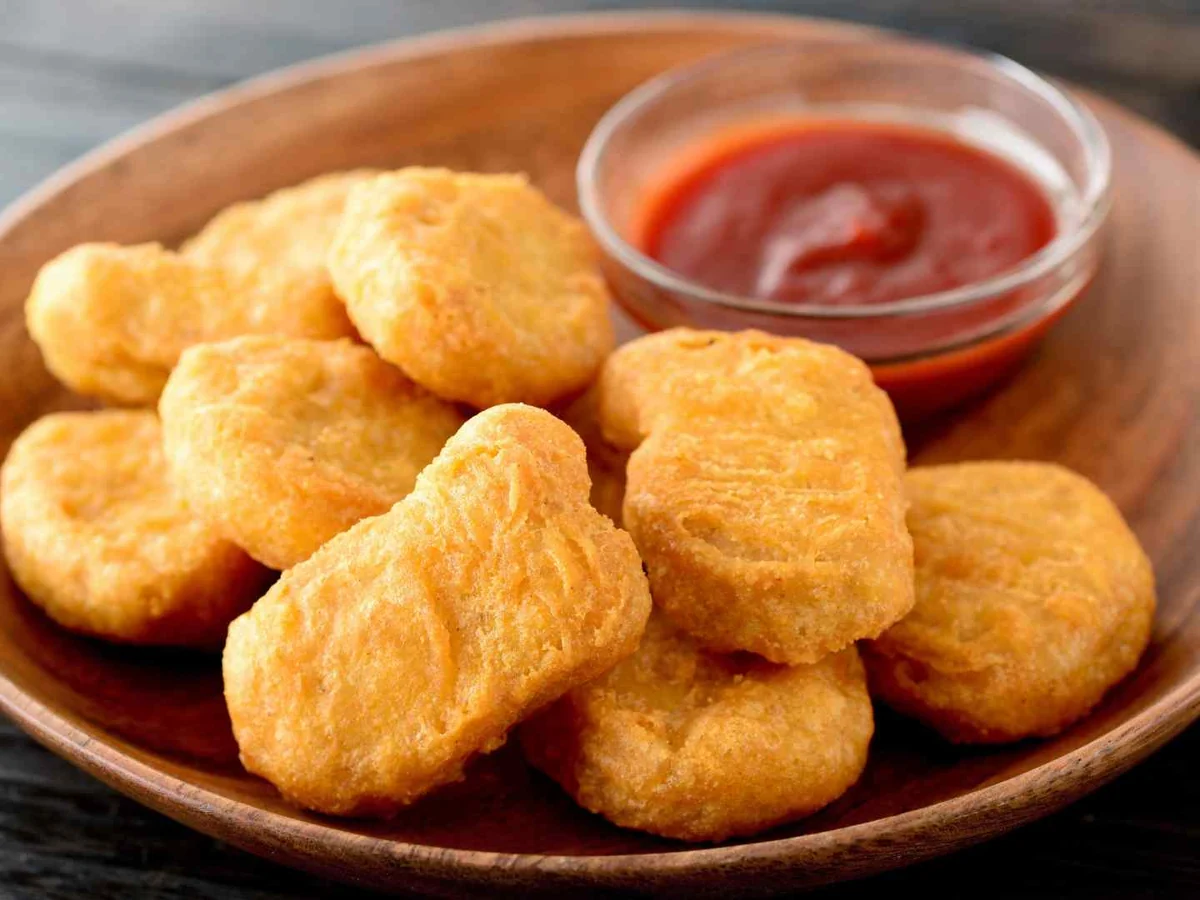
Fast-food, frozen, organic, gluten-free, spicy, barbecue, cheese-filled, and children’s nuggets are not one formula. Even two flavors from the same manufacturer can differ in allium seasoning, sodium, dairy, sweeteners, and cooking status.
Read every parenthetical ingredient in spice blends and natural flavors where details are disclosed, plus the allergen statement and cooking directions. Save the lot information if illness develops because a product recall or handling issue may matter.
The site’s chicken nugget product overview helps organize brands, sauces, fat, and package hazards. It is useful for identifying the food, but dog portions and toxicity assumptions are not feline instructions.
Onion and garlic deserve their own check
Garlic powder, onion powder, or a mixed seasoning may appear in breading, meat flavor, dipping sauce, or a restaurant’s finishing salt. Cats are particularly vulnerable to allium-related red blood cell damage, and cooking does not make alliums harmless.
The ASPCA’s people-food guidance associates onion, garlic, and chives with gastrointestinal irritation and red blood cell injury. Call about a meaningful exposure before waiting for pale gums, weakness, rapid breathing, high heart rate, or dark urine.
One nugget containing seasoning does not guarantee poisoning, but the concentration and amount are rarely obvious from the crust. A poison specialist can interpret the product and cat together more reliably than a homemade teaspoon calculation.
Frozen nuggets may be raw, partially cooked, or ready to eat
A browned coating can make a frozen product look cooked even when the label requires full heating. Check phrases such as raw, uncooked, ready to cook, or fully cooked instead of judging the center by color.
The USDA chicken safety resource recommends cooking poultry to 165 degrees Fahrenheit and explains that color alone cannot establish safety. Raw poultry can carry Salmonella, Campylobacter, and other pathogens and can contaminate paws, counters, bowls, and utensils.
If your cat ate a raw frozen nugget, call for advice and clean contacted surfaces without letting the cat lick disinfectants. Monitor for vomiting, diarrhea, feverish behavior, lethargy, and appetite change while remembering that some infected animals can shed organisms.
Do not microwave one nugget solely for the cat because uneven heating can leave cold areas and painfully hot pockets. If sharing plain chicken, prepare an unseasoned piece separately and verify doneness with proper food-handling methods.
Fat, frying oil, and repeat portions
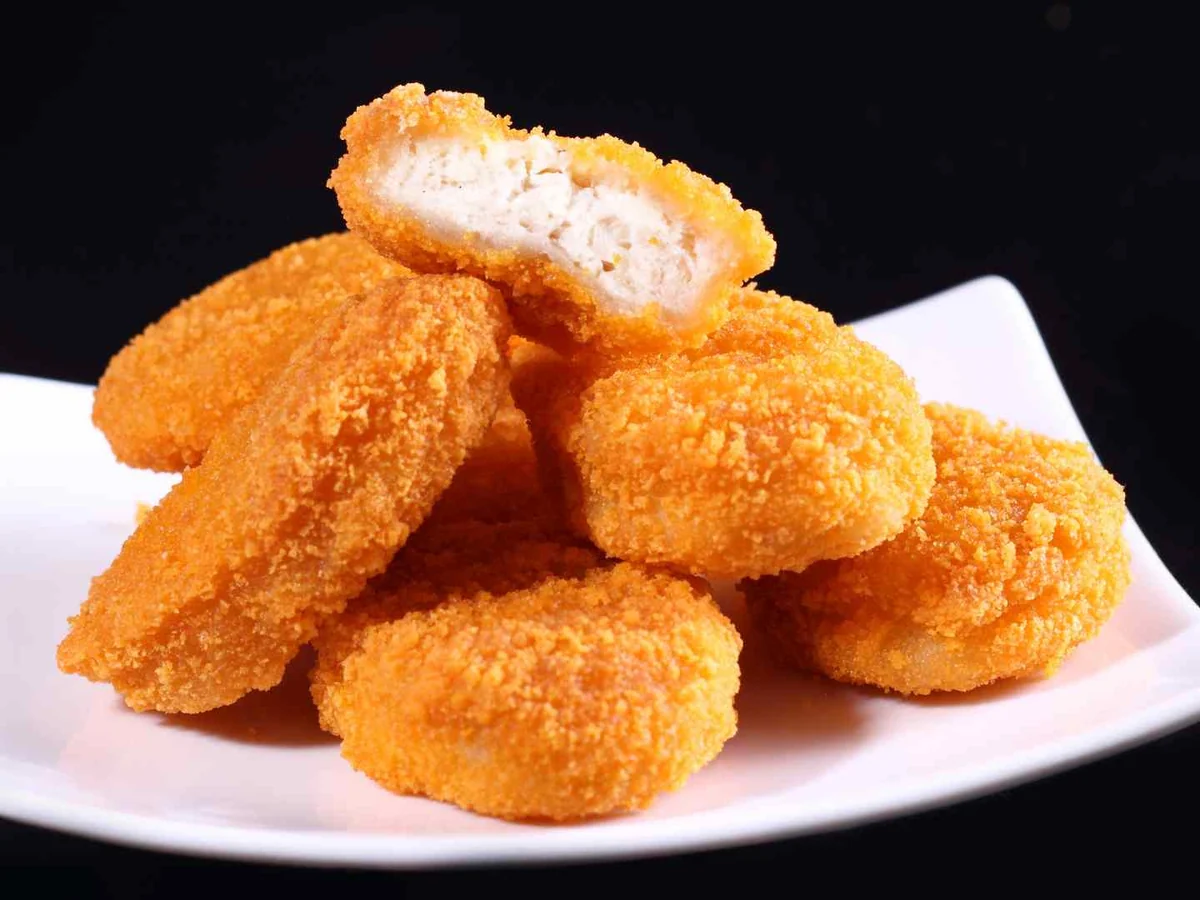
Frying adds fat to both breading and meat, and a cat can consume several human-sized bites before the box looks noticeably emptier. A rich-food raid may cause vomiting, diarrhea, abdominal discomfort, or appetite loss.
Cats with previous pancreatitis, chronic bowel disease, obesity, or a therapeutic diet deserve a lower threshold for calling. The butter and cats guide offers context for rich-food exposures without pretending butter and fryer oil are chemically identical.
Air-fried nuggets are not automatically lean or plain because many frozen products contain oil before they enter the appliance. Baking changes the cooking method, not the sodium and seasoning already inside.
Repeated bites also add calories that are easy to forget because they are handed over during human meals. Weight control works only when every household member counts the extras, including the corner that fell off each nugget.
Salt matters most in context
Nuggets and sauces can be sodium-heavy, but one small bite does not usually create salt poisoning. Concern rises with numerous nuggets, concentrated seasoning, very salty sauce, restricted water, or a cat with heart, kidney, or blood-pressure disease.
Do not force excessive water after a salty theft. Keep fresh water accessible and call for vomiting, marked thirst, weakness, tremors, seizures, disorientation, or a large amount.
Processed meat comparisons can help explain why salt and seasoning accumulate quickly. The salami guide for cats covers sodium, alliums, and casing risks in a different but similarly label-dependent food.
Dipping sauce can outrank the nugget
Barbecue, honey mustard, ranch, buffalo, sweet-and-sour, teriyaki, curry, and garlic sauces can add alliums, salt, sugar, chili, dairy, alcohol flavoring, or alternative sweeteners. Identify the sauce separately and estimate whether the cat licked residue or emptied a cup.
A tiny lick of a confirmed allium-free ordinary sauce is often a monitoring event, but severe drooling, mouth pawing, vomiting, weakness, or breathing changes needs care. Never assume honey in the name means the remainder is simple.
Sauces and nugget toppings can overlap with pizza ingredients, particularly cheese, garlic, and cured meat. Our cat pizza article provides a practical way to separate those components.
Bones, cartilage, skewers, and hard fragments
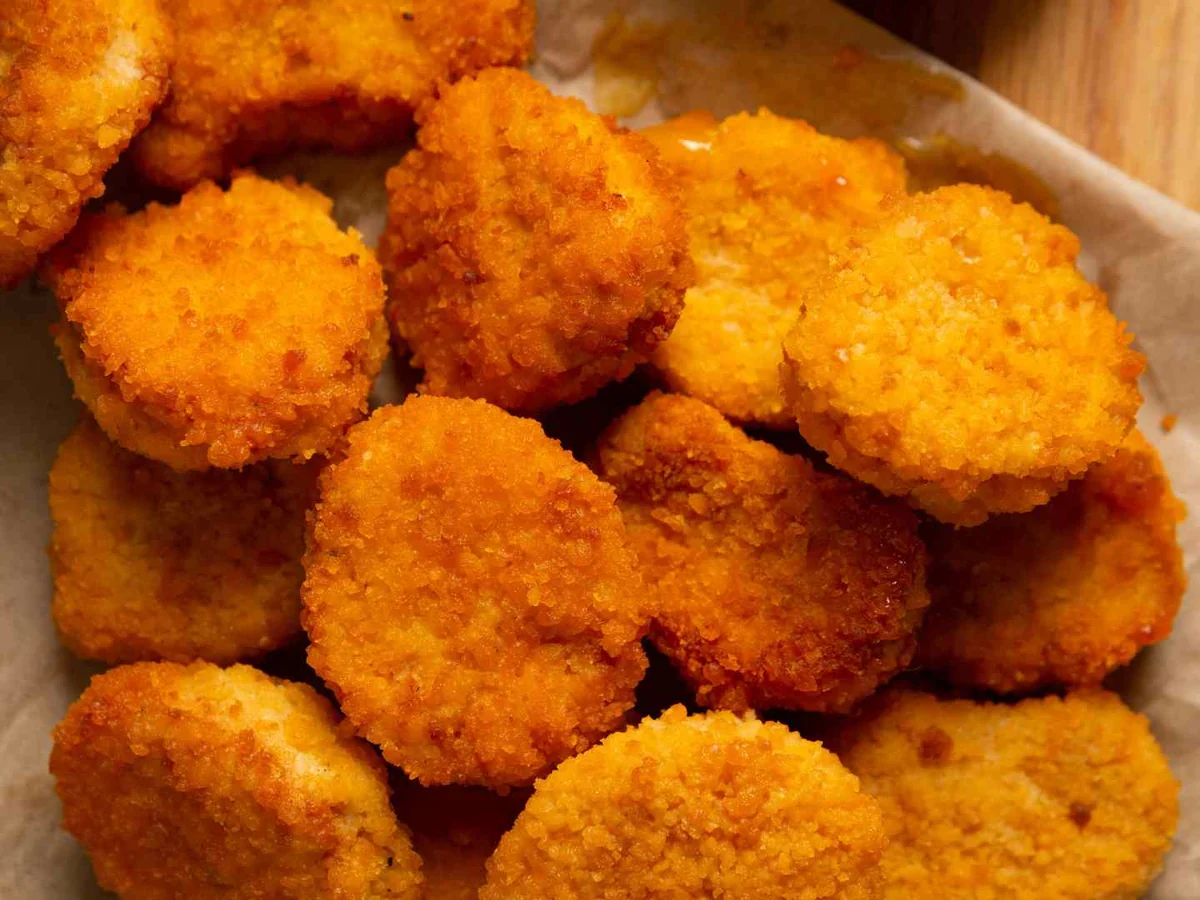
Standard formed nuggets are marketed as boneless, but homemade chunks, restaurant products, and poorly processed meat can contain bone or hard cartilage. A cooked bone fragment may splinter, lodge, or injure the mouth and digestive tract.
Call if a hard shard was chewed or swallowed, and do not feed bread to cushion it. Coughing, repeated swallowing, gagging, drooling, blood, vomiting, abdominal pain, or refusal to eat needs urgent assessment.
Novelty nugget skewers and appetizer picks are medical emergencies when missing because pointed wood can perforate tissue. Count every pick before cleanup rather than waiting for symptoms.
Plant-based nuggets are not a feline protein solution
Meatless nuggets may contain soy, pea protein, wheat gluten, oils, salt, yeast extract, onion, garlic, gums, and flavor blends. Their chicken-like shape says nothing about suitability for an obligate carnivore.
A small accidental bite may be low risk after a clean label review, but a large amount can cause stomach upset and package-specific concerns. Do not use plant nuggets to replace complete cat food or manage a suspected meat allergy without veterinary nutrition guidance.
The box and sauce cup are not harmless accessories
Greasy paperboard, plastic film, foil-lined wrappers, sauce lids, absorbent pads, and packet corners can be swallowed while a cat pursues the scent. The FDA warns that food packaging and foreign objects can endanger pets.
Move leftovers into closed storage and put trash behind a latched door or rigid lid. A folded box on the counter is not secure storage when it smells like an entire poultry festival.
Call after packaging ingestion or for persistent vomiting, loss of appetite, lethargy, straining, or a painful belly. Do not pull plastic or string protruding from the mouth or anus.
Better chicken sharing
If you want to offer chicken, cook a small boneless piece without skin, breading, oil, salt, sauce, onion, or garlic and let it cool. Keep the amount within the cat’s treat allowance and do not rely on plain muscle meat as a complete diet.
A commercial cat treat or part of the regular ration is even simpler. The reward comes from the attention and timing, not from preserving the exact geometry of a drive-through nugget.
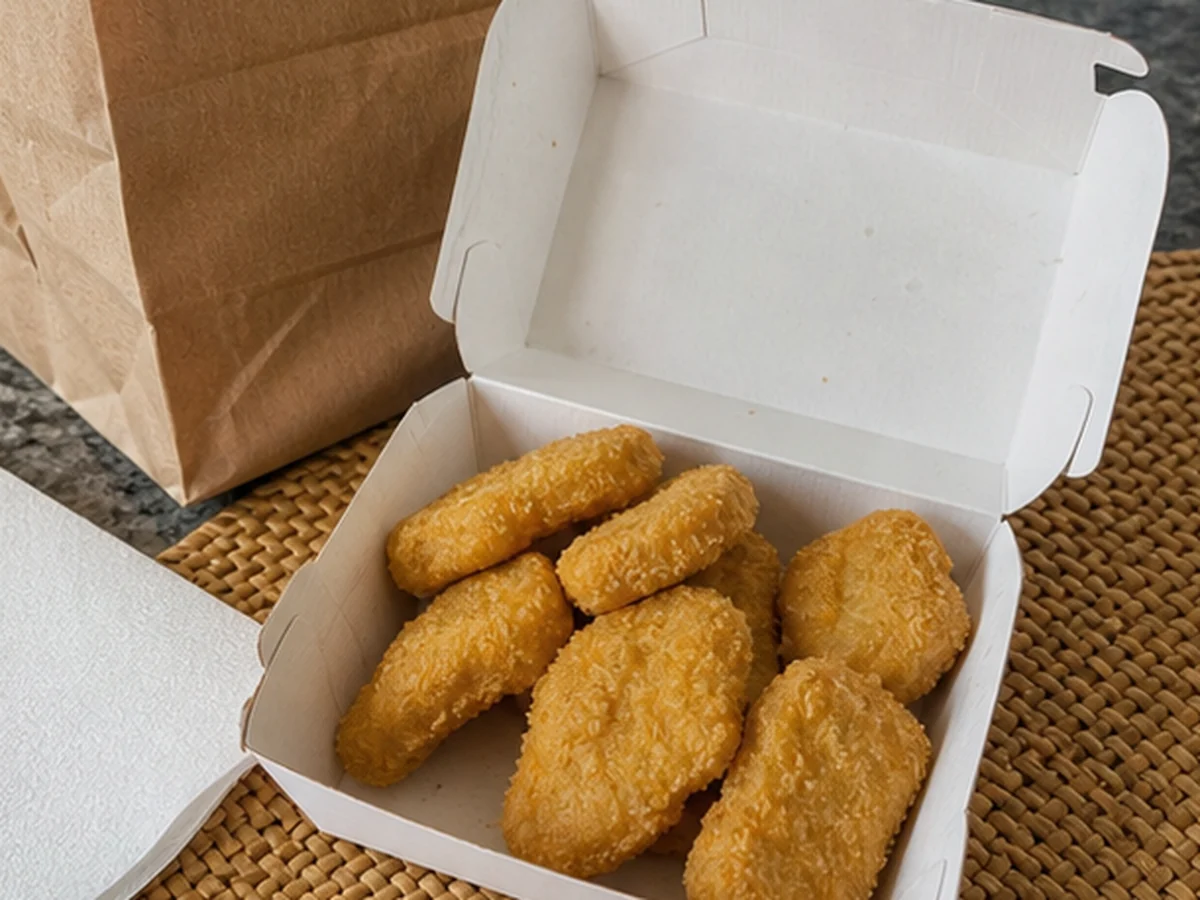
Delivery and takeout details worth saving
Keep the receipt or order screen because it identifies restaurant, flavor, sauce, customization, and time more accurately than memory. If several people ordered similar boxes, compare remaining pieces before assigning the cat the largest possible portion.
Delivery bags may contain condiment packets, napkins, staples, stickers, tamper seals, and disposable cutlery that smell like food. Move the entire order off the floor and account for these items before throwing anything away.
Nuggets left at room temperature for an unsafe period should be discarded, not reheated for the cat. USDA advises refrigerating cooked chicken promptly and using refrigerated leftovers within the recommended storage window.
FAQ
Can a cat eat one chicken nugget?
A whole nugget is more fat, salt, breading, and seasoning than a cat needs. One small fully cooked, bone-free bite is usually low risk after checking the label.
What if my cat ate a frozen chicken nugget?
Check whether the product was fully cooked or raw and call about raw poultry exposure. Also report the amount, temperature, seasoning, wrapper, and any gastrointestinal signs.
Are chicken nugget sauces safe for cats?
Do not offer them because formulas can contain onion, garlic, salt, fat, chili, dairy, or sweetener blends. A tiny accidental lick requires label checking rather than automatic panic.
Can kittens eat chicken nuggets?
Skip nuggets because kittens need balanced growth food and have small calorie budgets. Their size also makes hard pieces, bones, and wrappers relatively more dangerous.
Bottom line
A stolen nugget crumb is usually a label check and monitoring job, not a catastrophe. Raw poultry, alliums, bones, sauces, quantity, and packaging are the details that can turn familiar chicken into a veterinary call.