Can Cats Eat Cool Whip? Labels, Dairy, Sweeteners, and Mix-Ins
Cool Whip is not a useful treat for cats. One small lick of a standard thawed variety may cause no illness, but recipes change, dairy-sensitive cats can develop digestive upset, and sugar-free formulas, chocolate desserts, rich mix-ins, frozen spoonfuls, and chewed tubs require label-by-label attention.
Start with the lid, not a memory of the brand
Cool Whip is sold in multiple varieties, package sizes, and markets, while limited editions and reformulations can alter ingredients. Original, Extra Creamy, Lite, Sugar Free, reduced-fat, seasonal, and flavored toppings should never be treated as one permanent recipe.
Read the container currently in front of you and photograph its ingredient panel, nutrition facts, best-by date, lot code, and exact product name. An ingredient list remembered from childhood cannot assess the tub your cat opened today.
| Version or use | Main question | Practical cat answer |
|---|---|---|
| Standard thawed topping | How much and how did the cat respond? | A tiny lick is often low risk but not worth serving. |
| Sugar Free variety | Which sweeteners are on this exact label? | Identify every sweetener before offering reassurance. |
| Extra Creamy or rich recipe | What are the fat and dairy ingredients? | More richness can mean more digestive trouble. |
| Frozen spoonful | How hard and large is the piece? | Cold dense lumps may be swallowed badly. |
| Dessert topping | What was under or mixed into it? | Chocolate, coffee, alcohol, nuts, raisins, and dough can dominate risk. |
| Licked container | Was plastic, foil, or lid material swallowed? | Packaging can choke or obstruct. |
A whipped topping and whipped cream are not identical
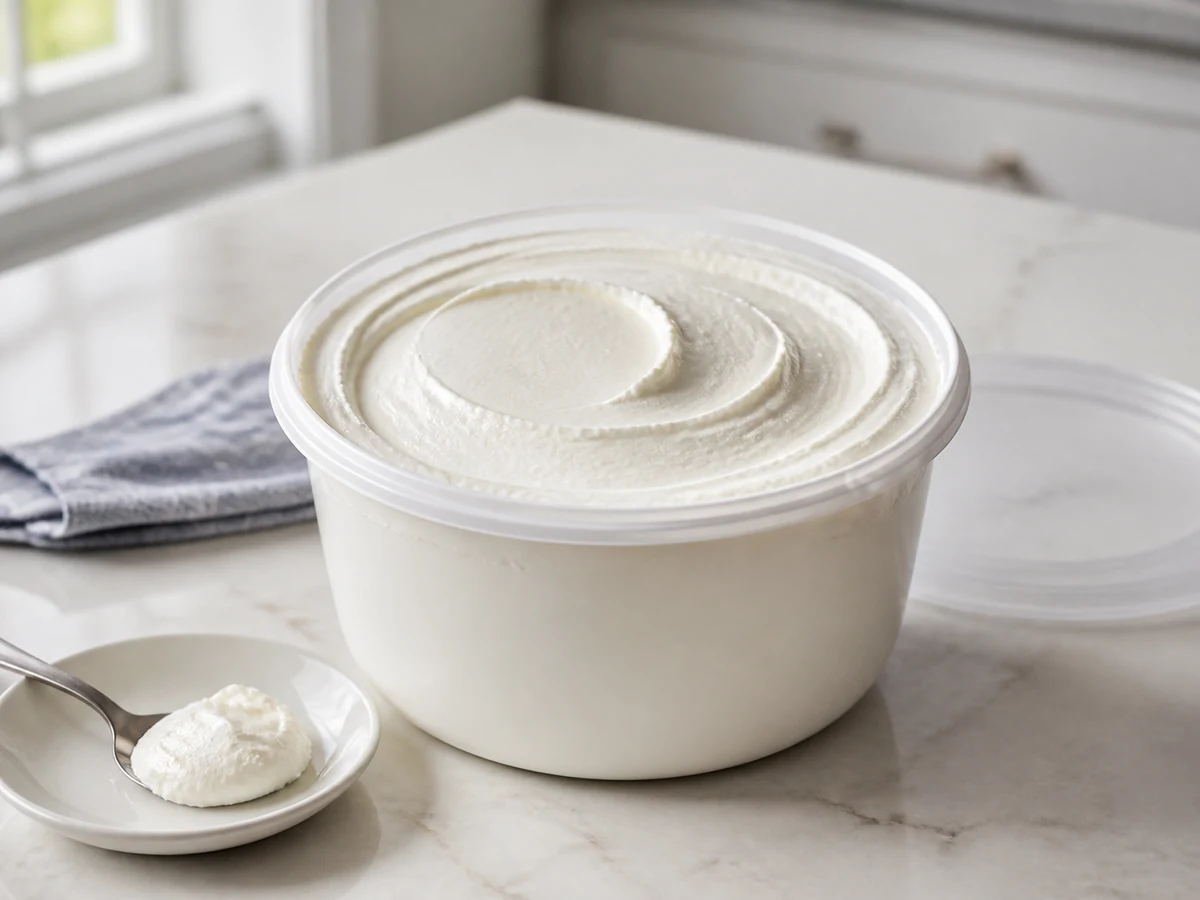
Traditional whipped cream is cream aerated into a foam, often with sugar and vanilla. Frozen whipped topping is a formulated product that may combine water, sweeteners, fats, milk-derived ingredients, stabilizers, emulsifiers, and flavoring according to the variety.
Neither category is designed to meet feline nutritional needs. The cat whipped-cream guide handles fresh, canned, homemade, and plant-based whipped products, while this page concentrates on the labeled frozen topping in a tub.
A product may contain a milk-derived ingredient without behaving like a bowl of milk, yet a sensitive cat can still react. Use the actual formula and observed response instead of announcing that all whipped topping is either dairy-free or pure cream.
Dairy tolerance is individual
Many adult cats have reduced lactase activity and do not digest substantial lactose comfortably. The ASPCA explains that milk and dairy can cause diarrhea or other digestive upset in pets with inadequate lactase.
A small lick may be tolerated while a larger amount produces gas, soft stool, diarrhea, vomiting, nausea, or appetite reduction. The response depends on the product, portion, cat, and other dessert ingredients.
Do not use one symptom-free lick to establish a regular serving. Tolerance only means the cat avoided obvious trouble that time, not that the topping supplied anything the diet was missing.
Yogurt contains different cultures, sugar levels, flavorings, and lactose characteristics. Our yogurt guide for cats is the right comparison when the white spoonful came from a cultured container rather than a frozen topping tub.
Sugar adds calories, not feline benefit
Cats do not need sweetened dessert topping, and habitual licks can occupy a surprising share of a small animal’s treat allowance. The airy texture creates a visual trick because a fluffy spoonful can still represent a meaningful extra when offered often.
A cat’s limited ability to perceive sweetness does not prevent interest in fat, aroma, texture, temperature, or attention. Begging shows that the ritual is rewarding, not that sugar serves a feline purpose.
Cats with diabetes require a veterinarian-directed diet, medication plan, and response strategy. Never use Cool Whip to treat suspected low blood sugar unless the clinician managing that cat gives precise instructions for the situation.
Honey may appear in a dessert beneath the topping rather than the topping itself. The feline honey guide explains why natural-sounding sugar does not make a parfait or pie cat-appropriate.
Sugar Free requires exact sweetener identification
A sugar-free front label does not disclose which sweeteners are used, and formulas may differ by date or country. Check for sugar alcohols, high-intensity sweeteners, and proprietary blends rather than assuming one familiar recipe.
Xylitol can cause severe hypoglycemia and liver injury in dogs, but those well-established canine dose claims cannot be transferred to cats. Feline sensitivity has not been established in the same way.
The FDA’s xylitol warning is specifically written around dogs. If a cat ate a xylitol-containing or uncertain sugar-free product, save the label and call for feline-specific advice instead of applying a dog calculator or declaring guaranteed safety.
Do not preemptively give honey or corn syrup because a canine article mentions falling glucose. Home treatment can complicate diabetes, delay appropriate care, or enter the airway when forced.
Fat and rich desserts can upset the stomach
Whipped toppings obtain texture partly from fat, although the type and amount depend on the product. A large serving can cause nausea, loose stool, vomiting, or abdominal discomfort in a cat unused to rich food.
A previous pancreatitis diagnosis, chronic gastrointestinal disease, obesity, or a fat-restricted plan calls for stricter boundaries. It remains inaccurate to claim that any single lick inevitably causes pancreatitis.
Buttercream, cheesecake filling, pudding, and icebox pie below the topping may contribute much more fat than the garnish. The butter guide for cats can help inventory a rich dessert while the full recipe still drives triage.
The dessert underneath may be the actual emergency
Chocolate pie, cocoa pudding, mocha drinks, tiramisu, rum cake, fruitcake, and cannabis edibles can all wear an innocent-looking white cap. When a cat licks the topping, determine whether the tongue also reached the layer below.
Chocolate and coffee contain methylxanthines that can affect the heart and nervous system. Vomiting, marked restlessness, rapid or irregular heartbeat, tremors, seizures, or collapse after a cocoa or caffeine dessert needs urgent veterinary attention.
Our cat chocolate guide organizes cocoa type and amount. Bring the recipe or package because white topping cannot tell a clinician whether the base used cocoa powder, dark chocolate, or merely chocolate flavor.
Alcohol may remain in no-bake desserts and sauces, while raisins, macadamia nuts, raw dough, and concentrated flavor oils add separate questions. Do not stop the ingredient inventory after identifying Cool Whip.
Vanilla flavor is a formulation question
Vanilla-flavored foods may use extract, natural flavor, artificial flavor, or vanilla bean. A trace flavor in a manufactured topping is not equivalent to drinking alcohol-containing vanilla extract from the bottle.
Direct access to a flavoring bottle deserves a prompt call with concentration and amount because alcohol and concentrated ingredients can matter. Keep extracts, essential oils, and bakery concentrates in a closed cabinet during dessert preparation.
Frozen texture changes how a cat swallows it
A thawed smear is soft, but a scoop straight from the freezer can be dense and hard. Cats that bolt food may gulp a cold lump, cough, gag, or experience pain against a sensitive tooth.
Letting the topping soften does not make it nutritionally useful, so the simplest solution is not to serve it. If a frozen piece was swallowed and the cat repeatedly swallows, drools, regurgitates, or appears distressed, call promptly.
Breathing difficulty, blue-gray gums, collapse, or inability to move air is an emergency. Do not pour liquid into the mouth to melt a suspected obstruction.
Tubs, foil seals, lids, and spoons
A mostly empty tub can attract a cat’s head and paws because residue remains along the sides. Plastic edges may be chewed, and a foil freshness seal can crumple into a small shiny foreign object.
Check whether the lid, tamper ring, film, label, foil, spoon, or silicone spatula has bite damage. Packaging swallowed with topping can create a choking or intestinal-obstruction risk independent of the ingredients.
Repeated vomiting, appetite loss, belly pain, reduced stool, straining, hiding, or marked lethargy after plastic disappears requires veterinary assessment. Never pull protruding strip material from the mouth or rectum.
Rinse tubs before recycling and place them directly into a secured bin. An open container on the counter teaches a surprisingly persistent kitchen lesson even when the first raid causes no symptoms.
Storage and spoilage
Follow the package directions for freezing, thawing, refrigeration, and use after opening. Do not refreeze or serve a product that sat out for an unknown period merely to avoid waste.
Discard topping with an odd odor, discoloration, mold, a damaged seal, or uncertain storage history. A cat’s willingness to lick spoiled dairy-style food is not evidence that it is safe.
A response plan for the missing dollop
- Identify the exact variety: save the tub and record ingredients, sweeteners, nutrition label, lot code, date, and amount missing.
- Rebuild the dessert: list chocolate, coffee, alcohol, raisins, nuts, raw batter, cannabis, spices, fruit pits, and decorations within reach.
- Inspect packaging: account for the foil seal, lid, tub fragments, plastic film, spoon, toothpick, and any ribbon or pastry pick.
- Call promptly: seek advice for uncertain sugar-free products, a large amount, risky mix-ins, swallowed material, or a medically fragile cat.
- Use emergency care: breathing trouble, facial swelling, collapse, tremors, seizures, repeated retching, or severe weakness cannot wait.
For one tiny lick of a standard thawed topping from a clean spoon, a healthy cat with no symptoms may only need label review and observation. Continue normal cat food and water without using another human food to counteract the first.
What to offer instead
A few pieces from the measured daily kibble allowance or a teaspoon of the usual wet food can preserve the shared-dessert ritual. Put the feline reward on a separate saucer before human plates appear.
The FDA explains the nutritional adequacy statement on complete and balanced pet food. Cool Whip carries no feline adequacy claim, regardless of whether its ingredient list sounds short, dairy-light, or technically sugar-free.
Cats with prescription diets should receive only approved extras. Even a small unplanned ingredient can interfere with a food-allergy trial, calorie target, or digestive treatment plan.
Frequently asked questions
Can cats eat Original Cool Whip?
A tiny lick may be tolerated by many healthy adult cats, but it is sweetened, calorie-bearing human dessert topping rather than useful cat nutrition. Check the current label and do not make it a routine reward.
Can cats eat Sugar Free Cool Whip?
Do not answer from the product name alone because sweeteners and formulas can change. Read every ingredient and call after a meaningful or uncertain exposure, especially when xylitol appears.
Is Cool Whip lactose-free?
The answer depends on the exact variety and current formulation, and milk-derived ingredients can appear even when the product is not conventional cream. Check the tub rather than using a blanket claim.
What if my cat licked Cool Whip off chocolate pie?
Treat the chocolate layer as part of the exposure and call with the cocoa type, recipe, maximum amount, and time. Do not assume the white topping kept the cat from reaching the filling.
Bottom line
Cool Whip belongs to the human-dessert category, where labels and supporting ingredients change faster than a cat can clean a spoon. A tiny standard lick is often uneventful, but read the tub, investigate the pie beneath it, and keep foil seals and plastic firmly out of the after-party.