Can Cats Eat Grits? Plain Bowls, Toppings, and Burns
A teaspoon or less of fully cooked, plain, cooled grits is unlikely to harm most healthy adult cats, but grits are optional starch rather than useful feline nutrition. Hot bowls, butter, cheese, milk, salt, gravy, onion, garlic, bacon, large portions, dried crusts, and microwave hot spots change the answer.
Before ingredients, check temperature
| Bowl state | Main hazard | Sensible response |
|---|---|---|
| Steaming from the stove | Mouth and skin burns | Keep the cat away until fully cooled |
| Microwaved leftovers | Hidden hot spots | Stir, rest, and test the center |
| Plain cooled spoonful | Unbalanced starch and portion | At most a tiny optional taste |
| Cheese or loaded grits | Fat, sodium, dairy, seasonings | Review the complete recipe |
| Dried pot scrapings | Hard texture and cleaning residue | Do not offer |
Grits can stay dangerously hot in the center even after the surface looks calm. A cat who steps into, laps, or tips a bowl can burn the tongue, lips, chest, paws, and skin.
Flush a fresh skin burn with cool, not icy, water only if it can be done safely, and call a veterinarian promptly. Drooling, mouth pawing, refusal to eat, red tissue, blistering, or breathing difficulty after hot food needs urgent evaluation.
Plain grits are cooked corn, not a complete meal
Traditional grits are made from ground corn cooked with water or another liquid. Cooking makes the cereal soft, but it does not supply the complete amino-acid, fatty-acid, vitamin, and mineral profile cats require.
The FDA nutritional adequacy resource explains how a pet-food staple earns a complete-and-balanced claim. A breakfast bowl belongs outside that category, even when the cat approves the texture.
Water-cooked and cooled is the narrow simple version
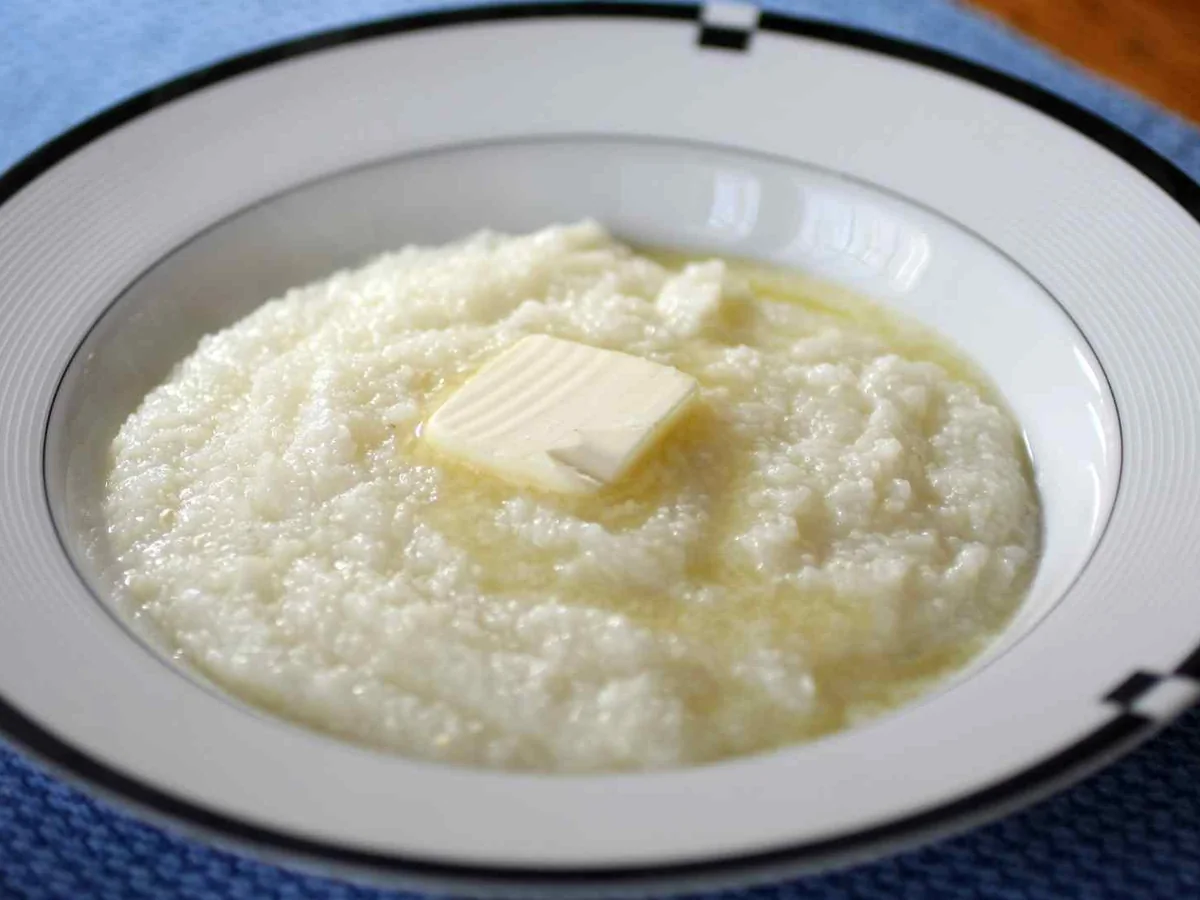
If a veterinarian has not restricted extras, a healthy adult could taste no more than a teaspoon of soft grits made only with water. Cool them completely, make sure no hard lump remains, and stop after one exposure.
Most cats gain nothing from repeating the taste, and some will vomit or develop loose stool after unfamiliar starch. The site’s corn guide covers kernels, cobs, husks, and other forms that grits do not resemble.
Milk and cream make the bowl richer
Many recipes replace some water with milk, half-and-half, cream, evaporated milk, or buttermilk. Adult cats vary in lactose tolerance, while dairy fat and calories can make a larger theft uncomfortable.
A lick of plain dairy grits may cause no sign, but there is no reason to serve more. Our ice-cream article explains lactose and rich dairy without suggesting that every dairy taste is poisoning.
Butter is a portion problem with a slippery delivery system
A melting pat can pool on top and carry salt or seasoning across the entire bowl. Large fatty servings may trigger vomiting, diarrhea, abdominal pain, or difficulty for cats with a pancreatitis history.
Do not scrape off the visible butter and assume the remaining grits are plain. The butter guide for cats adds portion and medical-diet context.
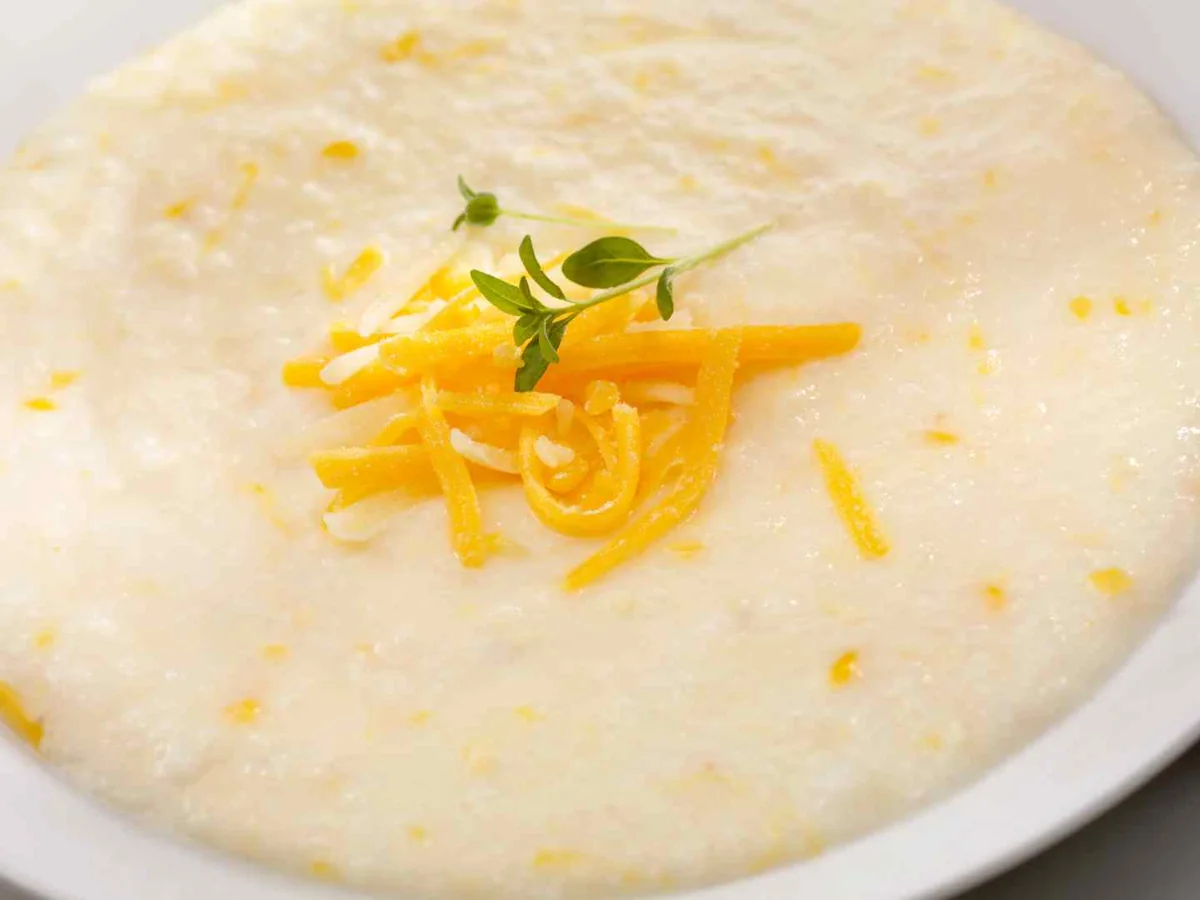
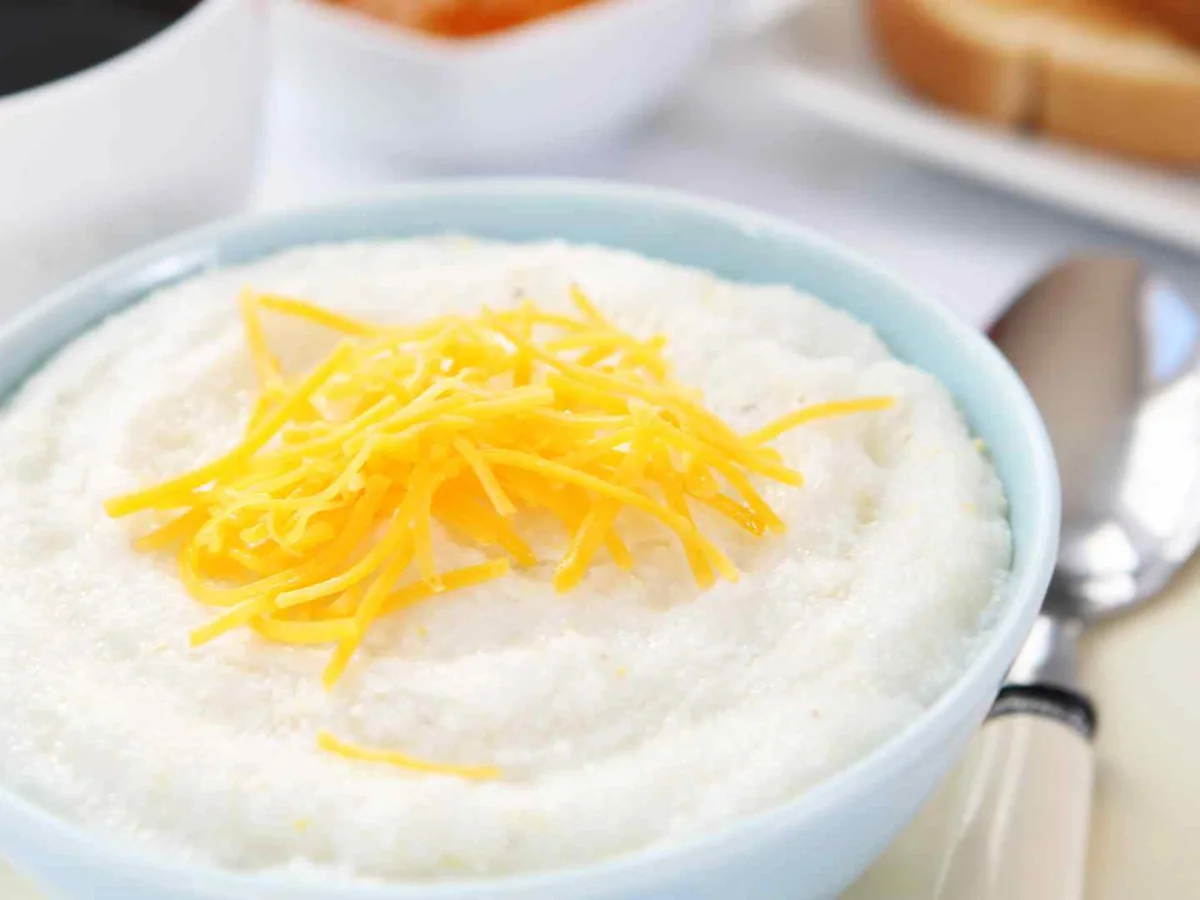
Cheese grits are a mixed dish
Cheddar, Parmesan, processed cheese, cream cheese, and cheese sauce contribute varying sodium, fat, lactose, and additives. Packaged mixes can include powdered dairy, flavorings, preservatives, and substantial salt.
Read the actual mix and every topping rather than relying on “cheesy” as a recipe. A tiny stolen lick is not the same as finishing a ramekin, but neither makes cheese grits a sensible routine treat.
Salt can come from several quiet places
Salted water, butter, cheese, bacon, sausage, ham, bouillon, and seasoning packets stack sodium in ways that plain appearance does not reveal. Cats with heart, kidney, or urinary conditions may have individualized sodium targets.
The Merck salt-toxicosis review describes thirst, vomiting, poor coordination, tremors, and seizures after excessive exposure. Keep water available without forcing it and call for a large salty ingestion or symptoms.
Savory bowls often hide Alliums
Shrimp and grits, breakfast casseroles, gravy, stock, sausage, and restaurant sides can contain onion, garlic, chives, or powdered seasonings. Cooking does not reliably eliminate their ability to damage feline red blood cells.
Save the recipe and call for Allium exposure, even if the cat looks normal initially. Our onion article covers delayed anemia and the reason home vomiting is inappropriate.
Shrimp and grits is not a seafood treat
The dish can contain shellfish, butter, bacon, sausage, garlic, onion, stock, hot sauce, cheese, and pan drippings. Shell fragments, skewers, tails, and toothpicks may remain near the serving dish.
A tiny clean cooked shrimp flake set aside before seasoning is a different food, but the finished bowl must be evaluated as a recipe. Account for shells and table debris before focusing on corn.
Instant packets deserve slower reading
Quick and instant grits can be plain or flavored with cheese, butter, bacon, jalapeño, herbs, salt, or sweetener. A single-serve packet also leaves foil-lined wrappers and torn corners that smell like the food.
Photograph both panels and note how much dry powder versus prepared cereal disappeared. Inhaling loose flavored mix adds an airway and eye-irritation question that a cooled spoonful does not.
Dry grits and cornmeal are not ready-made treats
Uncooked granules are dry, dusty, and capable of creating a gritty mouthful or irritating the airway. Do not sprinkle them onto cat food for fiber or use them to thicken a sick cat’s meal.
Move the animal away from a large spill and avoid sweeping dust toward its face. Persistent cough, wheeze, eye pain, open-mouth breathing, or collapse requires urgent veterinary care.
Grits do not treat diarrhea or appetite loss
A familiar human bland food is not automatically a feline gastrointestinal prescription. Vomiting, diarrhea, poor appetite, or straining can signal infection, parasites, inflammation, obstruction, pancreatitis, toxin exposure, or organ disease.
Contact the clinic for repeated vomiting, blood, black stool, dehydration, abdominal pain, marked lethargy, or reduced food intake. Covering symptoms with buttered cereal can delay the diagnosis while failing to provide balanced nutrition.
Leftovers need a clock and a lid
Refrigerate prepared grits promptly in a covered container and follow safe leftover guidance. The USDA leftovers guidance explains rapid chilling, refrigerated storage, and reheating for human food.
Discard sour, slimy, moldy, forgotten, or repeatedly warmed bowls. Reheating does not turn spoiled food into a suitable cat meal, and old dried edges can become hard enough to challenge teeth.
A bowl-raid checklist
- Move hot cookware, unplug warming appliances, and keep the cat off the stove.
- Identify water, milk, cream, butter, cheese, salt, meat, gravy, Alliums, and spice.
- Estimate the amount and time, then save packets and the restaurant receipt.
- Account for foil, pot scrubbers, spoon rests, skewers, shells, and broken dishes.
- Call for burns, Alliums, severe symptoms, a large salty amount, or foreign material.
After one tiny cooled plain taste, monitor normal eating, comfort, vomiting, stool, and activity. Do not force extra water or offer human stomach medicine.
Use a shallow measured dish if a taste has been approved, then pick it up immediately. Leaving the whole breakfast bowl down turns one teaspoon into a cat-managed portion, a system with famously flexible accounting.
Sweet grits deserve the same whole-bowl reading
| Addition | What changes | Practical response |
|---|---|---|
| Sugar or syrup | More calories and sticky residue | Skip as a planned treat |
| Honey | Concentrated sugar | Keep the portion away from cats |
| Chocolate | Methylxanthine concern | Call after credible exposure |
| Sugar-free sweetener | Product-specific uncertainty | Save the exact label |
| Fruit preserves | Sugar, fruit, possible alcohol or mold | Identify the complete jar |
Breakfast grits may carry brown sugar, maple syrup, honey, jam, chocolate, or sweetener packets instead of savory toppings. A white bowl does not reveal what dissolved into it, so ask the cook before treating the spill as plain cereal.
Sugar is mainly a calorie and dental-residue issue in a small taste, not a reason to announce certain poisoning. Chocolate, alcohol, unknown concentrated sweeteners, mold, and swallowed packets are the details that raise urgency.
Do not let a cat lick the syrup bottle, foil seal, or spoon after the bowl is removed. Sticky packaging can be swallowed and may also coat fur, turning cleanup into a larger ingestion.
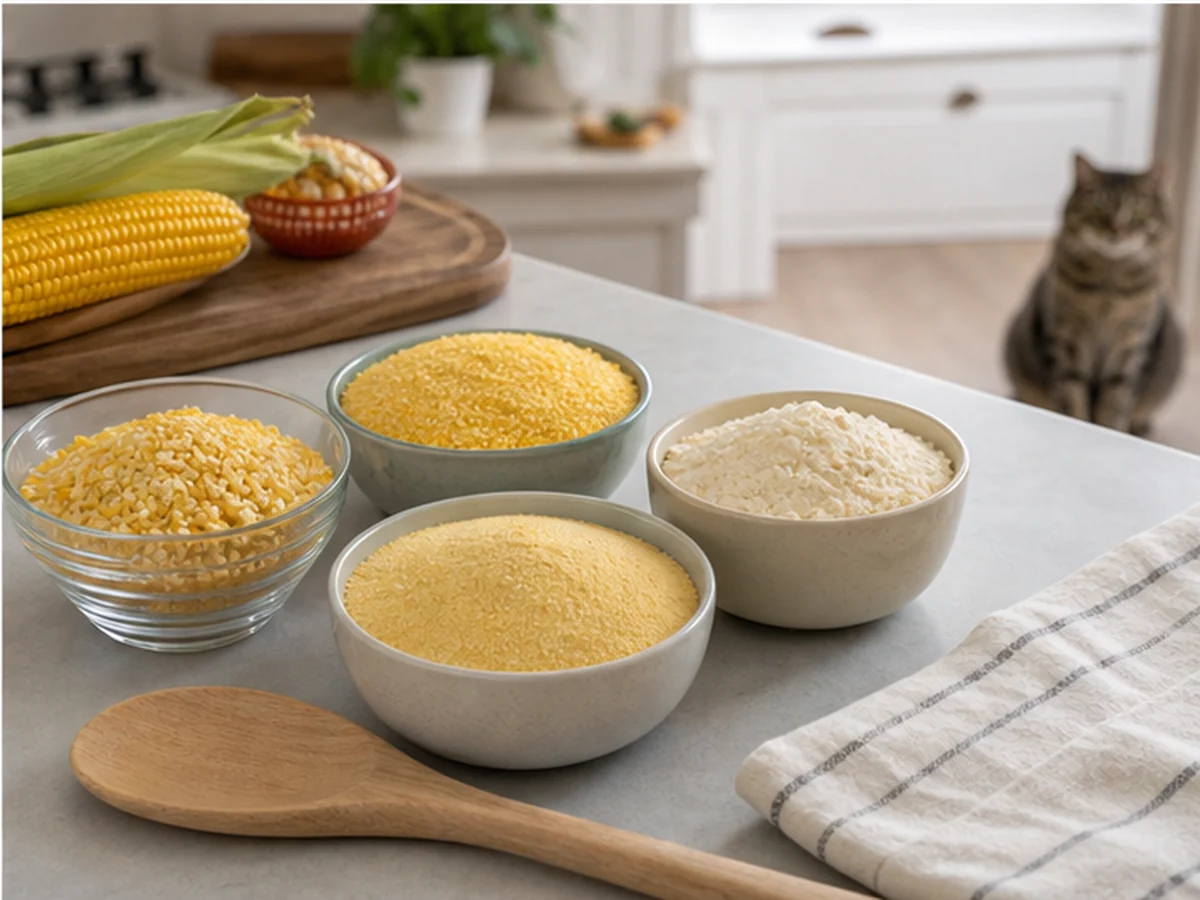
Stone-ground, hominy, polenta, and cornmeal are related, not identical
Product names reflect corn type, particle size, processing, and regional usage, and cooking times differ. Follow the label until every grain is fully hydrated and soft instead of transferring a quick-grits timer to a coarse stone-ground batch.
Polenta may set into firm slices that are fried or grilled, while hominy grits may be enriched or sold in flavored mixes. Texture, toppings, heat, and portion still outrank debates about the breakfast food’s proper name.
Never feed dry cornmeal mush, uncooked grits, or hardened decorative corn products to test whether a cat likes corn. A familiar grain can still arrive in a form that is dusty, sharp, hard, or attached to non-food material.
Grits can thicken considerably while cooling, turning a soft spoonful into a dense sticky lump. Stir in plain water only when preparing the human batch, then check the final cooled texture rather than assuming yesterday’s consistency remains safe today.
Cats with dental disease may approach a soft cereal even when chewing normal food hurts. Dropped kibble, one-sided chewing, bad breath, drooling, face sensitivity, or a new preference for mush deserves an oral examination, not a permanent switch to grits.
Automatic feeders and food puzzles should not be filled with wet cereal unless their manufacturer explicitly permits it. Grits can clog mechanisms, spoil in narrow channels, and make a measured cat diet impossible to track.
Questions from the breakfast table
Can kittens eat plain grits?
Kittens need complete growth food and receive no necessary benefit from cereal. Use part of the normal kitten ration for treats instead.
Are cheese grits safe for cats?
They are unnecessary and can contain dairy, fat, sodium, onion, garlic, meat seasoning, or hot sauce. Check the exact recipe after an accident.
Can grits help a cat with diarrhea?
Do not use grits as treatment without veterinary direction. Persistent diarrhea, vomiting, blood, pain, lethargy, or appetite loss needs assessment.
The bowl at the end of the counter
A tiny taste of plain water-cooked, fully cooled grits is usually low concern for a healthy adult, but it offers little value. Temperature comes first, then recipe, portion, packaging, and medical diet, with butter, dairy, salt, Alliums, meat toppings, and old leftovers kept off the feline menu.