Can Cats Eat Gummy Bears? Sweeteners, Choking, and Labels
One standard sugar gummy bear is unlikely to poison a healthy cat, but its sticky texture makes it a terrible treat. Sugar-free candy, vitamin gummies, cannabis or sleep products, caffeine, chocolate, choking, and swallowed wrappers can make a similar-looking bear far more serious.
The fastest useful move is not guessing whether the color looks medicinal. Put the cat somewhere safe, keep the container in your hand, and work from the printed facts.
Do not triage by shape
The word gummy now covers ordinary candy, vitamins, fiber supplements, sleep aids, energy products, and cannabis edibles. Find the original container before deciding that a brightly colored bear is harmless.
Count missing pieces, note the milligrams or nutrients per gummy, and record the time and cat’s weight. Photograph the front label, ingredient list, Nutrition Facts or Supplement Facts, and any warning panel.
Call immediately about a medicated, vitamin, cannabis, caffeine, or unknown gummy. Breathing trouble, collapse, seizures, severe wobbling, tremors, profound sleepiness, repeated vomiting, or inability to swallow needs urgent care.
A plain candy bear is mostly a texture problem
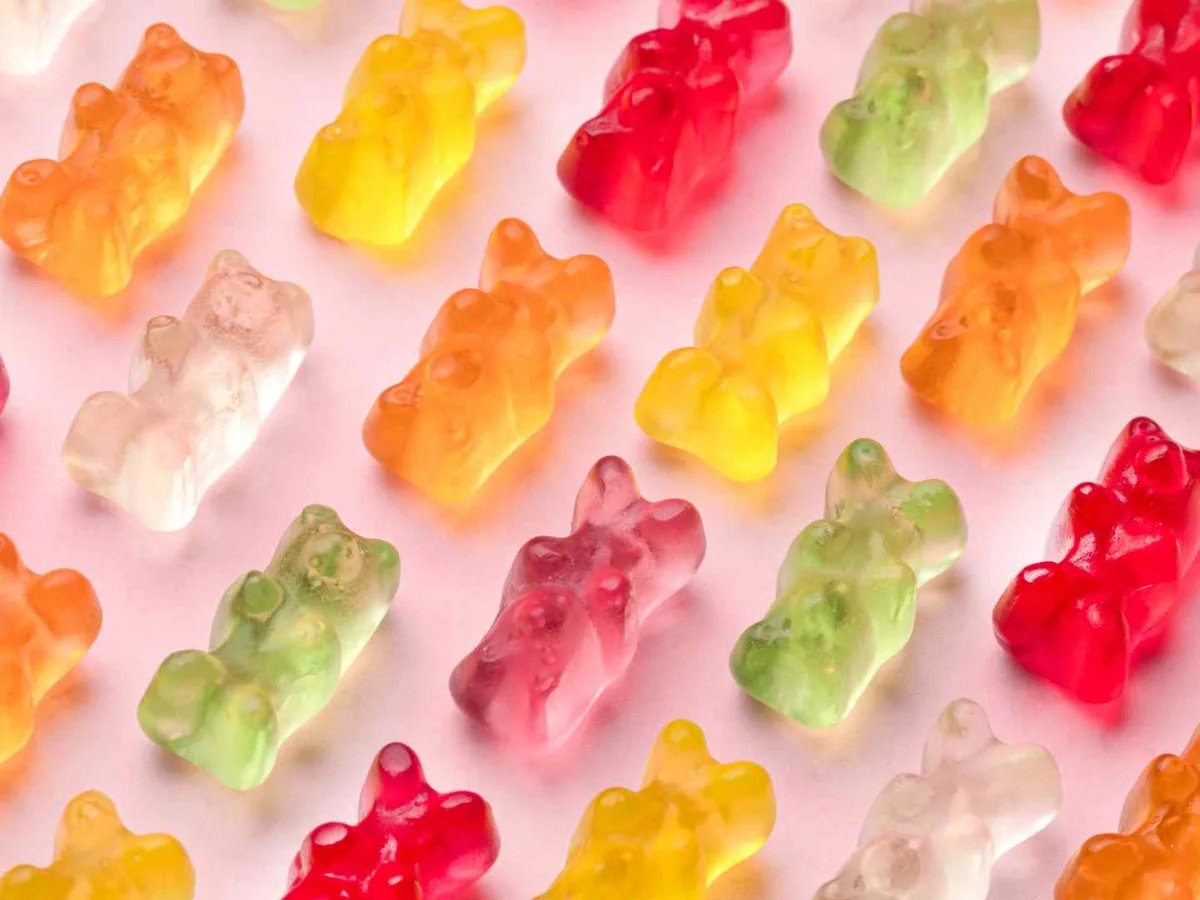
Standard gummies commonly contain sugar or syrup, gelatin or starch, acid, flavor, and color. One piece is not nutritious and may cause stomach upset, but it is not automatically a poisoning emergency when the label contains no active or concerning ingredient.
The candy can stick to teeth, palate, tongue, or throat, particularly when swallowed whole. Kittens, seniors, flat-faced cats, and cats with dental or swallowing disease have even less margin for that sticky lump.
Do not offer gummies intentionally, slice them into treats, or use one as a pill pocket. A soft commercial cat treat is easier to portion and designed to be swallowed by the species in front of you.
Choking happens before digestion
A choking cat may paw at the mouth, gag, panic, make little or no sound, develop blue-gray gums, or collapse. Get emergency help immediately when air movement is impaired.
Do not sweep blindly with a finger because a gummy can be pushed deeper. If the cat is breathing but coughing or swallowing repeatedly, keep the mouth clear of additional food and call for instructions.
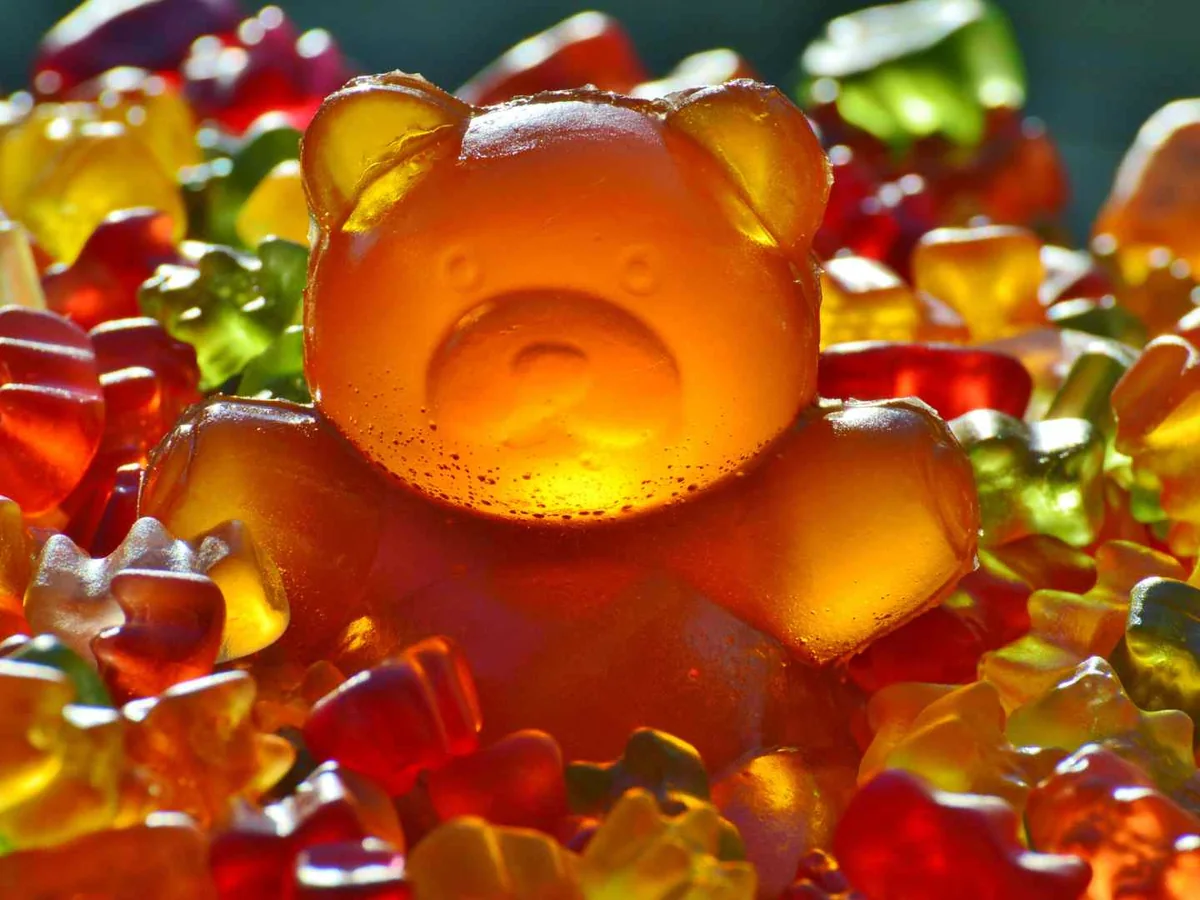
Giant gummies and long fruit-snack strips are more dangerous physical objects than a mini bear. Tell the clinic the dimensions and texture, not merely the number missing.
Sugar-free is a category, not an ingredient
A sugar-free gummy may contain xylitol, sorbitol, maltitol, erythritol, stevia, or several sweeteners together. Front-label language cannot tell you which compound or amount the cat swallowed.
The FDA Nutrition Facts guide helps readers locate serving size and ingredients, but specialty candy may also carry a Supplement Facts panel. Preserve every panel for professional review.
Sugar alcohols can cause gastrointestinal upset, especially in larger amounts. Do not give human antidiarrheal medicine, activated charcoal, or another sweetener to counter the first one unless a veterinarian specifically directs it.
Keep the xylitol species boundary clear
Xylitol can cause rapid hypoglycemia and liver injury in dogs. The FDA notes that xylitol does not appear equally dangerous to cats, so the canine mechanism and dose should not be presented as established feline facts.
That does not make an unidentified sugar-free gummy safe. It may include chocolate, caffeine, vitamins, drugs, botanical extracts, or enough other ingredients to require case-specific advice.
Call with the exact label and let a veterinary toxicology professional assess the cat, not the dog warning copied from a search result. Honest uncertainty is safer than invented precision.
Vitamin gummies can deliver a concentrated dose
Multivitamin gummies may contain vitamin D, vitamin A, iron, zinc, calcium, or many nutrients together. A human serving can represent a large exposure for a cat, and some ingredients cause delayed injury before obvious symptoms appear.
Call promptly with the Supplement Facts panel and the maximum missing count. Do not wait for vomiting or weakness, and do not calculate a cat dose by shrinking the human serving according to weight.
Prenatal vitamins and iron-containing products deserve particular attention. Keep the bottle intact because the clinic needs the amount per unit, not just the product name.
Sleep gummies may contain more than melatonin
Melatonin gummies can be combined with chamomile, valerian, L-theanine, magnesium, or other sleep ingredients. Different formulas bearing the same bedtime branding may have entirely different active doses.
Call after any unplanned ingestion and report unusual sleepiness, agitation, poor coordination, vomiting, tremors, or breathing changes. Do not place a severely sedated cat in a high spot where a fall is possible.
Store sleep products with medicines rather than candy. A cat cannot read the moon-and-stars label, and the berry smell is doing no risk communication whatsoever.
Cannabis edibles need immediate, candid care
THC gummies can cause marked neurologic depression, wobbling, urine leakage, abnormal heart rate, temperature changes, agitation, tremors, or coma. The package may also contain chocolate, caffeine, or a sweetener that adds another problem.
Tell the veterinary team exactly what was eaten, including THC or CBD concentration and any other drugs. Accurate disclosure helps treatment and is far more useful than calling the item herbal candy.
CBD labeling and purity can vary, and some products contain measurable THC or additional active ingredients. Never give another cannabinoid product to balance the first exposure.
Caffeine gummies can be deceptively small
Energy gummies and sports chews may pack caffeine into a bite-sized unit. Cats can develop dangerous stimulant effects, including restlessness, rapid heartbeat, elevated temperature, tremors, and seizures.
The FDA pet-hazard guide lists caffeine and chocolate among household dangers. Contact a veterinarian or animal poison service without waiting for signs.
Pre-workout chews may combine caffeine with several unfamiliar compounds. Bring the entire ingredient list and the claimed milligrams per piece.
Chocolate-coated gummies are chocolate exposures
Chocolate covering adds methylxanthines that cats metabolize poorly. Dark coatings, cocoa-rich candy, and chocolate centers deserve more concern than color alone suggests.
Use the cat chocolate guide to collect cocoa type, product weight, amount, time, and cat weight. Call before restlessness, racing heart, tremors, or seizures develop.
White chocolate has much less cocoa stimulant but remains fatty and sugary. Its presence does not clear a candy that also contains coffee, THC, or a swallowed wrapper.
Alcohol-filled candy is not a normal gummy
Some novelty sweets contain ethanol or a liqueur center. Even a small volume matters more for a cat than for the adult human serving pictured on the package.
The cat alcohol guide covers weakness, poor coordination, unusual sleepiness, low temperature, vomiting, and breathing changes. Call immediately rather than trying coffee, food, or a cold shower.
Homemade cocktail gummies require the full recipe and batch yield. If strength is uncertain, report the highest plausible amount.
Fiber, probiotic, and laxative gummies
Fiber gummies may contain concentrated soluble fiber, sugar alcohols, probiotics, magnesium, or laxative-style ingredients. Several missing pieces can produce more than an ordinary candy stomachache.
Call about a meaningful amount, especially for a cat with chronic bowel disease, dehydration, kidney disease, or medication use. Keep normal water available, but do not force fluid into a nauseated or drowsy cat.
The Cornell Feline Health Center recommends complete nutrition rather than improvised additions. A human fiber sweet should never become a home constipation plan.
Sour, spicy, and novelty coatings
Sour gummies use food acids that can irritate the mouth and stomach, while spicy novelty products may trigger drooling, pawing, coughing, vomiting, or diarrhea. Powder can also reach the eyes or be inhaled.
Wipe a small dusting from fur with a damp cloth and prevent grooming until the surface is clean. Call for persistent drooling, eye pain, repeated vomiting, coughing, or abnormal breathing.
Do not give milk as a spice antidote because dairy can add digestive upset. Avoid applying oil to the mouth or coat.
Fruit snacks are still formulated sweets
Fruit snacks may contain juice concentrate, puree, syrup, starch, gelatin, color, and flavor, yet little resemblance to a fresh fruit portion. Their folding, sticky texture can create the same choking problem as a gummy bear.
Read the product label and avoid long strips for cats. If grape concentrate appears, ask for cat-specific guidance rather than transferring dog raisin claims.
The cat candy-cane guide offers useful comparison for sugar, specialty ingredients, and choking, although a hard candy and a sticky gummy behave differently.
Wrappers and bottles can become the emergency
Candy residue makes plastic film, foil, freshness packets, and bottle seals smell edible. Swallowed packaging may choke or obstruct even when the candy formula itself is ordinary.
Call whenever material is missing and watch for repeated vomiting, appetite loss, lethargy, abdominal pain, straining, or reduced stool. Do not pull film or string protruding from the mouth or anus.
If a bottle spills, separate pets and count what remains before sweeping. Do not assume the cat ate nothing because another animal looks more guilty.
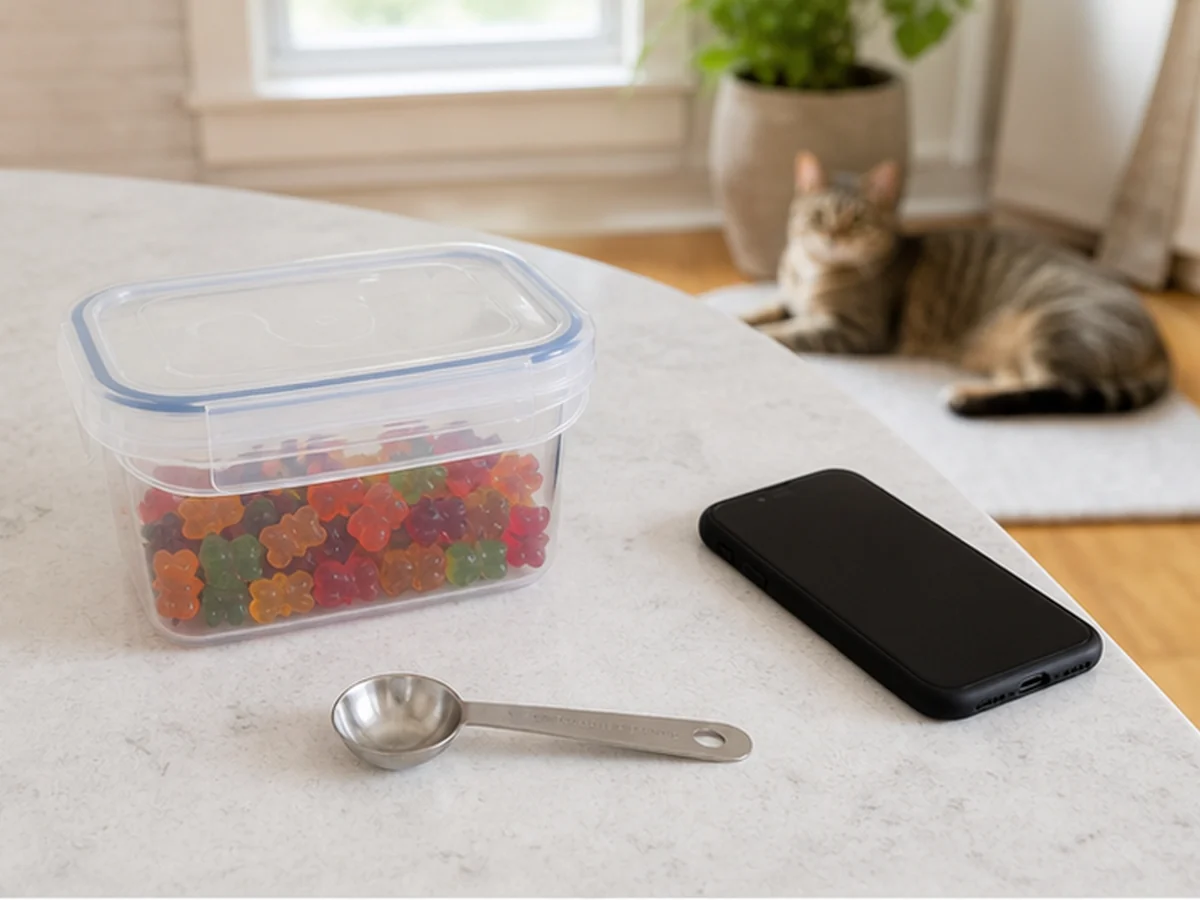
Monitoring a confirmed plain gummy
Home observation only fits a known standard candy with no active drug, chocolate, caffeine, alcohol, concerning sweetener, or missing wrapper. Offer usual water and normal measured meals.
Watch breathing, swallowing, appetite, energy, stool, vomiting, and coordination. Escalate any repeated or worsening sign, especially in a kitten or medically fragile cat.
Secure candy in a latched cabinet and keep supplement gummies in their original child-resistant containers. Purses, bedside tables, gym bags, and bathroom counters all count as cat-accessible storage until proven otherwise.
FAQ
Can one plain gummy bear hurt a cat?
One confirmed standard sugar gummy is unlikely to poison a healthy cat, but choking and digestive upset are possible. Do not offer another.
What if the gummy bears were sugar-free?
Save the package and call with the sweetener list. Xylitol’s severe dog effects should not be asserted as proven in cats, but the exact formula still needs assessment.
My cat ate a vitamin gummy. What now?
Call immediately with the nutrients per piece and maximum missing count. Supplements can deliver concentrated active ingredients, and waiting for symptoms can waste useful time.
Can cats eat fruit snacks?
Fruit snacks are sticky formulated sweets rather than suitable cat treats. Their shape, ingredients, amount, and wrapper determine the practical risk.
Bottom line
A plain gummy bear is an unnecessary sticky candy, while a medicated or specialty gummy can be an urgent exposure. Find the container, count the pieces, identify every active ingredient, and let the exact product drive the response.