Can Cats Eat Mac and Cheese? Dairy, Seasonings, Heat, and Leftovers
A tiny cooled lick of plain mac and cheese may pass without trouble in many healthy adult cats, but it is rich, salty, dairy-heavy, and unnecessary. Onion or garlic powder, hot sauce, bacon, seasoned crumbs, extreme heat, foil, wrappers, spoilage, and a medically restricted diet can matter more than the pasta.
The bowl is still warm: start here
| Scene | Main concern | First move |
|---|---|---|
| Steaming stovetop pot | Burns and hot cheese adhesion | Block access and cool safely |
| Boxed dinner | Powder ingredients and sodium | Save both panels |
| Restaurant side | Unknown seasoning and large portion | Ask for the current recipe |
| Baked casserole | Alliums, toppings, foil | Inventory dish and covering |
| One cool plain lick | Rich optional food | Remove and monitor |
Check the cat’s mouth, paws, and coat before debating dairy when the food was hot. Drooling, mouth pawing, red tissue, blistering, painful swallowing, or refusal to eat after a burn needs urgent veterinary evaluation.
Do not apply ice, butter, ointment, or human burn medicine. Cool-water first aid and transport should follow the clinic’s direction because a struggling cat can aspirate liquid or worsen tissue injury.
Plain does not mean nutritionally useful
Macaroni supplies refined starch while cheese sauce supplies fat, sodium, dairy protein, and calories. The combination cannot replace complete cat food, and a human spoonful is a substantial extra for a small animal.
The FDA explains the nutritional adequacy statement used on staple pet food. A casserole has no claim to meet feline amino-acid, vitamin, mineral, fatty-acid, or life-stage needs.
Dairy tolerance varies
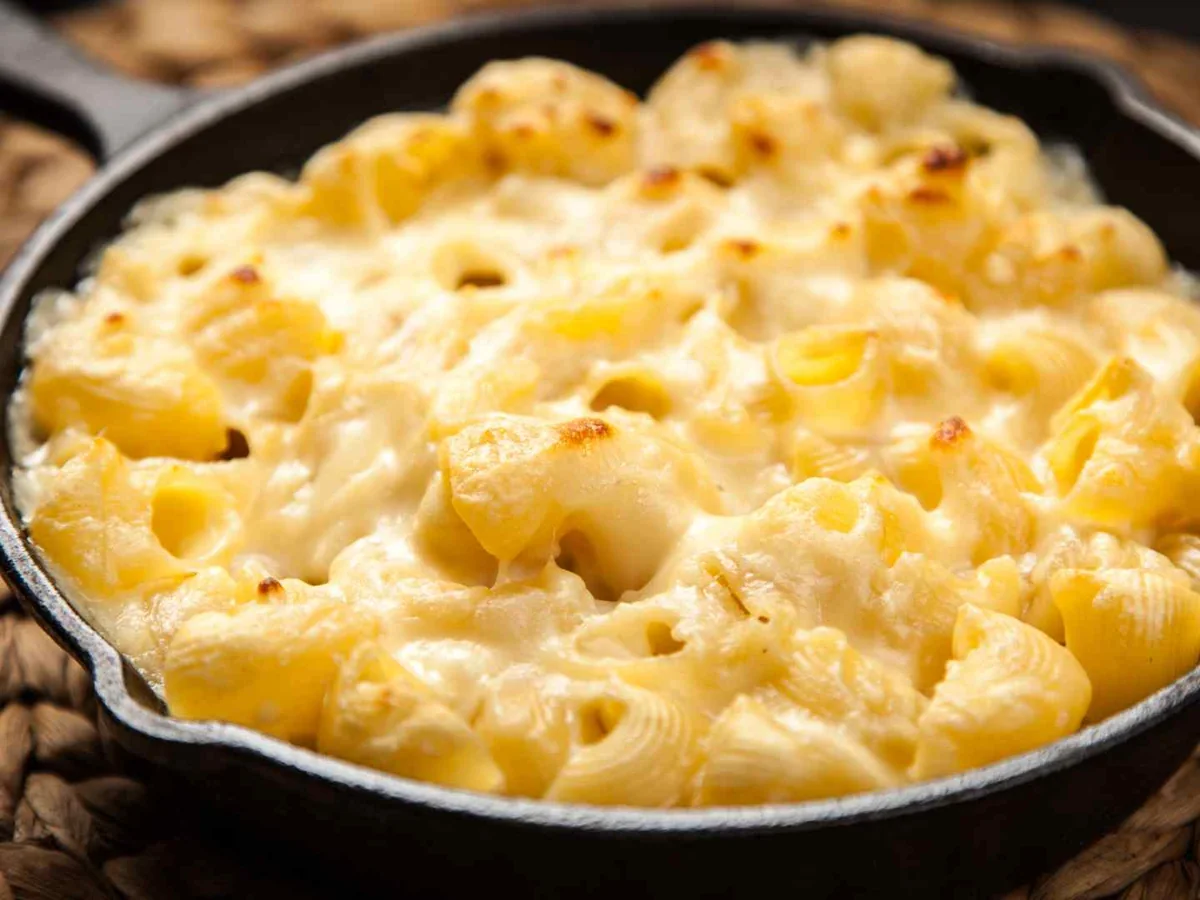
Many adult cats digest lactose poorly, while recipe dairy can include milk, cream, evaporated milk, sour cream, cream cheese, and several cheeses. A small lick may cause nothing, but a larger amount can bring gas, vomiting, loose stool, or abdominal discomfort.
Our cheese guide distinguishes lactose, fat, sodium, mold, and varieties. Lactose-free milk would remove only one issue and would not turn the finished dish into cat food.
Rich food can upset digestion without guaranteeing pancreatitis
Butter, cream, cheese, bacon fat, and oily toppings can produce a very fatty bowl. Vomiting, diarrhea, appetite loss, or abdominal pain after a raid needs advice, particularly in a cat with previous pancreatitis or gastrointestinal disease.
Do not state that one bite will cause pancreatitis, since individual risk and diagnosis are more complicated. Likewise, do not dismiss persistent illness as mere lactose intolerance without an examination.
Sodium stacks across the recipe
Salt can enter through pasta water, cheese, powdered sauce, bouillon, bacon, sausage, ham, seasoning, and crumbs. Cats with kidney, heart, or urinary conditions may have individualized sodium targets even when acute toxicosis is not expected from one lick.
The Merck salt review lists thirst, vomiting, diarrhea, poor coordination, tremors, and seizures after excessive exposure. Leave ordinary water available without forcing it and call for a large salty theft or neurologic signs.
Onion and garlic hide in powder form
Boxed packets, restaurant sauces, broth, bacon, bread crumbs, and “seasoning” can contain onion or garlic powder. Cats are particularly susceptible to oxidative red-cell injury from Alliums, and clinical anemia may not appear until days later.
Save the exact label and call promptly rather than waiting for pale gums, weakness, rapid breathing, or dark urine. The site’s onion article explains delayed signs and repeated exposure.
Boxed macaroni is a product, not a universal recipe
Brands differ in pasta, powdered cheese, sodium, colors, whey, milk, preservatives, spice, and preparation additions. A family-size box, microwave cup, and vegan packet should never be assumed equivalent.
Photograph the dry packet and the additions actually used, including butter substitute, milk, protein powder, or hot sauce. Account for torn foil and plastic cup lids before cleaning the counter.
Baked mac and cheese collects toppings
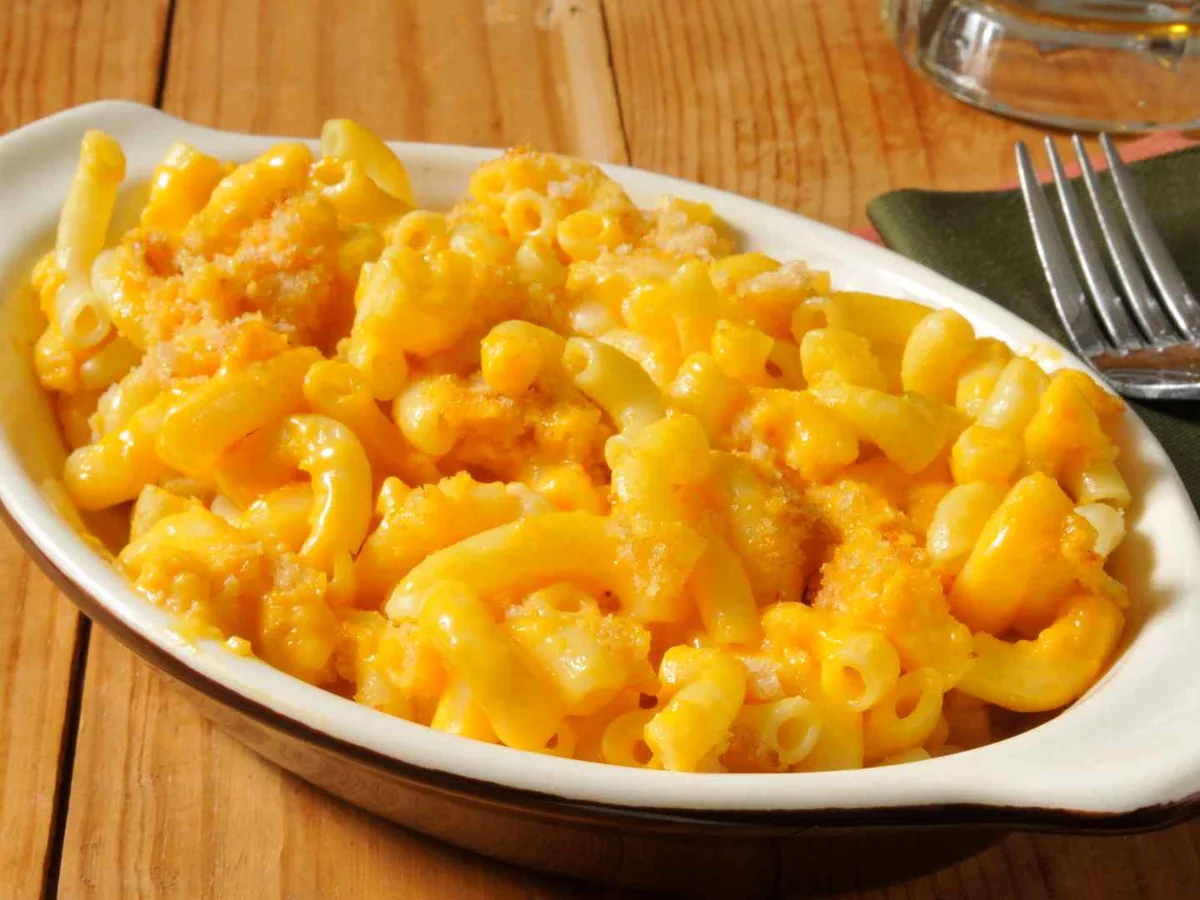
Casseroles may add seasoned breadcrumbs, Parmesan, bacon, lobster, crab, chicken, jalapeño, truffle oil, onion, garlic, or hot sauce. Crisp crusts and dried corners can be harder to chew than soft pasta.
Picking off visible crumbs cannot remove absorbed seasoning. For seafood add-ins, identify shells and skewers as well as the meat, and save the full recipe.
Foil and cookware can outrank the food
Greasy aluminum foil, plastic film, parchment, elastic covers, disposable trays, and pot scrubbers attract cats after dinner. Sharp foil edges and swallowed covering can cut, obstruct, or complicate vomiting.
Call promptly for missing non-food material, repeated gagging, vomiting, belly pain, reduced stool, or food refusal. Never induce vomiting after suspected foil, metal, or sharp packaging.
Leftovers need time and temperature control
Refrigerate mac and cheese promptly in shallow covered containers and follow the storage guidance for its ingredients. The USDA leftovers resource explains chilling and reheating for human food.
Discard moldy, sour, slimy, forgotten, or long-warm portions. Reheating can create mouth-burning hot spots without reliably reversing toxins formed during spoilage.
Vegan and gluten-free labels solve narrow questions
A vegan cheese sauce removes dairy but may contain cashew, coconut oil, nutritional yeast, starch, salt, onion, garlic, and flavoring. Gluten-free pasta can still be rich, seasoned, hot, and wrapped in plastic.
Read the finished formula rather than treating dietary marketing as feline approval. A cat with food allergy or an elimination trial needs the exact treating diet, not a plant-based human substitute.
Medical diets make sharing harder to justify
Kittens need complete growth nutrition, while diabetes, obesity, kidney disease, heart disease, urinary disease, pancreatitis history, and bowel conditions can impose strict calorie or nutrient goals. Even a small bowl raid can complicate monitoring.
Do not hide medicine in macaroni unless the prescribing clinic approves the drug-food combination. A measured veterinary pill treat or portion of the regular ration makes dose delivery easier to verify.
A practical post-bowl checklist
- Separate a cool plain lick from a hot pot, seasoned packet, casserole, or spoiled leftover.
- Save the box, powder packet, restaurant recipe, toppings, amount, time, and cat health history.
- Account for onion, garlic, salt, dairy, fat, hot sauce, seafood shell, foil, film, and utensils.
- Call for burns, Alliums, severe signs, foreign material, a large amount, or a medically fragile cat.
- Do not induce vomiting, force milk or water, or diagnose pancreatitis at home.
After one tiny cooled lick of verified Allium-free food, observe appetite, comfort, vomiting, stool, thirst, and energy. Stop table-food sharing if any digestive change appears.
Prevention is wonderfully boring: portion human leftovers, cover the dish, refrigerate it, wipe the stove, and close the dishwasher. The cat can supervise from a distance with the usual skepticism.
Microwave cups create their own kitchen scene
Single-serve cups can overflow, leave scalding water beneath the pasta, or develop cooler edges around a dangerously hot center. Stir thoroughly, observe the standing time, and keep the cup beyond paw reach until it is safe for the human eating it.
Powder can spill before water is added and irritate eyes or airways, especially when a cat walks through it and grooms. Move the animal into clean air and call for persistent coughing, wheezing, eye pain, open-mouth breathing, or collapse.
Paper cups may contain a plastic coating, foil lid, tear strip, seasoning sachet, and a small stirring utensil. Account for each piece after a counter raid rather than focusing exclusively on noodles.
Do not let a cat lick a cup that still contains boiling water or clinging sauce. Cut empty flexible packaging open before secure disposal when doing so can prevent a pet from trapping its face inside.
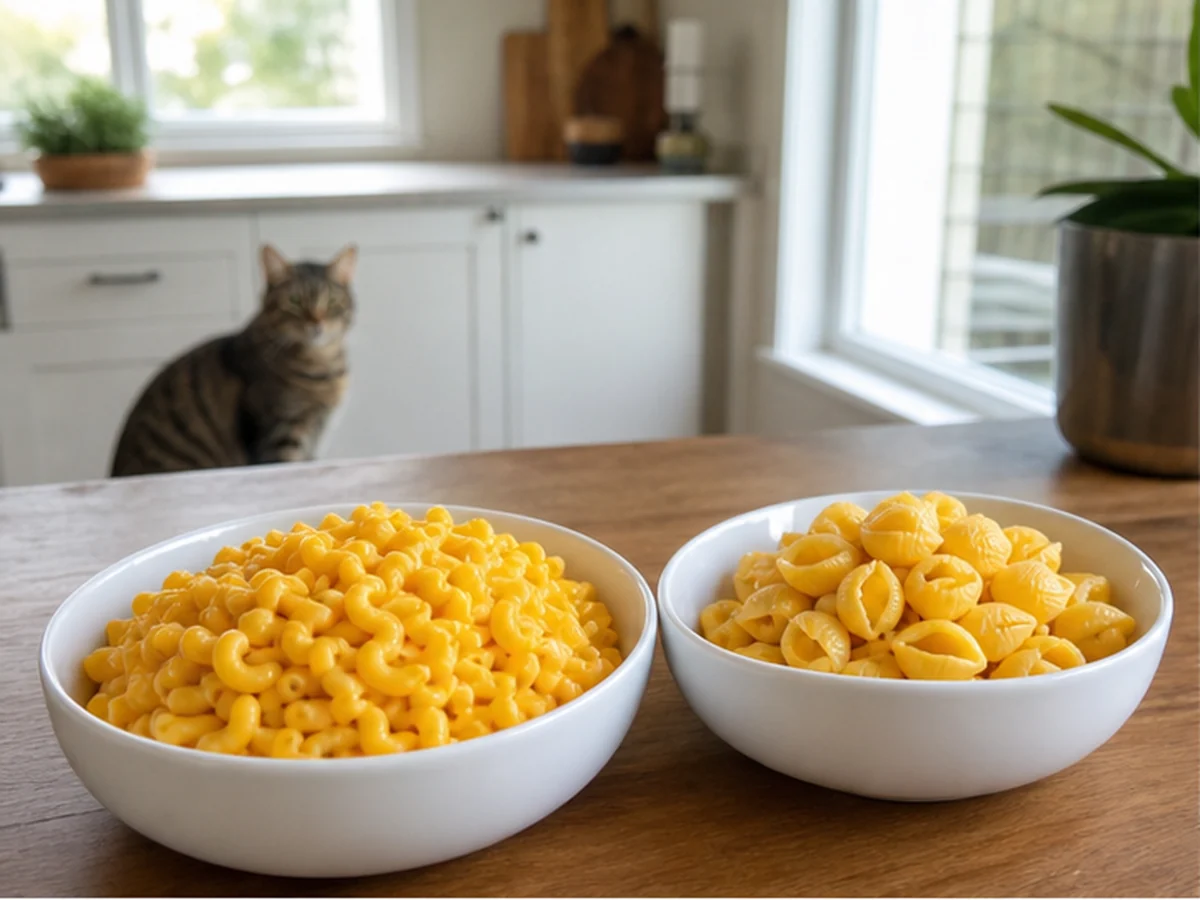
Macaroni shape does not change the nutrition answer
- Elbows can trap sauce and seasoning inside their curves.
- Shells hold cheese, bacon, onion, or crumbs in their cavities.
- Long noodles can be swallowed as strands and should never be offered for play.
- Stuffed pasta may contain seasoned meat, garlic, ricotta, or spinach.
- Protein-enriched pasta can add legumes, egg, or unfamiliar supplements.
A tiny plain cooked noodle without sauce is generally less rich than mac and cheese, but it remains optional starch. Do not use pasta to bulk out home-cooked cat food or stretch a prescription ration.
If a long noodle or string is protruding from the mouth or rectum, do not pull it. Linear material can anchor internally and injure the digestive tract as it moves.
For another creamy dairy food, our cream-cheese guide covers flavor additions, Alliums, medication use, and calorie density. The same jar-reading habit belongs beside the macaroni pot.
A cat that suddenly prefers soft macaroni to normal kibble may have oral pain rather than sophisticated taste. Dropping food, chewing on one side, bad breath, drooling, face sensitivity, or retreating from the bowl deserves a dental examination.
Do not keep replacing normal food with richer soft dishes while waiting for the mouth to improve. Mac and cheese masks texture discomfort, lacks complete nutrition, and can turn a treat into the only calories a painful cat accepts.
If several cats shared the pot, list each animal’s weight, medical conditions, likely portion, and signs separately. The cat wearing cheese on one ear provides evidence of access, not a reliable serving estimate.
A counter raid may involve raw flour from a roux, uncooked pasta, a cheese grater, knife, or silicone spatula before the casserole is assembled. Inventory the preparation area and report any missing tool fragment rather than assuming the finished noodles were the only target.
Macaroni questions after the cheese settles
Can kittens eat mac and cheese?
Kittens need complete growth food and gain no necessary benefit from pasta or cheese sauce. Dairy, sodium, hot food, and small packaging pieces add avoidable concerns.
Will one bite cause pancreatitis?
One bite does not guarantee pancreatitis, but rich food can cause digestive upset and may be inappropriate for susceptible cats. Persistent vomiting, pain, lethargy, or appetite loss needs veterinary care.
Can cats eat vegan mac and cheese?
It remains unnecessary and may contain onion, garlic, cashew, coconut fat, salt, starch, or flavorings. Read the exact recipe.
The last noodle
A cooled plain lick of mac and cheese is usually a dietary misstep rather than certain poisoning, but the dish offers little value. Check heat first, then dairy, fat, sodium, Alliums, toppings, storage, foil, and the cat’s medical plan, while avoiding home vomiting and one-bite pancreatitis claims.