Can Cats Eat Plantains? Cooked Flesh, Raw Pieces, Peels, and Chips
A tiny cube of peeled plantain that was cooked until soft, then cooled and left completely plain, is unlikely to be toxic to most healthy cats. It is still an unnecessary starchy extra, while raw slices, peels, fried tostones, sweet maduros, chips, garlic-seasoned dishes, hot pieces, and packaging each deserve a separate look.
Plantain is a banana relative, not a sweet potato
The food commonly called cooking plantain belongs to the banana group in the genus Musa. The ASPCA entry for banana and plantain lists the plant as non-toxic to cats, which supports reassurance about a small plain-flesh exposure.
Non-toxic is not the same as digestible in every form, nutritionally necessary, or safe in every recipe. A green plantain slab has the density of a determined doorstop, and the restaurant version may arrive under salt, oil, garlic, cheese, or sugary syrup.
Read the color, then ask about the pan
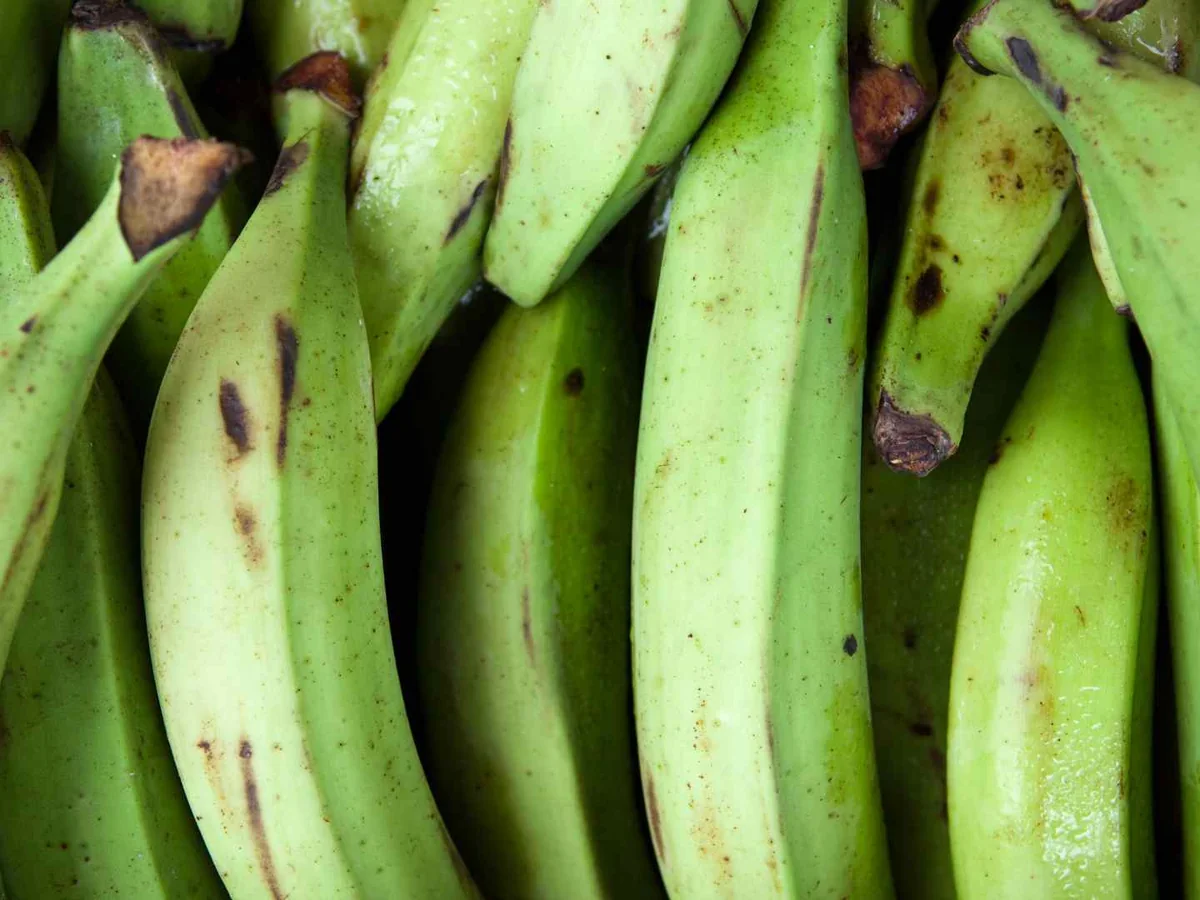
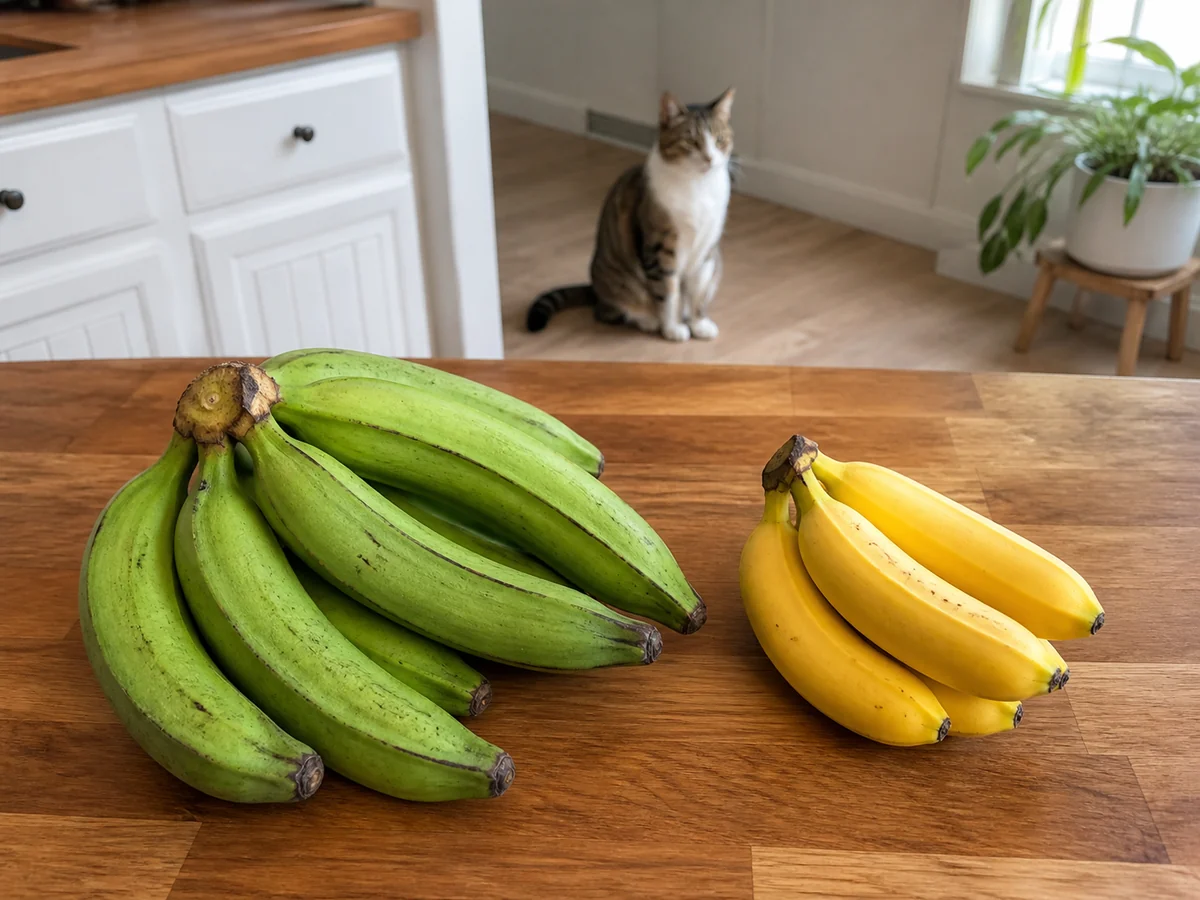
Green plantains are firm and starch-forward; yellow fruit softens and sweetens; heavily spotted or blackened peel usually signals riper, sweeter flesh. Ripeness affects texture and sugar, but the cooking method often matters more to the cat.
| Form | Practical feline concern |
| Raw green slice | Very firm texture, choking, large indigestible mouthful |
| Plain boiled or steamed flesh | Lowest-concern form when soft, peeled, cooled, and tiny |
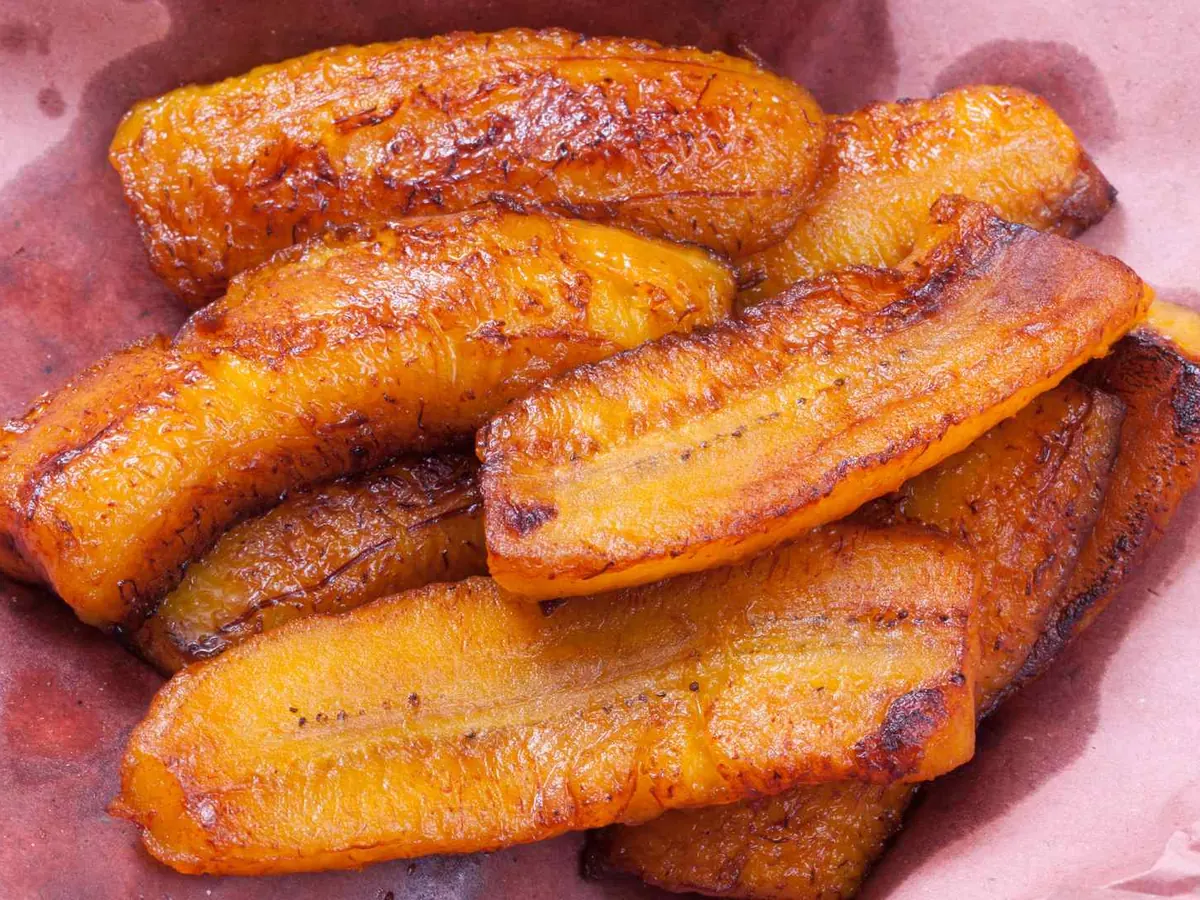
| Fried tostone | Hard edge, oil, salt, garlic sauce, portion size |
| Fried sweet plantain | Oil plus concentrated sweetness and possible toppings |
| Packaged chip | Crunchy shard, sodium, seasoning blend, snack bag |
| Peel or stem end | Tough fibrous material and possible digestive obstruction |
| Plantain flour or raw batter | Airborne powder, raw ingredients, recipe additions |
The best-case bite is almost comically specific
If a veterinarian has no objection and you want to share, peel the fruit, cook it in water or steam until it mashes easily, cool it, and offer a piece no larger than a pea. No oil, butter, salt, sugar, cinnamon, stock, sauce, or cheese needs to join the experiment.
That careful preparation reduces physical and recipe hazards, but it does not transform plantain into feline wellness food. Most cats will be better served by one measured cat treat or a morsel reserved from their normal meal.
Raw plantain is a texture problem before it is a nutrition question
Raw green plantain is dense, chalky, and difficult to bite cleanly, which makes a thick coin or broken end a poor object for a cat to swallow. The issue is not a proven feline plantain poison; it is the possibility of gagging, choking, vomiting, or a troublesome mass of tough food.
If a raw chunk is missing, note its dimensions rather than reporting “one piece.” Call promptly for gagging, repeated swallowing, breathing difficulty, unproductive retching, repeated vomiting, abdominal pain, loss of appetite, or reduced stool.
The peel should go directly to a closed bin
Plantain peel is thicker and more fibrous than the familiar dessert-banana peel, and it may be coated with dirt or surface residues from handling. Washing produce helps kitchen hygiene, but it does not make the peel a suitable chew.
A wide strip can bunch up after swallowing, while the woody stem end is particularly awkward. Do not induce vomiting or try to push the material through with oil, bread, pumpkin, or extra food; ask a veterinarian how to handle the specific size and timing.
Boiled, steamed, baked, and air-fried are not synonyms
Boiling or steaming without seasoning yields soft, moist flesh that is easiest to portion. Baking can produce leathery edges, while air-frying removes moisture and may create a firm chip even without added oil.
Check doneness through the whole piece, remove browned hard corners, and let it cool completely. A hot starch can cling to oral tissues, so sudden drooling, pawing at the mouth, or refusal to eat after a fresh-from-pan theft merits veterinary advice.
Tostones bring crunch, oil, and usually company
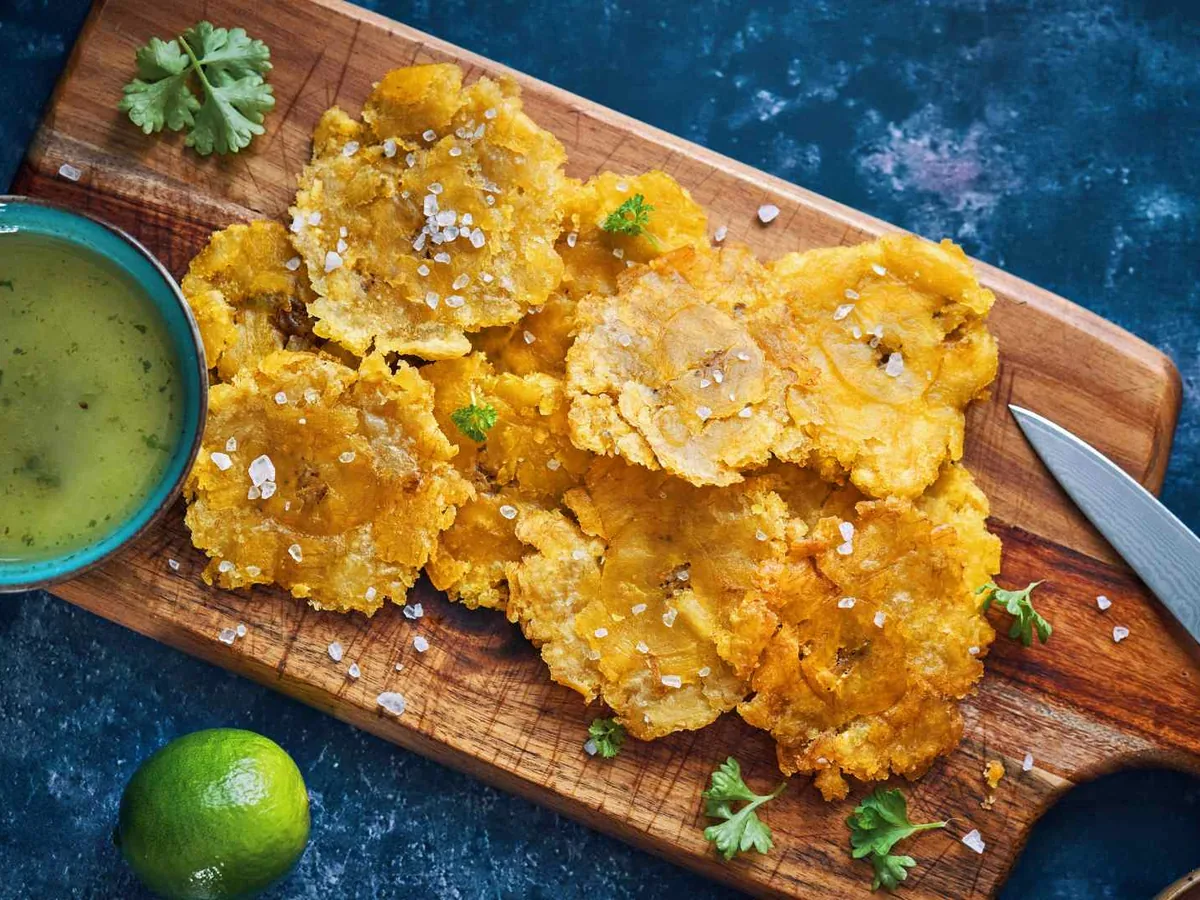
Tostones are green plantain pieces fried, smashed, and fried again, producing crisp edges and substantial oil exposure. They are commonly salted and served with garlic sauce, seasoned meat, cheese, or dips, so the plate is rarely just cooked fruit.
A tiny dropped crumb may pass without drama, but a stolen stack can cause digestive upset and a seasoning concern. Keep the restaurant description, and check the site’s garlic guide promptly if mojo or garlic paste touched the pieces.
Maduros are softer, not automatically better
Ripe plantains fried as maduros have a tender center, yet frying adds fat and browning concentrates sweetness at the surface. Recipes may include butter, salt, brown sugar, condensed milk, cream, or syrup, particularly when the dish is served as dessert.
A cat with diabetes, obesity, pancreatitis history, chronic gastrointestinal disease, or a prescribed diet should not sample this version. One lick cannot predict pancreatitis, but persistent vomiting, pain, severe lethargy, or appetite loss should not be dismissed as a sugar rush.
Bagged plantain chips require both sides of the package
Commercial chips may be fried in coconut, palm, sunflower, or another oil and seasoned with salt, lime, chile, garlic, onion, cheese powder, barbecue flavor, or sweet coating. A “natural” claim does not identify the seasoning, and a green label does not make the product nutritionally appropriate for cats.
The chip itself can splinter into hard points or be gulped after minimal chewing. The bag also matters: the FDA warns about snack-bag suffocation risk for pets, so cut or secure discarded bags where a cat cannot put its head inside.
Plantain flour appears in more than one aisle
Plantain flour can be used in breads, pancakes, crackers, baby foods, and gluten-free mixes. The powder itself can irritate eyes and airways when scattered, and the finished product inherits every ingredient in the recipe rather than the simple profile of plantain flesh.
Move a cat away before sweeping a flour spill, ventilate the area, and seek help for coughing, wheezing, labored breathing, or persistent eye irritation. For batter, check for raw egg, other raw flour, yeast, chocolate, sweeteners, and seasoning before deciding what was swallowed.
Savory plantain dishes are ingredient scavenger hunts
Mofongo, mangú, fufu-style preparations, soups, casseroles, and stuffed plantains vary widely across cooks and cuisines. Garlic, onion, broth, pork fat, bacon, cheese, butter, oil, salt, chiles, and meat drippings may be mashed into a texture that hides them completely.
Respect the actual recipe instead of making assumptions from the dish name. Onion and garlic deserve special attention because Alliums can damage feline red blood cells, while rich additions and salt may complicate care for cats with existing disease.
Sweet plantain recipes deserve the same scrutiny
Plantain bread, cake, fritters, empanadas, and dessert cups may contain sugar, dairy, chocolate, raisins, alcohol, nutmeg, or sugar substitutes. Save the packaging or recipe and identify the amount of the whole dessert that disappeared.
Do not use the ripe fruit’s sweetness as a reason to offer it for low energy or poor appetite. A cat that stops eating needs the cause addressed, because prolonged inadequate intake can become medically serious.
A small carbohydrate extra can still disrupt a medical plan
Plantain supplies starch, fiber, and potassium in human nutrition tables, but those numbers do not establish a therapeutic benefit for a cat. It should not be used to treat diarrhea, constipation, low potassium, or weight problems without a veterinarian’s diagnosis and plan.
The FDA explains how to recognize complete and balanced pet food, which supplies nutrients in feline-appropriate proportions. A plantain side dish can dilute that balance when extras become routine.
What to do when the plate has already been raided
- Collect the remaining food and determine whether the fruit was raw, boiled, steamed, baked, fried, dried, or powdered.
- Check the peel, stem, skewers, toothpicks, foil, sauce cups, and snack bag for missing pieces.
- Photograph the full ingredient list or write down the restaurant recipe while it is available.
- Estimate the amount, time, cat’s weight, medical conditions, and current behavior.
- Call for a large or unknown quantity, peel or hard raw chunk, concerning seasoning, packaging exposure, or any abnormal sign.
A veterinarian may advise observation after one cooled, soft, plain cube in a healthy cat. Offer normal water and regular cat food, and monitor the appetite, energy, stool, and vomiting pattern for the period they recommend.
When the call becomes urgent
Breathing difficulty, choking, collapse, repeated unproductive retching, a painful swollen abdomen, repeated vomiting, severe weakness, tremors, or inability to keep water down needs urgent care. A possible swallowed peel, skewer, hard stem, or package fragment also deserves early advice before signs become dramatic.
Do not give peroxide, salt, oil, milk, activated charcoal, or a human stomach medicine. Home vomiting is unsafe in cats, and adding food can complicate a burn, obstruction, or recipe exposure.
Plantain and banana share a family, not a serving rule
Dessert bananas are usually soft enough to eat raw, whereas cooking plantains are commonly prepared because of their firmer, starchier flesh. The guides to bananas and banana chips provide useful comparisons without treating the foods as identical.
In all cases, the cat’s own food should supply nearly all daily calories. If the attraction is crinkle, crunch, or attention, a food puzzle loaded with the normal ration is a far more feline answer than opening another chip bag.
Frequently asked questions
Can cats eat boiled plantain?
A pea-size piece of peeled plantain boiled until soft, cooled, and served plain is unlikely to harm most healthy adult cats. It remains optional, and cats with medical diets should have veterinary approval first.
Can cats eat raw plantain?
Do not offer it raw because the firm, dense texture creates avoidable choking and digestive concerns. Call for guidance if a thick chunk was swallowed or if gagging, vomiting, pain, appetite loss, or stool changes appear.
Can cats eat plantain chips?
Plantain chips are best avoided because they are hard, often fried, frequently salty, and sometimes seasoned with garlic, onion, chile, or cheese. Secure the bag as carefully as the chips.
Are plantains poisonous to cats?
The ASPCA lists banana or plantain in the Musa group as non-toxic to cats, but that listing does not approve peels, hard raw chunks, large servings, oils, seasonings, desserts, or foreign objects. Preparation determines the practical advice.
Bottom line
Plain cooked plantain flesh can be a tiny, infrequent taste, but it offers no special benefit to cats. Peels, hard raw pieces, fried preparations, chips, mixed dishes, hot food, flour spills, and packaging are the forms that deserve more caution and a label-led response.