Can Cats Eat Skittles? Sugar, Sweeteners, Chewy Candy, and Packaging
Skittles are not cat treats. One standard candy may pass without illness, but a handful adds sugar, chewy pieces, choking, stomach upset, sour acids, product variations, sugar-free or specialty sweeteners, cannabis look-alikes, torn bags, wrappers, and uncertain counts, so identify the exact package before deciding what the cat needs.
Standard candy is mostly a calorie and texture problem
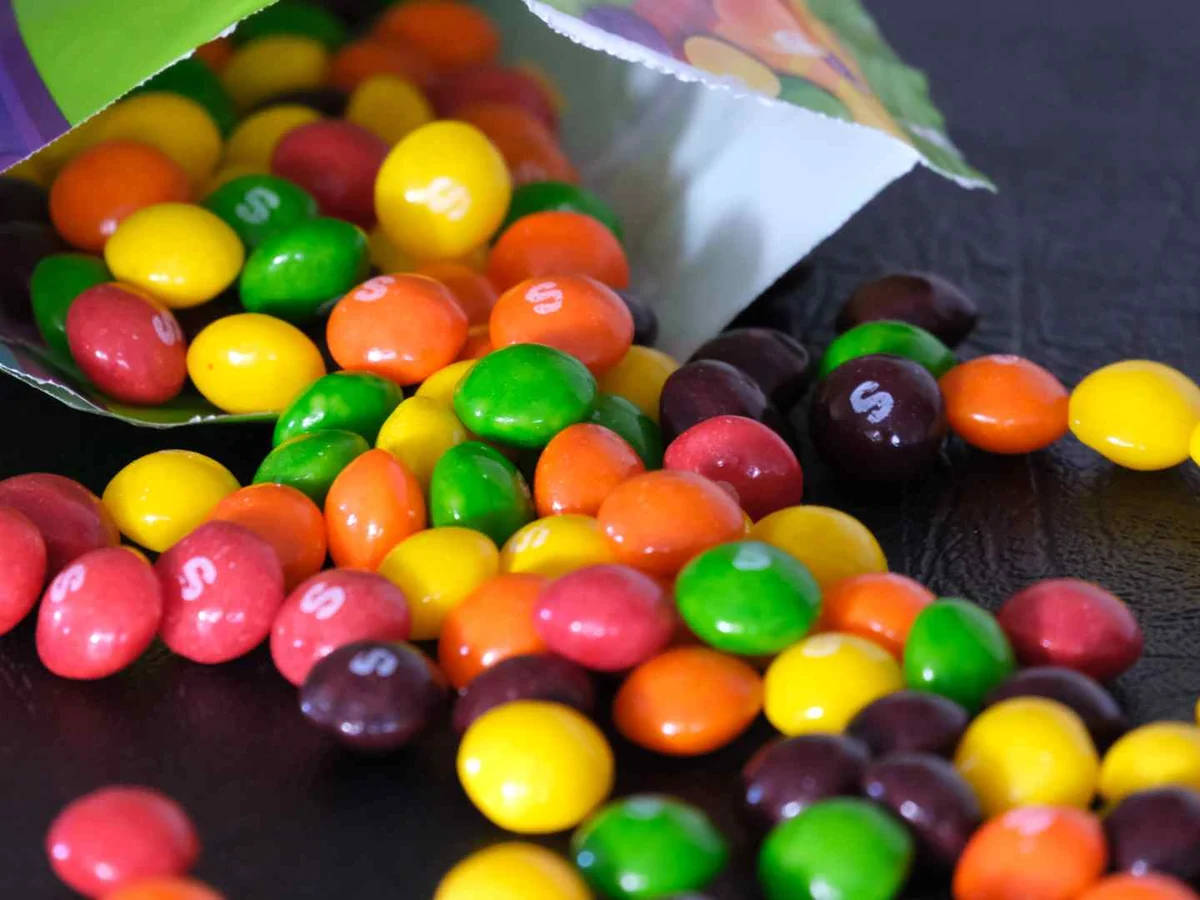
Ordinary Skittles are not formulated as a classic feline poison, but they provide no needed nutrition and can be gulped whole. A sticky shell can cling to teeth or soften into a chewy mass.
The cat honey guide explains why a sweet ingredient does not gain feline benefit from a natural image.
The variety name matters
Original, Wild Berry, Tropical, Sour, Gummies, drink mixes, limited editions, and products sold in different countries may not share one formula. Photograph the package involved.
Sour coatings can irritate the mouth and stomach, while gummies have a different size and texture from small hard-shell pieces.
Sweetener claims stay species-specific
The FDA identifies xylitol as a serious canine hazard, but that does not establish the same dose-response in cats. Read the actual feline product label and call with exact ingredients.
Do not call every sugar-free candy safe or poisonous by analogy. Other components, quantity, packaging, and limited feline evidence still require product-specific advice.
Candy does not balance cat food
The FDA explains nutritional adequacy on pet-food labels. Skittles supply no useful feline meal role.
Wrappers can outrank sugar
Thin bags, tear strips, resealable tracks, cardboard, multipack film, and desiccants retain sweet odor. Swallowed plastic can obstruct.
The cat ice cream guide helps when Skittles are mixed into a dairy dessert with its own cold, fat, and packaging concerns.
Edible look-alikes require honesty
Cannabis edibles can be made to resemble familiar rainbow candy or mixed into an original bag. Sedation, wobbliness, urine dribbling, unusual responses, or collapse after possible access needs prompt care.
Tell the veterinary team exactly what was present. Accurate disclosure protects the cat.
Dental concerns
Candy does not reliably cause an instant cavity, but sticky sugar is unnecessary and can lodge around painful teeth. Mouth-pawing, bleeding, swelling, or sudden food refusal deserves examination.
Count colors only after counting pieces
A few scattered candies can roll under appliances, making the missing amount larger than the visible pile suggests. Weigh an intact serving or use the package serving count instead of guessing from color.
Record when the bag was opened and when the cat was discovered. Another person may have eaten part of the serving before the raid.
Choking and chewy masses
A single piece is small, but several softened candies can stick together in saliva or inside a warm bag. Gagging, repeated swallowing, drooling, coughing, or breathing difficulty needs urgent attention.
Do not reach blindly into a struggling cat’s throat or force water to dissolve candy. Follow emergency instructions while arranging care.
Likely signs after ordinary candy
A small standard-candy theft may cause no signs, while a larger amount can contribute to vomiting, diarrhea, gas, or reduced appetite. Symptoms do not prove a rare toxin when sugar and food dye were present.
Repeated vomiting, marked lethargy, abdominal pain, collapse, tremors, seizures, or abnormal behavior deserves prompt veterinary assessment.
Sour Skittles change mouth exposure
Sour varieties use acidic coatings that can sting irritated gums and cause drooling or face rubbing. The powder may also become airborne during a crushed-bag spill.
Move the cat from dust, prevent further licking, and seek advice for persistent coughing, eye pain, mouth pain, vomiting, or distress.
Gummies are not ordinary pieces
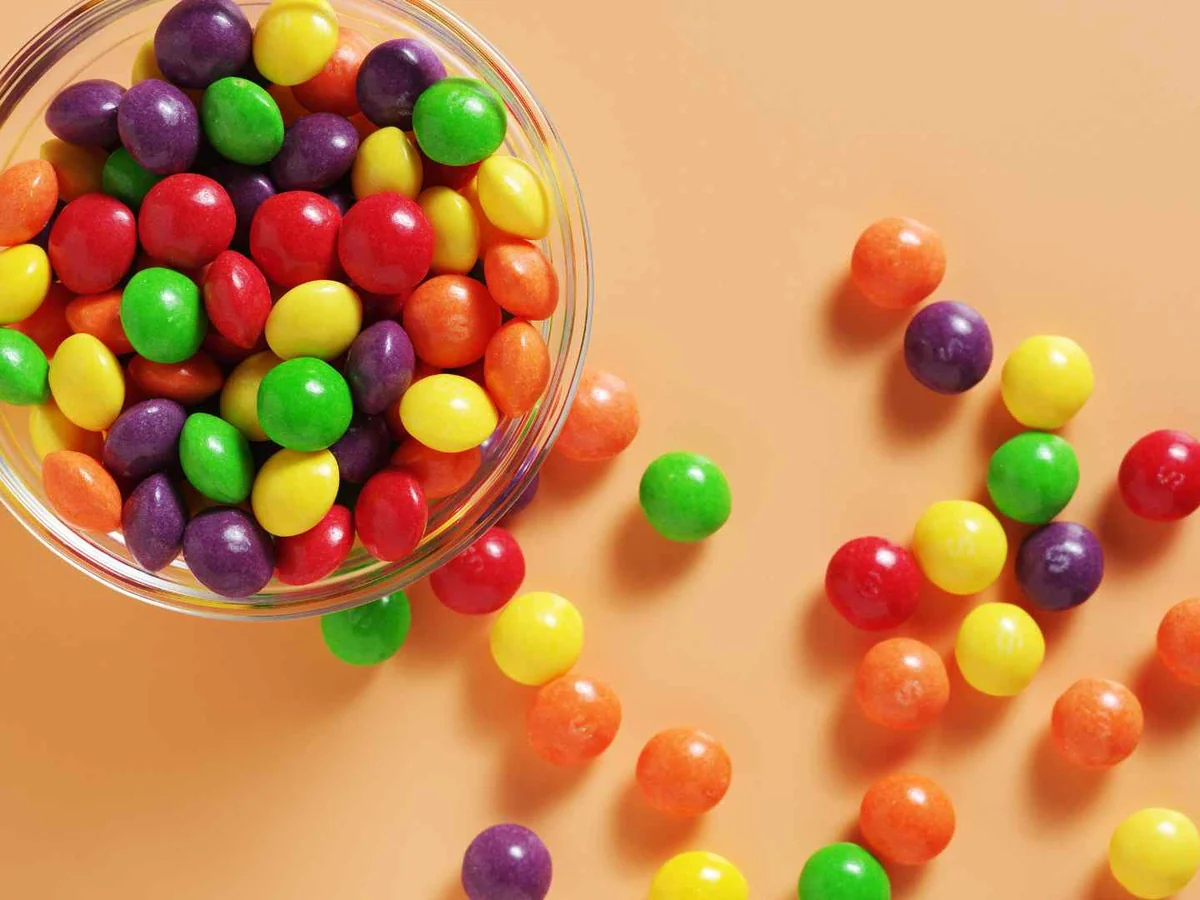
Skittles Gummies are larger, softer, and easier to swallow in a sticky clump. Their ingredient list and package weight must be checked separately from the original candy.
A missing gummy bag also means heavier plastic and a resealable strip may be involved. Count the closure and torn edges.
Drink powders and frozen drinks
Skittles-branded drink mixes can concentrate acids, sweeteners, colors, and flavor into powder or liquid. A scoop is not equivalent to one candy.
Powder on paws becomes ingestion during grooming, while a frozen drink adds cold and cup-lid hazards. Preserve preparation directions and mixed volume.
Chocolate cross-contact at holidays
Rainbow candy may sit in a bowl with chocolate, raisins, coffee beans, nuts, gum, and foil-wrapped sweets. Identify every missing item rather than assuming the colorful pieces were taken alone.
Diabetes and weight plans
Cats with diabetes should not receive sugary candy, and an accidental amount can complicate food and glucose records. Contact the treating team rather than changing insulin at home.
Repeated candy sharing adds calories without satiety or required nutrients. Weight reduction should use a measured complete diet, not human low-fat logic.
Artificial colors without panic
Approved food colors in a standard product should not be labeled a poisoning merely because they can tint vomit or stool. Product quantity and the cat’s clinical condition matter more than dramatic color.
Still report the package and any unusual signs because specialty, imported, or counterfeit products may differ. A brand name cannot authenticate an opened bag.
The FDA explains how color additives are regulated and labeled. That oversight does not make candy a feline food or identify an unknown imported product.
Packaging and drawer hazards
Candy drawers may also contain gum, nicotine products, medicines, batteries, clips, rubber bands, and cannabis edibles. Inventory the drawer rather than stopping when one torn bag appears.
Repeated vomiting, pain, appetite loss, or reduced stool after plastic disappears needs evaluation. Do not induce vomiting when film or another object may be involved.
Cleanup that preserves evidence
Confine the cat, collect loose pieces, photograph the package panels, and keep a sample. Wipe sticky fur only according to veterinary guidance if a large or uncertain product coated it.
Do not apply alcohol, citrus solvent, essential oil, or household cleaner to fur. Prevent grooming until the cleanup plan is clear.
The call that gets a useful answer
- Name the exact product: original, sour, gummies, drink mix, imported, sugar-free, edible, or unknown.
- Estimate maximum intake: use package weight, serving count, remaining pieces, time, and cat weight.
- Check companions: chocolate, gum, medicines, cannabis, nicotine, raisins, caffeine, and sweeteners.
- Count objects: find plastic, tear strips, seals, cups, lids, clips, and desiccants.
- Describe signs: report vomiting, gait, alertness, mouth pain, breathing, appetite, and litter-box changes.
Frequently asked questions
Will one Skittle poison a cat?
One standard piece is unlikely to cause severe poisoning in most healthy adult cats, but choking, product variation, and an uncertain bag count still deserve attention.
Are sugar-free Skittles safe for cats?
Do not assume so; read the exact formula and seek product-specific advice. Canine xylitol certainty should not be presented as a proven feline threshold.
Can kittens eat Skittles?
No. Chewy candy, sugar, packaging, and tiny airways make it an especially poor kitten experiment.
What if my cat ate an edible that looked like Skittles?
Call a veterinarian promptly, disclose the possible drug and dose, and watch for sedation, wobbliness, urine dribbling, vomiting, or altered responses.
Bottom line
Ordinary Skittles are more likely to create sugar, stomach, choking, and packaging problems than a classic feline toxicosis, but specialty formulas and look-alike edibles prevent blanket reassurance. Check the actual bag, count carefully, and keep canine sweetener claims in their evidence lane.
Keep candy in a rigid latched container rather than a crinkly bag that doubles as a toy. Prevention is especially important in homes where medicines or cannabis products resemble ordinary sweets.
Skittles stored in a car can soften into a dense sticky slab and may be contaminated by coins, gum, medications, nicotine pouches, or cleaning wipes in the console. Heat changes texture rather than making candy safer, so identify everything accessible and report a clumped mass by weight rather than individual piece count.
Holiday Skittles may come in plastic eggs, tubes, ornaments, dispensers, or tiny favor containers with springs and caps. A cat can swallow the closure or chew brittle plastic while chasing candy, making product packaging and toy-like hardware essential parts of the veterinary call.
Party favor bags can mix Skittles with gum, chocolate, jawbreakers, hard mints, toys, confetti, glow-stick parts, and ribbon, so a rainbow spill needs a floor-level object inventory. Count every nonfood item before vacuuming, preserve wrappers, and keep the cat confined until candy beneath furniture and sticky pieces on paws are found.
Skittles-branded desserts can appear in cookies, cakes, ice cream, popcorn, cocktails, and milkshakes, each adding a new base recipe and serving object. Chocolate, caffeine, alcohol, dairy, raw dough, wooden sticks, glass, straws, and plastic cups may matter more than the candy shell, so report the complete dish.
A cat that seems attracted to candy may actually be chasing a rolling object, licking fat or dairy from a mixed dessert, or seeking attention rather than craving sweetness. That behavior is not evidence of a sugar requirement, and redirecting play to an intact feline toy avoids teaching the cat to patrol bags and children’s snack bowls.
Sticky dye around the mouth or in vomit can look alarming without proving organ damage, while a normal color does not clear a swallowed wrapper or drug-containing edible. Photograph unusual material for the clinic, but base urgency on product identity, amount, objects, symptoms, and the cat’s condition rather than the brightness alone.
During an approved home-monitoring window, keep the cat indoors with ordinary complete food and water and record vomiting, stool, appetite, gait, alertness, breathing, and litter-box output. Do not offer more candy, change insulin, give peroxide, force milk, or administer a human stomach remedy; call again if the count changes or any sign develops.