Can Cats Eat Scallops? Cooked Meat, Raw Shellfish, Roe, and Seasoning
A healthy adult cat may tolerate a tiny flake of plain, fully cooked scallop muscle. Raw shellfish, viscera or roe, shells, grit, butter, garlic, wine, bacon wrapping, salt, skewers, hot pans, allergy, spoilage, and packaging are different exposures, so identify the exact dish before sharing reassurance.
Know which scallop part is on the plate
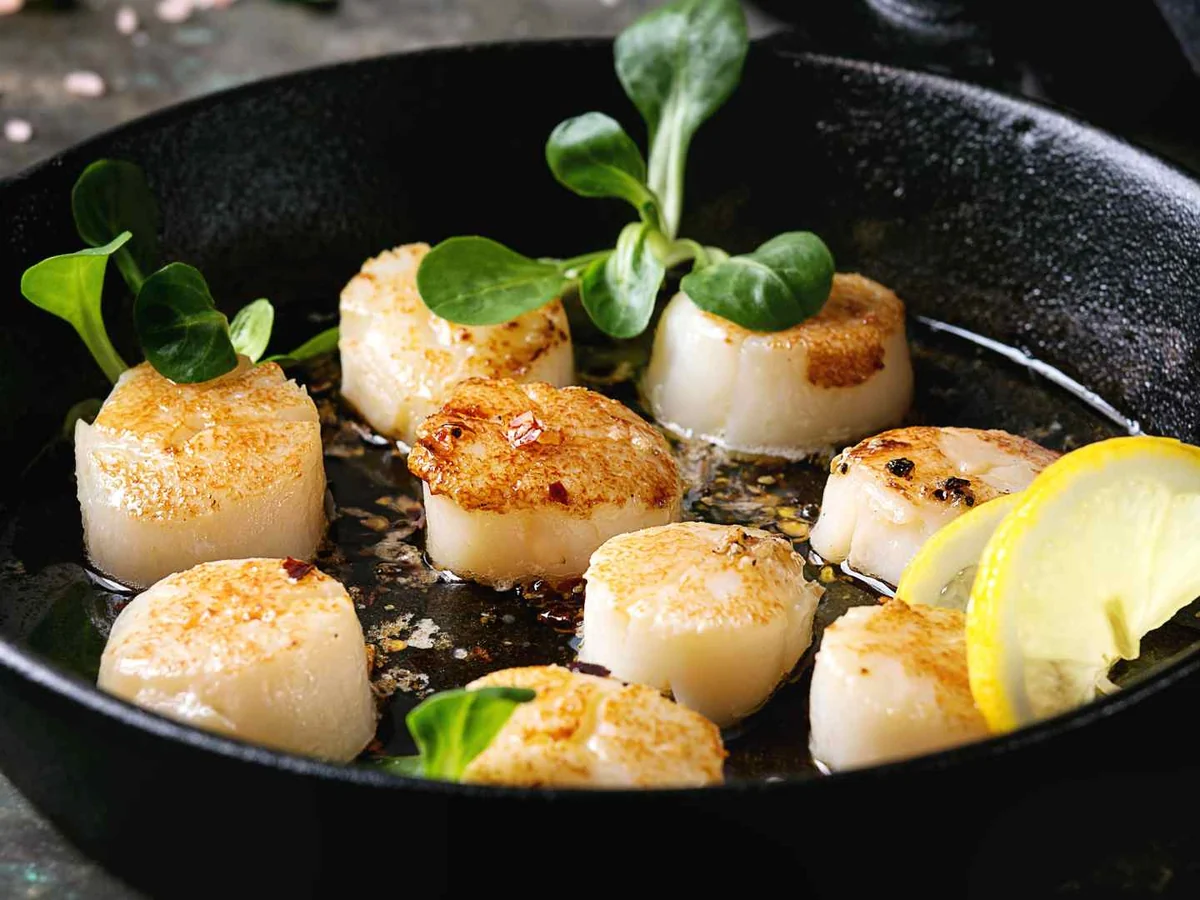
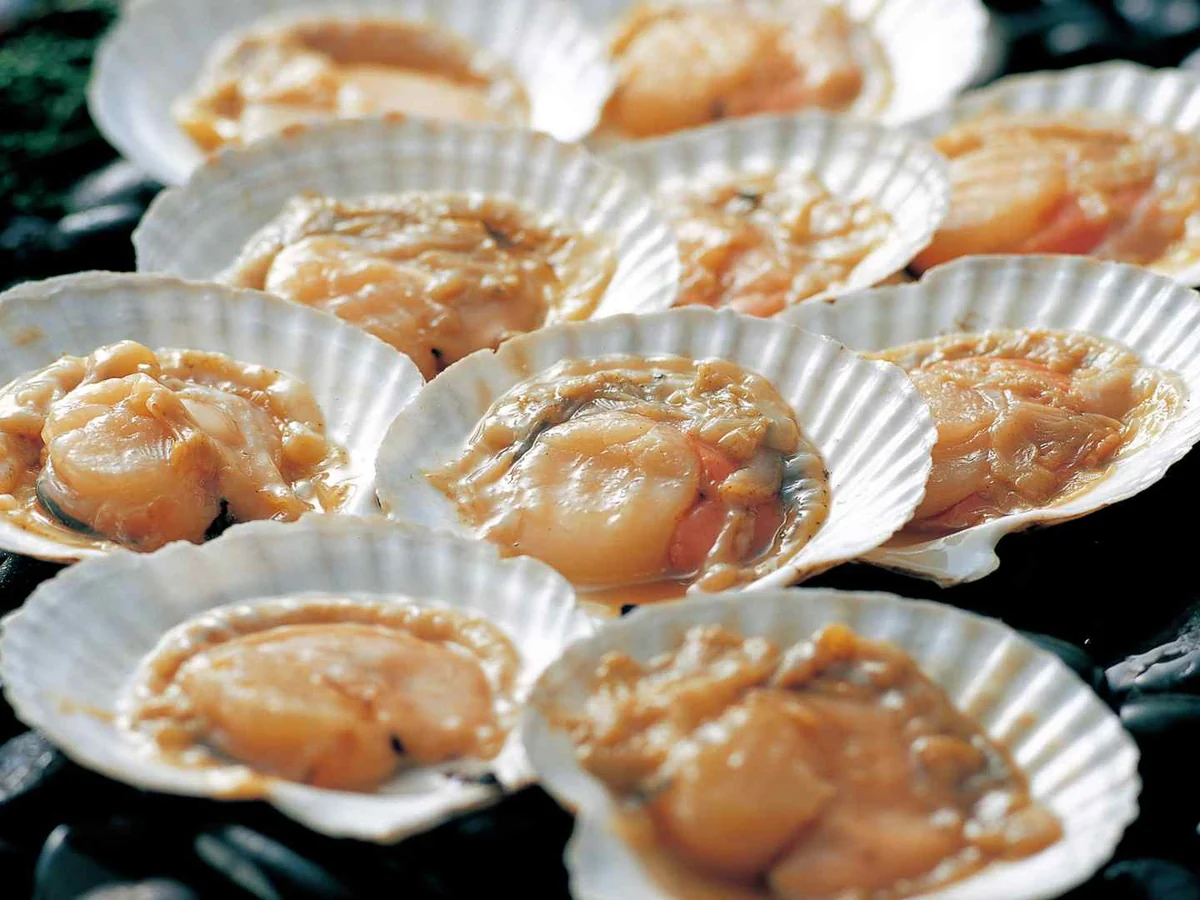
The round white adductor muscle is the common U.S. market portion, while whole scallops elsewhere may include roe and other tissues. Shell, viscera, and restaurant garnish must not be treated as interchangeable.
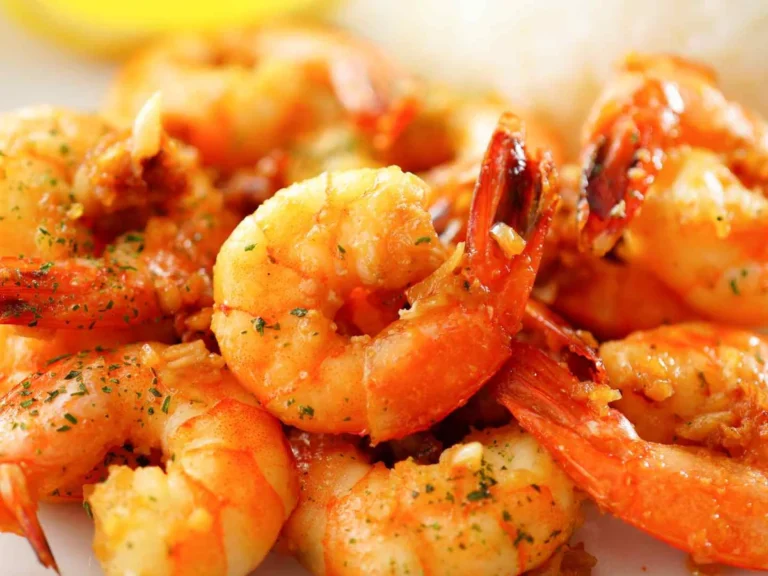
The cat shrimp guide provides a related shellfish comparison, but tails, shells, and cooking patterns differ.
Raw scallops carry microbial risk
Raw, seared-rare, ceviche-style, and thawed scallops can carry pathogens, and acid marinades do not equal cooking. Cross-contamination can spread through hands, knives, boards, paws, and dishes.
The CDC describes Vibrio infections associated with raw or undercooked seafood. Do not offer raw scallop as a natural feline food.
Cook plainly and cool completely
Use a sound product, cook it through according to official seafood-safety guidance, remove all shell and grit, cool it, and flake off less than a pea. Skip oil, butter, salt, stock, and sauce.
The FDA explains safe seafood selection, storage, and preparation. Smell alone cannot prove a raw scallop is pathogen-free.
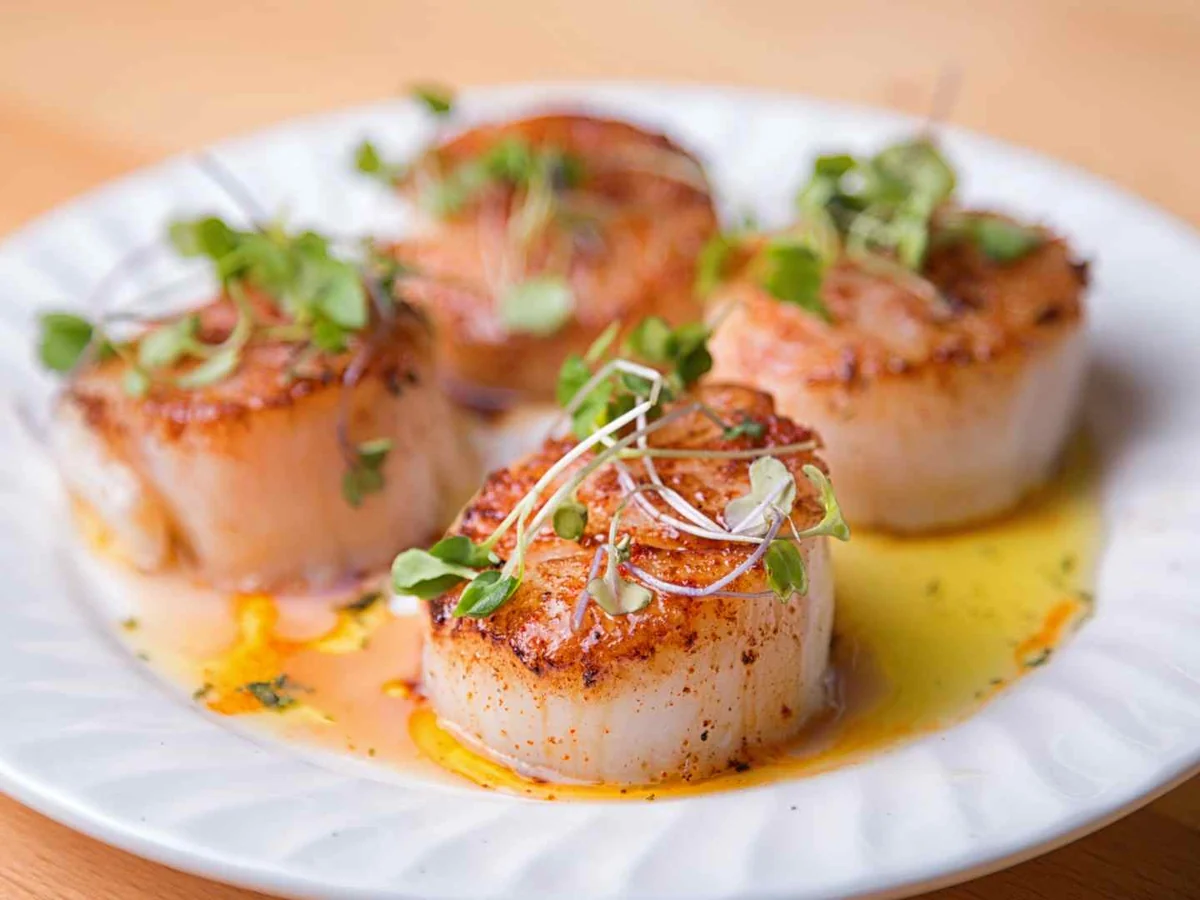
Restaurant scallops arrive dressed
Seared scallops commonly come with garlic butter, wine reduction, cream, risotto, bacon, truffle oil, chili, or salty sauce. Removing the top surface cannot remove absorbed seasoning.
The cat bacon guide matters when scallops are wrapped in cured pork. Toothpicks and skewers can outrank the food as hazards.
Shell and allergy questions
Scallop shells can cut, choke, or obstruct and may retain sand or cleaning chemicals. Keep serving shells and decorative fragments away.
Sudden facial swelling, hives, vomiting, breathing difficulty, or collapse after scallop needs urgent care. A chronic food allergy requires a controlled veterinary diet trial, not repeated shellfish testing.
Complete nutrition remains separate
The FDA explains nutritional adequacy claims for cat food. Scallop muscle is not a complete feline diet or taurine supplement.
The cat tuna guide helps compare another seafood treat that should not dominate the bowl.
Sea scallop or bay scallop changes portion math
Sea scallops are much larger than bay scallops, so “one scallop” is not a meaningful amount without weight. Photograph an intact piece beside the missing serving and record whether the cat reached raw or cooked seafood.
Wet-packed products can contain added solution, while dry scallops are sold without that treatment. The label can reveal sodium or processing details that appearance cannot.
The safest tasting preparation
Choose one sound scallop muscle, cook it fully without oil or seasoning, remove grit and any side muscle if tough, cool it, and pull off a flake smaller than a pea. Do not let the cat bite the whole round.
A chewy or rubbery texture can still be gulped rather than chewed. Cats with dental pain, swallowing disease, or prior obstruction should skip the experiment.
Seared outside does not prove a cooked center
Restaurant scallops are often intentionally translucent inside, and a hard sear can disguise that fact. Ask the kitchen how the center was prepared before describing the portion as cooked.
Ceviche uses acid rather than validated heat cooking, while sushi preparations may be raw. Neither is an appropriate feline treat.
Shellfish bacteria and the household
Raw juice can spread from cutting boards to faucet handles, towels, dishes, paws, and the refrigerator shelf. Confine the cat before cleaning and wash hands after litter duties during monitoring.
People with weakened immune systems, pregnancy, advanced age, or very young age should avoid the contaminated zone. A cat can carry residue without looking ill.
The orange crescent and whole-animal products
Some scallops are sold with roe or coral attached, and whole scallop dishes can retain viscera. Do not assume safety data for plain adductor muscle covers every tissue.
Report precisely which portion disappeared and where the seafood was harvested or purchased. An unlabeled whole shellfish exposure deserves more caution than a sealed plain muscle product.
Dredging, breading, and frying
Fried scallops may contain flour, egg, milk, salt, pepper, garlic, onion, oil, and dipping sauce. Crisp coating can hide a fragment of shell.
Removing breading cannot remove absorbed grease or seasoning. Persistent vomiting, abdominal pain, food refusal, or marked lethargy after a fried-seafood raid needs assessment.
Garlic butter is not a garnish problem
Scallops readily absorb butter, garlic, wine, lemon, stock, and salt during basting. Shaving off the browned face does not restore plain seafood.
Known garlic exposure deserves a timely call even when the cat seems normal because oxidative red-cell effects can be delayed. Keep the recipe and estimate sauce volume.
Bacon-wrapped scallops
Bacon adds cure, sodium, fat, smoke, and often a wooden pick, while the scallop center may remain undercooked. Count every pick and compare damaged ends.
Never induce vomiting after a skewer or sharp shell might have been swallowed. Repeated swallowing, gagging, retching, blood, or pain requires urgent care.
Frozen products and glaze ice
Individually frozen scallops may be coated with protective ice and packed with clips or inner liners. A frozen round can injure teeth and should not be offered as enrichment.
Thaw in a contained refrigerator vessel according to official guidance, not on a counter. Discard seafood with an unsafe temperature history instead of cooking it for the cat.
Scallop allergy without overdiagnosis
One episode of vomiting after garlic-butter scallops cannot identify the shellfish protein among fat and seasoning. Chronic reactions require a controlled veterinary elimination and challenge.
Facial swelling, widespread hives, sudden vomiting, noisy breathing, or collapse is an emergency pattern. Do not perform a second home exposure to confirm it.
Calorie and diet boundaries
Scallop muscle provides protein and minerals in human diets, but a few flakes cannot balance homemade cat food. Repeated seafood topping can distort calories and food-allergy trials.
Cats with kidney disease, sodium restrictions, pancreatitis history, or prescription diets need approval before any restaurant seafood. “Lean” is not the same as medically suitable.
A scallop raid in five observations
- Count muscles: distinguish bay, sea, whole, roe-on, and unknown pieces.
- Name preparation: raw, translucent, seared, boiled, fried, bacon-wrapped, or sauced.
- List additions: garlic, onion, butter, wine, salt, chili, dairy, and sweeteners.
- Find objects: shells, picks, film, pads, foil, knives, and sauce lids.
- Track the cat: record weight, time, amount, vomiting, breathing, gait, appetite, and pain.
Frequently asked questions
Can kittens eat scallops?
Kittens need complete growth nutrition, and raw seafood, chewy rounds, seasoning, shells, and contamination make scallops a poor use of limited stomach space.
Can cats eat raw scallops?
Do not offer them because microbial exposure and household contamination are avoidable. Acid marinade and a quick exterior sear do not provide the same control as thorough cooking.
What if my cat swallowed scallop shell?
Seek prompt advice with fragment size, shape, time, and symptoms. Do not make the cat vomit or push food behind a sharp piece.
How often can cats eat scallops?
Only as an occasional tiny plain cooked flake if the veterinarian approves; the complete diet should remain unchanged.
Bottom line
Plain cooked scallop muscle can be a tiny optional taste, but whole tissues, raw centers, shell fragments, butter, garlic, bacon, picks, and storage failures change the scene quickly. Inspect the dish like seafood, not like a generic protein cube.
Keep a cat away while shucking because shell knives, broken valves, rubber bands, towels, and slippery work surfaces create injury risks before the seafood is cooked. Count shell halves and discard them in a secured container that cannot be tipped later.
Scallops marketed as pet treats still require feeding directions, calorie accounting, intact packaging, and safe storage. Confirm whether the package calls the product a treat or a complete food, discard pieces that became damp or moldy, and stop use if the cat develops vomiting, itching, diarrhea, or appetite change.
A scallop taken during a strict fish-free elimination diet can invalidate diagnostic progress even if the flake was plain and cooked. Contact the treating clinic before changing the trial length, and record all sauces, shared cooking surfaces, supplements, and other proteins that could complicate interpretation.
Scallop chowder combines shellfish with milk or cream, butter, potato, onion, garlic, bacon, salt, flour, and hot liquid, making the white muscle only one small part of the exposure. A cooled spoonful can still carry every dissolved ingredient, and a hot spill requires burn assessment for drooling, red tissue, blisters, squinting, or sudden refusal to eat.
Dried scallops and seafood snacks contain much less water than fresh muscle and may be salted, smoked, sweetened, or packaged with oxygen absorbers. Their dense chewy texture can be gulped, their calories and sodium are concentrated, and an imported package may use a recipe or serving statement that differs from familiar domestic seafood.
Scallop ceviche, poke, and seafood salad may add citrus, chili, onion, garlic, avocado, soy sauce, mayonnaise, sesame oil, raw fish, and plastic takeout film. Acid changes texture but does not supply the microbial control of validated cooking, and rinsing one cube cannot remove sauce absorbed into cut surfaces.
A shellfish counter raid often involves ice, meltwater, paper, price labels, rubber bands, knives, and neighboring raw seafood. Tell the veterinary team whether the cat drank display liquid, chewed shell, contacted another species, or tracked raw juice through the room, then clean human-food surfaces using label-directed methods while keeping pets elsewhere.
When monitoring a tiny plain cooked flake, preserve the ordinary complete meal and avoid using scallop to tempt repeated appetite tests. Write down the clinic’s observation window, identify which cat ate the seafood in a multicat home, and escalate for repeated vomiting, breathing change, weakness, facial swelling, pain, poor appetite, or missing packaging.