Can Cats Eat Sweet Potato Skins? Raw Peel, Cooked Skins, Fries, and Loaded Recipes
Do not offer cats sweet potato skins, especially when raw. The identified sweet potato plant is not considered feline-toxic, but peel is fibrous, carries soil and handling residue, and can fold into a choking or digestive foreign body; loaded skins, fries, chips, and garden scraps add entirely different hazards.
A peel strip behaves differently from orange flesh
Sweet potato skin can remain leathery after cooking and becomes tougher when dried or crisped. A cat may swallow a long strip with minimal chewing, while a tiny piece of peeled, soft-cooked flesh is easier to portion if a veterinarian allows human-food tastes.
| Skin form | Main concern |
| Raw peel strip | Fibrous wad, soil, choking or obstruction |
| Cooked plain skin | Still tough and unnecessary |
| Crispy skin or chip | Hard edge, oil, salt, seasoning |
| Loaded potato skin | Cheese, bacon, sour cream, Alliums, heat |
| Compost peel | Mold, other scraps, bags, string |
| Garden root or vine | Identification, chemicals, wire, soil |
Sweet potato is not white potato
Sweet potato is Ipomoea batatas, not the white potato nightshade, so warnings about green white-potato skin and solanine should not be copied wholesale. The ASPCA lists sweet potato vine as non-toxic to cats, which supports a non-poisonous plant classification.
That listing does not certify every peel texture, rotten tuber, garden chemical, recipe, or unidentified ornamental vine as safe. Correct species and preparation remain the beginning of the answer.

Raw peel carries the cutting-board story
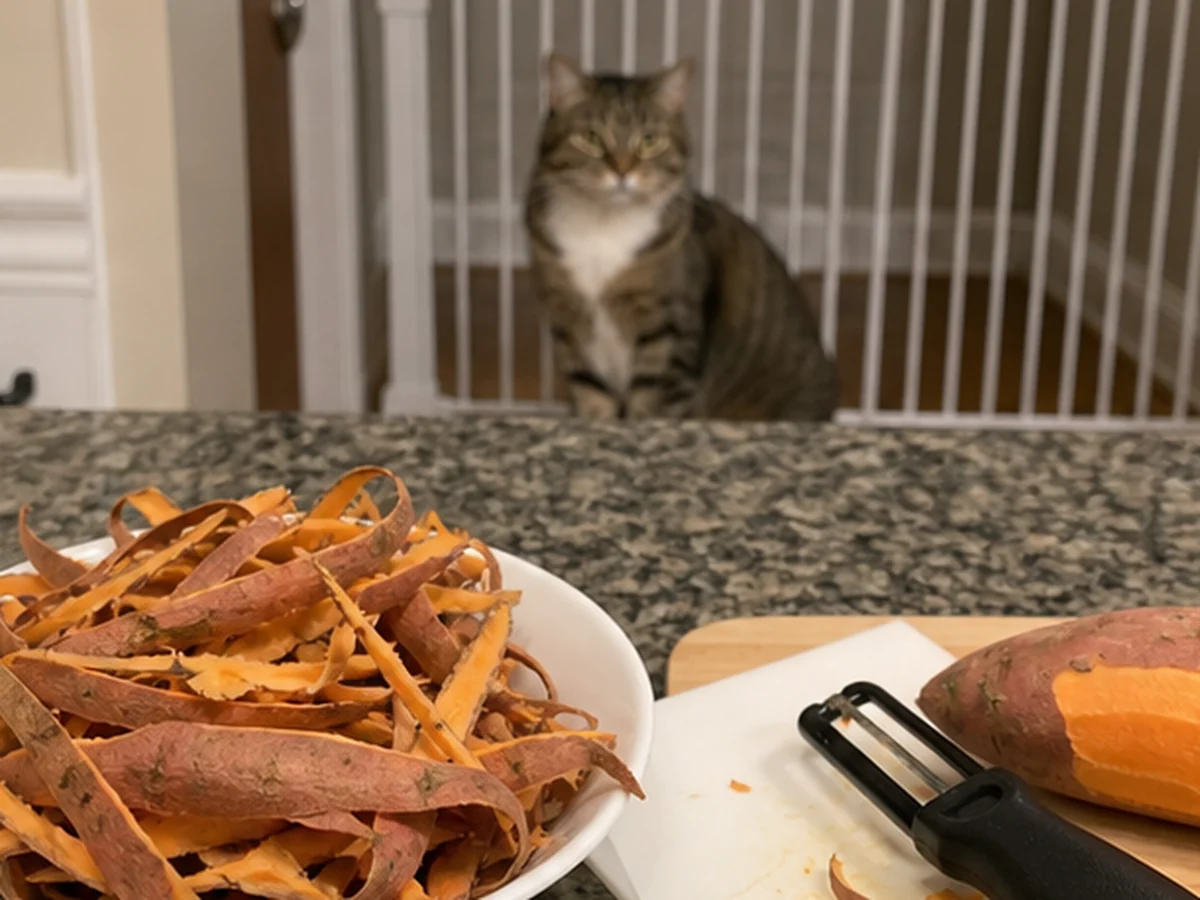
Peeling exposes long ribbons beside a sharp knife, vegetable peeler, mandoline, produce sticker, rubber band, and plastic bag. A cat that raids the pile may swallow non-food objects or step onto a blade before anyone notices missing skin.
Move the cat out of the prep zone, collect peels directly into a closed container, and count blade guards and stickers. Blood, gagging, repeated swallowing, or a missing sharp object warrants prompt care.
Spiralizers and julienne peelers create thin, noodle-like strands that are especially easy to overlook on the floor. Unplug electric equipment before retrieving food, then inspect the blade housing and discard tangled peel where paws cannot reach it.
A blood smear beside a peel pile changes the concern from vegetable digestion to possible mouth or paw injury. Check only what the cat allows comfortably and let a clinic assess a suspected cut rather than probing with fingers or tweezers.
Wash before peeling, even when skin goes in the bin
A knife or peeler can carry dirt and bacteria from the surface into human food. FDA produce-safety guidance recommends running water, clean hands and tools, and no soap or commercial wash on produce.
Washing reduces surface contamination but does not transform peel into a cat treat. Discard deeply damaged, leaking, moldy, rodent-contaminated, or foul-smelling roots rather than salvaging skins for an animal.
Cooking softens some skins, not every strip
Boiling and steaming usually leave a moister peel than baking, air-frying, or dehydrating, but width and thickness still vary. If peel separates from human food, throw it away rather than testing whether a cat can manage it.
A swallowed broad strip deserves advice when the cat is small, has swallowing disease, or develops vomiting, pain, appetite loss, or reduced stool. Do not try to push it through with oil, bread, pumpkin, or more food.
Peel width matters because a narrow fleck and a palm-length ribbon do not behave alike, yet a photo beside a ruler is more useful than a brave guess. If part of a strip is hanging from the mouth, do not tug when it does not slide free immediately, since unseen material may be caught farther back.
Cats with prior intestinal surgery, chronic constipation, reduced gut movement, dental pain, or a habit of swallowing fabric merit quicker advice after a missing ribbon. Their individual history changes the decision without turning every speck into an emergency.

Loaded skins are restaurant recipes
Loaded sweet potato skins can include butter, cheese, bacon, sour cream, salt, onion, garlic, chives, chile, barbecue sauce, and hot grease. The sturdy shell becomes a boat for ingredients more appealing and more concerning than the root.
Save the menu or recipe and use the site’s sour cream guide and onion guide for components. Do not assume scraping away visible toppings removes dissolved seasoning.
Fries and chips concentrate texture and seasoning
Skin-on fries add oil, salt, browned edges, garlic or onion powder, and sometimes dipping sauce. Sweet potato chips remove moisture until thin peel and flesh become brittle shards, often inside a flexible bag that attracts pets.
A crumb may cause no trouble, but a bag raid can produce vomiting and introduce suffocation or package ingestion. Secure wrappers and count sauce-cup lids, foil, and skewers.
Commercial dehydrated sweet potato chews are commonly designed for dogs and may be broad, dense, and difficult for a cat to tear safely. A single-ingredient label does not solve the size and texture problem, and flavored versions can add smoke, meat coating, glycerin, salt, or preservatives.
Homemade peel crisps are not safer simply because the kitchen is familiar. Dehydration removes water, concentrates each bite, and can turn curled edges into rigid points that scratch the mouth or become an awkward swallowed wad.
Garden and compost scraps are mixed exposures
Homegrown roots may be coated with fertilizer, pesticide, fungicide, slug bait, or contaminated soil, while compost piles mix peels with onion, coffee, moldy food, string, and fermenting waste. Decomposition does not create a predictable safety timetable.
Keep product labels and identify every plausible scrap after a compost raid. A latched bin is more reliable than expecting a cat to distinguish orange peel from the ribbon tying yesterday’s vegetables.
Mold changes the case because some molds can produce toxins that affect the nervous system, and compost may also ferment. Tremors, agitation, marked weakness, repeated vomiting, or seizures after access to spoiled scraps require urgent care even if the visible peel seems ordinary.
Outdoor peels can also carry slug pellets, rodent bait, weed killer, or concentrated fertilizer granules stuck to damp surfaces. Photograph the area and bring original product labels rather than relying on the root vegetable’s name when speaking with the clinic.

Signs that make a peel incident urgent
- Breathing difficulty, blue or pale gums, collapse, or obvious choking
- Repeated unproductive retching, vomiting, or inability to keep water down
- A painful or swollen abdomen, reduced stool, straining, or food refusal
- Blood in the mouth or a missing peeler blade, skewer, foil strip, or bag piece
- Weakness, tremors, abnormal behavior, or exposure to garden chemicals
Do not induce vomiting or give peroxide, salt, oil, milk, charcoal, or a human laxative. A veterinarian needs the strip size, time, recipe, objects, cat’s weight, conditions, and signs.
Obstruction signs can begin after the kitchen has been cleaned, so write down the incident instead of relying on memory. Repeated vomiting, a hunched posture, hiding, tenderness, food refusal, or little stool warrants a call even when the peel never reappears.
Normal stool once does not prove every swallowed strip has passed, and finding one fragment does not account for the whole pile. Follow the monitoring window and feeding instructions the veterinarian gives for that cat.
Sweet potato peel may not be obvious on every type of imaging, so a normal-looking home abdomen or one quiet hour cannot rule out trouble. The clinician may choose examination, imaging, observation, or supportive care according to the strip, timing, and cat rather than a single universal protocol.
Skin cannot treat constipation or clean teeth
Fiber does not make a tough peel a safe digestive tool, and hard or leathery food does not provide validated dental care. Constipation, hairballs, diarrhea, and dental disease require diagnosis and an appropriate plan.
Straining can also reflect urinary blockage, especially in a male cat producing little or no urine. Do not delay emergency urinary care while trying vegetable fiber.
The regular diet already has a better job description
The FDA’s nutritional adequacy statement identifies food intended to meet feline needs. Sweet potato peel adds no essential feature that complete cat food lacks.
For the broader root question, the raw sweet potato guide separates dense flesh, cooking, skins, and recipes. Cats on diabetes, kidney, bowel, allergy, or weight diets should receive approved extras only.
The peel-pile response
- Remove peels, root, tools, stickers, bands, bags, toppings, and garden products.
- Measure the missing strip and identify raw, cooked, fried, dried, seasoned, rotten, or composted form.
- Record time, weight, health conditions, recipe, objects, and current signs.
- Call for a broad strip, unknown amount, vulnerable cat, chemicals, packaging, or symptoms.
- If observation is advised, serve normal food and water and monitor appetite, vomiting, stool, and comfort.
Frequently asked questions
Are sweet potato skins poisonous to cats?
The identified sweet potato plant is not listed as toxic, but peel remains a poor food because it is fibrous and can carry contamination or seasoning. Non-toxic does not mean easy to swallow.
What if my cat ate cooked sweet potato skin?
Call based on strip size, thickness, seasonings, and the cat’s health, especially if the piece was broad or long. Seek care for gagging, vomiting, pain, appetite loss, or reduced stool.
Can cats eat skin-on sweet potato fries?
They are best avoided because oil, salt, seasonings, hard edges, and dips add risk. A tiny dropped crumb is different from a package raid.
Should I make my cat vomit after swallowing peel?
No. Home vomiting is unsafe for cats and can worsen an obstruction or sharp-object exposure; contact a veterinarian for case-specific directions.
Bottom line
Sweet potato skin is not a useful cat treat even though the plant is not classified as feline-toxic. Raw or broad strips, crispy skins, loaded recipes, garden residue, compost, and preparation debris deserve a physical and ingredient-led response.