Can Cats Eat Cabbage? Raw Shreds, Cooked Leaves, and Fermented Forms
A tiny shred of plain cooked cabbage is generally low risk for a healthy adult cat, but it is optional, fibrous, and likely to be less exciting than whatever you are eating beside it. Raw leaves, large pieces, slaw dressing, sauerkraut, kimchi, garlic, onion, and discarded cores need separate decisions.
Use the dish, not the vegetable name, for triage
One cooked unseasoned shred usually calls for observation, while a bowl of coleslaw or kimchi calls for ingredient investigation. Account for toothpicks, plastic film, produce bands, skewers, and absorbent packaging before deciding the food itself is the only issue.
After a minor plain bite, offer the normal diet and water and watch for gas, vomiting, diarrhea, constipation, or reduced appetite. Do not give oil, milk, salt, laxatives, or human stomach products to counteract cabbage.
Contact a veterinarian for onion or garlic, a large core piece, choking, repeated vomiting, abdominal pain, weakness, pale gums, breathing changes, collapse, or a cat who stops eating. Save a recipe, package, or clear photograph for the call.
Green, red, Savoy, and napa cabbage
Common culinary cabbages are varieties of Brassica oleracea, while napa cabbage belongs to a related Brassica species. Color and leaf shape change texture and flavor, but none needs to become a regular component of a balanced feline diet.
Green cabbage has dense smooth leaves, red cabbage brings pigments that may color food or stool, and Savoy has crinkled leaves with pronounced ridges. Napa is softer and more watery, yet a large raw piece can still fold into an awkward mouthful.
Plain cabbage is not listed among the classic foods that commonly poison cats. The useful safety discussion centers on size, fiber, digestive tolerance, added ingredients, and whether an optional vegetable is crowding out appropriate food.
Why cooking improves the texture
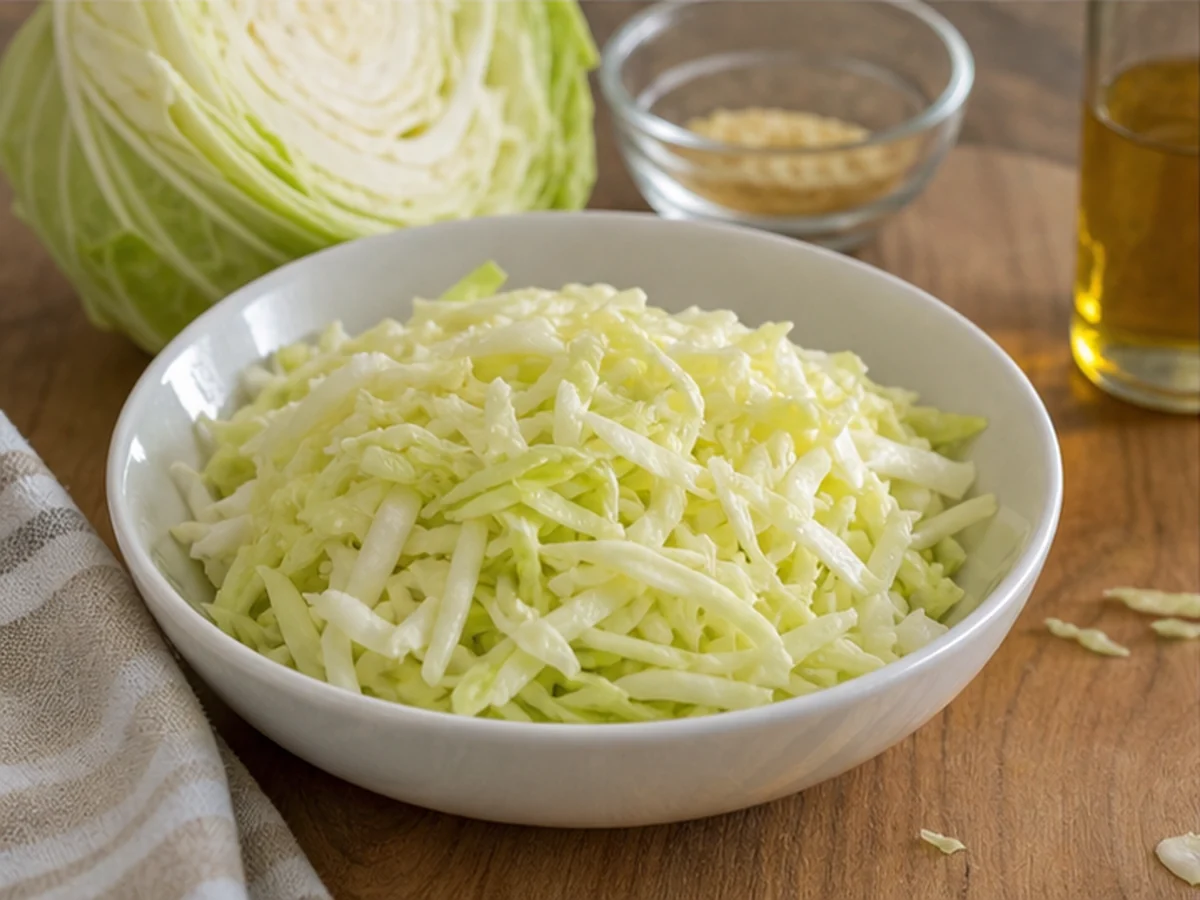
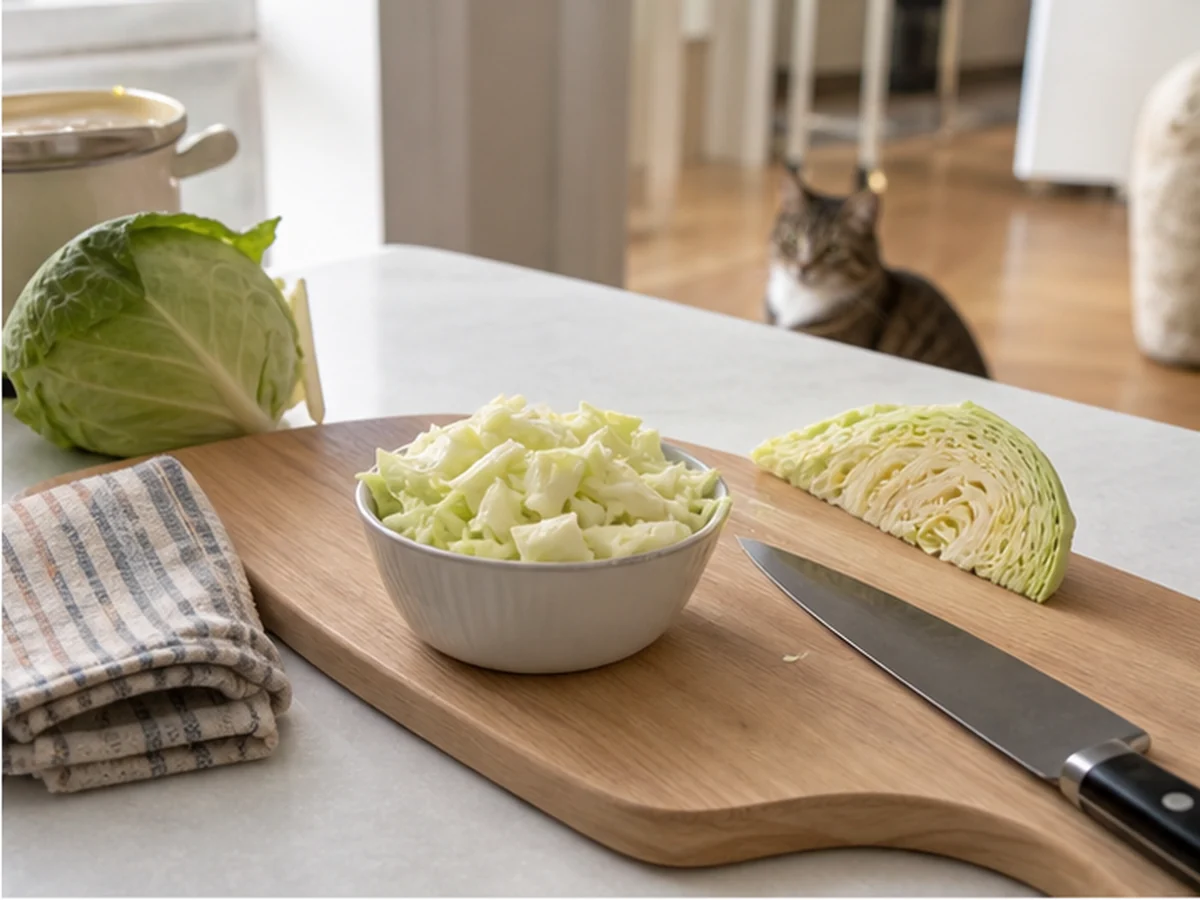
Steaming or boiling in plain water softens cabbage fibers and makes a tiny portion easier to chew. Remove the firm core and thick central rib, then mince a cooled piece rather than offering a whole floppy leaf.
A first taste should be one or two shreds smaller than a pea for a healthy adult cat. That practical ceiling is deliberately cautious and should not be mistaken for a scientifically proven daily serving.
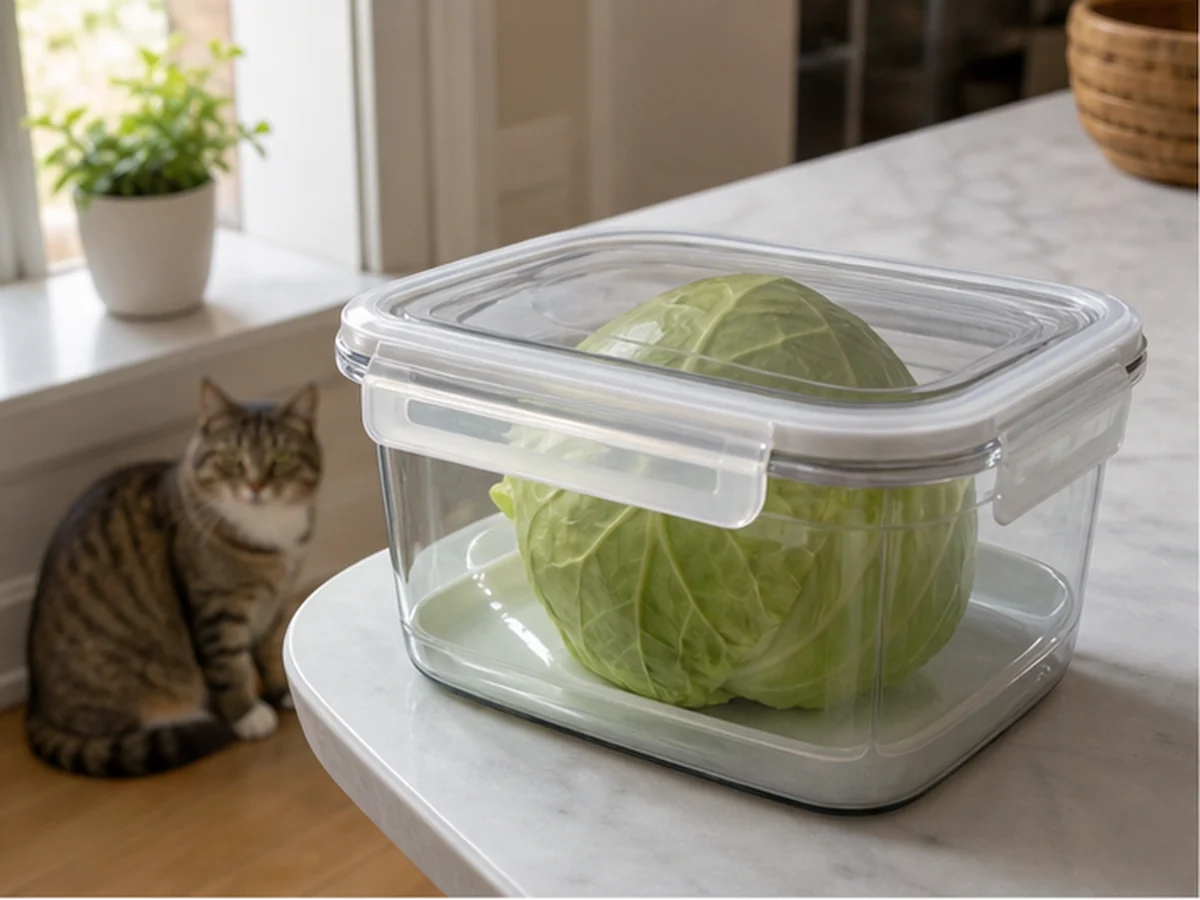
Wash the uncut head before preparation and discard slimy, rotten, or badly damaged leaves. The FDA advises washing produce under running water, avoiding soap, and keeping clean produce separate from raw meat and contaminated utensils.
Cooked cabbage should cool before it reaches the floor-level diner. Rolled leaves and dense centers can stay hotter than expected, especially after microwaving.
Raw cabbage is not poison, but it is cumbersome
Raw leaves are tougher to break down and may produce more gas or loose stool in an unaccustomed cat. Long slaw-like ribbons can be gulped, dangle from the mouth, or behave like linear material when swallowed in quantity.
If a strip hangs from the mouth or anus, do not pull it. Material caught internally can damage the gastrointestinal tract when tension is applied.
A hard cabbage core is denser and more concerning than a leaf shred. The Merck Veterinary Manual describes vomiting, appetite loss, lethargy, diarrhea, abdominal pain, and shock among possible obstruction findings.
Gas is common; painful bloating is not a punchline
Cabbage fiber and fermentable carbohydrates can produce intestinal gas, particularly after a large or unfamiliar serving. A comfortable cat with one windy afternoon may simply need the regular menu restored.
A tense abdomen, repeated unproductive retching, vomiting, hiding, restlessness, weakness, or refusal to eat requires veterinary advice. Those signs cannot be safely attributed to harmless fermentation without examining the cat.
Do not massage a painful belly or give over-the-counter gas remedies made for people. Product ingredients and doses differ, and abdominal pain can reflect obstruction or another emergency.
Coleslaw is mostly a dressing question
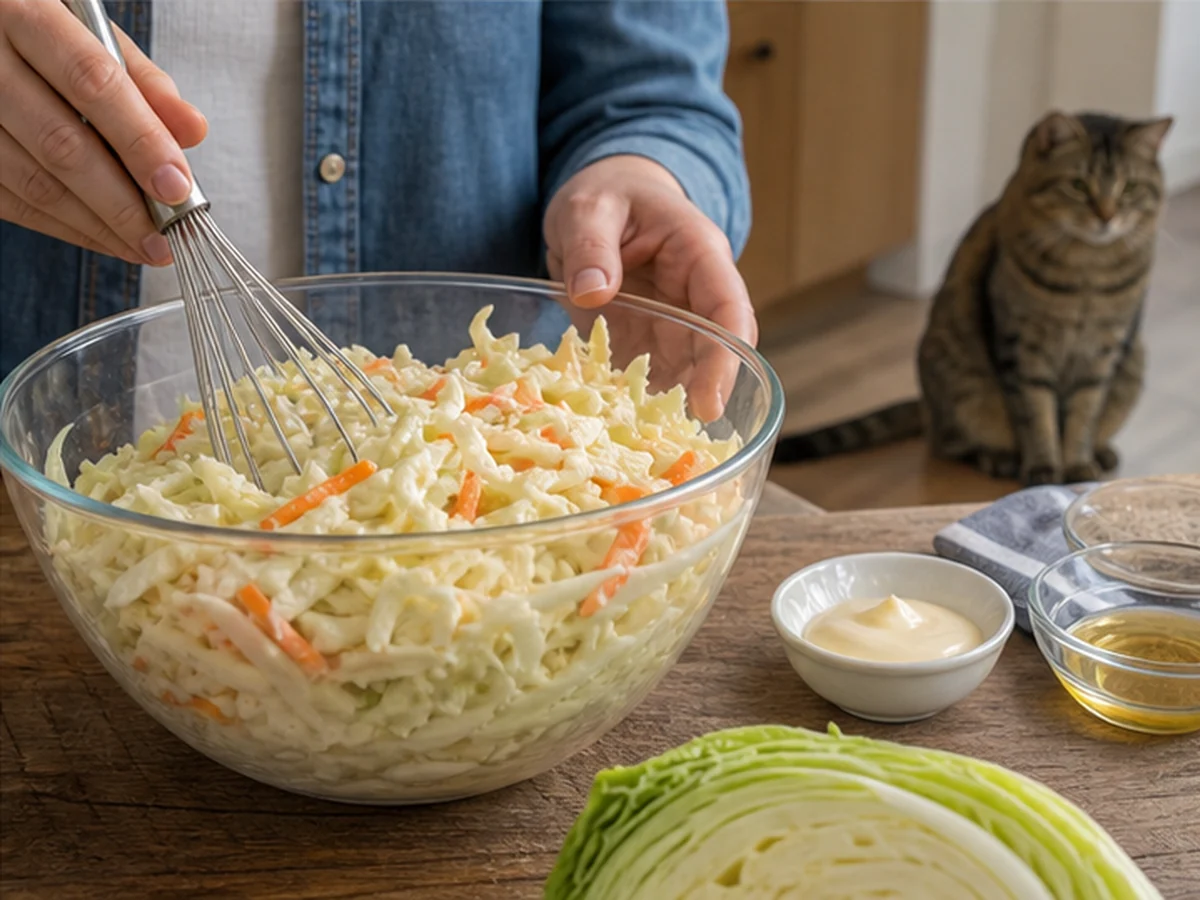
Classic creamy slaw can include mayonnaise, sugar, salt, mustard, onion, and dairy, while vinaigrette versions may use garlic, oil, vinegar, and sweeteners. A plain cabbage answer cannot clear either recipe.
A tiny lick of ordinary allium-free dressing may cause no more than mild stomach upset, but a large portion adds significant fat. Check onion and garlic carefully, including powders tucked inside premade seasoning packets.
Raisins sometimes appear in slaw, introducing a separate uncertainty that deserves prompt professional advice. Report every add-in, because saying the cat ate salad dramatically undersells what may have been in the bowl.
Sauerkraut brings sodium and fermentation
Sauerkraut is cabbage fermented with salt, and commercial or homemade versions may add caraway, wine, garlic, onion, sausage, or sweeteners. Its sodium concentration and acidic brine make it a poor feline treat even when the ingredient list is short.
The site’s sauerkraut overview helps identify brine, seasoning, and fermentation variables, but dog portions are not cat instructions. After a lick, inspect the jar and call for large amounts, risky additions, or symptoms.
Do not offer fermented cabbage as a probiotic without veterinary guidance. Microbial strains, viability, salt, and evidence vary, while feline probiotic products are designed and labeled for a clearer purpose.
Home-fermented cabbage that smells wrong, shows unexpected mold, has a broken seal, or was processed unreliably should be kept from every household member. A cat is not a quality-control technician, despite its willingness to sit beside the crock.
Kimchi needs an immediate ingredient check
Kimchi commonly contains garlic, scallion, onion, chili, fish sauce, and substantial salt. Cats are particularly susceptible to allium-related oxidative injury, so meaningful ingestion should be discussed promptly with a veterinarian or animal poison service.
The ASPCA lists onion, garlic, and chives as hazardous and notes cats’ increased susceptibility. Possible signs include gastrointestinal upset and red blood cell damage that can lead to anemia.
Do not wait for pale gums, weakness, rapid breathing, high heart rate, or dark urine after a substantial allium exposure. Effects may not appear at the instant the plate is licked, which makes early history-based advice valuable.
Stuffed cabbage and cooked dinner dishes
Stuffed cabbage rolls may contain onion, garlic, seasoned meat, rice, tomato sauce, salt, and toothpicks. The leaf is often the least important part of this particular theft.
Boiled dinners can include cured meat, fatty drippings, broth, and large vegetable chunks. Stir-fries add oil and salty sauce, while roasted cabbage wedges may be coated with spice blends whose sub-ingredients are not visible.
If pizza carries cabbage as a specialty topping, evaluate dough, cheese, sauce, and alliums using the cat pizza guide. One named vegetable never gets veto power over the rest of a mixed dish.
Does cabbage affect feline thyroid function?
Cabbage contains compounds discussed as goitrogens, which can interfere with thyroid hormone processes under some experimental or high-exposure circumstances. There is not good evidence that one tiny cooked serving causes thyroid disease in a cat.
Avoid large, repetitive raw-cabbage feeding and unbalanced homemade diets rather than turning an occasional shred into an acute toxin scare. Cats already diagnosed with thyroid disease should follow the veterinarian’s diet and medication plan.
Do not use cabbage to lower thyroid hormone or alter medication requirements. Only examination and appropriate laboratory monitoring can show whether treatment is working.
Cabbage is not a complete fiber plan
Fiber type and amount can influence stool, appetite, gut microbes, and calorie density, but random leaves do not provide controlled therapy. Constipation, diarrhea, hairballs, and weight management each need a cause-based plan.
The Cornell Feline Health Center’s nutrition resource recommends complete and balanced food with treats kept occasional. That framework is much safer than allowing vegetables to occupy a growing fraction of each meal.
If your veterinarian recommends added fiber, ask for the product, measurement, frequency, hydration instructions, and signs that should trigger a recheck. A scoop chosen by eye can vary dramatically from one day to the next.
Cats who should leave cabbage to the humans
Kittens, cats with chewing or swallowing difficulty, patients with chronic gastrointestinal disease, and animals with previous foreign-body obstruction should skip cabbage. The same applies during veterinary elimination diets and when a prescription formula requires strict adherence.
Diabetic and overweight cats need predictable calories rather than unrecorded table tastes. Cats with heart or kidney disease may also have sodium targets that make brined products particularly unsuitable.
A senior who suddenly struggles with leafy textures may have dental or oral pain. Choose an examination over quietly replacing the normal diet with soft household food.
Internal comparisons that clarify the form
The cabbage preparation overview separates raw, cooked, core, and recipe questions. For nearby vegetables, the broccoli guide and Brussels sprout guide show how structure changes the practical hazard.
Those pages describe canine topics and are useful only for identifying food forms and hidden ingredients here. A dog’s tolerated amount, metabolism, and clinical evidence cannot establish what is safe for a cat.
FAQ
Can cats eat raw cabbage?
A tiny raw shred is unlikely to poison a cat, but it is tougher and may cause gas or digestive upset. Soft cooked cabbage cut very small is the more sensible optional form.
Can cats eat red cabbage?
One minced, plain, cooked piece is generally low risk, and its pigment may alter the color of food or stool. Rich dressing, onion, garlic, and large portions remain the real concerns.
Is sauerkraut safe for cats?
Do not offer it because it is salty and may contain wine, garlic, onion, sausage, or spices. Check the jar after an accidental lick and call for a large amount or hazardous additions.
Can cabbage help a constipated cat?
It is not a reliable home treatment, and extra bulk can be harmful in some constipated or obstructed cats. Straining, pain, vomiting, lethargy, or appetite loss needs veterinary attention.
Bottom line
One tiny cooked cabbage shred is usually harmless, but raw ribbons, hard core, gas, fermented salt, and seasoned recipes can complicate the picture. Keep any sample plain and rare, and let complete cat food handle the nutrition.