Can Cats Eat Chickpeas? Plain Beans, Cans, Hummus, and Gas
One or two soft, plain, fully cooked chickpea pieces are generally low risk for a healthy adult cat, but beans are not a substitute for feline protein. Dry chickpeas, salty cans, garlic-heavy hummus, fried falafel, crunchy snacks, large servings, and packaging all create different practical concerns.
Start with the form on the floor
A mashed piece from a plain cooked chickpea is likely to need only observation. A mouthful of dry beans, hummus from an unknown restaurant, a spicy roasted snack, or raw falafel batter deserves closer attention.
Remove access, save the package or recipe, and note the possible amount and time. Keep normal cat food and water available rather than offering extra beans, milk, oil, or laxatives to move the first serving along.
Call a veterinarian for onion or garlic, repeated vomiting, a swollen or painful abdomen, marked weakness, choking, a large quantity, dry beans swallowed whole, missing packaging, or a cat who stops eating. Do not induce vomiting unless a professional instructs you.
Chickpea and garbanzo bean mean the same food
Chickpea and garbanzo bean are two common names for Cicer arietinum. Label language can change between cans and recipes, but the bean does not become a different species when the package switches names.
The site’s chickpea overview and garbanzo bean guide help decode cooking and product forms. They cover dog topics, so use them for food identification rather than feline portions or medical predictions.
Chickpeas provide plant protein, starch, and fiber for people, but their protein is not nutritionally equivalent to a complete cat food. Cats require species-specific amino acid, fatty acid, vitamin, and mineral balance that a bowl of legumes cannot deliver.
The safest optional taste is cooked almost to mush
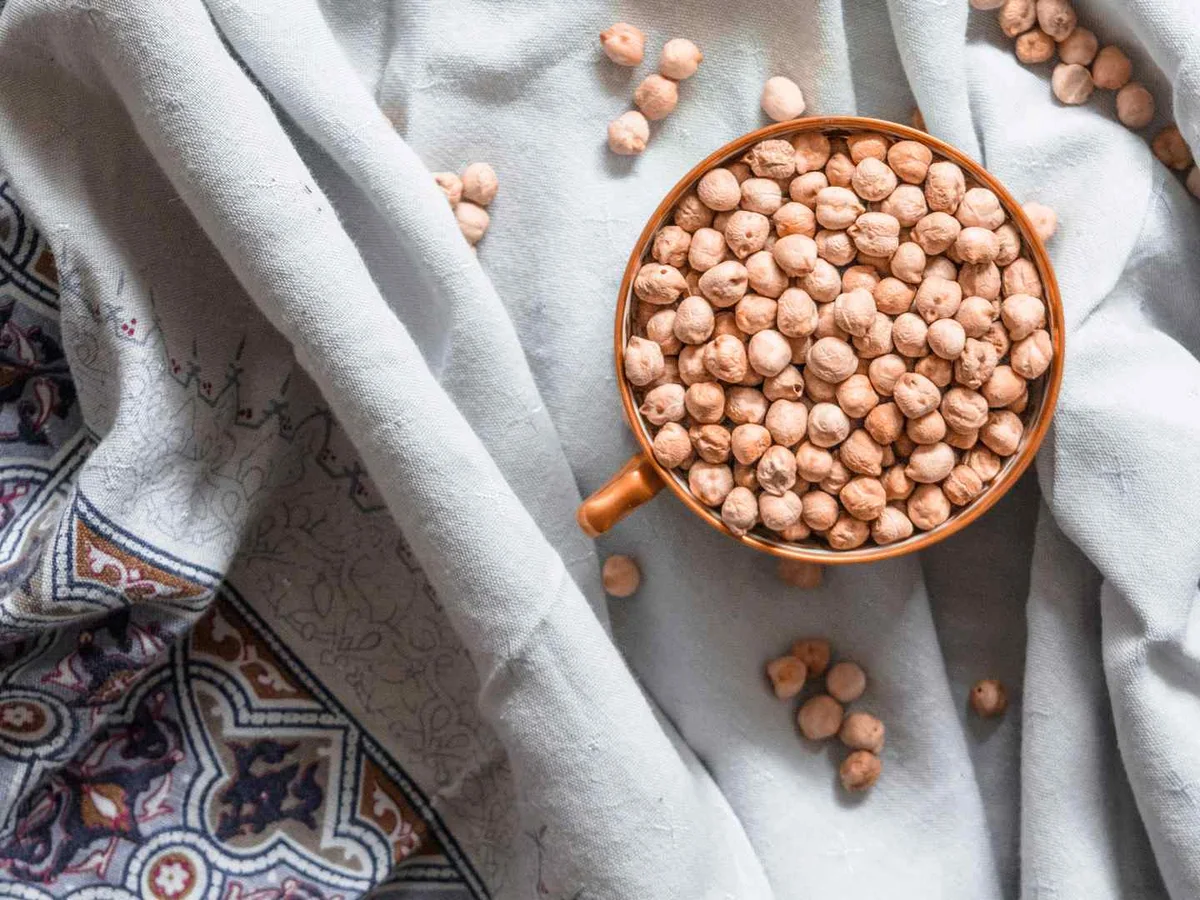
Use chickpeas soaked and boiled in plain water until they crush easily between fingers, then remove any loose skins and mash a small piece. Cool it fully and offer no more than one or two pea-sized portions on a first trial.
That amount is a cautious household serving, not a known toxic threshold or nutritional prescription. A cat who walks away has made a perfectly reasonable menu decision and does not need persuasion.
Do not add salt, broth, butter, oil, onion, garlic, chili, lemon, or spice. If a veterinarian includes chickpeas in a formulated recipe, follow the specified cooked weight and preparation rather than improvising from this snack guidance.
Dry and undercooked chickpeas are a poor gamble
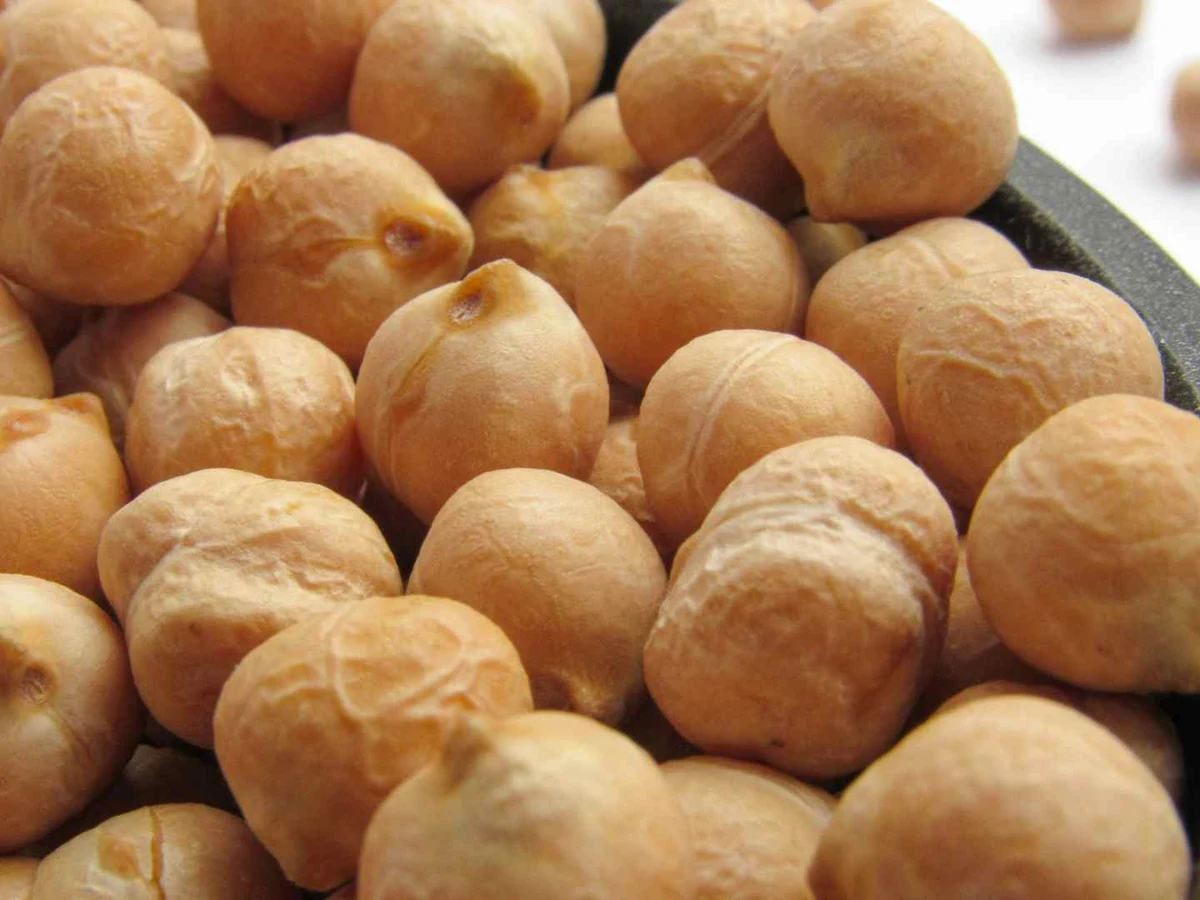
Dry chickpeas are hard enough to damage teeth or lodge in the throat, and they expand and soften only with proper soaking and cooking. They are not feline crunch treats, puzzle-feeder pieces, or a sensible way to add fiber.
Undercooked legumes are difficult to digest and may contribute to nausea, gas, cramps, vomiting, or diarrhea. If several dry beans are missing, call for size-based advice rather than assuming they will simply hydrate inside the cat.
The Merck Veterinary Manual describes appetite loss, vomiting, lethargy, abdominal pain, and other variable signs of obstruction. Choking, repeated retching, breathing trouble, or collapse needs immediate care.
Why chickpeas make some cats gassy
Chickpeas contain fiber and fermentable carbohydrates that gut microbes can use, producing gas. A novel serving can also change stool consistency simply because the digestive tract has not been receiving that ingredient.
Mild gas in a cat who remains comfortable, active, and hungry is different from painful bloating, repeated vomiting, hiding, or food refusal. Stop the beans and call when signs persist, escalate, or occur in a kitten, senior, or medically fragile cat.
Do not treat gas with human simethicone or another over-the-counter product without veterinary approval. Flavors, sweeteners, combination ingredients, and dosing errors can turn a minor food issue into a medication issue.
Canned chickpeas bring brine and labels
Canned chickpeas are fully cooked, but standard products may contain substantial sodium and firming agents. Choose an unsalted can if a veterinarian approves a taste, drain it, rinse the beans under water, and mash one thoroughly.
Rinsing can remove surface brine but cannot transform a seasoned canned recipe into plain food. Chickpeas packed with curry, chili, garlic, onion, tomato sauce, or meat flavor must be evaluated from the entire ingredient list.
The FDA’s Nutrition Facts guide explains serving size, sodium, added sugars, and ingredient information on packaged foods. Remember that the human serving printed on the can is not a suggested feline portion.
Never use a swollen, leaking, spurting, deeply rusted, or badly damaged can. Refrigerate leftovers promptly in a clean covered container and discard spoiled beans instead of offering them to the household’s smallest volunteer.
Aquafaba is bean liquid, not cat broth
Aquafaba is the cooking or canning liquid from chickpeas and is used as an egg substitute in human recipes. Plain homemade liquid may be low risk in a tiny lick, but canned aquafaba can carry sodium and dessert aquafaba can contain sugar, chocolate, coffee, or sweeteners.
Do not pour it over cat food for hydration because fresh water and suitable wet food are more predictable. If a cat drank from a dessert bowl, identify everything whipped into the liquid rather than reporting only chickpea water.
Hummus is not plain chickpea puree
Traditional hummus blends chickpeas with tahini, lemon, garlic, olive oil, and salt, and commercial flavors may add onion, peppers, herbs, nuts, or preservatives. Garlic is the ingredient that most clearly changes the feline risk.
The ASPCA notes that cats are particularly susceptible to allium toxicity, which can damage red blood cells. Call after meaningful garlic or onion exposure and report weakness, pale gums, rapid breathing, vomiting, or dark urine urgently.
A pinhead lick of ordinary hummus does not guarantee poisoning, but it is not a treat to repeat. The hummus ingredient guide helps organize garlic, tahini, oil, and label questions while feline risk is assessed separately.
Falafel adds frying, herbs, and raw batter concerns
Falafel commonly contains soaked chickpeas or fava beans, onion, garlic, parsley, cumin, salt, and frying oil. The alliums and rich fried exterior make a finished ball unsuitable for cats.
Raw falafel mixture is not safer because it can contain uncooked legumes and concentrated seasoning. A whole ball or scoop can also be a choking-sized mass for a small animal.
Restaurant platters bring pita, pickles, tahini sauce, hot sauce, foil, and wooden picks into the same incident. Our pickle guide for cats can help with brine and alliums if a garnish was also stolen.
Roasted chickpeas and chickpea snacks
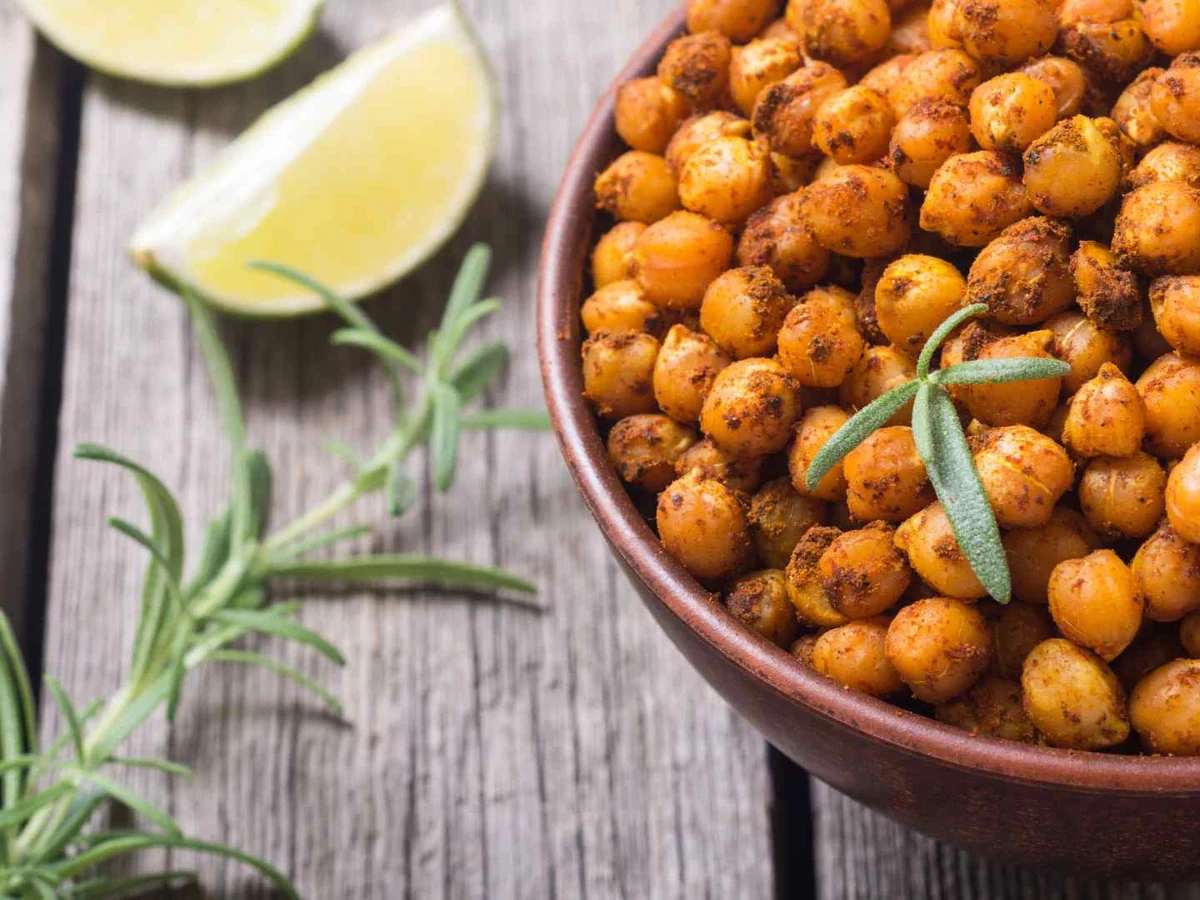
Roasted chickpeas become hard and crunchy, which increases choking and dental concerns compared with a soft mashed bean. Snack bags can add salt, barbecue powder, ranch flavor, chili, chocolate, sugar, or garlic.
Chickpea chips, puffs, and crackers may use chickpea flour but remain processed snacks with oils and seasonings. A crumb is usually low risk after checking ingredients, yet the product earns no regular place beside complete cat food.
Keep bags away from cats because greasy film invites chewing and plastic can obstruct or suffocate. Report any missing packet corners or bag pieces when you call.
Sprouted chickpeas and food safety
Warm, humid sprouting conditions can support harmful bacterial growth, and raw sprouts are a higher-risk human food. Cats do not need raw chickpea sprouts, so cooking and then feeding complete feline food is the simpler safety plan.
The FDA’s produce guidance explains that raw sprouts can contain Salmonella, Listeria, or E. coli and that washing does not eliminate every risk. Keep sprouting jars and drainage water away from pets and clean contacted surfaces.
Why plant protein cannot replace a cat’s main meal
Protein grams on a human label do not show amino acid balance, digestibility, mineral profile, or suitability for a cat’s life stage. Chickpeas also bring substantial carbohydrate and fiber alongside their protein.
Cornell’s feline feeding resource explains cats’ distinctive nutritional needs and the role of complete diets. Do not create a vegetarian cat menu or dilute a prescription diet with beans without a board-certified veterinary nutritionist’s formulation.
An ingredient can appear in a balanced commercial food without being balanced by itself. Manufacturers may use legumes for specific formulation functions while controlling the rest of the recipe, which is different from adding spoonfuls at home.
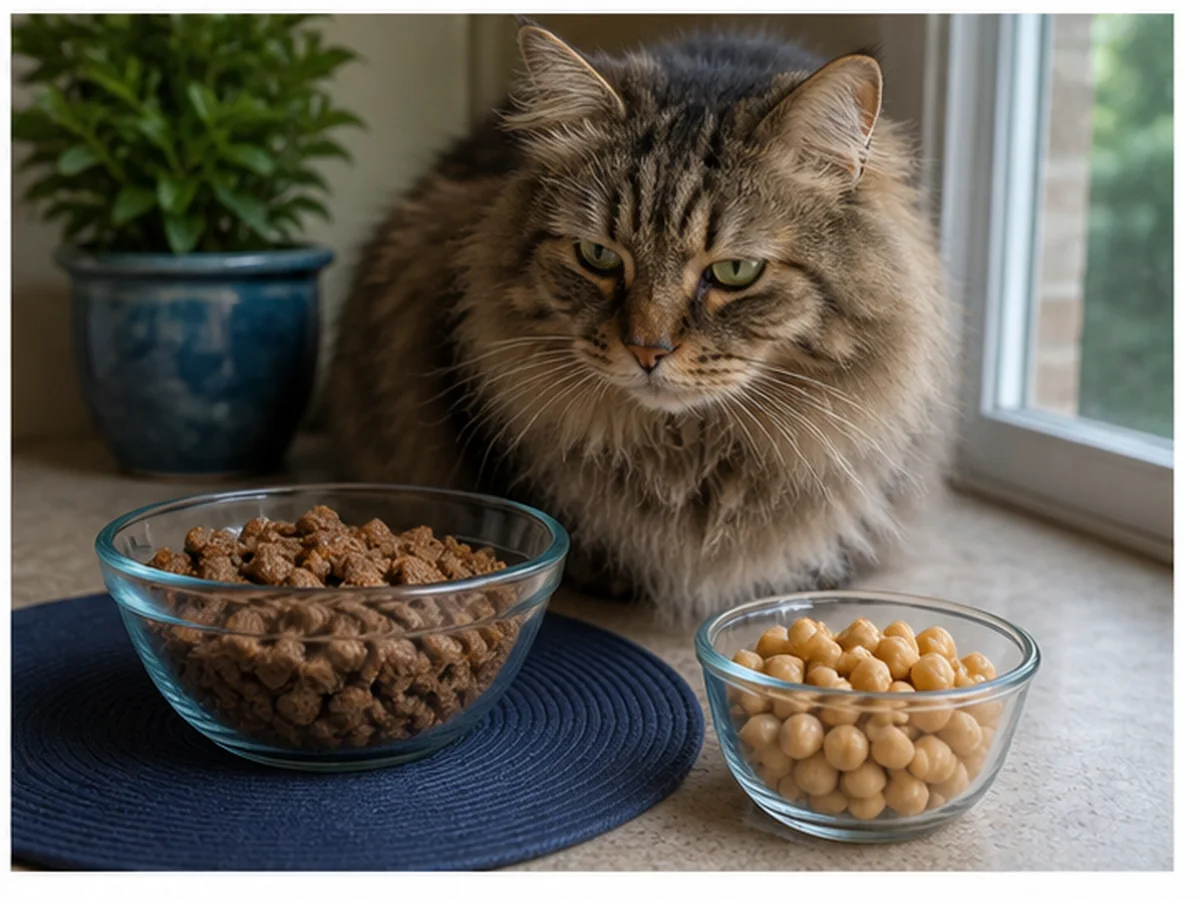
Cats who should skip chickpeas
Kittens, cats with dental disease, swallowing trouble, chronic digestive signs, constipation, diabetes, obesity, or a therapeutic diet should avoid casual bean samples. A food-allergy elimination trial also depends on excluding every unapproved nibble.
Patients with urinary disease should not receive salty brine in the hope that thirst will increase. Hydration and mineral management must follow the diagnosis and veterinarian’s plan.
If your cat refuses usual food but accepts hummus or beans, appetite loss remains important. Novelty eating does not prove adequate calorie intake or resolve the reason the regular meal was rejected.
FAQ
Can cats eat canned chickpeas?
A tiny mashed piece from an unsalted, unseasoned can is generally low risk after draining and rinsing. Standard brine, seasoning, and human serving sizes make most canned portions unnecessary.
Can cats eat hummus?
Do not offer hummus because it commonly contains garlic, salt, oil, lemon, and tahini. Check the recipe and call after meaningful allium exposure or concerning symptoms.
Can cats eat roasted chickpeas?
Skip them because their hard texture can choke or damage teeth and snack coatings may contain salt or alliums. A soft plain cooked bean is the lower-risk form if a veterinarian permits a taste.
Are chickpeas good fiber for cats?
They contain fiber, but they are not a precise treatment for constipation, diarrhea, hairballs, or weight loss. Ask a veterinarian which fiber type and amount match the actual condition.
Bottom line
A mashed crumb of plain cooked chickpea is usually uneventful, but dry beans, gas, canned brine, hummus, falafel, and crunchy snacks deserve separate scrutiny. Keep beans optional and let complete feline food supply the protein that counts.