Can Cats Eat Ketchup? Garlic, Onion, Salt, Sweeteners, and Packets
Do not make ketchup a cat condiment. One tiny lick may cause no obvious problem, but recipes vary, and garlic or onion, salt, sweeteners, chile, spoiled bottles, greasy companion foods, packet corners, caps, and foil seals can make the real exposure more complicated.
Start with the exact ketchup
Save the bottle, packet, restaurant cup, recipe, or ingredient photo and identify regular, no-salt, reduced-sugar, sugar-free, spicy, curry, homemade, or imported ketchup. Estimate teaspoons or packet fraction.
Check tomato concentrate, onion, garlic, salt, vinegar, sugar, syrup, sweeteners, chile, spices, preservatives, and mixed foods. Count caps, foil liners, tear-off corners, and packets.
Call promptly for alliums, a large or unknown amount, severe vomiting, weakness, pale gums, dark urine, tremors, collapse, eye exposure, or missing packaging. Do not induce vomiting.
The ripe tomato base is not the full product
Ketchup typically begins with ripe tomato concentrate, but concentration, seasoning, salt, and sweetener distinguish it from a fresh tomato taste. A product can be tomato-heavy and still unsuitable.
The cat tomato guide separates ripe flesh from green fruit and plant material. Ketchup needs a label-based answer after that.
A tiny conventional lick may only cause mild stomach upset. It offers no nutritional reason to repeat the experiment.
Garlic and onion deserve a careful search
Some ketchup recipes contain onion powder, garlic powder, allium-based natural flavors, or spice blends. Cats are particularly susceptible to red blood cell damage from Allium plants.
ASPCA’s people-food guidance notes that cats are more susceptible to allium effects. Powdered ingredients can be distributed throughout the bottle.
Call with the ingredient list and amount rather than waiting for pale gums, rapid breathing, weakness, dark urine, or collapse. Signs may be delayed.
Natural flavors and restaurant uncertainty
A label may group flavoring ingredients in ways that do not answer every household question, while restaurants can change suppliers. Ask for current ingredient information when available.
Do not delay veterinary advice while pursuing a perfect recipe. Report the brand, restaurant, amount, and what the staff could confirm.
Scraping ketchup from a burger cannot remove sauce absorbed into bread and meat. The whole plate still matters.
Sodium varies across products
Regular, no-salt-added, reduced-sodium, organic, restaurant, and homemade ketchup can differ substantially. Read sodium per labeled serving and calculate the cat’s approximate portion.
The FDA’s consumer label instructions show how a listed sodium value connects to the manufacturer’s stated human serving. Human percent daily value does not establish a feline safe dose.
A substantial salty ketchup exposure becomes urgent when intense thirst, ongoing vomiting, neurologic changes, profound weakness, or collapse appears. Do not force water.
Sugar is unnecessary rather than instantly toxic
Traditional ketchup may contain sugar, corn syrup, or other caloric sweeteners. A tiny lick does not cause diabetes, while routine sharing adds calories and can interfere with weight or glucose control.
The cat sugar guide keeps ordinary sugar separate from sugar alcohols and concentrated products. Cats do not need a sweeter dinner.
Ketchup on medication can also disguise appetite changes. Use only prescriber-approved pill methods.
Sugar-free labels need feline-specific xylitol language
Sugar-free ketchup may use stevia, sucralose, erythritol, xylitol, or other sweeteners depending on brand and market. Verify the current bottle.
Xylitol causes severe hypoglycemia and liver injury in dogs, while comparable feline toxicity has not been demonstrated. FDA says it does not seem as dangerous for cats, which is not a guarantee for every amount or mixture.
Do not borrow dog dose thresholds. Call with the exact label when xylitol or an unfamiliar sweetener appears.
Spicy and curry ketchup
Spicy ketchup can contain cayenne, jalapeño, hot sauce, pepper extract, garlic, or onion. Curry ketchup may add an extensive spice blend and more salt.
Capsaicin can irritate the mouth, eyes, airway, and digestive tract, causing drooling, pawing, coughing, squinting, vomiting, or diarrhea. Do not give milk as an antidote.
The cat spicy-food guide covers powder and coat exposure. Save the exact bottle.
Packets are tiny foreign objects
Ketchup packets include soft film, sharp torn corners, printed coatings, and sometimes connected strips. A cat may swallow the wrapper while licking residue.
FDA’s pet-hazard page supports securing food bags and small objects. Count every packet and corner.
Do not pull plastic protruding from the mouth or anus because it may be anchored internally. Vomiting, food refusal, pain, lethargy, or reduced stool after missing film needs care.
Bottle caps, foil seals, and squeeze tips
A rigid cap or nozzle can choke, while an inner foil seal can lodge or cut. Dried ketchup scent keeps these pieces interesting after the bottle looks empty.
Count cap, nozzle, tamper ring, and foil before cleanup. A missing rigid component requires prompt veterinary direction.
Blood, drooling, gagging, repeated swallowing, or breathing trouble is urgent. Do not probe deeply into the mouth.
Burgers, fries, hot dogs, and meatloaf
Ketchup often rides on salty fatty meat, cheese, onion, garlic, bread, fried potatoes, bones, foil, or toothpicks. The condiment may not be the biggest concern.
The cat hot-dog guide covers whole-link choking, alliums, sodium, fat, and packages. Photograph the complete meal.
Count skewers and picks before throwing anything away. A missing sharp object is an emergency even when the cat seems normal.
Eggs, hash browns, and breakfast plates
Ketchup can coat eggs, bacon, sausage, potatoes, and toast, adding oil, dairy, salt, alliums, and hard crisp pieces. Pills may also be beside the plate.
Inventory medication and every food. Do not reduce a breakfast raid to one red smear.
Hot pans and grease can burn paws. Cool the area and contact a veterinarian for burns rather than applying butter or ice.
Homemade ketchup
A home recipe makes quantities easier to report but can contain fresh onion, garlic, chile, wine, concentrated sweetener, or canning ingredients. Write down measurements and batch volume.
Home-canned sauce requires a tested food-safety process and sound seals. Do not taste a bulging, leaking, spurting, or suspicious jar.
The National Center for Home Food Preservation provides research-based human canning guidance. It does not endorse ketchup for cats.
Spoilage and refrigerator habits
Follow the product’s storage directions after opening. Mold, swelling, unusual gas, off odor, slime, or a damaged seal means secure disposal rather than a pet taste test.
Restaurants may leave open cups warm, where they collect meat juices and hand contamination. Save time and temperature history after illness.
Repeated vomiting, diarrhea, feverish behavior, lethargy, or appetite loss after questionable ketchup deserves advice. Reheating cannot repair every spoilage problem.
Cats on medical diets
Kidney, heart, urinary, diabetes, allergy, gastrointestinal, and weight diets have controlled goals. Ketchup adds sodium, carbohydrate, flavorings, and unapproved ingredients.
Do not use ketchup to stimulate appetite. A cat refusing normal food needs timely veterinary assessment, not increasingly elaborate condiments.
If a veterinarian approves a medication vehicle, use the specified product and amount. Ketchup may encourage licking around a pill.
After one tiny conventional lick
For a healthy adult that licked a small amount verified free of alliums and unfamiliar sweeteners, continue normal food and water while watching vomiting, diarrhea, appetite, energy, gum color, breathing, and urine. Keep the label.
Call if signs appear, more is missing, or the recipe changes on closer inspection. Follow the clinician’s timeline when allium exposure is possible.
Clear plates and discard packets immediately. Cats have no nutritional need for ketchup, though they may volunteer as quality-control inspectors.
Ketchup on fur and eyes
A small smear on outer fur can prompt prolonged grooming, while spicy ketchup or concentrated seasoning may irritate damaged skin. Prevent licking during cleanup.
Use a damp cloth for a tiny ordinary surface smear when safe, but seek product-specific advice for eyes, large areas, or painful skin. Do not apply vinegar, oil, or scented cleaner.
Persistent squinting, redness, discharge, coughing, or facial rubbing deserves prompt veterinary attention. Keep the bottle beside you when calling.
Bulk pumps and refill bags
Restaurant pumps and catering pouches contain more sauce and use rigid nozzles, springs, caps, foil, and thick plastic. A knocked dispenser can create both a large ingestion and foreign-object scene.
Block access before cleanup, estimate volume from the dispenser level, and count each component. Report commercial product details and storage history.
Greasy pump pieces can be swallowed even when they seem too large. Missing hardware or repeated gagging warrants urgent care.
Repeated small allium sources
A cat that gets ketchup, gravy, garlic bread, broth, and seasoned meat may accumulate several allium exposures close together. Family members often remember only their own handout.
Write a shared timeline and tell the veterinarian every likely source. Repeated small amounts cannot be assessed from one packet label alone.
Prevent recurrence with a household no-condiment rule for the cat. Complete treats are easier to count and safer to share.
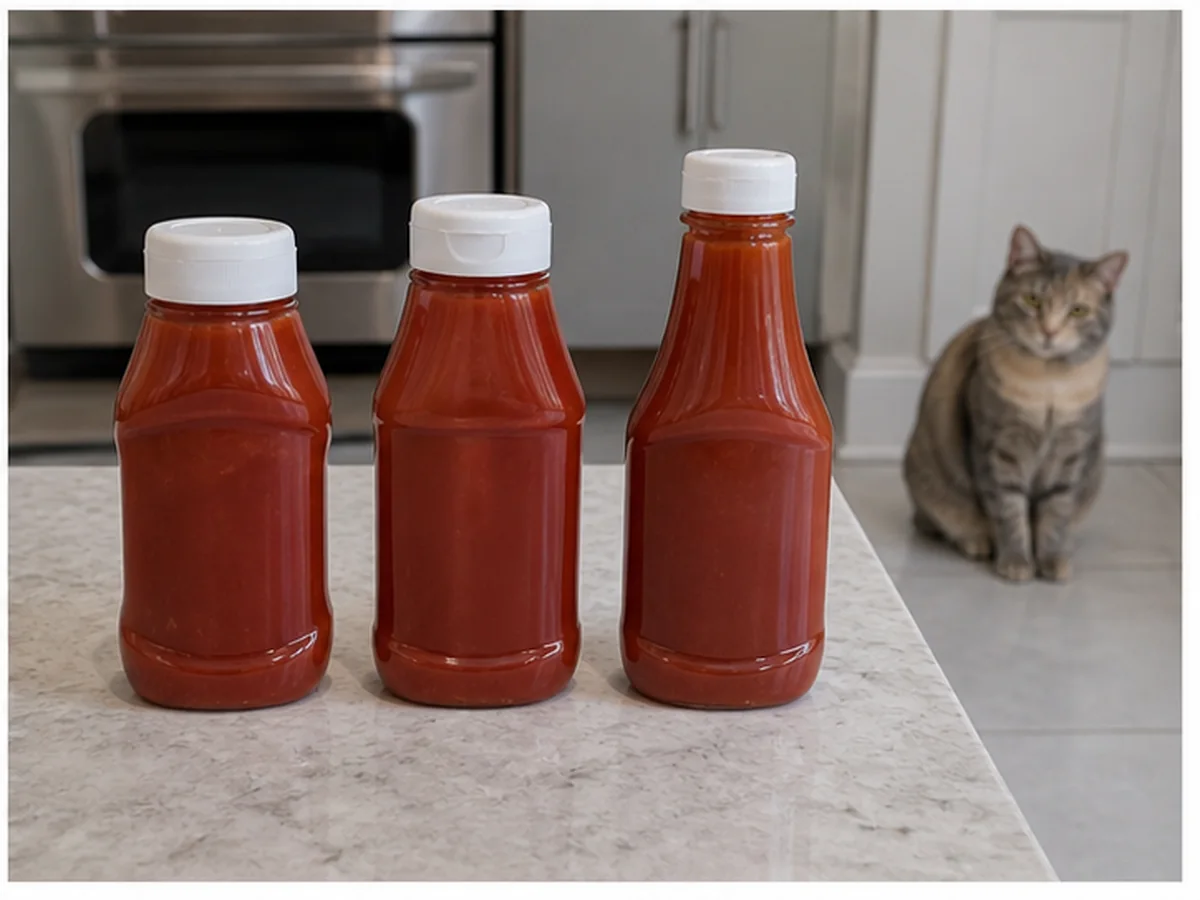
Labels can change between bottles
Recipes change, so keep the current container until monitoring is complete instead of relying on an old ingredient screenshot.
FAQ
Can cats lick regular ketchup?
One tiny lick may be low risk, but ketchup is salty, sugary, acidic, and product-specific, so it should not become a treat.
Why are onion and garlic in ketchup concerning?
Cats are unusually susceptible to allium-related red blood cell damage, and visible illness can be delayed.
Is sugar-free ketchup safe for cats?
Not automatically. Verify sweeteners and seasonings, and do not transfer dog xylitol dose claims to cats.
What if my cat swallowed a ketchup packet?
Call promptly because soft film and sharp packet corners can choke, lodge, or obstruct even when little ketchup was eaten.
Bottom line
Ketchup is a variable condiment, not plain tomato. Garlic or onion, sodium, sweeteners, chile, whole meals, spoilage, packets, caps, and delayed signs determine whether a lick needs observation or prompt veterinary help.