Can Cats Eat Oatmeal? Plain Porridge, Toppings, and Portions
A healthy adult cat can usually taste a teaspoon of plain oatmeal cooked in water, but oatmeal is optional and should never replace complete cat food. Milk, cream, butter, salt, sugar, raisins, chocolate, coffee, sweeteners, nuts, protein powders, hot temperature, and missing packaging can make a breakfast-bowl raid more complicated.
First, reconstruct breakfast
Move the bowl and save the oat package, recipe, and topping containers. Note whether the oats were dry, soaked, or cooked, how much is missing, when it happened, and whether the cat also chewed a sachet, spoon, foil lid, or plastic bag.
- One small lick of cooled, water-cooked oats: offer water and monitor.
- Milk, cream, butter, or a large portion: expect a greater chance of digestive upset and call if symptoms persist.
- Chocolate, coffee, raisins, alcohol, cannabis, medication, onion, garlic, or an unknown sweetener: call promptly.
- Breathing trouble, collapse, repeated vomiting, tremors, seizures, or severe weakness: seek urgent care.
Do not induce vomiting or give oil, salt, milk, or human stomach medicine. Product-specific advice is more reliable when the clinic has the ingredient panel, amount, time, and cat’s weight.
What oatmeal contributes, and what it does not
Oats provide starch and fiber with some protein, fat, vitamins, and minerals, but that does not make porridge nutritionally complete for cats. Feline diets require the right amounts and forms of amino acids, fatty acids, vitamins, and minerals.
The Merck Veterinary Manual nutrition reference explains cats’ distinctive needs, including taurine, arachidonic acid, and preformed vitamin A. A grain having nutrients is not the same as it meeting those needs in a usable balance.
A practical serving size
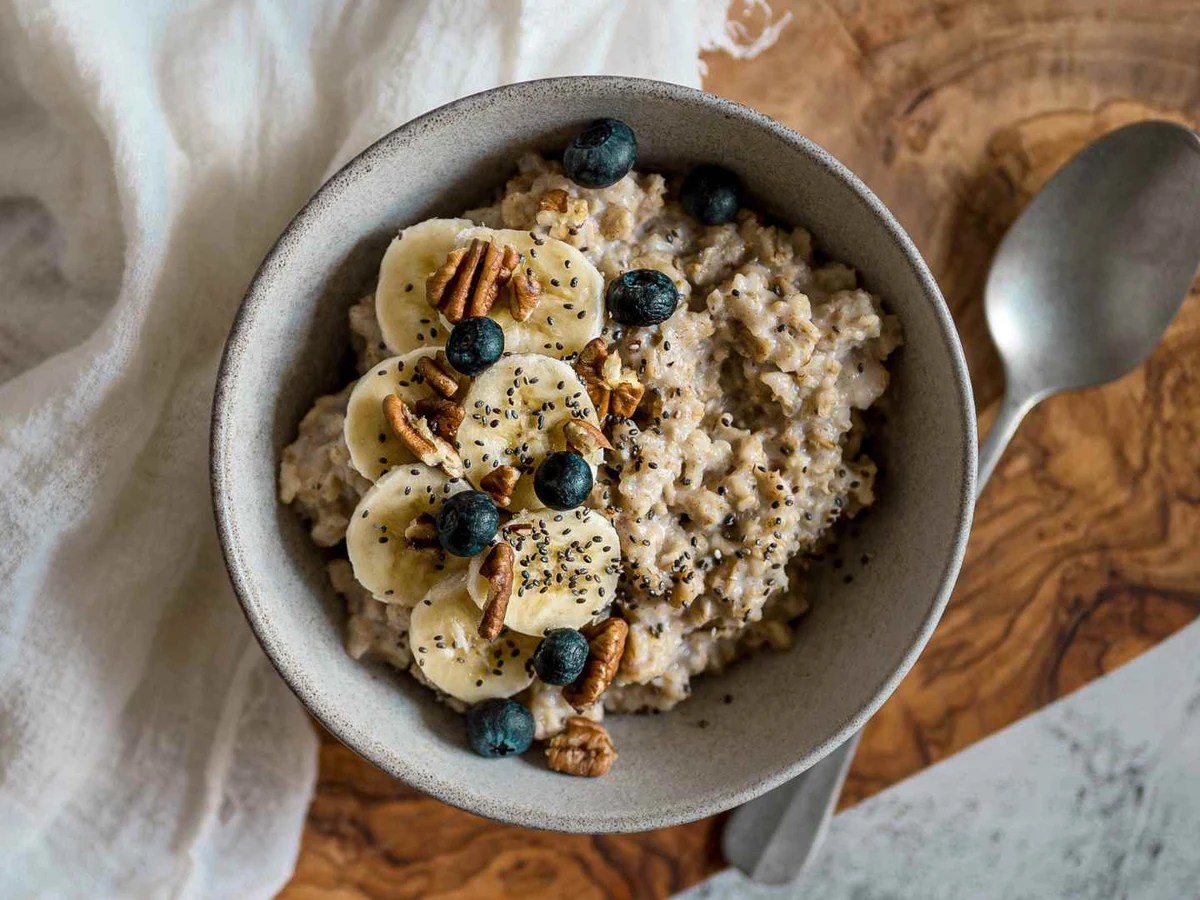
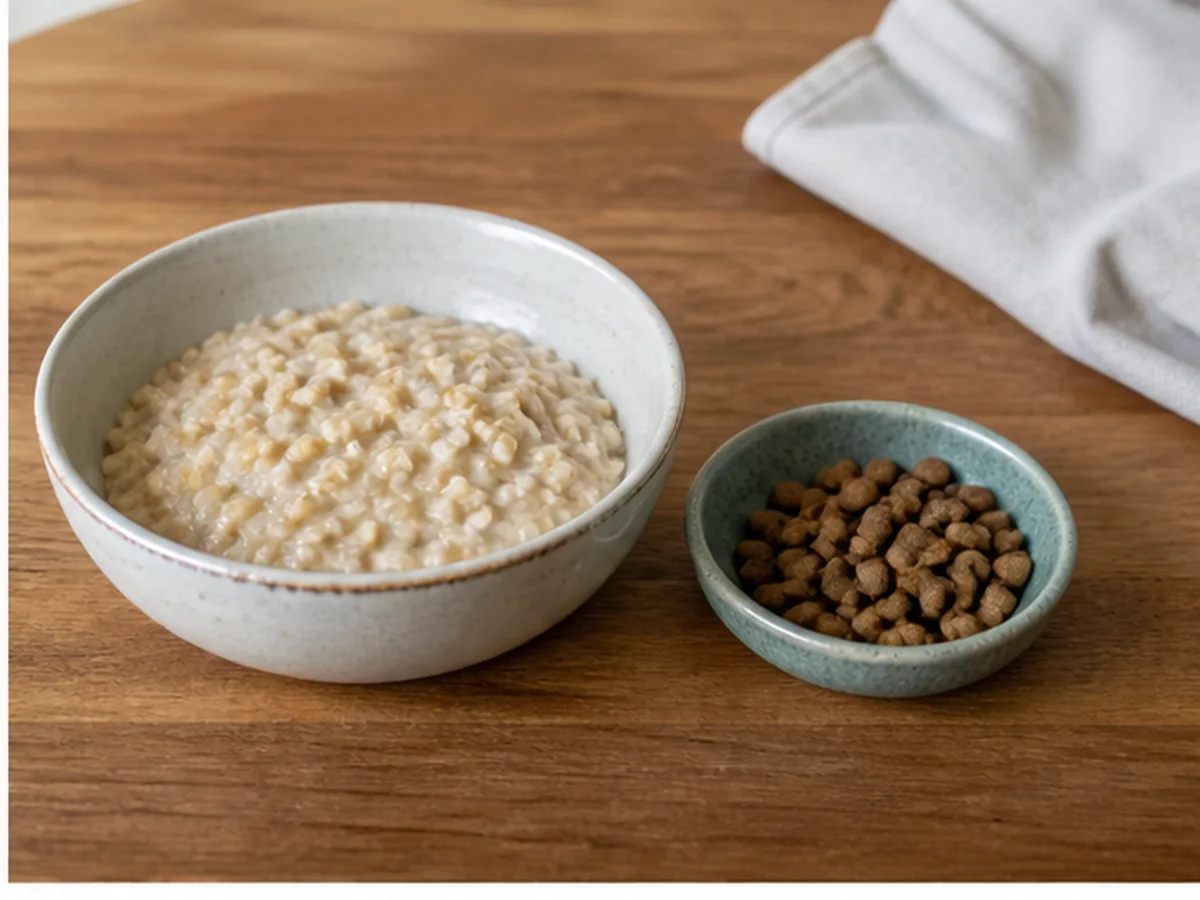
If the veterinarian approves a taste, begin with about one level teaspoon of fully cooked, cooled, plain oatmeal. That is plenty to test tolerance without turning a human side dish into a meaningful part of the ration.
Count oatmeal with every other treat offered that day, including pill pockets and table scraps. In a multi-person household, pre-portion the extras so one persuasive cat cannot assemble brunch from several sympathetic donors.
Cook oats in water, then cool them
Cooked oats are softer and easier to portion than dry flakes or dense granola. Serve them cool enough to touch comfortably, since thick porridge can hold heat and stick to the mouth.
Do not offer a large gluey spoonful, which can be gulped, smeared over fur, or trigger gagging. Thin the veterinarian-approved teaspoon with a little water if needed, but never force it into a reluctant cat.
Milk and cream are common troublemakers
Many adult cats digest lactose poorly after weaning, so milk-based oatmeal can produce gas, discomfort, loose stool, or diarrhea. Cream and butter add fat and calories even when the portion contains little lactose.
Our guides to Greek yogurt and butter explain those ingredients in more detail. Plant milk is not automatically better because it may contain sugar, gums, flavoring, chocolate, or sweeteners.
Sugar, syrup, and honey
Brown sugar, maple syrup, jam, and honey add concentrated carbohydrate without supplying a missing feline nutrient. Sticky toppings also coat paws and fur, leading to more ingestion during grooming.
A plain accidental lick is usually a cleanup and monitoring problem, but diabetes and weight-control plans demand stricter consistency. Wipe residue with a damp cloth and ask before intentionally adding any sweetener to food.
Raisins and dried fruit
Raisins and grapes cause unpredictable acute kidney injury in dogs, while feline evidence is limited. Because the outcome in an individual cat cannot be safely inferred, call after a cat eats raisin oatmeal rather than waiting for illness.
Dried cranberries, dates, apricots, and mixed fruit can add sugar, pits, sulfites, or wrappers. Our fruit guide helps identify low-risk flesh and higher-risk parts.
Chocolate, cocoa, coffee, and mocha oats
Cocoa powder, chocolate chips, cacao nibs, coffee, espresso, and some energy powders introduce methylxanthines. Concentrated dark chocolate and powders matter more than a trace artificial flavor.
Call with the actual product and amount, since online guesses cannot calculate a dose from “one bowl.” Agitation, vomiting, rapid heartbeat, tremors, or seizures requires urgent care.
Sugar-free and high-protein oat cups
Instant cups may contain sugar alcohols, sweeteners, whey, chocolate, caffeine, vitamins, herbal extracts, or concentrated minerals. Xylitol is a proven emergency in dogs, but a cat exposure still deserves label-based advice because the recipe may contain several concerns.
The FDA xylitol page shows the wide range of products where it can appear. Do not rely on “keto,” “low carb,” or “no added sugar” as a feline safety label.
Savory oatmeal
Oats cooked with broth, stock, cheese, bacon, sausage, garlic, onion, chives, salt, or seasoning need a full recipe check. Powdered Allium ingredients can be easy to miss in flavor packets.
Instant savory oats may be very salty, while hot oil or cheese can burn. Keep the package and call after a meaningful serving containing onion or garlic, since red-cell effects may be delayed.
Overnight oats and food safety
Overnight oats often include dairy, yogurt, fruit, seeds, nut butter, protein powder, or sweetener. They must also be refrigerated correctly, since time at room temperature changes the food-safety picture.
Discard a batch that smells sour beyond its intended fermentation, shows mold, or was stored unsafely. Reheating does not reliably erase every problem created by spoilage.
Granola and oat bars
Granola is denser, crunchier, sweeter, and more complex than plain oatmeal. It may contain raisins, chocolate, macadamias, other nuts, xylitol, salt, spices, hard clusters, and wrappers.
A small crumb is not equivalent to swallowing a bar with its film. Count missing food and packaging separately, and call if a wrapper, desiccant packet, or large hard cluster may have been swallowed.
Oat grass is a different product
Oat grass sold for cats is the young plant, not a bowl of grain porridge. Safe indoor grass should be correctly identified and grown without pesticides, mold, toxic companion plants, string, or sharp container pieces.
See our cat grass guide before setting up a grazing pot. Repeated plant eating with vomiting, weight loss, appetite change, or diarrhea needs investigation.
Kittens, seniors, and prescribed diets
Kittens need complete growth food and have too little stomach room for bowls of grain. Seniors may have dental disease, kidney disease, diabetes, bowel problems, or weight loss that makes experimentation less sensible.
Ask before giving oatmeal to a cat on an allergy trial, urinary diet, kidney diet, gastrointestinal diet, or weight-loss plan. A controlled diet works best when every extra is known and measured.
Quick oats, rolled oats, and steel-cut oats
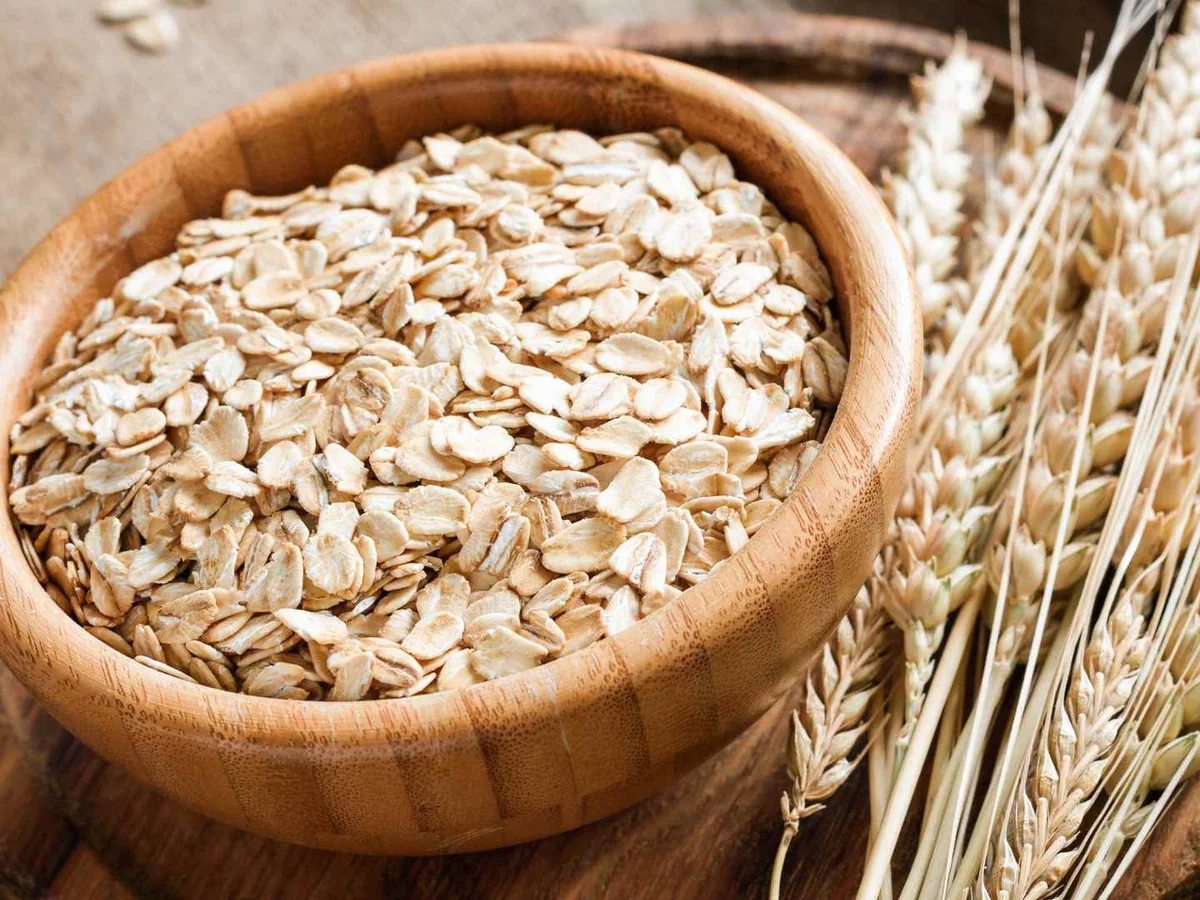
All three are oat products, but cooking time and final texture differ. Steel-cut oats remain firmer, rolled oats soften more quickly, and instant oats may arrive with flavoring already mixed in.
For a rare approved taste, the useful endpoint is fully cooked, soft, plain, and cool, not a particular marketing label. Never assume the flavor sachet is harmless because the grain itself is ordinary.
Fiber can help or hinder
Different fibers affect water retention, stool bulk, fermentation, and gut movement in different ways. Adding oatmeal without knowing the cat’s diet and diagnosis can worsen gas, diarrhea, or constipation.
If the goal is stool control, ask about a complete gastrointestinal food or a measured fiber supplement with a clear plan. Record stool frequency and consistency instead of continually adjusting breakfast spoonfuls.
Oatmeal is not a weight-loss shortcut
Replacing meat-based balanced food with porridge can reduce essential nutrient intake even if the bowl looks filling. Safe feline weight loss preserves muscle with adequate protein while calories are deliberately controlled.
Use a kitchen scale or measured scoop for the prescribed ration and weigh the cat at recommended intervals. Unplanned table food makes a plateau harder to interpret.
Food allergies and gluten questions
Oats do not naturally contain wheat gluten, but processing facilities may handle wheat, barley, or rye. Cross-contact matters if a veterinarian is conducting a strict elimination trial.
Do not diagnose a grain allergy from one episode of itching or vomiting. Food reactions require a controlled diet trial and careful re-challenge under veterinary direction.
Storage and pantry pests
Keep dry oats in a sealed container away from moisture, insects, rodents, and curious paws. Discard products with mold, webbing, larvae, an odd smell, or water damage.
Do not let a cat investigate spilled dry grain mixed with a desiccant packet or damaged plastic liner. Count those nonfood items before cleanup.
A simple cat-specific alternative
If the cat wants to participate at breakfast, reserve a spoonful of its usual wet food before seasoning human meals. A puzzle feeder or lick mat can make the normal ration feel novel without altering nutrition.
Wash the mat promptly and supervise chewing, since some cats switch from licking to eating silicone. Enrichment works only while the equipment remains intact.
Keep breakfast bowls off heated appliance surfaces and check the temperature before any approved taste. Thick oats can remain hot in the center after the top appears cool.
The FDA pet-food label guide explains how nutritional adequacy statements distinguish staple diets from treats and toppers. Oatmeal belongs in the optional-extra column.
Frequently asked questions
Can cats eat oats every day?
There is no nutritional reason to make plain oats a daily feline habit. Frequent servings can displace balanced food and add calories or fiber the cat does not need.
Can oatmeal settle a cat’s stomach?
Do not use oatmeal to treat unexplained vomiting or diarrhea. The right food and urgency depend on the cause, age, hydration, medical history, and severity.
Can cats eat dry oats?
A few flakes are unlikely to poison a cat, but dry oats are harder to chew and can expand with moisture. Fully cooked cooled oats are the more sensible form if a veterinarian approves a taste.
The bottom line
A teaspoon of cooled oatmeal cooked only in water is generally low risk for a healthy adult, but it is not needed. Mixed ingredients, hot temperature, dry clusters, medical diets, symptoms, and missing packaging determine whether a call is warranted.