Can Cats Eat Popsicles? Ingredients, Sticks, Frozen Burns, and Heat Safety
Popsicles are poor cat treats. One lick of a simple fruit ice may cause no illness, but sugar, chocolate, caffeine, dairy, sweeteners, grape ingredients, alcohol, supplements, concentrated flavor, hard frozen surfaces, wooden sticks, plastic sleeves, mold trays, melting puddles, and heat illness each change the answer.
The wrapper tells more than the color
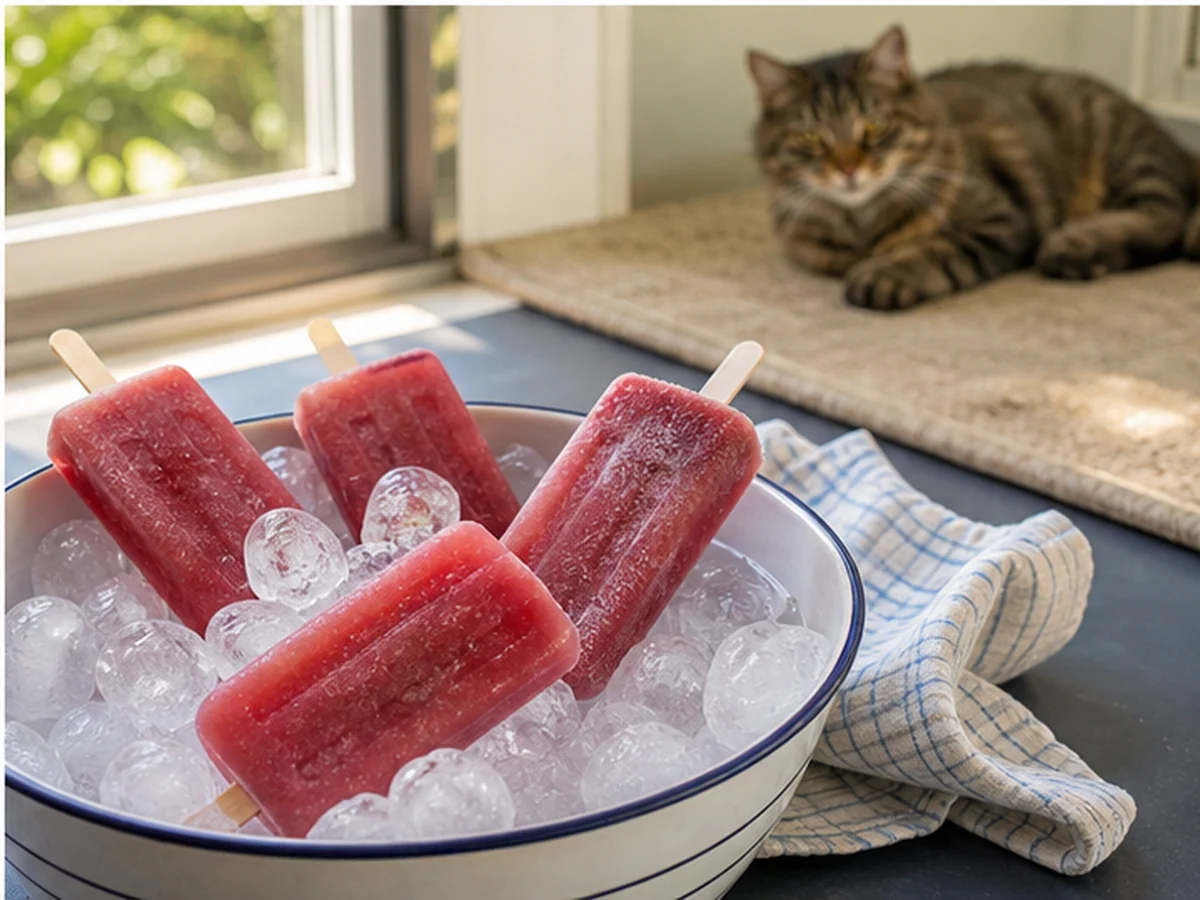
Red might mean cherry, strawberry, watermelon, fruit punch, dye, or several concentrates, while brown can mean cola, coffee, chocolate, or caramel. Read the current ingredient panel instead of identifying a frozen bar by appearance.
Record product weight, number missing, whether the stick vanished, and how much melted. Multipacks sometimes include different formulas in one box.
Homemade pops require the recipe, mold size, and every addition. “Just fruit” can still include grapes, sweetener, yogurt, herbs, supplements, or alcohol.
A tiny lick is not a serving recommendation
A healthy adult cat may tolerate a brief lick from a plain water-and-fruit ice, but cold, sweetness, and novelty do not create nutritional value. Remove the pop before the cat bites a hard chunk or reaches the stick.
The cat watermelon guide covers one common homemade flavor, including rind, seeds, juice, and mixed products. The frozen format adds temperature and object concerns.
Use a few pieces of regular cat food or a veterinarian-approved treat when the cat wants to join snack time. No frozen dessert is required for enrichment.
Hard ice can injure a warm mouth
A deeply frozen bar can stick briefly to moist lips or tongue and can crack teeth when bitten. Cats with dental disease, mouth ulcers, or recent oral surgery should never be offered frozen surfaces.
Drooling, mouth-pawing, bleeding, a broken tooth, swelling, sudden food refusal, or persistent pain needs veterinary examination. Do not pry adhered tissue away or pour very hot water over it.
Let a clinic guide gentle warming when tissue is stuck. Ice should also never be pressed directly onto a burn or injury without instructions.
Chocolate and coffee flavors raise urgency
Chocolate pops can contain cocoa powder, chocolate liquor, chips, or coating, while mocha and coffee pops add caffeine. Product concentration and missing weight matter.
Use the cat chocolate guide to gather cocoa type and possible dose. Restlessness, vomiting, rapid heartbeat, tremors, seizures, or collapse after cocoa or caffeine needs urgent care.
A pale fudge bar can contain more cocoa than its color suggests. Save the wrapper and lot information.
Sugar-free does not mean ingredient-free
Sugar-free frozen treats may use xylitol, erythritol, sorbitol, stevia, sucralose, or blends, and formulations vary by country and year. Read the actual package.
The FDA identifies xylitol as a severe canine hazard, but a dog dose-response should not be declared proven in cats. Call with the exact feline exposure because other ingredients and limited evidence still matter.
Sugar alcohols and rich gums may produce digestive upset even when a classic poisoning syndrome is not expected. Do not use “natural sweetener” as a verdict.
Fruit bars can hide pits and concentrates
Whole-fruit bars may contain seeds, berry fragments, citrus peel, coconut, mango fibers, or stone-fruit pieces. Firm frozen fragments are harder to chew than thawed fruit.
Grape and raisin kidney toxicity is well established in dogs, while feline evidence and a cat toxic dose remain uncertain. Obtain prompt product-specific advice after a meaningful cat exposure rather than copying dog certainty.
The broad feline fruit guide helps identify pits, seeds, rinds, syrups, and dried additions. Juice concentrate makes a bar easier to overconsume as it melts.
Creamy pops add dairy and fat
Ice cream bars, yogurt pops, pudding pops, and paletas can contain milk, cream, cheese, condensed milk, egg, coconut cream, nuts, or chocolate. Many adult cats tolerate lactose poorly.
The cat ice cream guide explains lactose, fat, flavors, sweeteners, and packaging. A dairy lick may cause gas, diarrhea, nausea, or vomiting without being a universal emergency.
Never use a human frozen bar as kitten formula or a hydration replacement. Complete kitten food and species-appropriate milk replacer have different nutritional jobs.
Sticks are the quiet emergency
Wooden sticks can splinter, pierce tissue, lodge in the throat, or obstruct the gut. Plastic sticks, reusable handles, and broken mold parts pose similar mechanical concerns.
Gagging, drooling, repeated swallowing, retching, vomiting, abdominal pain, appetite loss, or a missing stick needs prompt assessment. Do not induce vomiting after a sharp object may have been swallowed.
A stick that appears intact may have a bitten-off tip. Compare it with an unused bar and photograph both beside a ruler.
Sleeves, film, and freezer debris
Plastic tubes, paper wrappers, foil, tear strips, box windows, rubber bands, dry ice packs, and reusable molds can retain sweet residue. A cat may swallow packaging while licking it clean.
Freezer-burned product is poor quality but not the same as a thermal burn. Mold, leaking packages, thaw-refreeze history, or contact with raw meat adds a food-safety question.
The FDA explains safe refrigerator and freezer practices. Discard questionable bars rather than feeding them to avoid waste.
Melting creates a different exposure
A puddle can be lapped quickly and spread across paws, upholstery, electrical cords, or cleaning chemicals. Estimate the original bar size, not merely the liquid left when discovered.
Sticky coat contamination should be removed before grooming, using clinic-advised methods if ingredients are concerning. Never use citrus solvent or essential oil on fur.
Meltwater around a freezer cord or appliance creates an electrical hazard. Isolate the room before cleaning.
Heat relief requires water and cooling
A popsicle does not treat heatstroke and may delay effective care. A cat that is panting, drooling, weak, confused, vomiting, collapsing, or very hot needs immediate veterinary help.
The CDC describes severe heat illness as a medical emergency, although feline cooling instructions should come from a veterinarian. Move the cat from heat and call while arranging transport.
Keep fresh water, shade, ventilation, and climate control available before a crisis. Do not force ice water into an overheated cat’s mouth.
Adult products and supplements
Cocktail pops can contain ethanol, while wellness pops may add caffeine, electrolytes, vitamins, protein powder, herbs, or cannabis. A freezer does not neutralize pharmacologically active ingredients.
Alcohol can produce weakness, incoordination, vomiting, low body temperature, breathing changes, and collapse. Cannabis products may cause profound sedation, wobbliness, urine dribbling, or altered responses and need prompt care.
Preserve the label without hiding an ingredient from the veterinary team. Accurate information protects the cat.
A five-part frozen-snack report
- Flavor and brand: photograph both panels and identify homemade recipes completely.
- Amount: count bars, estimate melted volume, record time, and give cat weight.
- Ingredients: flag cocoa, caffeine, grape, alcohol, cannabis, sweeteners, dairy, supplements, and pits.
- Objects: count sticks, sleeves, tear strips, lids, mold pieces, and freezer packs.
- Signs: note mouth pain, vomiting, gait, breathing, temperature exposure, and behavior.
Electrolyte and sports pops need labels
Products marketed for athletes or illness can contain sodium, potassium, sugar, vitamins, caffeine, herbs, colors, and artificial sweeteners. Human hydration branding does not make a formula appropriate for feline kidney or heart disease.
A veterinarian chooses fluids according to examination and laboratory needs. Do not replace prescribed water strategies or medication with a frozen human electrolyte product.
Large access should be reported with the nutrition panel and product volume. Unusual thirst, vomiting, weakness, tremors, or neurologic change requires prompt advice.
Freezer molds create portion confusion
Mini molds, novelty shapes, and reusable trays vary widely in capacity, so “one pop” is not a useful measurement. Fill an identical cavity with water and measure it only if doing so will not delay an urgent call.
Silicone can be chewed, wooden handles can splinter, and reusable plastic may crack after repeated freezing. Inspect every cavity and attachment before discarding a damaged tray.
A homemade batch can also be contaminated by raw meat stored above it or an unwashed blender. Freezing pauses growth of many microbes but does not sterilize food.
Frozen pet treats need the same discipline
A product sold for cats may be suitable when fed exactly as labeled, yet treats still carry calories, storage directions, age guidance, and package hazards. Pet branding does not excuse a thawed, spoiled, or recalled product.
Check that the item is a treat rather than complete food and follow the serving size for the cat’s weight. Ask before using it in diabetes, food-allergy trials, prescription diets, or chronic digestive disease.
Discard any tube or cup after supervised feeding so the cat cannot shred it later. Refrigerate or freeze the remainder only as the manufacturer directs.
Cold sensitivity is individual
Senior cats, cats with painful teeth, oral tumors, gingivitis, recent extractions, or temperature sensitivity may recoil from even a softened frozen treat. Respecting that response is safer than repeatedly presenting the bar.
Sudden one-sided chewing, food dropping, bad breath, drooling, facial swelling, or avoidance of ordinary food deserves a dental examination. The popsicle may reveal pain rather than cause all of it.
Frequently asked questions
Can cats lick a plain ice pop?
One quick lick may remain low risk if ingredients are simple, but it offers no benefit and encourages access to sticks and wrappers. Plain fresh water is better.
Can I give my cat a popsicle in hot weather?
No human bar is a heat treatment. Use a cool environment and water, and seek emergency care for panting, weakness, confusion, vomiting, or collapse.
What if my cat ate the wooden stick?
Call immediately because wood can splinter, lodge, or perforate. Do not induce vomiting or feed bread to cushion it.
Are homemade tuna popsicles safe?
Only a veterinarian-approved recipe served in an object-free format should be considered. Tuna water, salt, complete-diet displacement, molds, and frozen hardness still require attention.
Bottom line
Popsicles combine an optional sweet food with a hard temperature, easy-to-swallow meltwater, sticks, wrappers, and unpredictable recipes. One simple lick can stay minor, but cocoa, caffeine, alcohol, grapes, concentrated products, missing objects, mouth injury, or heat illness deserves a faster response.