Can Dogs Eat Sushi? Raw Fish, Soy Sauce, and Hidden Risks
A tiny piece of plain cooked fish and rice is usually low risk for a healthy dog, but “sushi” is not one ingredient. Raw seafood, sauces, fillings, fried coatings, bones, skewers, and packaging can turn the same-looking bite into a very different problem.
Start with the roll, not the word sushi
- Plain cooked fish and rice, one small bite: usually monitor for stomach upset.
- Raw fish or shellfish: note the species, source, freshness, amount, and geographic origin.
- Soy sauce, tempura, spicy mayo, or pickles: assess sodium, fat, seasonings, and quantity.
- Onion, garlic, xylitol, grapes, raisins, macadamias, chocolate, alcohol, or caffeine: call promptly.
- Bones, skewers, chopsticks, plastic grass, packets, or wrappers missing: treat as a foreign-object exposure.
Save the menu, receipt, ingredient label, sauce cups, and packaging, then estimate the maximum amount each dog could have eaten. Record time, dog weight, medical conditions, medications, current diet, symptoms, and every missing nonfood item.
Maki, nigiri, sashimi, hand rolls, poke, and grocery trays use different ingredients, so a restaurant name is not enough. Ask what fish was used, whether it was raw or cooked, and what was mixed into the rice, filling, topping, and sauce.

Raw seafood carries pathogens and parasites
Raw fish and shellfish can carry bacteria or parasites, and refrigeration does not make every organism disappear. The FDA seafood safety guide says thorough cooking is the safest route because freezing can kill some parasites but not all harmful germs.
A dog may develop vomiting, diarrhea, appetite loss, abdominal discomfort, fever, or unusual tiredness after contaminated seafood. Puppies, older dogs, pregnant dogs, and dogs with immune or digestive disease deserve earlier veterinary guidance because foodborne illness may be harder on them.
Raw seafood also spreads contamination to hands, bowls, floors, counters, and other pets. Wash hands and food-contact surfaces, separate raw items from ready-to-eat food, and do not let a dog lick the tray or preparation board.
Do not assume restaurant-grade, sushi-grade, previously frozen, wild, organic, or freshly caught means risk-free for a dog. Those terms do not replace product-specific handling, temperature control, or cooking.
Even a cooked roll can be cross-contaminated by knives, boards, gloves, or display surfaces used for raw seafood. Refrigerate leftovers promptly and discard any tray with an uncertain time or temperature history.
Pacific Northwest raw salmon needs special attention
Dogs that eat certain raw salmonid fish from the Pacific Northwest can develop salmon poisoning disease, which involves a fluke carrying Neorickettsia helminthoeca. This regional veterinary concern is different from ordinary human food poisoning and deserves prompt discussion when the history fits.
The Oregon Veterinary Medical Association describes risk from raw fish associated with coastal streams and rivers from northern California through the Pacific Northwest and into Alaska. Tell the veterinarian about travel, fishing, scavenging, and the fish source, even if the sushi was eaten days earlier.
Possible signs include vomiting, diarrhea, appetite loss, weakness, weight loss, fever, swollen lymph nodes, or eye and nasal discharge. Do not wait for the full list when a dog with relevant raw-fish exposure becomes unwell.
Fish species matters for mercury and bones
Mercury exposure varies greatly by fish species and builds with repeated intake, so one accidental tuna crumb is not the same as frequently adding large predatory fish to meals. The FDA mercury overview explains that methylmercury levels differ across seafood and tend to be higher in certain large, long-lived fish.
A complete canine diet already supplies nutrients in tested proportions, and sushi fish should not be used as an omega-3, protein, skin, heart, or joint treatment. Veterinary fish-oil products and therapeutic diets have controlled formulations that a random slice of tuna cannot duplicate.
Small pin bones can remain in fish and may lodge in the mouth or throat, cut tissue, or contribute to obstruction. Gagging, repeated swallowing, drooling, pawing at the mouth, breathing trouble, or repeated vomiting needs prompt assessment.
Do not reach blindly into the throat or induce vomiting when a bone, skewer, or chopstick may have been swallowed. Sharp objects can cause more damage on the way back up.

Rice, vinegar, sugar, and salt add up
Sushi rice is typically seasoned with rice vinegar, sugar, and salt, so it is not equivalent to plain cooked rice. One bite is unlikely to cause a crisis, but several rolls can add substantial calories and sodium while displacing balanced food.
Vinegar can irritate a sensitive stomach, and concentrated vinegar products are a separate exposure from seasoned rice. Our vinegar guide explains why food-level acidity cannot be compared with cleaning vinegar, supplements, or concentrated acetic acid.
Sticky rice can clump into a large mouthful, especially when a dog swallows quickly. Break an accidental safe piece into perspective by considering total roll weight, not the number of individual rice grains.
Soy sauce and salty toppings
Soy sauce, tamari, eel sauce, ponzu, pickled ginger, imitation crab, cured fish, and roe may contain considerable sodium. A lick is different from drinking a sauce cup, and small dogs or dogs with heart, kidney, or blood-pressure restrictions may need advice after less.
After a salty raid, keep normal drinking water available unless a veterinarian has restricted it, but do not force water or give homemade electrolyte mixtures. Vomiting, marked thirst, weakness, tremors, confusion, seizures, or collapse warrants urgent veterinary care.
Wasabi and hot sauces mainly cause irritation rather than providing a useful “detox” response. Drooling, pawing at the face, vomiting, coughing, or eye exposure should be handled according to the actual product and route.
Avocado, tempura, mayonnaise, and rich sauces
A small amount of avocado flesh is usually more a fat and stomach-upset question than a classic poisoning emergency, while the pit creates choking and obstruction risk. Skin, pit, plant material, guacamole, and concentrated avocado products require separate assessment.
Tempura batter, cream cheese, spicy mayonnaise, and fried crunch add fat and calories that can trigger vomiting or diarrhea and may contribute to pancreatitis in susceptible dogs. A dog with prior pancreatitis or a prescribed low-fat diet should not be used to test a rich roll.
Our avocado-oil guide explains why culinary oil is mainly a concentrated-fat concern, not a wellness supplement. It also covers flavored oils, topical products, bottles, and packaging.
Sauces can hide garlic, onion, chili, sweeteners, or alcohol, and “spicy” does not identify the risky ingredient. Ask for the restaurant allergen or ingredient sheet instead of relying on color or taste.
Onion, garlic, and urgent co-toxins
Scallions, chives, onion, garlic, and their powders can appear in rolls, spicy mixes, tempura dipping sauces, and toppings. Concentrated powders are easy to miss and can damage canine red blood cells, with signs that may be delayed.
Our garlic-powder guide covers cumulative Allium exposure and delayed anemia. Report every seasoned food eaten over recent days rather than evaluating one roll in isolation.
Call promptly for xylitol, grapes or raisins, macadamia nuts, chocolate, alcohol, caffeine, or a meaningful Allium exposure. Do not induce vomiting or give peroxide, salt, oil, or charcoal unless a veterinary professional specifically directs it for that dog and exposure.
Seaweed, roe, and imitation seafood
Plain culinary nori in a small roll is usually not the leading concern, but large sheets can become tough, sticky mouthfuls. Seasoned seaweed snacks may add salt, oil, garlic, onion, chili, or sweet coatings.
Roe and imitation crab vary in sodium, dyes, starches, sugar, preservatives, and seasoning, and imitation products may still contain fish. Dogs with known food allergy or a veterinary elimination diet should not receive a mixed seafood snack.
Itching alone does not prove a food allergy, and a first exposure can still cause vomiting or diarrhea without allergy. Facial swelling, widespread hives, breathing difficulty, weakness, or collapse is an emergency.
Packaging can outrank the food
Plastic trays, film, condiment packets, absorbent pads, fake grass dividers, rubber bands, chopsticks, skewers, and toothpicks can choke, cut, or obstruct. Count every item and inspect the trash before assuming the dog ate only food.
Food bags and thin wrappers can also seal over the nose and mouth, causing suffocation within minutes. Store leftovers in a rigid closed container and place the entire takeout bag behind a latched door.
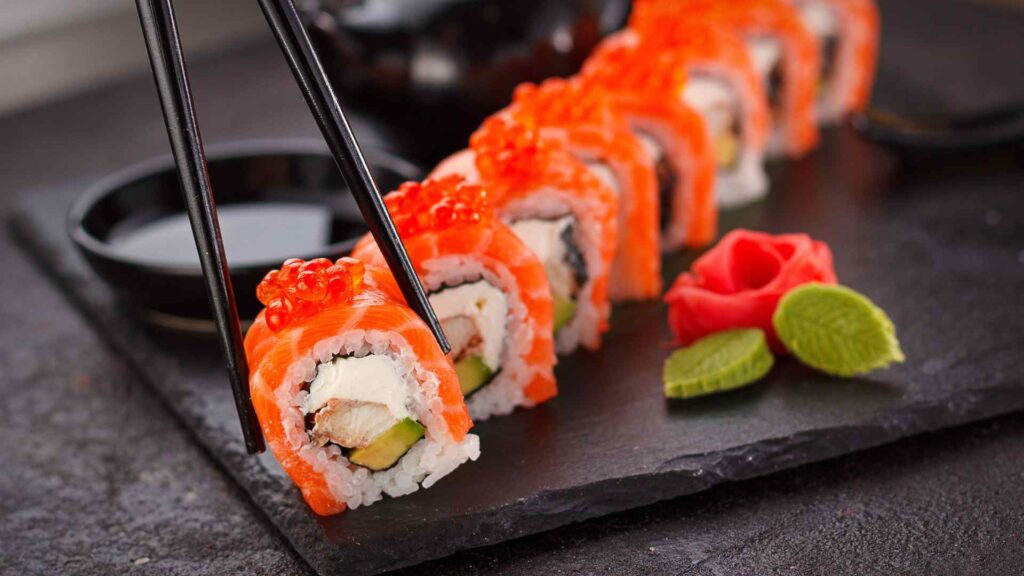
What to do after a sushi raid
Secure the remaining tray and identify fish species, raw or cooked status, sauces, fillings, toppings, amount, time, and every missing object. Photograph labels and call the restaurant while the order details are still available.
Call promptly for raw Pacific Northwest salmonid exposure, urgent co-toxins, a large salty or fatty meal, sharp objects, packaging, a medically vulnerable dog, or symptoms. For one small bite made only from plain cooked fish and rice, recipe review and monitoring are usually proportionate.
Do not use sushi to treat poor appetite, dehydration, skin disease, inflammation, or a protein deficiency. If food is needed for a medical reason, ask the veterinarian for a complete plan rather than improvising with a mixed restaurant dish.
Bottom line
Sushi is an ingredient list, not a yes-or-no food. A tiny plain cooked bite is usually low risk, while raw seafood, regional salmon exposure, mercury-prone species, salty sauces, rich fillings, Alliums, urgent co-toxins, bones, skewers, and packaging deserve targeted action.